
-
Jesta

(c’83) Peter Hollis (vocals), David Rose (guitar / vocals), Neil Dewey (piano), Glyn Edwards (drums / percussion), George Glavin (bass), and Kevin Inch (guitar).
As far as we know this band formed for the singular purpose of performing the ‘rock’ opera called “1215” about the legend of Silent Pool written by Hollis and Rose. It was performed, just once, at the Yvonne Arnaud Theatre, Guildford on 16 July 1983.
In ’81, Rose was a founding member of Sammy Rats Big Big Blues Band, in which Edwards also played, and appeared in Luxury Glass Town and, along with Dewey and Edwards, The Ant Hill Mob.
Gallery:
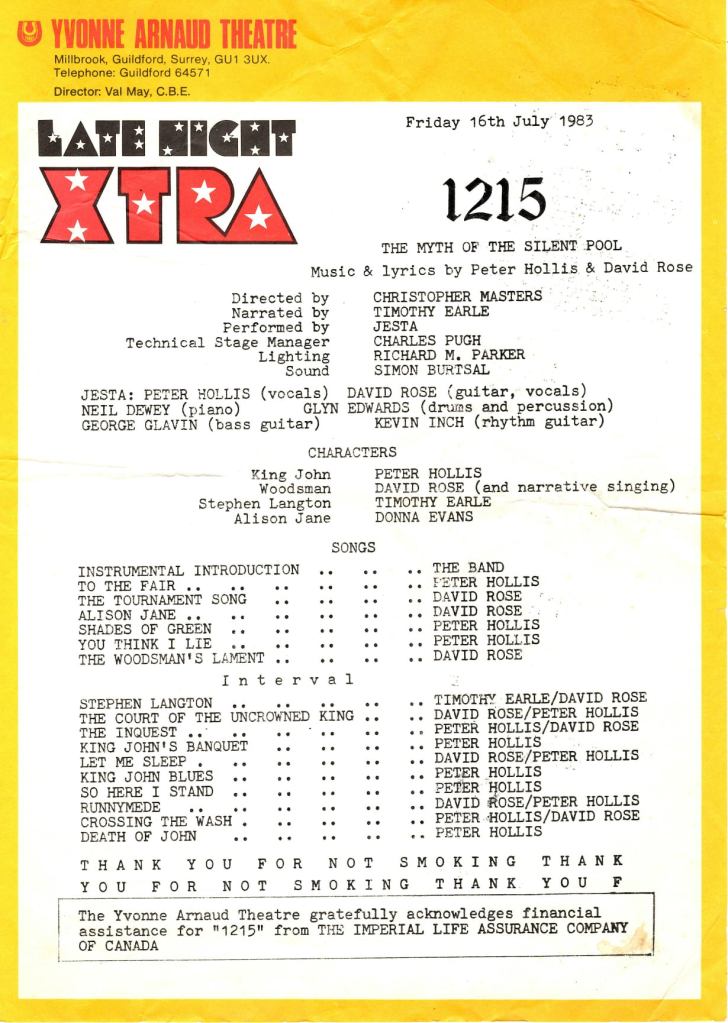
16 July 1983: Jesta performed “1215” at the Yvonne Arnaud Theatre, Guildford. Picture courtesy of John Hudson -
Wicked Vicar
(c’92-’93) ? members.
This Farnham band were influenced by Queen, Mr Big and Guns ‘n’ Roses and we know they performed at The George, Ash Vale on 5 September ’92. On 26 January ’93, they were back at The George with J.C. Regulator; returning once more on 23 February ’93 to support Epicureans.
Gallery:

5 September 1992: Wicked Vicar play The George, Ash Vale per this August / September 1992 gig list from an unidentified fanzine. Picture courtesy of Steve Porter 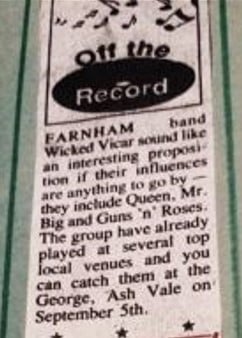
5 September 1992: Wicked Vicar played The George, Ash Vale. Picture courtesy of Steve Porter -
Supernal Music

This underground record label and mail order company was established by Alex Kurtagic in ’96 and was run by him out of Shamley Green. Supernal Music, which had two sub-labels: Conquistador Records and Black Metal Records, focused on Avant-garde/Heavy/Doom/Death/Black (raw, experimental, pagan, and symphonic) Metal, Ambient, Dark Ambient and Dungeon Synth.
UK based bands Ashes, Benighted Leams, Contra Ignem Fatuum, and Ethereal Woods all released through the label. The rest of Europe was represented on the label’s roster by Lunar Aurora (Germany); Poccolus (Lithuania); Capricorrnus, Dead Raven Choir, Infernum, Kataxu, Sunwheel, and Thor’s Hammer (Poland); Deinonychus (Netherlands); Fleurety, and Mayhem (Norway); Astofas, Blood of Kingu, Dark Ages, Drudkh, Лютомысл, and Hate Forest (Ukraine). But there were also stateside acts Eldrig, and Helvintr.
The label’s first release Caliginous Romantic Myth [AURA001] by Benighted Leams – Kurtagic’s own solo Black Metal music project that he kicked off in ’95 – was released on 31 October ’96 with a limited pressing of 2000 CDs.
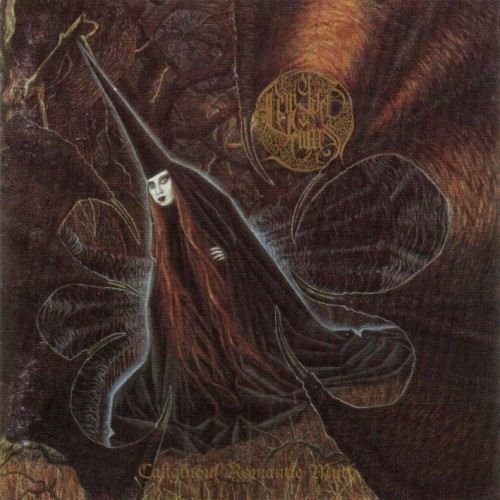
Cover for 1996’s Caliginous Romantic Myth by Benighted Leams The label would later move to Cranleigh and while it released albums by known National Socialist Black Metal (NSBM) bands, such as Hate Forest, Capricornus and Sunwheel, it claimed to not be a NSBM label. That said, following the publication in 2009 of Mister, Kurtagic’s dystopian novel, until 2013 he was an active far-right intellectual figure and speaker.
It label closed it PO Box in 2011.
[Ed – We’ll add more gradually]
Alex Kurtagic, Ashes, Astofas, Benighted Leams, Black Metal Records, Blood of Kingu, Capricorrnus, Conquistador Records, Contra Ignem Fatuum, Cranleigh, Dark Ages, Dead Raven Choir, Deinonychus, Drudkh, Лютомысл, Eldrig, Ethereal Woods, Fleurety, Hate Forest, Helvintr, Infernum, Kataxu, Lunar Aurora, Mayhem, National Socialist Black Metal, NSBM, Poccolus, Shamley Green, Sunwheel, Supernal Music, Thor’s Hammer -
Revolt
(c’77-’79) – Barnaby ‘Sniff’ Russel (guitar), Russ ‘Savage’ Russel (vocals), Jane Roberts (drums), and ? ‘Aggy’ ? (bass).
Revolt pumped out a Crisis-esque sound with a rougher edge. The Russel brothers were affiliated to the Socialist Youth League and played some RAR gigs in the Guildford area. They covered X-Ray Spex’s “Oh Bondage Up Yours”, changing Bondage to Tyndall in order to slag off the then leader of the National Front (nka: BNP).
Ex-Wombat, Sniff formed the band in July ’77 with Savage (ex-Crew), calling on Alex Binnie to play bass and Matt ? to drum. Their first two gigs at the Union Hall Bar at the University of Surrey, Guildford and the Roxy, London, both supporting Crisis, saw them billed as Youth. Binnie and the drummer left, and the band were renamed Revolt with Roberts grabbing the sticks and Aggy on bass. They continued with support slots for Crisis, Ellery Bops, Visions and others.
A second headline gig at the Sixth Form College, Woking was nearly cancelled after Savage was hospitalized by Teds; and subsequently he departed the band. Constant fan ‘Shag’, with three days to learn the set, stepped in and proceeded to insult everybody from the audience to the college’s principal. Revolt were the first band to be banned from Woking College.
The group lasted just two more gigs, disbanding after a gig at St. Catherines Church Hall in February ’79. At some point in ’79, Insect Robin the Cleaner, the drummer in Crisis, was temporarily replaced Jane Roberts, who performed a gig or two with the band but was deemed unsuitable and replaced by Luke Rendall. In late July, issue No.4, the June/July ’80 issue, of Down in the Street, featured the band along with Actifed, Crisis, and Matrix.
Gallery:
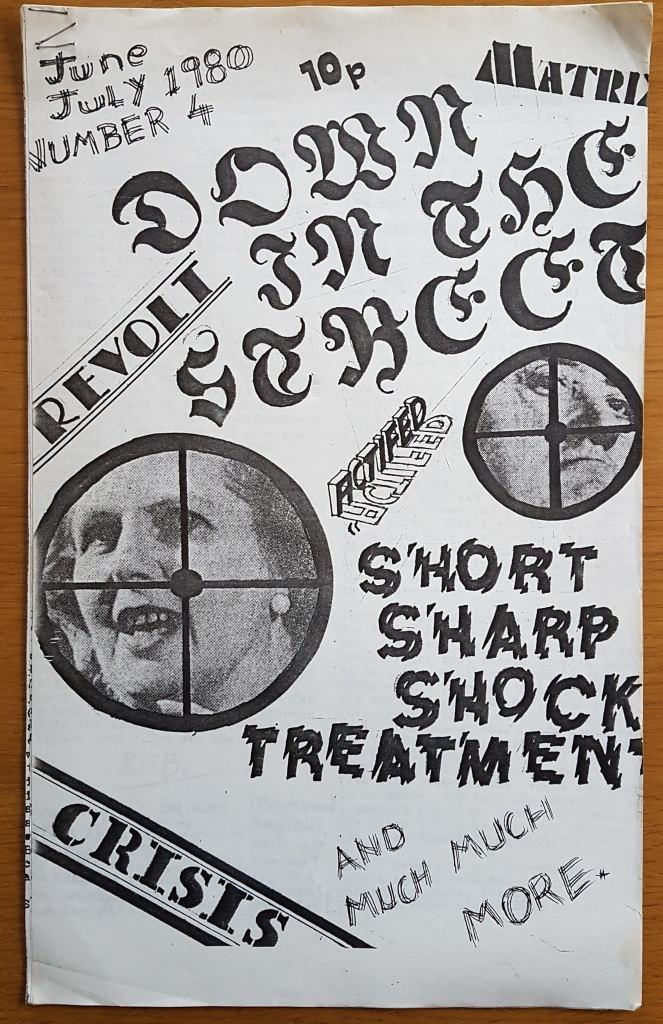
Revolt get a mention on the cover of Stuart Home’s ‘Down In The Street’ fanzine. Picture courtesy of John Hudson 
Article on Revolt from ‘Down In The Street’ fanzine No.4. Picture courtesy of John Hudson Actifed, Alex Binnie, Barnaby Russel, Crew, Crisis, Down in the Street, Guildford, Jane Roberts, London, Luke Rendall, Matrix, Revolt, Roxy, Russ Russel, Sixth Form College, St. Catherines Church Hall, The Ellory Bops, Union Hall Bar, University of Surrey, Visions, Woking, Woking College, Wombat, Youth -
The Early Hours

(c’81-’85) Chris Pilott (guitar / vocals), Dennis Wallis (drums), and Ray Penfold (bass).
The band went by the moniker The Sessions for the first couple of years, before adopting The Early Hours c’83. This Woking 3-piece used to practice in the Wallis’ garden shed / garage in Sheerwater. Then the neighbors complained and even got a petition together to have the band stopped. At which point rehearsals moved to the Youth Club, Sheerwater.
They played locally, sometimes sharing the bill with Five O’Clock High c’85, notably at the Youth Centre, and the Centre Halls, Woking as part of a variety show. Noddy and the Nymphos’ John Prior joined the band in later years as did singer and one time boxer, Reuben Cooper.
Gallery:

The Early Years on stage at The Centre Halls, Woking as part of a variety show. 
The Early Years… 
Drummer Ray Penfold of The Early Hours -
Eric Clapton

(’62-date) Eric Clapton (guitar / vocals)
[Ed – As with The Jam, we’ll look to keep the content early or local, with occasional interesting bits and bobs]
Clapton was born on 30 March 1945 in Ripley, Surrey. He was given his first guitar, an acoustic Hoyer, for his 13th birthday. Steel-strings are hard and he briefly lost interest. Two years later he picked it up again and started playing once more. Influenced by the blues he practiced for hours, playing along to records to learn the chords; recording his practice sessions using his portable Grundig reel-to-reel tape recorder, listening to them over and over until he felt he’d got it right.In ’61, after leaving Hollyfield School in Surbiton, Clapton studied at the Kingston College of Art but was dismissed at the end of the academic year because his focus remained on music rather than art. At 16 he was getting noticed and busked around Kingston, Richmond, and the West End. Clapton would turn up at L’Auberge, Richmond “…with a guitar and long thumbnails,” according to Chris Dreja, who played alongside Clapton in The Yardbirds.
In ’62, he joined forces with David Brock in pubs around Surrey. When he was 17, he joined early British R&B group, The Roosters, whose other guitarist was Tom McGuinness. He stayed with this band from January until August ’63. In October ’63, Clapton did a seven-gig stint with Casey Jones & the Engineers. Following Top Topham’s departure from The Yardbirds, Clapton replaced him in late October ’63. On 15 December ’63, The Rolling Stones took to the stage at the Civic Hall, Guildford, thanks to the Ricky Tick Club promoters, John Mansfield and Philip Hayward. Also, on the bill that night were The Yardbirds, with Clapton.
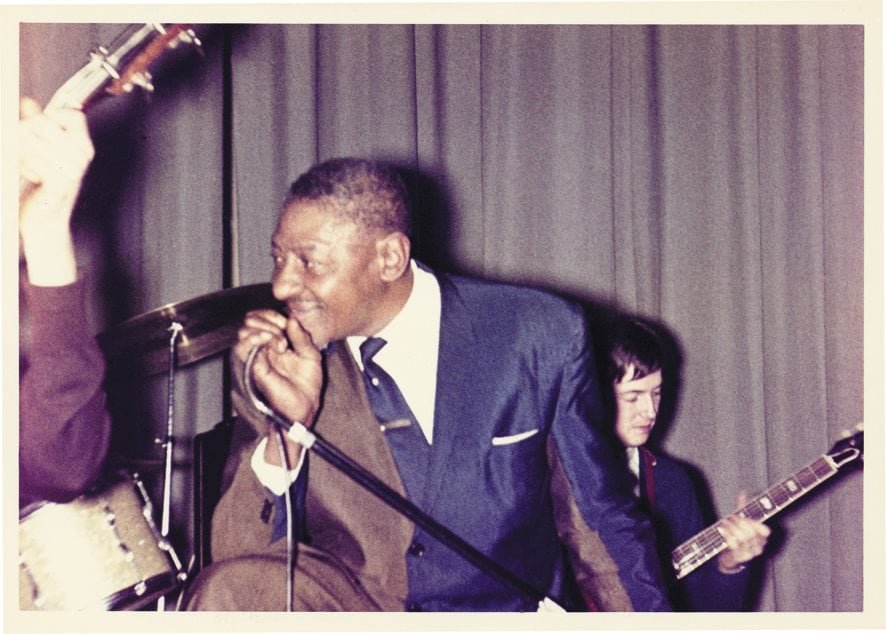
3 March 1964: Sonny Boy Williamson with The Yardbirds at the Town Hall, Farnborough. Behind Sonny is a young Eric Clapton. Source: Steve McKeown via Farnborough (Hants) Nostalgia Crawdaddy Club impresario Giorgio Gomelsky became the Yardbirds manager and first record producer. Under Gomelsky’s guidance the Yardbirds toured Britain as the back-up band for blues legend Sonny Boy Williamson II from 5 December ’62 to 24 May ’65 appearing at the Town Hall, Farnborough on 3 March. The Yardbirds signed to EMI’s Columbia label in Feb ’64.
The big draw, for the Ricky Tick Club at The Harvest Moon Club, Guildford on 17 March ’66 was John Mayall & The Blues Breakers, which then included Clapton; at which they previewed, for all present, most of the ‘Blues Breakers’ LP. On 14 July ’66 John Mayall’s Bluesbreakers played The Stoke Hotel, Guildford. After the 25 June that year Eric Clapton failed to show at several gigs as his time with the Bluesbreakers drew to a close – this was not one of them. David Gale recalls, in Guildford Past and Present, standing in the bar listening to John Mayall and hearing an additional blues guitar playing, which turned out to be Clapton joining in.
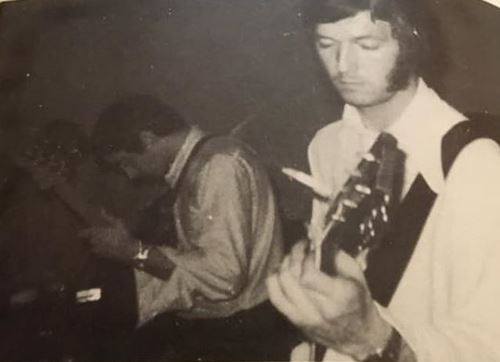
14 July 1966: Eric Clapton’s penultimate gig with John Mayall’s Bluesbreakers at The Stoke Hotel, Guildford Cream, Clapton’s next band, were a notable headliner at the Atlanta Ballroom, Woking on 19 September ’66. They had come directly from recording their slot for 30 December broadcast of Guitar Club for the BBC Home Service show. The venue was packed for them, but down the front of the crowd was a gentleman yelling at Clapton, “Oi, Eric you’re useless. Can’t play at all. Rubbish…!” One of the bouncers pulls this heckler aside and held him against the wall, to whom Clapton shouted out “Put my uncle down!”. Well, that’s how the story went when Adrian Clapton told it to Adam Russel.
Then there was the short-lived Blind Faith that started with jam sessions in Ripley / Ewhurst. In 1970, the Winter Gardens, Malvern hosted Clapton on 14 August, along with Dene Mason and Friends, Derek and the Dominoes, Origin, and Our House. On 3 December ’71, Clapton attended Leon Russell and The Shelter People’s second night at the Rainbow Theatre, London. After the show, Russell invited Clapton to join them the next night. Following the first number, on 4 December ’71, Clapton walked onto the stage but kept out of the limelight.
Eric Clapton, who was more used to arenas and stadiums, played the Village Hall, Cranleigh at least twice, the first was opened by Chas n’ Dave. That night, the 11 February ’77, Clapton’s band – formed by Ronnie Lane (guitar), Bruce Rowlands (drums), Charlie Hart (piano), and Brian Belsham (bass) – performed for over two hours, all of which was initiated by Roger Swallow of the village’s Swallow Tiles. Adam Russel recalls a few, who couldn’t get tickets, climbing onto the roof of a local garage from where a view of the stage could be gained. 30 minutes before the end of the show the doors were opened and they piled in with others, and Eric’s uncle got Russel backstage where he hung for a while.

15 July 1978: Eric Clapton on stage Source: Liam Feeley via Farnborough (Hants) Nostalgia In ’78 he appeared, supporting headliner Bob Dylan, at The Picnic at Blackbushe. After flying over the gathered masses at Blackbushe Airport, Yateley; Clapton landed and played a fantastic set, including Wonderful Tonight as the sun was setting. A set watch by Billy Connolly, who recalls finding himself standing next to Dylan to watch Clapton. The Picnic, which was attended by some 160-200,000 plus people, also featured Joan Armatrading, Graham Parker & The Rumour, Lake, and Merger. On 7 Dec ’78, local lad, Clapton along with Elton John (piano), George Harrison (guitar), and Muddy Waters (guitar / vocals) were in the Civic Hall, Guildford’s spotlights.
Clapton – who’d cut his US tour short a little earlier in the year for a perforated ulcer – returned to the Village Hall, Cranleigh, on 7 September ’79, this time with Albert Lee on guitar, as did Russel. Stuart Reffold’s band Poker were the support, and the hall was packed and crowded around Clapton who stood in the middle of them all. Poker paused between songs, and Clapton was heard to shout “Come on get on with it … it’s show business“…

7 September 1979: Eric Clapton appeared at Cranleigh Village Hall. The next year, on 18 May ’80, Clapton is back at Guildford’s Civic Hall.
Graham Cooper, once guitarist with Jackie Lynton’s Happy Days Band, would be later found performing solo under the Graham “Cupcake” Cooper moniker, and some recall Clapton joining him and other local musicians onstage at The Royal, Guildford for a charity gig in the early ’80s with Bruce Foxton of The Jam in the audience.
Clapton, supported by Chas n’ Dave, closes out his Money and Cigarettes tour at the Civic Hall, Guildford on 18 May ’83. To wrap up his set Clapton is joined on stage by Jimmy Page – Page’s first live appearance since he jammed with Foreigner on 12 May 1982. They perform Further up the Road and Cocaine before being joined by Phil Collins for Roll Over Beethoven. Then out came Chas & Dave to play You Win Again and Matchbox with the growing ensemble. Finally, Paul Brady comes out and they close proceedings with Goodnight Irene.On 23 December ’89, at the Village Hall, Chiddingfold, there was a benefit fundraising concert for local charities organized by Gary Brooker, at which Clapton and No Stiletto Shoes, consisting of Brooker (keyboards / vocals), Andy Fairweather-Low (guitar / vocals), Dave Bronze (bass), Henry Spinetti (drums), and Frank Mead (sax), rocked a 300-ish audience.
Late in ’91, Guildford based Genesis Publications, an ‘art house’ publisher in the fields of modern music and culture, published ‘24 Nights‘ by Clapton, Peter Blake, and Derek Taylor. This documented the run of 24-consequetive-nights across February to March ’91 Clapton performed at the Royal Albert Hall, London to close out the Journeyman World Tour. This two-volume book and CD boxed set was Clapton’s first with Genesis, with a limited 3,500 signed copies produced.
Then for two consecutive nights, the 15 and 16 December ’95, Clapton returned to guest with No Stiletto Shoes – Brooker, Fairweather-Low, Bronze, Spinetti, and Geoff Whitehorn (guitar), – on stage, supported by Big Town Playboys.
On 20 December ’03 and 18 December ’04, Brooker’s charity Christmas gig featured Clapton again, as it did on 15 December ’06, when Clapton sat in on four songs with No Stiletto Shoes, for what was now a tradition at The Chidd. But earlier in the 2000s, on Sunday, 4 January 4, 2004, Eric Clapton, Kenney Jones, Paul Jones, and Gary Brooker played the last gig ever at the Civic Hall.
[Ed – there is more images to add and bio to write.]Gallery:

Eric Clapton responds to Richard Prior of Ipswich’s question in the Expert Advice column on Page 12 of Melody Maker, 22 January 1966. 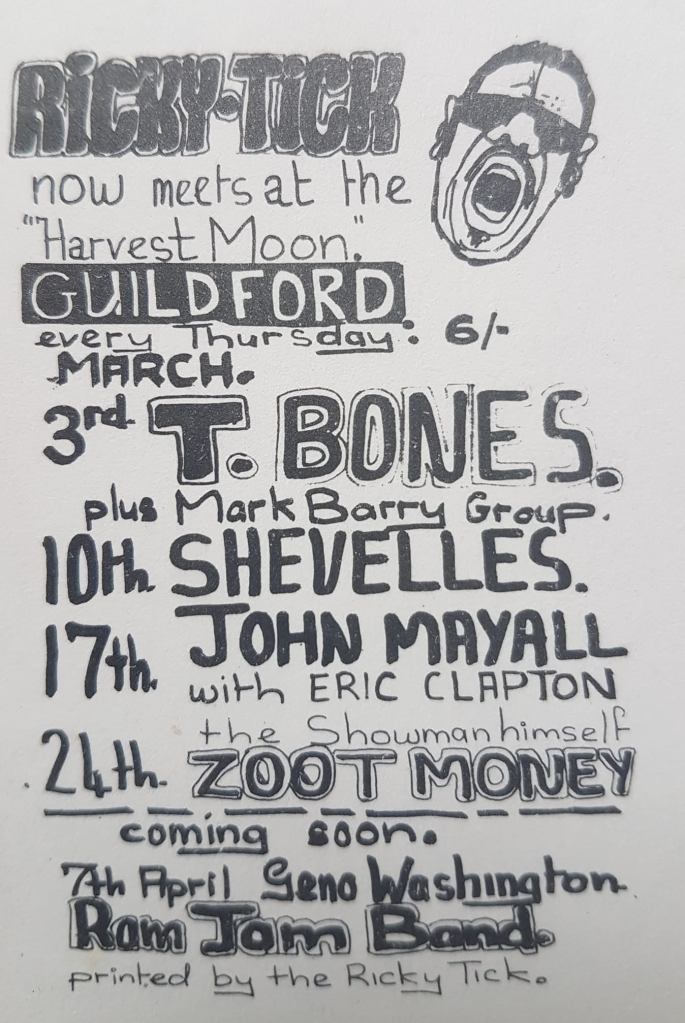
17 March 1966: The Ricky Tick had moved to the Harvest Moon, Guildford. Picture courtesy of Ben’s Collector’s Records 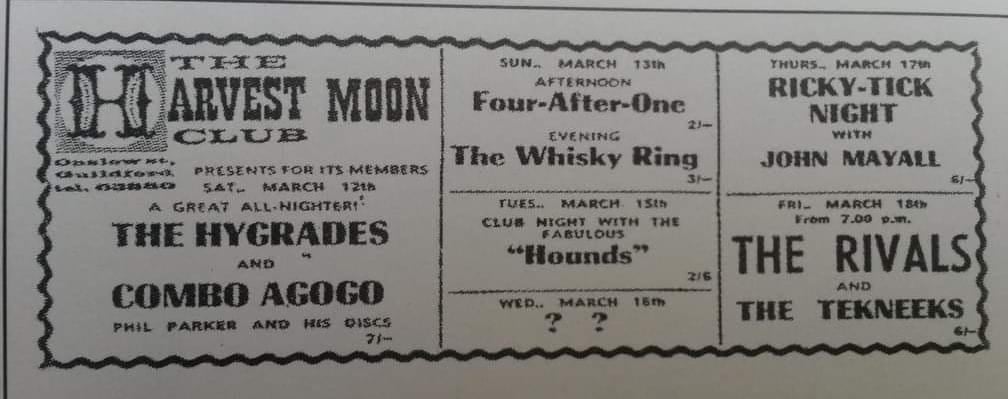
March 1966: Press Ad for The Harvest Moon Club, Guildford. Picture courtesy of Ben’s Collector’s Records 
4 December 1971: Melody Maker’s 11 December ‘ 71 issue covers Eric Clapton’s unannounced appearance at the Rainbow Theatre, London to play with Leon Russell and the Shelter People. 
12 Juy 1978: The front cover of Eric Clapton’s Ripley’s Son, recorded at the Civic Hall, Guildford 
12 Juy 1978: The back cover of Eric Clapton’s Ripley’s Son, recorded at the Civic Hall, Guildford 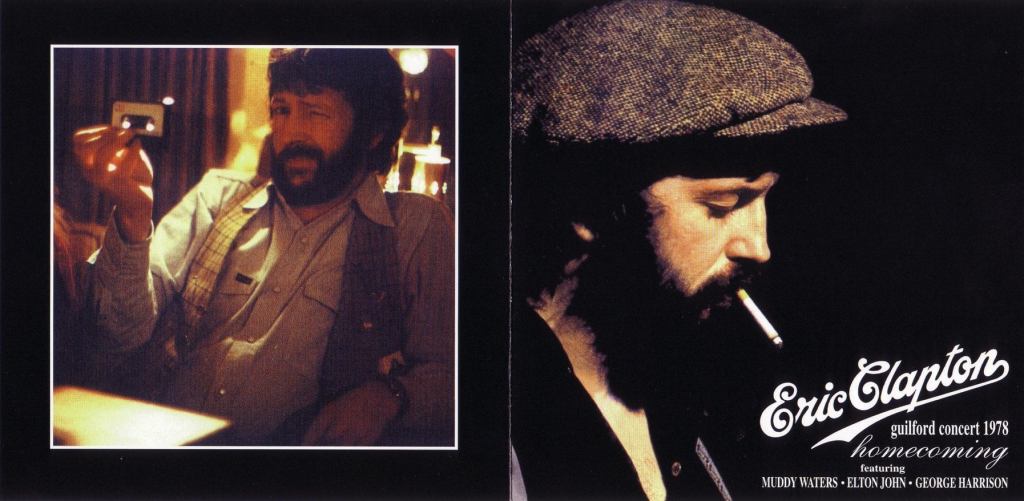
12 July 1978: Eric Clapton’s Homecoming was recorded at the Civic Hall, Guildford 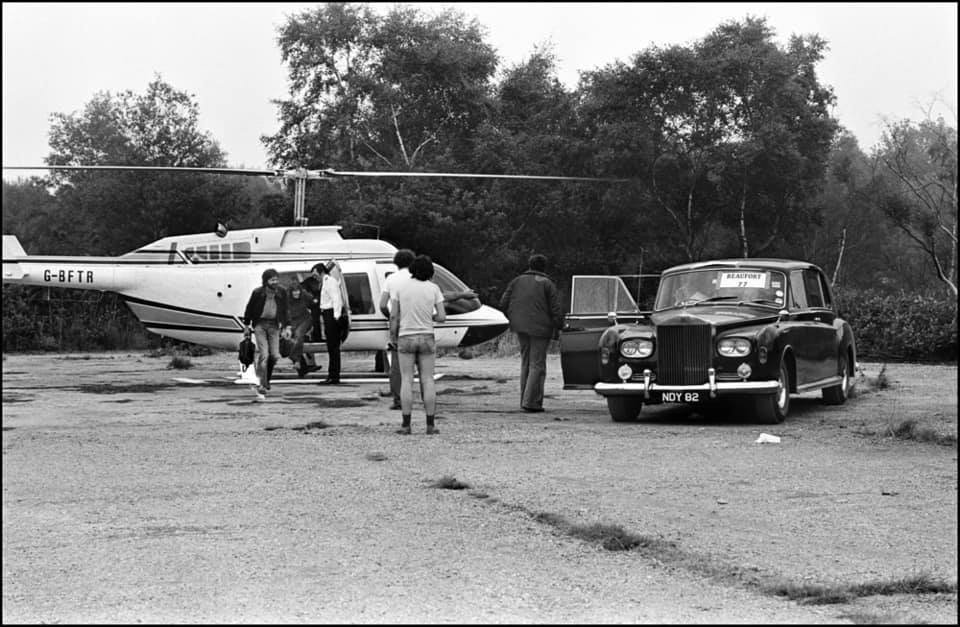
15 July 1978: Eric Clapton arriving at Blackbushe for The Picnic. Source: Susan Andre Lowson via Farnborough (Hants) Nostalgia 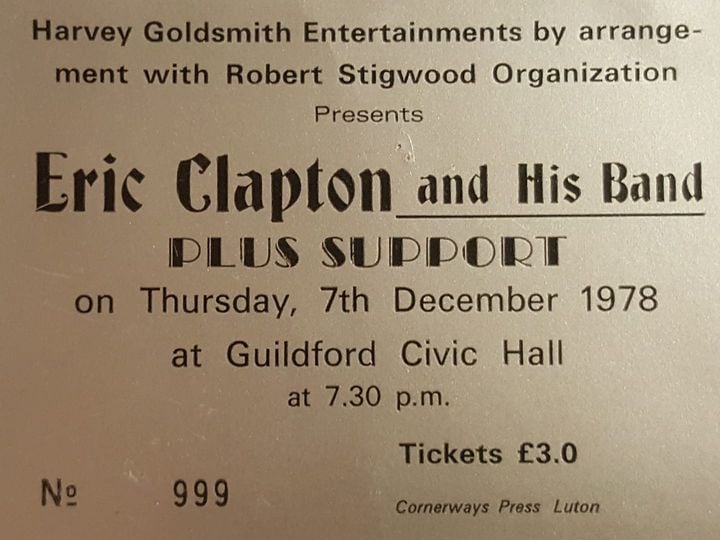
7 December 1978, Eric Clapton Guildford Civic Hall concert ticket from the collection of Stuart Matthews. Muddy Waters was the support, and ‘His Band’ included Elton John and George Harrison. Picture courtesy of Ben’s Collector’s Records 
7 December 1978: Only 250 copies of Eric Clapton’s “Live at the Civic Hall” were pressed on the Port Aventura Records label for distribution in Spain. It was recorded live at the Civic Hall, Guildford, with special guests: Muddy Waters, George Harrison, Elton John. 
18 May 1980: Civic Hall, Guildford hosts Eric Clapton. Ad in Record Mirror. 
18 May 1980: Ticket for Eric Clapton, supported by Chas n’ Dave, at the Civic Hall, Guildford. Source: Jackie Helm 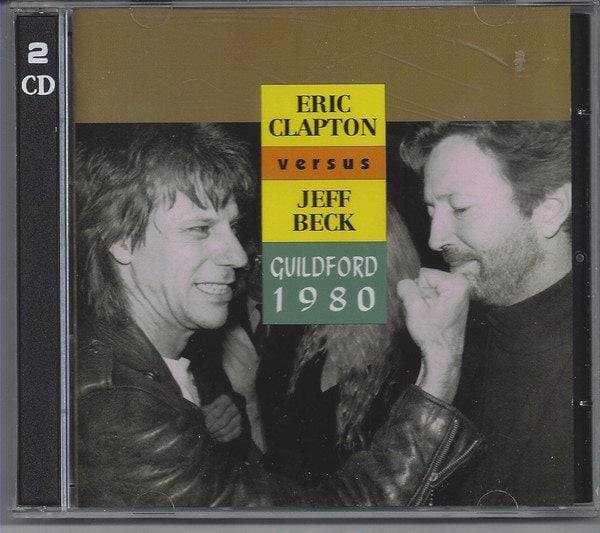
18 May 1980: “Eric Clapton versus Jeff Beck – Guildford 1980”, on the Zeus label [Z 2015001/2], was not released until 2000 as an unofficial 2xCD in Japan only; 20 years after it was recorded at Guildford Civic Hall. 
18 May 1980: “Eric Clapton versus Jeff Beck – Guildford 1980”, on the Zeus label [Z 2015001/2], was not released until 2000 as an unofficial 2xCD in Japan only; 20 years after it was recorded at Guildford Civic Hall. 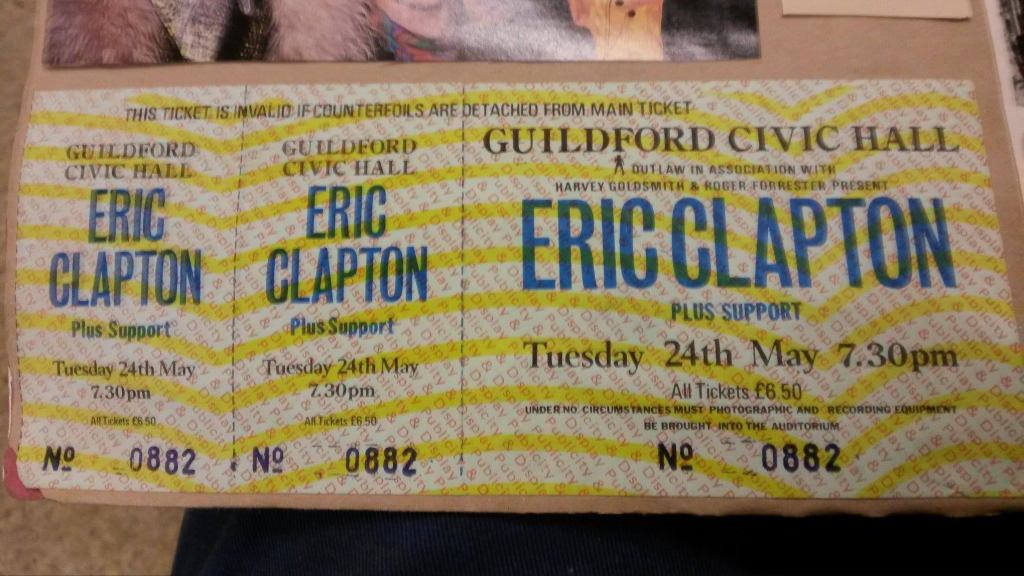
24 May 1983: Civic Hall, Clapton. picture courtesy of Ben’s Collector’s Records 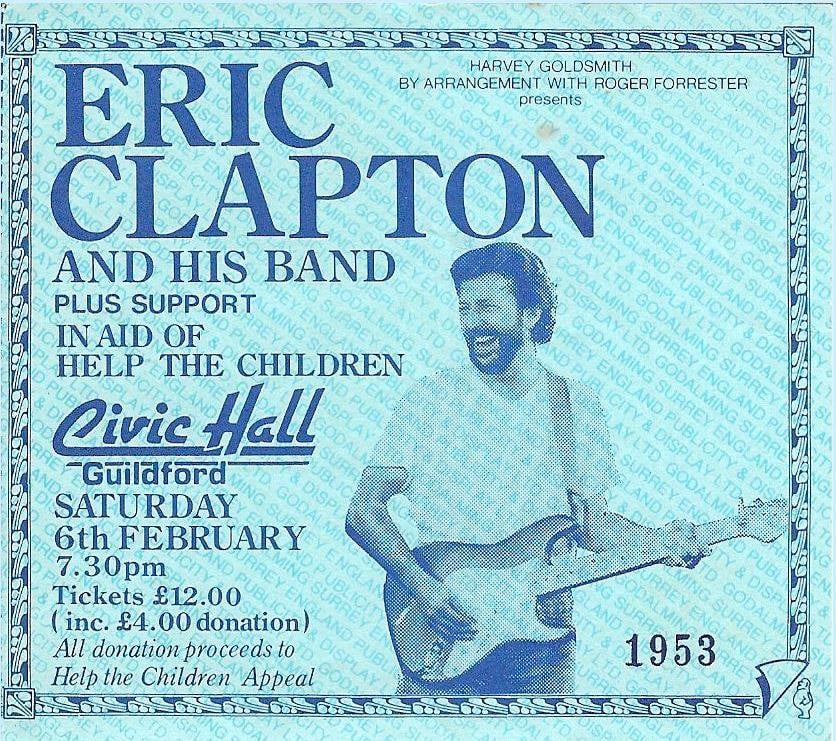
6 February 1988: Ticket #1953 for Clapton at the Civic Hall, Guildford. Picture courtesy of Chewtonia.com 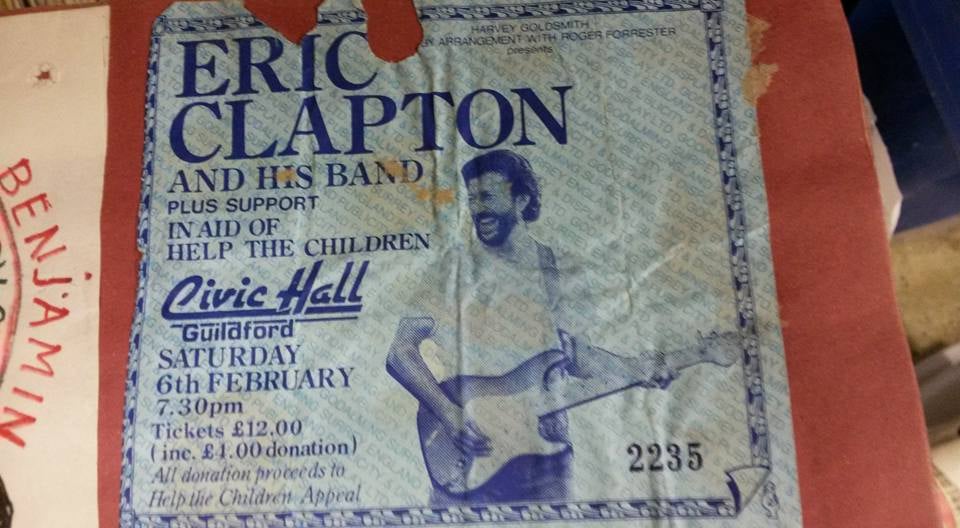
6 February 1988: Ticket #2235 for Clapton at the Civic Hall, Guildford. Picture courtesy of Ben’s Collector’s Records 
7 February 1988
Eric Clapton’s “To Infinity And Beyond 1988” was recorded at Guildford Civic Hall and released on the Mid Valley Records label [MID VALLEY 144/145] in Japan in 2002. Phil Collins Mark Knopfler, and Elton John all guested.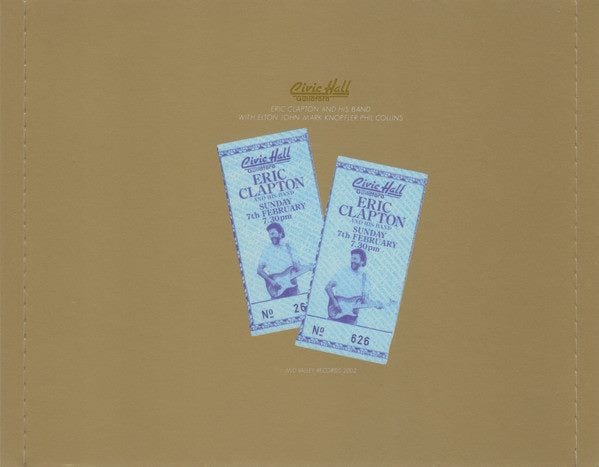
7 February 1988
Eric Clapton’s “To Infinity And Beyond 1988” was recorded at Guildford Civic Hall and released on the Mid Valley Records label [MID VALLEY 144/145] in Japan in 2002. Phil Collins Mark Knopfler, and Elton John all guested.
7 February 1988
Eric Clapton’s “To Infinity And Beyond 1988” was recorded at Guildford Civic Hall and released on the Mid Valley Records label [MID VALLEY 144/145] in Japan in 2002. Phil Collins Mark Knopfler, and Elton John all guested.
11 February 1977: Eric Clapton & Friends appearance at Cranleigh Village Hall. Courtesy of Ben Darnton and originally posted by Gary Prior in Cranleigh,Ewhurst & Surrounding Areas History.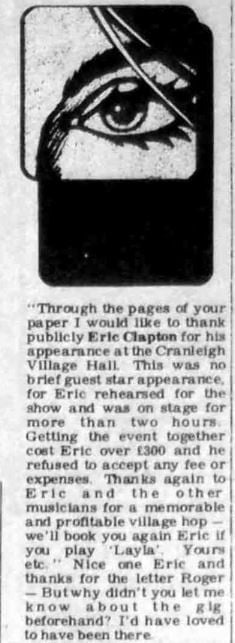
A letter to Record Mirror, published in the 26 February 1977 issue, thanking Eric Clapton for the gig at Cranleigh Village Hall. 
11 February 1977: Eric Clapton guitars picks commemorating the gig at Cranleigh Village Hall. 
11 February 1977: The sleeve for Eric Clapton’s “Timepieces Vol.II”, released in 1985, includes an image of the gig at Cranleigh Village Hall. 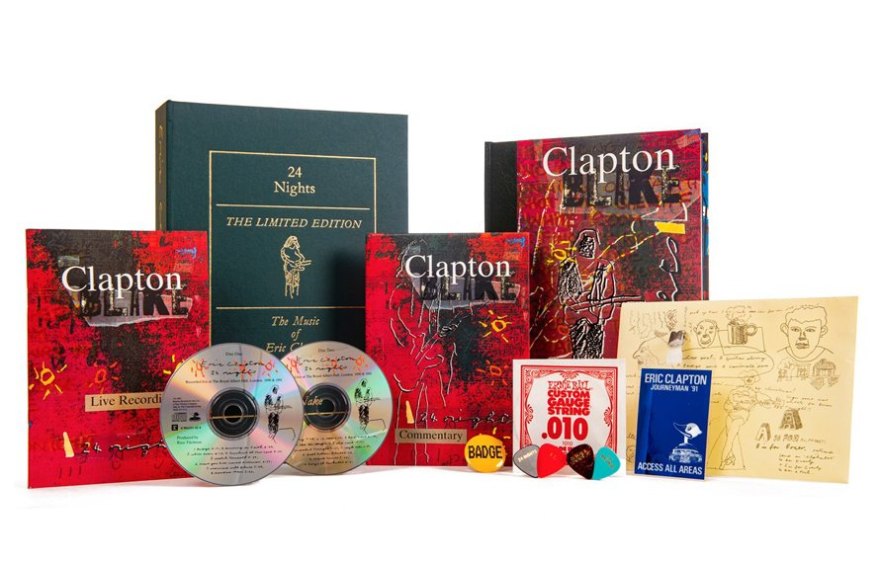
1991’s 24 Nights published by Genesis Adam Russel, Adrian Clapton, Albert Lee, Andy Fairweather-Low, Atalanta, Atalanta Ballroom, BBC Home Service, Big Town Playboys, Billy Connolly, Blind Faith, Bob Dylan, Brian Belsham, Bruce Foxton, Bruce Rowlands, Casey Jones & the Engineers, Charlie Hart, Chas n’ Dave, Chiddingfold, Chris Dreja, Civic hall, Columbia, Cranleigh, Crawdaddy Club, Cream, Dave Bronze, David Brock, David Gale, DEne Mason and Friends, Derek and the Dominoes, Derek Taylor, Elton John, EMI, Eric Clapton, Ewhurst, Farnborough, Foreigner, Frank Mead, Gary Brooker, Genesis Publications, Geoff Whitehorn, George Harrison, Giorgio Gomelsky, Graham Cooper, Graham Parker, Graham Parker & The Rumour, Guildford, Guitar Club, Henry Spinetti, Jackie Lynton's Happy Days Band, Jimmy Page, Joan Armatrading, John Mansfield, John Mayall & The Bluesbreakers, Kenney Jones, L’Auberge, Lake, Leon Russell, Leon Russell and The Shelter People, London, Malvern, Merger, Muddy Waters, No Stiletto Shoes, Origin, Our House, Paul Brady, Paul Jones, Peter Blake, Phil Collins, Philip Hayward, Poker, Rainbow Theatre, Richmond, Ricky Tick Club, Ripley, Roger Swallow, Ronnie Lane, Royal Albert Hall, Sonny Boy Williamson, Stuart Reffold, Swallow Tiles, The Harvest Moon Club, The Jam, The Picnic at Blackbushe, The Rolling Stones, The Roosters, The Royal, The Stoke Hotel, The Yardbirds, Tom McGuinness, Top Topham, Town Hall, Village hall, Winter Gardens, Woking -
The Halfway House, Heath End

The Halfway House (also known as The Blues Tavern) was located on the main road between Farnham and Aldershot at 64 Farnborough Road, Heath End.
In the ’80’s Colin “Hoppy” Hopkins and Edna were the tenant landlords, and the attached building on the right was an Elvis Presley memorabilia shop. In the early ’90s it became the Blues Tavern and was taken on by Tina Zedd and Peter “Zedd” Zmitrowicz.
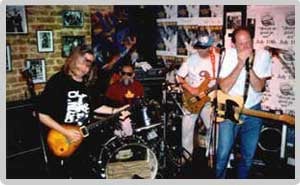
Cryin’ Out Loud playing at The Blues Tavern, Farnham in 1994. Cryin’ Out Loud appeared at The Blues Tavern in ’94. A 13-year-old Ant Forbes, of Vex Red, played guitar at a jam night at the Blues Tavern with Denny Laine of Moody Blues and Wings on keyboards. Simon Davis’ Univarium played the venue on 2 February ’96; and John Otway appeared on 11 July and 19 December that year, while the Larry Miller Band played on New Years Eve ’96. That same year Matt Taylor also played the venue.
John Otway appeared again on 24 April ’97 and Simon Townshend performed there, after his stint as second guitarist with The Who for their Quadrophenia Tour, in August. As the bell tolled for the Blues Tavern, Mindwire and Chesney Hawkes were among artists that played at the Save The Blues Tavern Festival on 18 January ’98. But it didn’t work, and the tavern was sold in April 1998. Tina would go on to open The Blues Tavern II.
It was demolished in the late ’90s with Friars Court, 12 one bed flats, constructed on the site. At the time of closure, it was known as the Blues Tavern, but for most of its life it was The Halfway House.
Gallery:
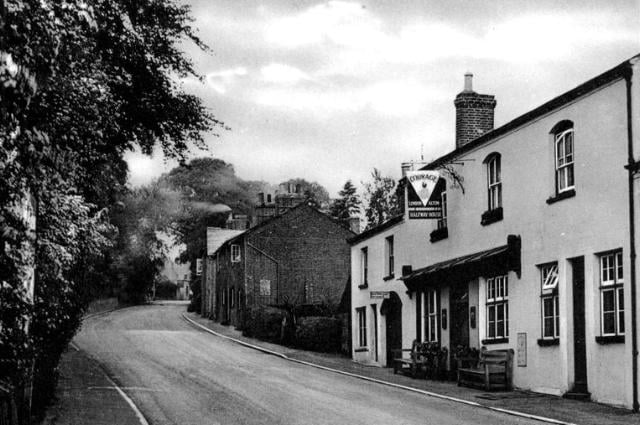
Halfway House, Heath End c’80’s 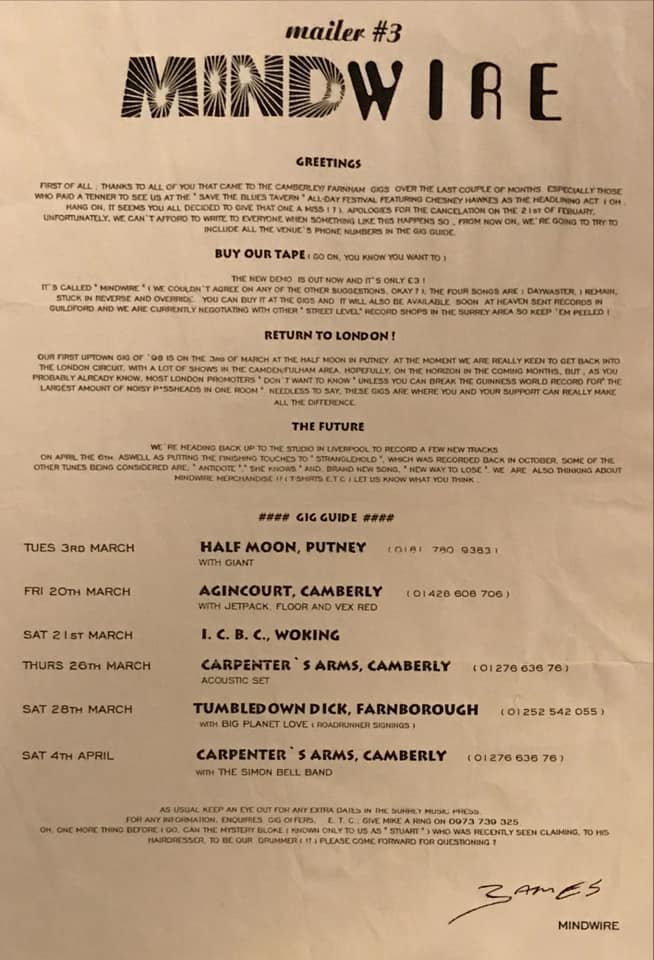
Mindwire Mailer #3 from 1998. Source: Mindwire 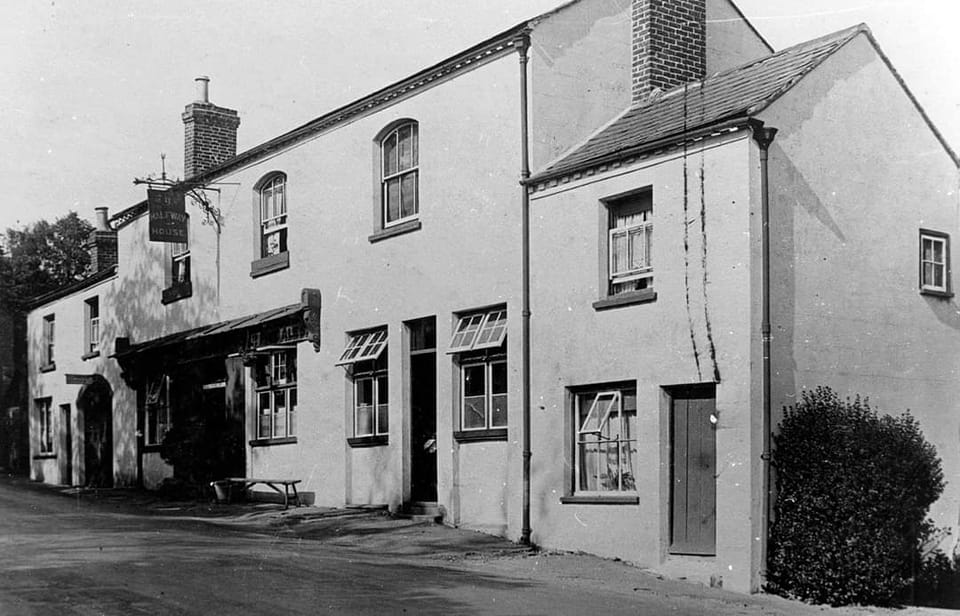
The halfway House, Heath End Source Barry Cole via Ant Forbes, Chesney Hawkes, Colin Hopkins, Cryin’ Out Loud, Denny Laine, Edna Hopkins, Friars Court, Heath End, John Otway, Larry Miller Band, Matt Taylor, Mindwire, Moody Blues, Peter Zmitrowitz, Simin Townsend, Simon Davis, The Blues Tavern, The Blues Tavern II, The Halfway House, THe Who, Tina Zedd, Univarium, Vex Red, Wings -
Undercurrents

(c’80-’82) Stuart Manson (keyboards), Neil Pyzer (sax), Ian Gibson (bass), and Gerald Eyton-Jones (drums).
Ex-T. T. Transmission / Crosswinds keyboardist Manson joined forces with Pyzer, Gibson (ex-The Brain Trust) and Eyton-Jones to form a quartet influenced by the likes of Jeff Lorber. Undercurrents’ jazz fusion could be heard predominately around the Aldershot / Farnham area with The West End Centre, Aldershot being a regular venue. At some point they supported Morrissey-Mullen at the West End Centre. Fellow ex-T. T. Transmission and Crosswinds member Mark Terry joined them sometime later.
Terry and Manson were also in Spliff Riff together. Pyzer has since enjoyed a playing career with Spear of Destiny, Geno Washington and now with The Selector.
Gallery:
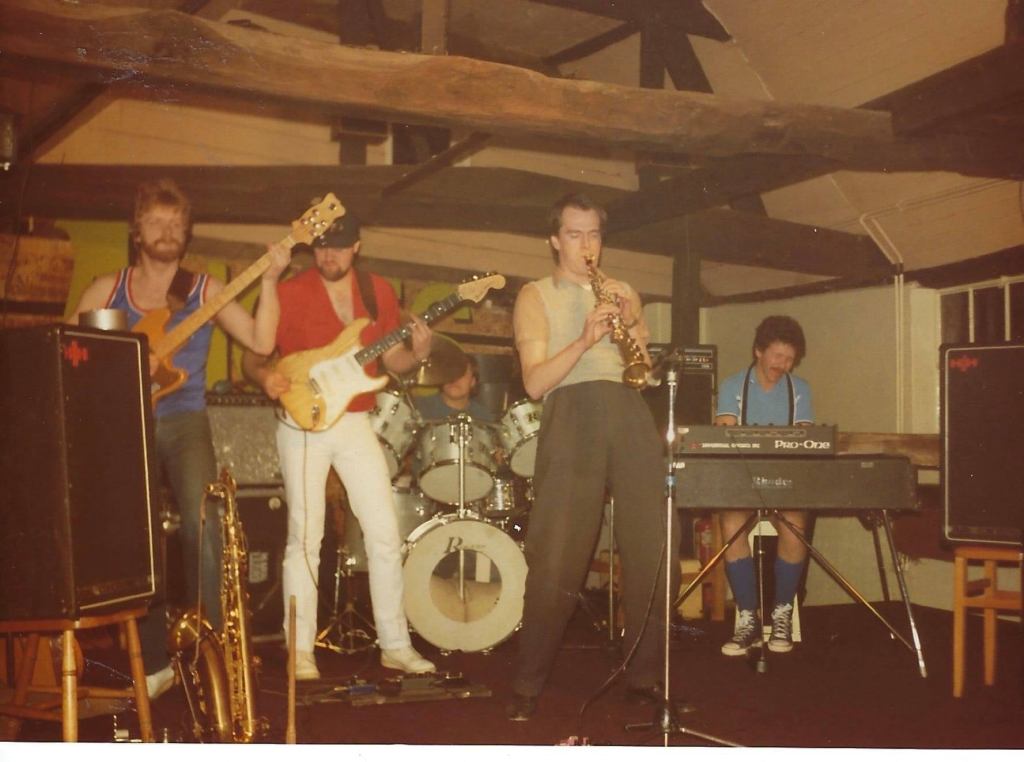
Undercurrents at Angie’s, Wokingham c’82. Picture courtesy of Mark Terry -
Jasmine Pie

(c’76-’78) Neil Pyzer (sax / vocals), Richard Atterbury (guitar / vocals), Nic Whitehouse (bass / vocals) and Gerald Eyton-Jones (drums).
This Godalming based band won the Surrey heat of Melody Maker’s Rock/Folk Contest 1977 held on 7 May ’77 at the University of Surrey, Guildford and the subsequent South of England heats held at the Marquee, London. The final was at Fairfield Hall, Croydon on 26 June ’77 and featured Cado Belle, Steve Adams, Paul Goodman, Richard Piper, Hokum Kavana, Mike Waller, Breaker, Girl, Jack Easy, Joe’s Diner, Roger the Cat, Six Hand in Tempo, Six of One, Staa Marx, and Tiger Lily, along with Jasmine Pie who regrettably did not win. ’77 was also the year the band played at Guildford Lido.
Liz Hall joined the band as dedicated vocalist sometime in late ’77 / early ’78. On 14 April ’78 the band headlined the Wooden Bridge, Guildford, with Brandenburg in support. Ten days later they were headlining again at The Junction held at Bunters, Guildford with The Reaction opening the show.
Pyzer, who also performed with UBz, White Gold and Bloodhound, would join Crosswinds after Jasmine Pie and has since appeared with Keith James and enjoyed a playing career with Spear of Destiny, Geno Washington and now with The Selector.
Gallery:

26 June 1977: Jasmine Pie performed at the National Final’s of Melody Maker’s Rock / Folk Contest. Picture courtesy of Gerald Eyton-Jones 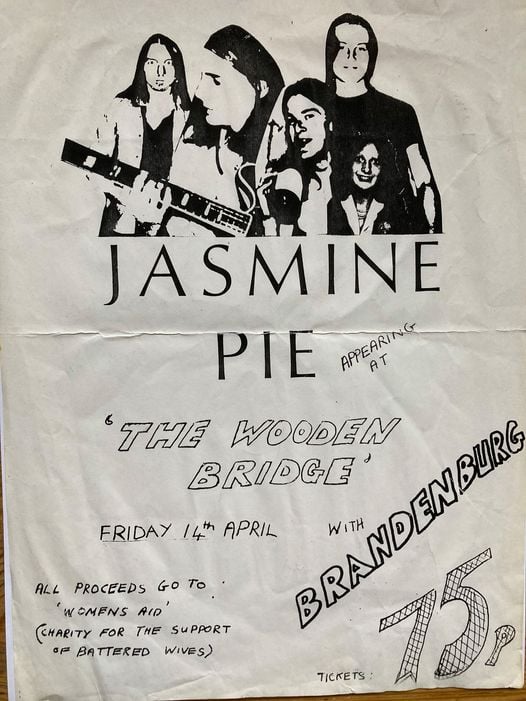
14 April 1978: Jasmine Pie, supported by Brandenburg, were at The Wooden Bridge, Guildford. Picture courtesy of Gerald Eyton-Jones Bloodhound, Brandenburg, Breaker, Bunters, Cado Belle, Crosswinds, Croydon, Fairfield Hall, Geno Washington, Gerald Eyton-Jones, Girl, Godalming, Guildford, Hokum Kavana, Jack Easy, Jasmine Pie, Joe’s Diner, Keith James, Liz Hall, London, Marquee, Melody Maker, Mike Waller, Neil Pyzer, Nic Whitehouse, Paul Goodman, Richard Atterbury, Richard Piper, Roger The Cat, Six Hand in Tempo, Six of One, Spear of Destiny, Staa Marx, Steve Adams, The Junction, The Reaction, The Selector, Tiger Lily, UBz, University of Surrey, White Gold, Wooden Bridge -
Under Cover Sex Gods
(c’95) Vis The Spoon (guitar / vocals), Dan Hiscocks (drums) and ?
The Under Cover Sex Gods played just the one gig as far as we are aware, entertaining the punters at The Cricketers, Westfield on 13 May ’95.
Gallery:

13 May 1995: The Cricketers, Westfield hosted the Under Cover Sex Gods. Picture courtesy of Daniel Hiscocks


Human beings takes me back to 1981. Followed them all over the Surrey reading area for a year a great band and 3 good guys playing well written songs of the era. I wish john Tim and steve well what ever they are doing now. Should reform for a few shows just like Oasis but do the wooden bridge.
LikeLiked by 1 person