
-
Detour Records

Detour started as the result of an enforced life detour for founder David “Dizzy” Holmes. Enroute from Midhurst to the National Scooter Rally, Skegness in ’84; Holmes hit a flooded section of motorway and smashed into a crash barrier. 18 months later he left the spinal injuries treatment centre at Odstock Hospital, Salisbury bound to a wheelchair.
An avid record collector before the accident he dove in deeper. Holmes placed an advert in Scootering Magazine to sell some unwanted vinyl and sold the majority and before long he’d a regular customer list. His mail order vinyl business was born.
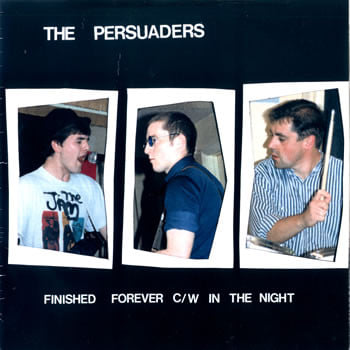
Detour Records [DR001]: The Persuaders’ Finished Forever / In the Night sleeve front In 1992, The Persuaders, from Margate, sent Holmes a demo tape and a few months later 300 copies of Finished Forever/In the Night [DR001] were released in January ’93 – Detour Records first release. They sold well, indicating a market for mod influenced music. That same year Detour released DR002 through to 009.
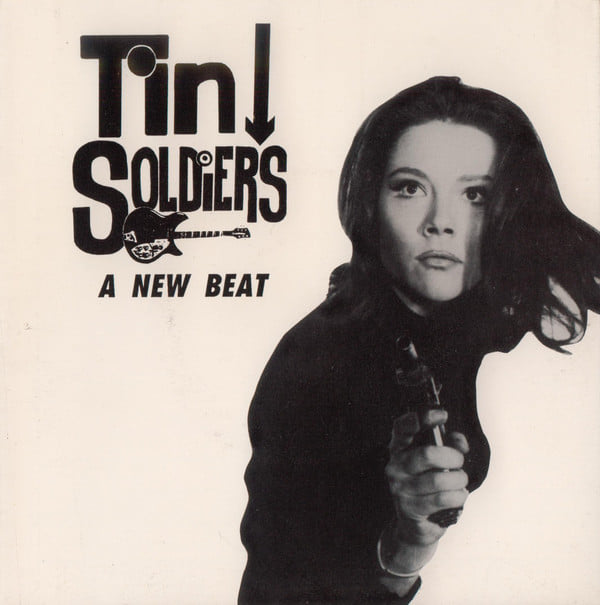
Detour Records [DR002]: Tin Solders’ A New Beat’ / Girlfriend & Get Up and Go sleeve front. The second release [DR002] was the one and only single by Hartlepool’s Tin Soldiers, which was pressed by SRT.

Detour Records [DR003] from 1993: Front sleeve for The Direction’s double A-sided Yesterday / The Kids Wanna New Direction. DR003 was Lewisham based The Direction’s second single, the double A-sided Yesterday / The Kids Wanna New Direction, and their only release on Detour. Tania ? joined Detour Records and handled the business side of the label / mail order sales (not Holmes’ forte), while Holmes focused on the records.
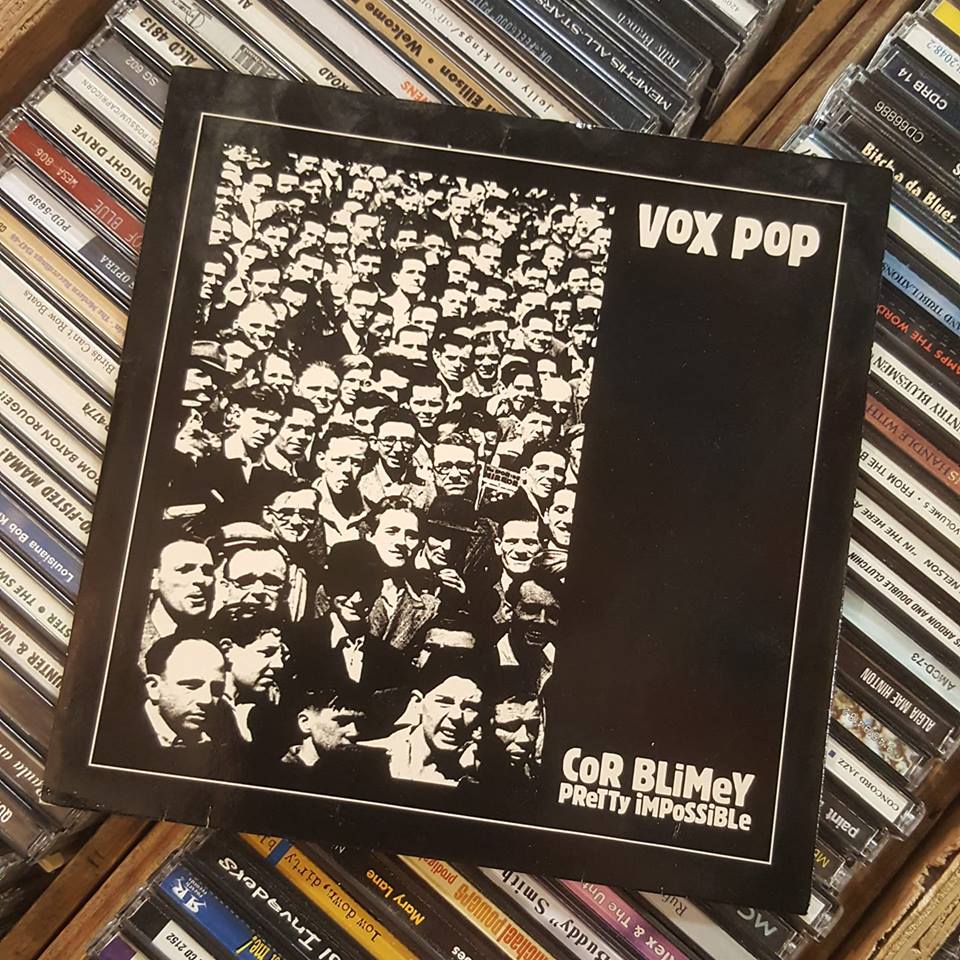
Detour Records [DR007] from 1993: Front sleeve of Vox Pop’s Cor Blimey / Pretty Impossible. Picture courtesy of Ben’s Collectors Records Woking’s own Vox Pop recorded a number of tracks at Earth Terminal Music in June ’93 with Cor Blimey! and Pretty Impossible, both produced by Luke Baldry along with the band, making it onto 7″ vinyl as Detour Records’ double A-sided DR007. Pretty Impossible would go on to appear on The Farnborough Groove and the Japan only release of a various mod artist compilation titled Kickstart! (TFCK-87501) on the Flavour of Sound label in ’95. When Record Collector magazine published an article on Dizzy Holmes’ Detour Record label, they called out Vox Pop’s Cor Blimey! as indicating a direction away from the typical mod sound of the label.
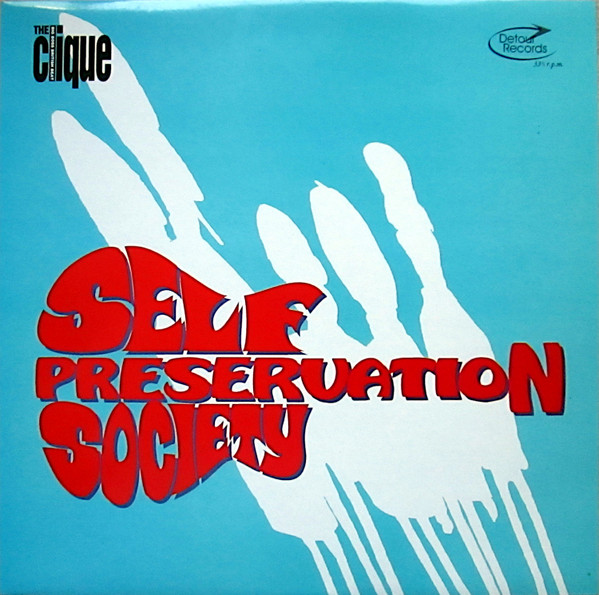
Detour Records [DRLP003] from 1995: Front sleeve for The Clique’s LP Self Preservation Society. In ’95, Philip Otto (bass), Trevor French, (vocals), Dom Strickland (organ), Bruce Brand (guitar) and Matthew Braim (drums), the five members of London based mod psych band, The Clique released The Self Preservation Society [DRLP003]. This was the band’s first and last studio album, after eight years as a unit. Engineered and produced by Liam Watson, part of it was used on The Big Breakfast. Selling over 5000 copies, with artwork by Dom Strickland, it is Detour’s best seller and saw The Clique showcase for the One Little Indian label. Mark Lamar would later have them do a Live in Session slot on Radio 1 on Mark Radcliffe’s evening show and he wrote the sleeve notes for the farewell single released on Detour in ’98.
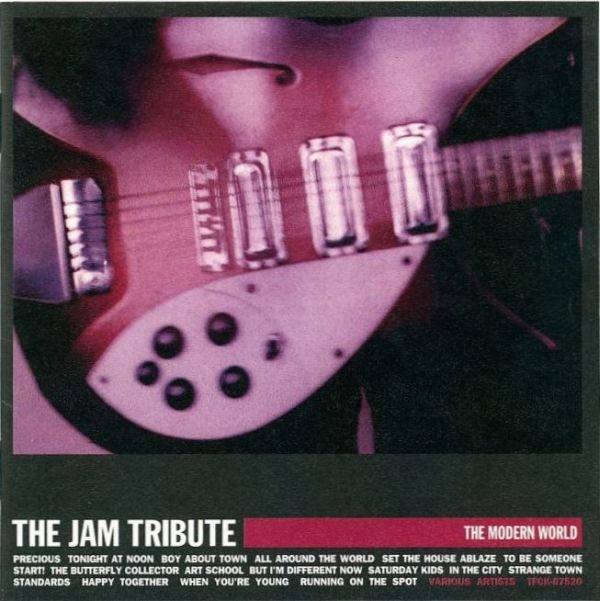
In ’96, co-produced with Detour Records, Flavour of Sound released The Jam Tribute the Modern World compilation album – again in Japan only – which carried Vox Pop’s Running on the Spot. This was re-released (PREACH008CD) in the UK on the Rhythm Vicar label in 2001 with two additional tracks.
Today, Detour has morphed into several labels (Detour, Paisley Archive, Biff Bang Pow, Bin Liner, and Only Fit for The Bin) and the mail order catalogue is online only. It is also be worth mentioning that just about everything Detour has released is available to stream or download from your favorite digital service.
Holmes is still active in the music arena and with Tania also runs the Bulldog Rescue Trust.
Gallery:
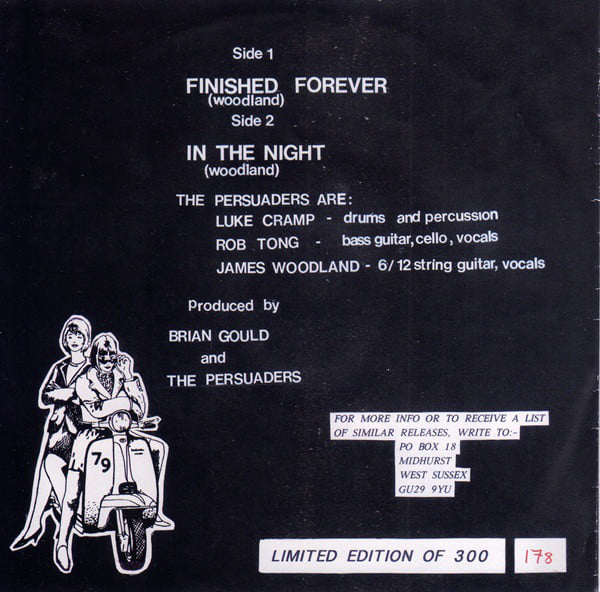
1993’s [DR001] Back sleeve The Persuaders’ Finished Forever / In the Night [DR001] 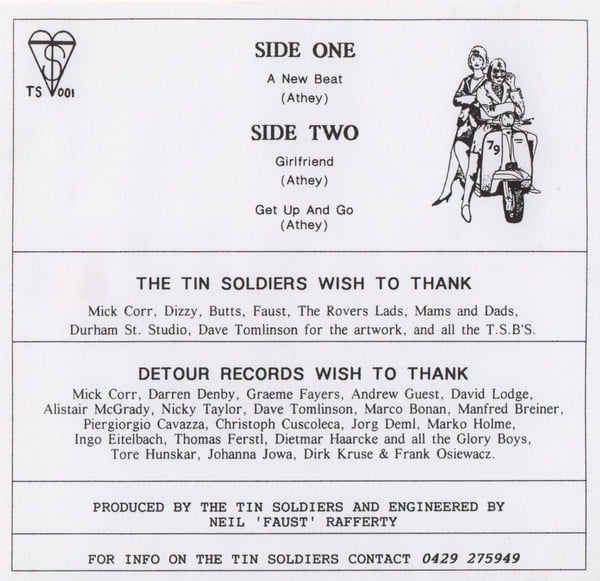
1993’s [DR002]: Tin Solders “A New Beat’ / “Girlfriend” & “Get Up and Go” sleeve back. 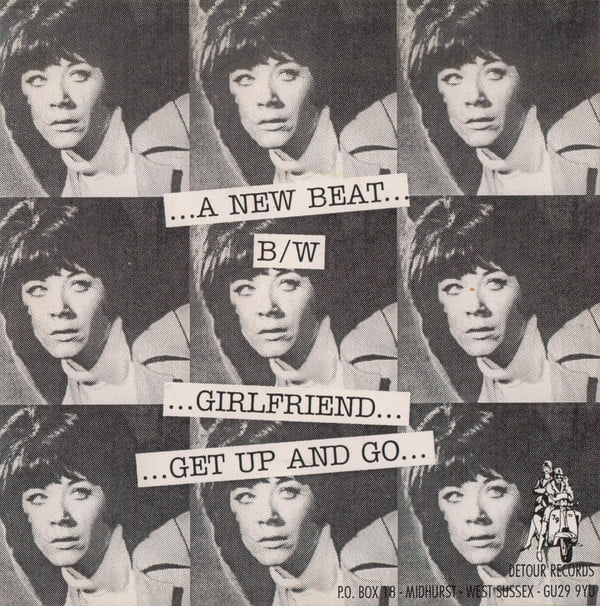
1993’s [DR002] Inner sleeve Tin Solders’ A New Beat / Girlfriend & Get Up and Go 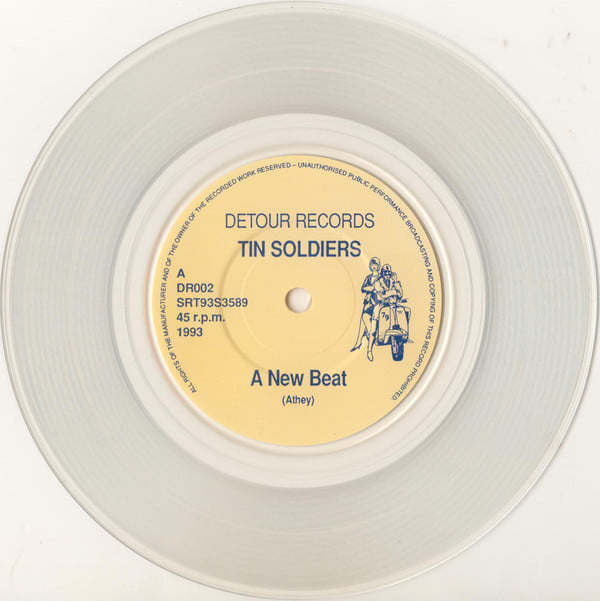
1993’s [DR002]: A-Side Tin Solders A New Beat / Girlfriend & Get Up and Go 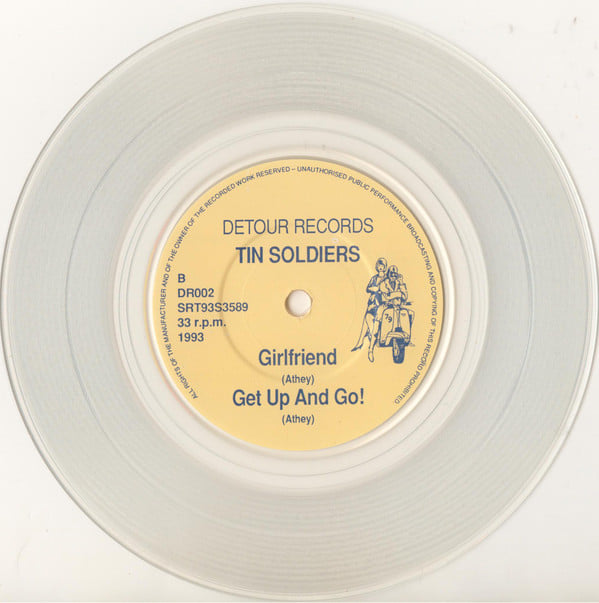
1993’s [DR002]: B-Side Tin Solders A New Beat / Girlfriend & Get Up and Go 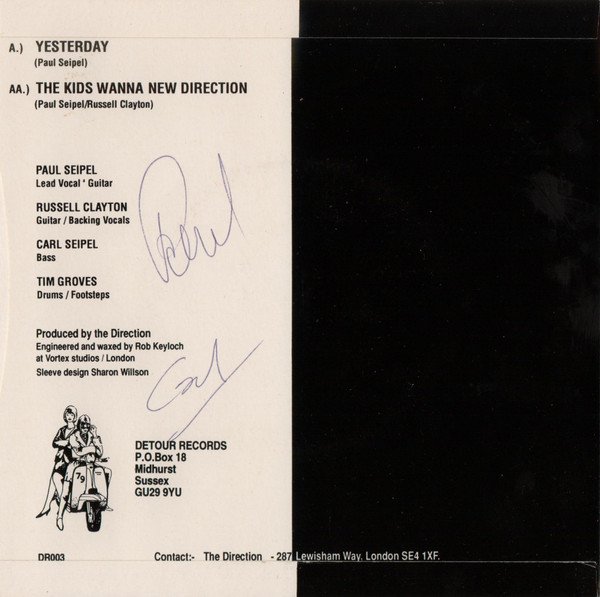
1993’s [DR003] – Sleeve back of The Direction’s Yesterday / The Kids Wanna New Direction. 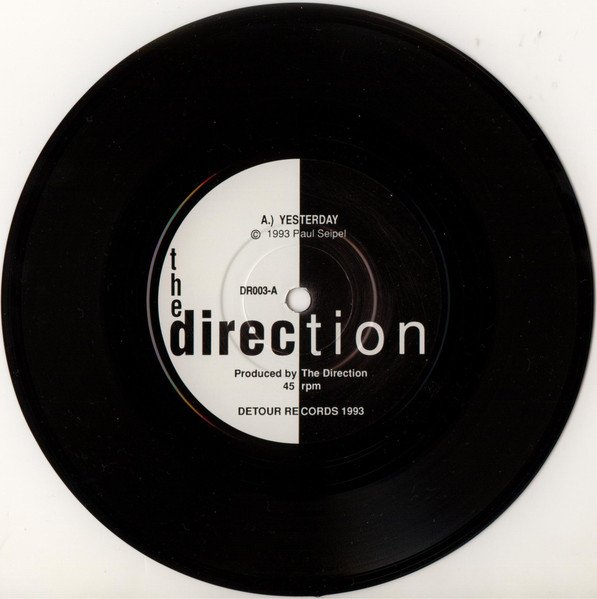
1993’s [DR003] – A-Side of The Direction’s Yesterday / The Kids Wanna New Direction. 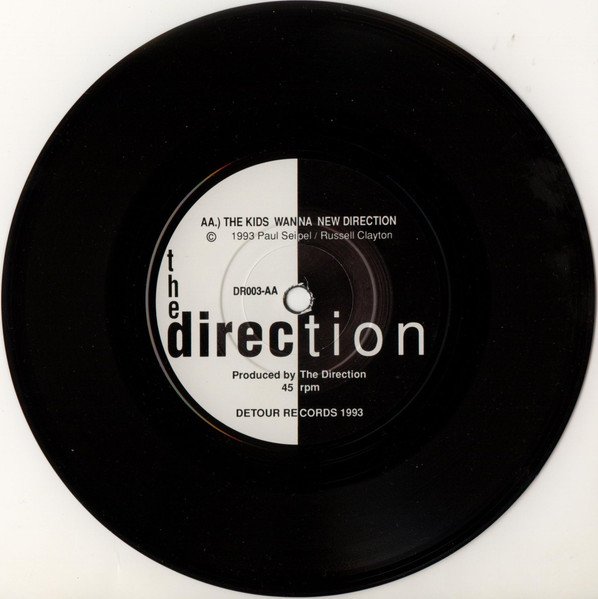
1993’s [DR003] – AA-Side of The Direction’s Yesterday / The Kids Wanna New Direction. 
1993’s [DR007] Back sleeve of Vox Pop’s Cor Blimey / Pretty Impossible. Picture courtesy of Ben’s Collectors Records 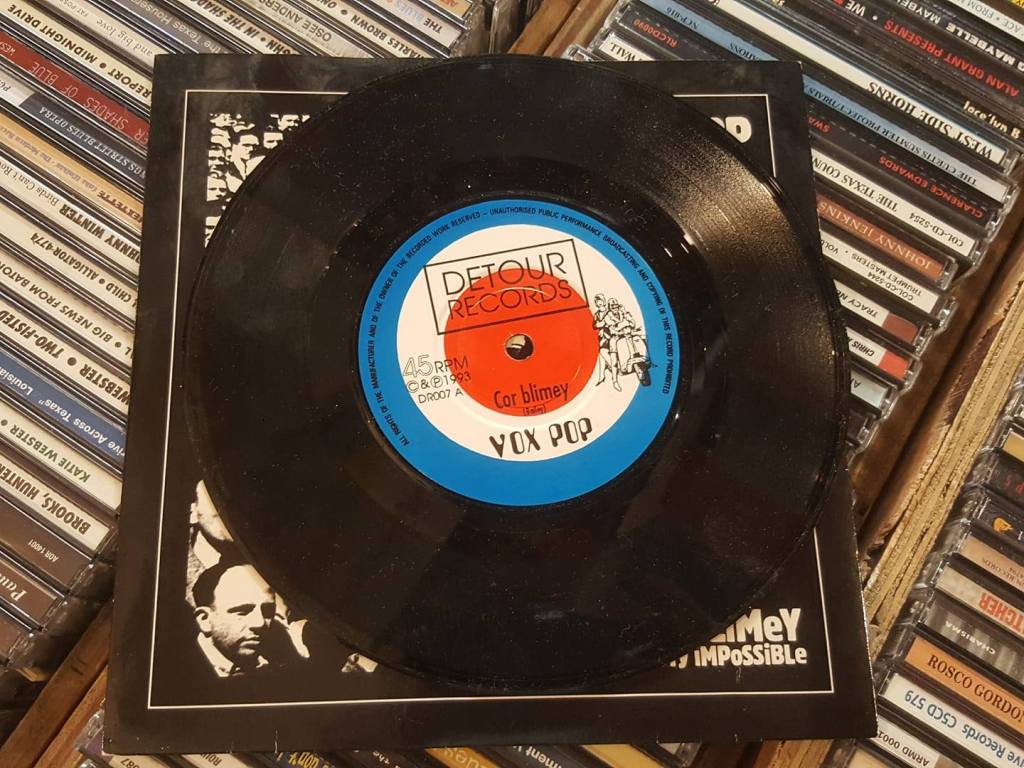
1993’s [DR007] Side-A of Vox Pop’s Cor Blimey / Pretty Impossible. Picture courtesy of Ben’s Collectors Records 
1993’s [DR007] Side-AA of Vox Pop’s Cor Blimey / Pretty Impossible. Picture courtesy of Ben’s Collectors Records 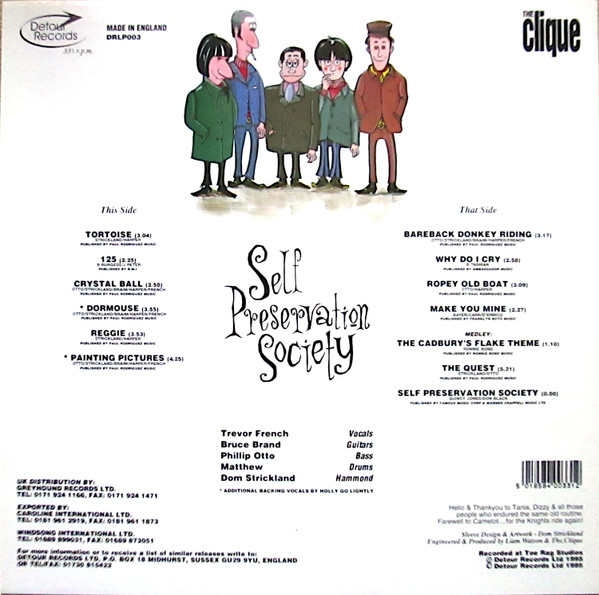
1995’s [DRLP003] – Sleeve back of The Clique’s LP Self Preservation Society. 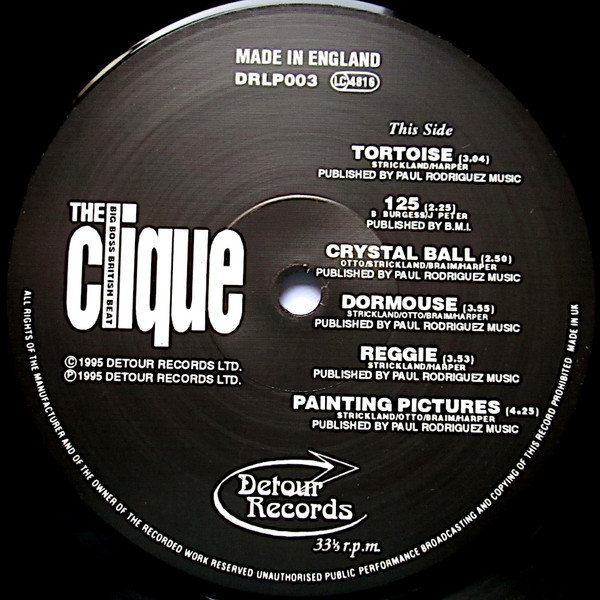
1995’s [DRLP003] – A-side of The Clique’s LP Self Preservation Society. 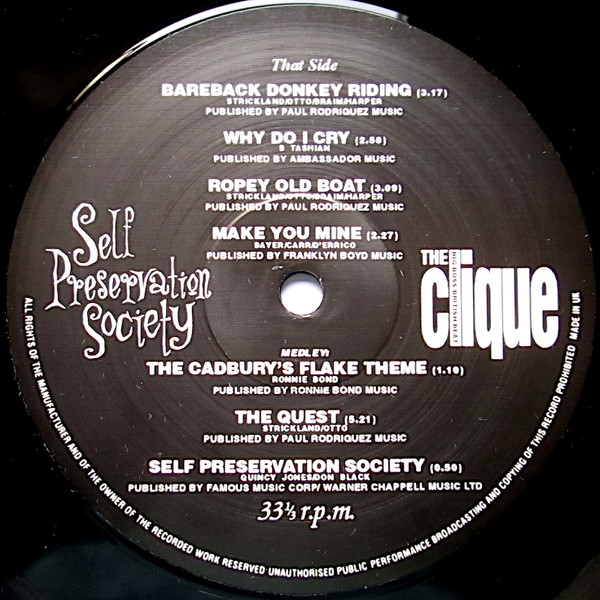
1995’s [DRLP003] – B-side of The Clique’s LP Self Preservation Society. Biff Bang Pow, Bin Liner, Bruce Brand, David Holmes, Detour Records, Dom Strickland, Earth Terminal Music, Farnborough Groove, Flavour of Sound, Hartlepool, Lewisham, Liam Watson, Live in Session, London, Luke Baldry, Margate, Mark Lamar, Mark Radcliffe, Matthew Braim, Midhurst, National Scooter Rally, Odstock Hospital, One Little Indian, Only Fit for The Bin, Paisley Archive, Philip Otto, Radio 1, Record Collector, Rhythm Vicar, Scootering Magazine, SRT, The Big Breakfast, The Clique, The Direction, The Persuaders, Tin Soldiers, Trevor French, Vox Pop -
The Doolahats

(c’57-’58) Claude Wilkins (guitar / vocals), Chris Arkle (washboard), Chris Winters (guitar), and Mick Cranham (tea chest bass).
This Guildford skiffle band got together in ’57. The next year Johnny Kelly (lead guitar) joined as Arkle moved to snare drum. Cranham and Winters left and Les Owen came in on bass and Micky Lampard on Guitar. Missing the truly skiffle washboard sound Stan Newman joined late in ’58. One Roger ? was also a member of the band during Newman’s tenure.
Owen got to together with a few others to form the Crescendos in the ’60’s and was later joined in the band by Kelly. Newman sadly passed, at the age of 81, in 2021.
Gallery:

The Doolahats c’58 
-
The Dennis Orchestra

(c’1916) Harry Whitworth (piano), Leslie Fly (piano) and ?.
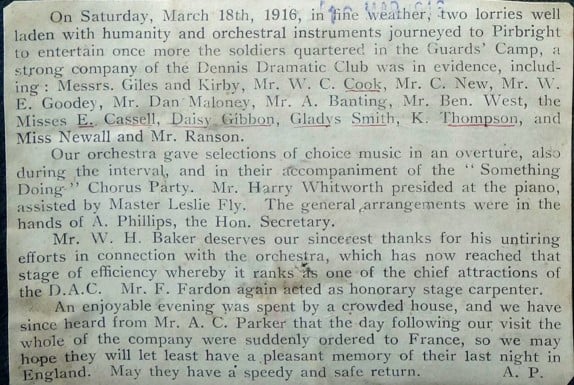
Dennis, the commercial vehicle manufacturer based in Guildford, was the town’s biggest employer and had an extensive work social program including The Dennis Orchestra. They performed at local events and for troops stationed near Guildford. They used Dennis lorries for transport.
On 18 March 1916, the orchestra travelled to Pirbright to perform to the company of soldiers stationed at Guards’ Camp, all of whom were ordered to France the next day. In the Surrey Advertiser on 2 December 1922, the Dennis Athletic Club on Woodbridge Hill, Guildford advertised their Dance Friday to be held on 8 December 1922 with music by The Dennis Orchestra, with tickets costing nine pence. The orchestra had also performed at the venue the prior Friday, the 1 December 1922.
Fly was also involved with the Co-Operative Concert Company.
Gallery:
-
Heart Management

(c’85-‘?) Heart Management was run by the father and son team of Bob and Chris Herbert out of Lightwater. In ’85, Bob took a liking to Matt and Luke Goss, friends of his son Chris and pupils together at Collingwood School, Camberley. Only 15 at the time, they had formed their own pop group called Gloss with the bassist Craig Logan. Bob offered Gloss advice and provided rehearsal space for them in his summer house; introduced them to songwriters, financed their early demo tapes and planned their route to success.
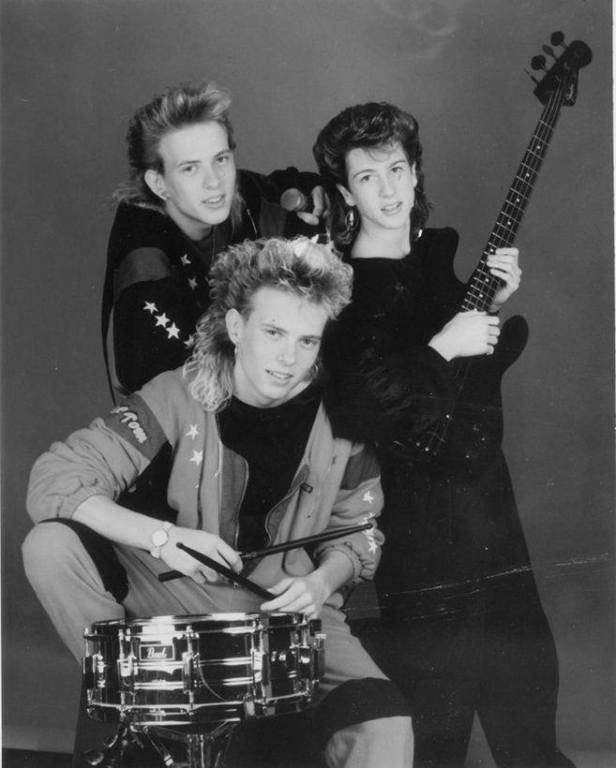
Gloss met musician, songwriter and music producer Nicky Graham, who introduced them to music manager Tom Watkins. Unimpressed, Watkins realized that he could mold the group into a boy band for the teen girl market, with Graham and Watkins writing the songs for them. Gloss split from Herbert and signed a contract with Watkins and his management company. Watkins renamed the band Bros.
Bob and Chris, now 21 years old, teamed up and Heart Management and Safe Management came into existence. Early ’94 found Bob handing out flyers in UK cities and placing an ad in The Stage which drew 600 applicants. He stated that “The whole teen-band scene at the time was saturated by boy bands like Take That and the Backstreet Boys. That was all a bit of a yawn for me and only appealed to female audiences…I felt if you could appeal to the boys as well, you’d be laughing.”
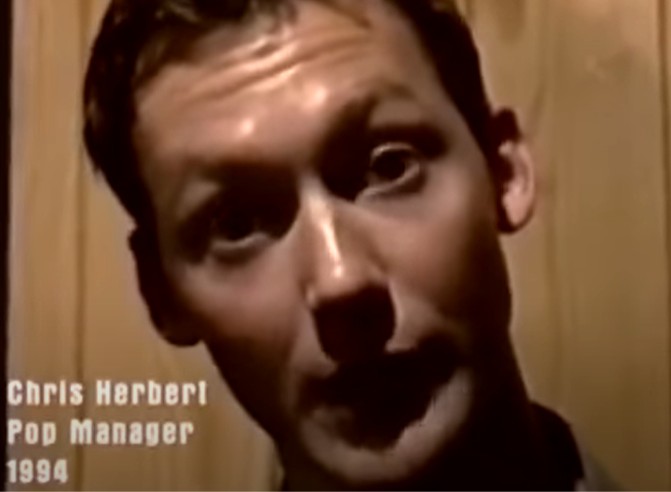
23 year old Chris Herbert of Heart Management The Herberts then, along with financier Chic Murphy – who previously managed the Three Degrees, auditioned the applicants and whittled the line-up down to Melanie Brown, Geri Halliwell, Melanie Laccohee, Lianne Morgan, and Michelle Stephenson. Laccohee was replaced almost immediately with Victoria Adams, and shortly after Morgan and Stephenson were replaced by Melanie Chisholm and Emma Bunton respectively. All five were put up in a semi-detached house in Maidenhead and rehearsed daily at Trinity Studios within the Community Centre, Knaphill.
Originally called Touch, it was during this development phase in ’94 that filmmaker Neil Davies, who’d been looking to make a documentary film about a girl group, filmed the quintet for four months at Trinity Studios and their Maidenhead domicile. There was no guarantee that the group would find success, but Davies wanted to capture the story even if it was a disaster. The group were insecure about the lack of a contract and frustrated by the direction in which Heart was steering them (dress the same and sing cover versions of other artists).

The Spice Girls purportedly shot at Trinity Studios, Knaphill Chris set up a showcase performance for industry writers, producers and A&R men in December ’94 at the Nomis Studios, Shepherd’s Bush. There was a lot of interest in the group and the Herberts quickly set about a binding contract, but all five members delayed signing on legal advice. In March ’95 they parted from the Herbert’s Heart Management and Spice, then the Spice Girls were born.
In ’97, the Herberts reverted to boy-bands and the formation and management of Five, having selected the lads from 3,000 hopefuls who’d auditioned for Bob and Chris. Heart also helped oversee the careers of Stephen Gately, B*Witched, The Honeyz, and Ben’s Brother. Chris represented Hear’Say as part of the music reality TV show, Popstars and managed all the artists from the BBC music show, Fame Academy. In 2001, Chris was awarded the Manager of the Year award by the Music Managers Forum. Chris Herbert was also the manager of Justin Edwards, aka MC Ultra, the source of 2012’s Tulisa Contostavlos sex tape.
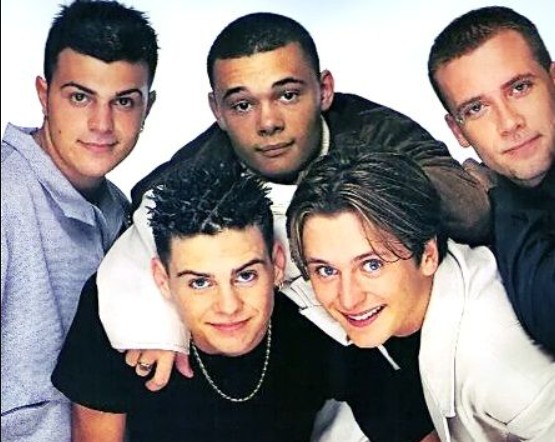
Five Bob died in a car crash in Windsor on 19 August ’99. Chris appeared in Raw Spice, the 2001 documentary about the Spice Girls, filmed by Davies back in ’94, and is still involved in the music industry.
Gallery:
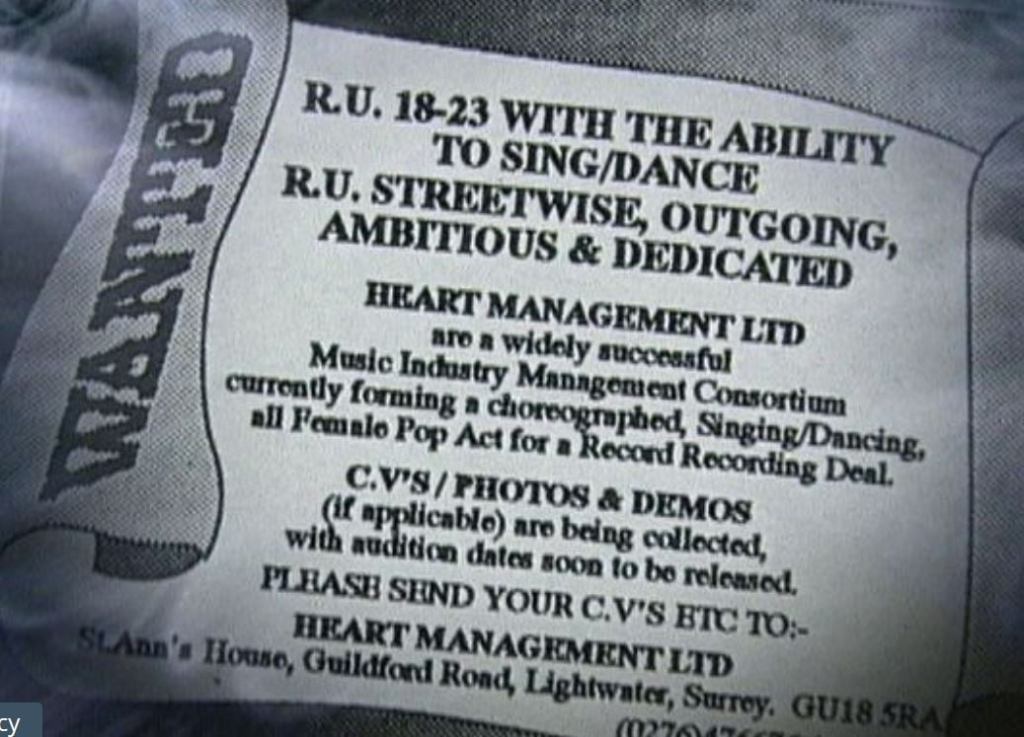
One of Heart Management’s adverts that led to the formation of the Spice Girls. B*Witched, BBC, Ben’s Brother, Bob Herbert, Bros, Camberley, Chic Murphy, Chris Herbert, Collingwood School, Community Centre, Craig Logan, Emma Bunton, Fame Academy, Five, Geri Halliwell, Gloss, Hear’Say, Heart Management, Justin Edwards, Knaphill, Lianne Morgan, Luke Goss, Maidenhead, Matt Goss, MC Ultra, Melanie Brown, Melanie Chisholm, Melanie Laccohee, Michelle Stephenson, Neil Davies, Nicky Graham, Nomis Studios, Popstars, Safe Corporation, Safe Management, Shepherd's Bush, Spice, Spice Girls, Stephen Gately, The Honeyz, The Stage, Three Degrees, Tom Watkins, Touch, Trinity Studios, Tulisa Contostavlos, Victoria Adams, Windsor -
Village Hall, Churt

After WWI 5 1/2 acres of a 10-acre site in the middle of Churt became recreation ground as a memorial to the dead. The remaining area was divided into building plots to be sold originally only to ex-servicemen. One plot of land remained unsold so Frank Mason, a local businessman, gave Churt the plot and its Village Hall; which opened in 1928.
One of the Hall’s early Trustees was local resident David Lloyd George. During WWII the Hall was used for Wartime Services and the locally stationed Canadian army held weekly dances. On 7 December ’63, The Stormsville Shakers rocked the village, returning on 25 January and 8 May ’64. In the early 60’s we know that local band The Conchords played there, and the music continues at the venue to this day.
Gallery:

The Conchords at Churt Village Hall. Source: Stephen Lindsey-Clark via Guildford Town Past & Present 
The Village Hall, Churt c’30 -
Lopez and the Waveriders

(c’79) Patrick ‘Paddy’ Carroll (bass/vocals), Clive Parker (drums), Martin Whittaker (guitar/vocals)
Parker, who’d played with rock n roll, show, and rocks bands on the Old Dean Estate including Cameo, along with Carroll had both been in The Members. Carroll being Jean Marie “JC” Carroll’s brother, who’d joined The Members in ’77.
Their band, with Whittaker, started out as The Planets. On 19 May ’79, T. T. Transmission headlined at the Technical College, Farnborough and were supported by The Planets – a purposeful juxtaposition where the Waveriders’ well performed opening was incongruous to the audience’s prog-rock leanings. There was however another band going by The Planets moniker, and they had a record deal and a manager and a fruitless argument with that manager by Parker led to a change of name.

19 May 1979: T. T. Transmission, supported by The Planets, headlined Farnborough College of Technology. Picture courtesy of Mark TerryInitially thy changed to Walkies Talkies, then going by Lopez, a moniker under which they were supposed to support Thieves on 18 December ’79 at The Tumbledown Dick, Farnborough, but to the best of our knowledge Thieves didn’t show and the support became the headliner under the longer moniker Lopez and the Waveriders, with Matrix Numbers opening the show. The poster for this gig and many of the bands’ others were surreptitiously photocopied at RAE, Farnborough where Parker worked.
The band gigged across the area including Guildford, Bracknell, Farnborough, and Reading and they supported The Members and Eddie & The Hot Rods further afield. They rehearsed in the basement of Whittaker and Carroll’s rented house in Reading, a location that led to gigs at Bones Club, Reading as well as Bulmershe College, Reading and Northeast to Oxford pubs. They also rehearsed in the hall next to Cornwallis Primary School on the Old Dean Estate, nipping to the The Highwayman, Camberley after for a drink or three.
Not long after Lopez and the Waveriders dissolved, Parker joined Athletico Spizz 80. Big Country’s Stuart Adamson then auditioned Parker in ’81 at The Members’ rehearsal room in Ladbroke Grove, London. The next day he was called on to play on demos for CBS Records and subsequently joined the band. Parker was also a member of Scary Thieves, Kingfishers Catch Fire, Holy Trinity, Barra, and Marshall Star; and toured with Nik Kershaw, Pop Will Eat Itself, Crazyhead, and Living Colour. More recently, Parker has played in The Expressway with ex-Jesus and Mary Chain guitarist and drummer, John Moore. He went on to production and management, forming the Furry Records UK label. In ’92, Parker along with Oswin Falquero and Kasie Sharp wrote and produced Pulling the Strings, which became a minor dance hit. The Camberley lad now lives in East Sussex.
Gallery:
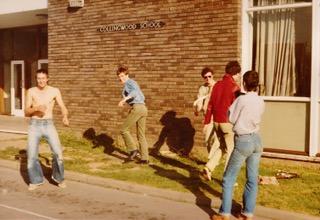
4-piece The Planets outside Collingwood School. Photo taken and courtesy of Clive Parker-Sharp 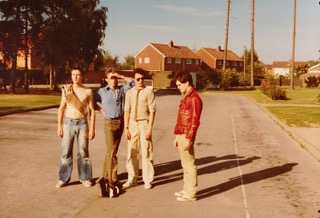
4-piece The Planets outside Collingwood School. Photo taken and courtesy of Clive Parker-Sharp 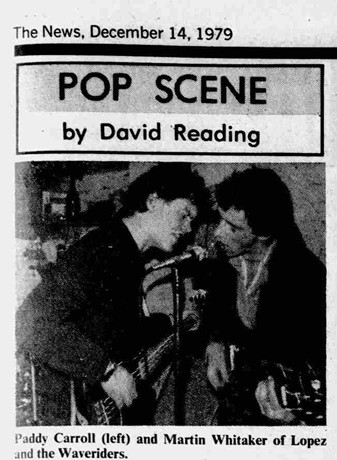
Picture of Lopez and the Waveriders in their basement rehearsal space in Reading. Photo taken and courtesy of Clive Parker-Sharp 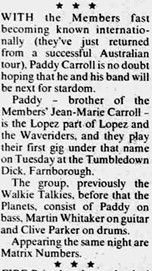
Lopez and the Waveriders clipping from Pop Scene in 14 December 1979 issue of The News. Photo taken and courtesy of Clive Parker-Sharp 
18 December 1979: Lopez and the Waveriders supported by Matrix Numbers up at the Tumbledown Dick. Athletico Spizz 80, Barra, Big Country, Bones Club, Bracknell, Bulmershe College, Camberley, Cameo, CBS Records, Clive Parker, Crazyhead, East Sussex, Eddie & The Hot Rods, Farnborough, Furry Records UK, Guildford, Holy Trinity, Jean Marie Carroll, John Moore, Kasie Sharp, Kingfishers Catch Fire, Ladbroke Grove, Living Colour, London, Lopez, Lopez & the Waveriders, Lopez and the Waveriders, Marshall Star, Martin Whittaker, Matrix Numbers, Nik Kershaw, Old Dean, Oswin Falquero, Oxford, Patrick Carroll, Pop Will Eat Itself, RAE, Reading, Scary Thieves, Stuart Adamson, T.T. Transmission, Technical College, The Expressway, The Highwayman, The Jesus and Mary Chain, The Members, The Planets, The Tumbledown Dick, Thieves, Walkie Talkies -
Co-Operative Concert Company

(c’1920) Ethel Robinson (contralto), Madame A. Watts (mezzo-soprano), Archie Fielding (comedian), Reg Gaston (humorist), Ewart W. Nicholas (barritone), and Leslie Fly (vocals / piano).
Accompanied by Fly, who was also involved with The Dennis Orchestra, on the piano, the Co-operative Concert Company performed their somewhat restrained variety shows throughout the area covered by The Guildford & District Co-operative Society, which was established in 1891.
To mark the opening of the new Co-op at Woodbridge Hill, the Co-Operative Concert Company were in action on 20 February ’20 at the Church Room, Stoughton. Five days later, on 25 February ’20, the group were the musical portion of a ‘concert-meeting’ regarding education in Guildford at the Borough Hall, Guildford.
Gallery:

20 February 1920: Clipping dated 27 February 1920, has the Co-Operative Concert Company performing at the Church Room, Stoughton to mark the opening of the Co-op Stores branch at Woodbridge Hill, Guildford. Picture courtesy of Philip Hutchinson 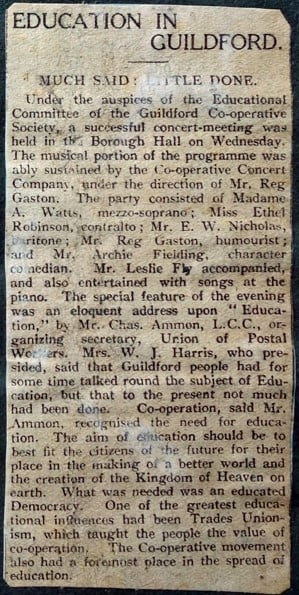
Clipping dated 3 March 1920, has the Co-Operative Concert Company performing at the Borough Hall, Guildford. Picture courtesy of Philip Hutchinson -
Poise

(c’92-93) Jo Bartlett (guitar / vocals), Danny Hagan (bass), Ches ? (drums), and Rudy ? (guitar)
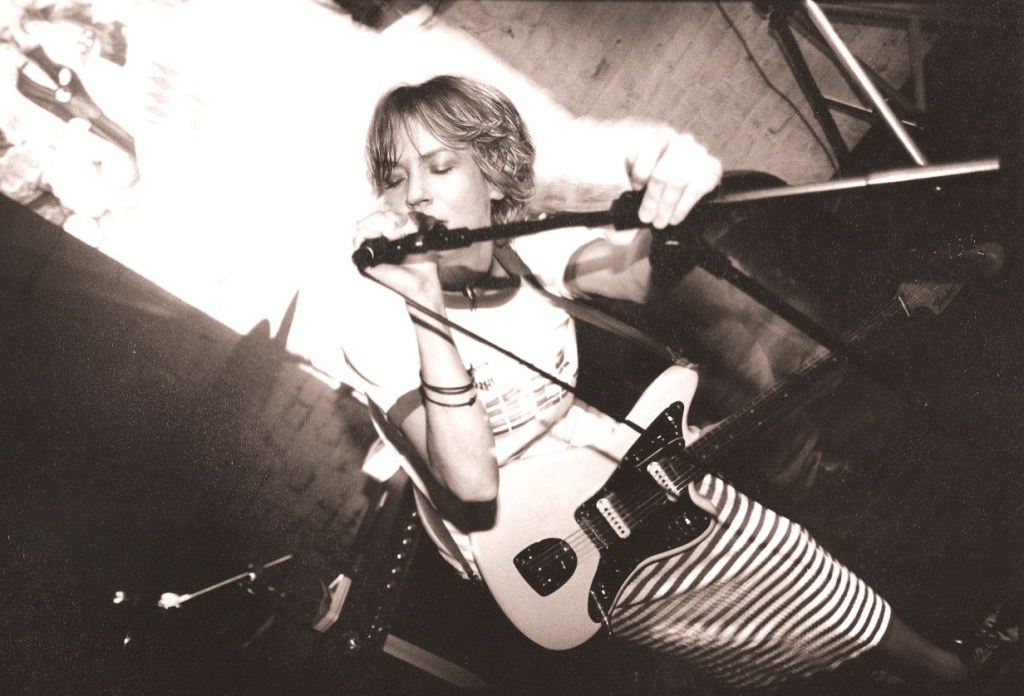
Bartlett front and centre for Poise c’93. Source: Indie Through the Looking Glass Bartlett and company may have relocated Camden, but their musical endeavors are forever embedded in the GU. In late ’92 Poise formed around Bartlett and Hagan, and although short live made a sizeable impression.
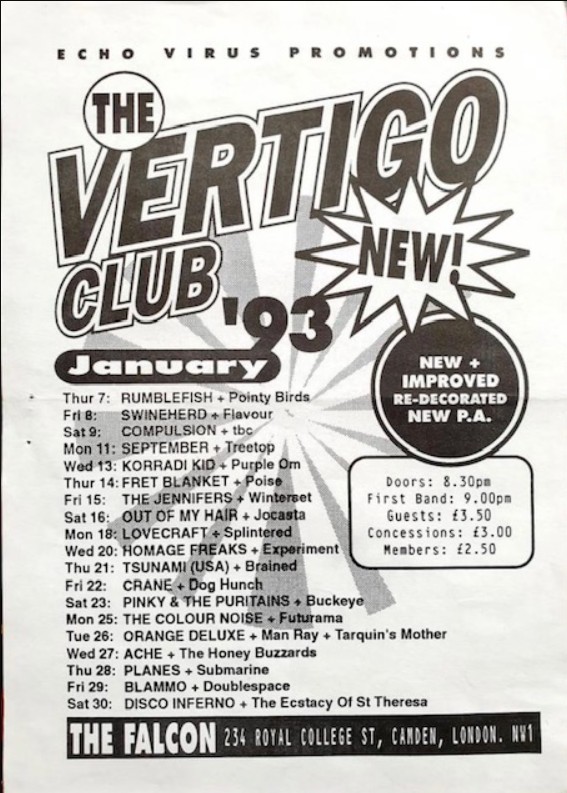
In January ’93 the band supported Fret Blanket at The Falcon, Camden. Later that month The Buzz Club, at the West End Centre, Aldershot, had Poise and Flavour supporting Cornershop on 30 January ’93. The following month, on 24 February ’93, they returned to The Falcon to support Flower Sermon.
The Buzz Club, nepotistically, welcomed the band back for a supporting role on 2 October ’93. The Afghan Whigs had been booked but they reneged and were replaced by San Francisco-based power pop band, The Loud Family. Meanwhile, Poise were supposed to be joined in support by Jacob’s Mouse, who also went back on their promises and were replaced by Elastica. The final Buzz Club ran later that year, on 4 December ’93, and Barlett and Hagan’s Poise opened for Shed Seven and headliners Dodgy; just as their band Go! Service, along with Zaz Turned Blue, had opened for The Blow Monkeys, seven years earlier, at The Agincourt, Camberley on 1 December ’85.
Gallery:
Source: Indie Through the Looking Glass 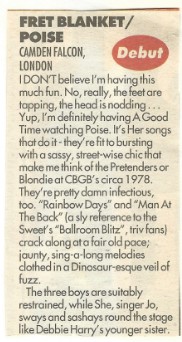
January ’93: Poise reviewed in Melody Maker’s 31 Jan ’93 issue by Michael Bonner. Source: Indie Through the Looking Glass 
30 January 1993: Cornershop, Poise and Flavour were the Buzz Club, West End Centre, Aldershot.
Lime Lizard review from early ’93. Source: Indie Through the Looking Glass 
24 February ’93: Poise were at The Falcon to support Flower Sermon. Source: Indie Through the Looking Glass 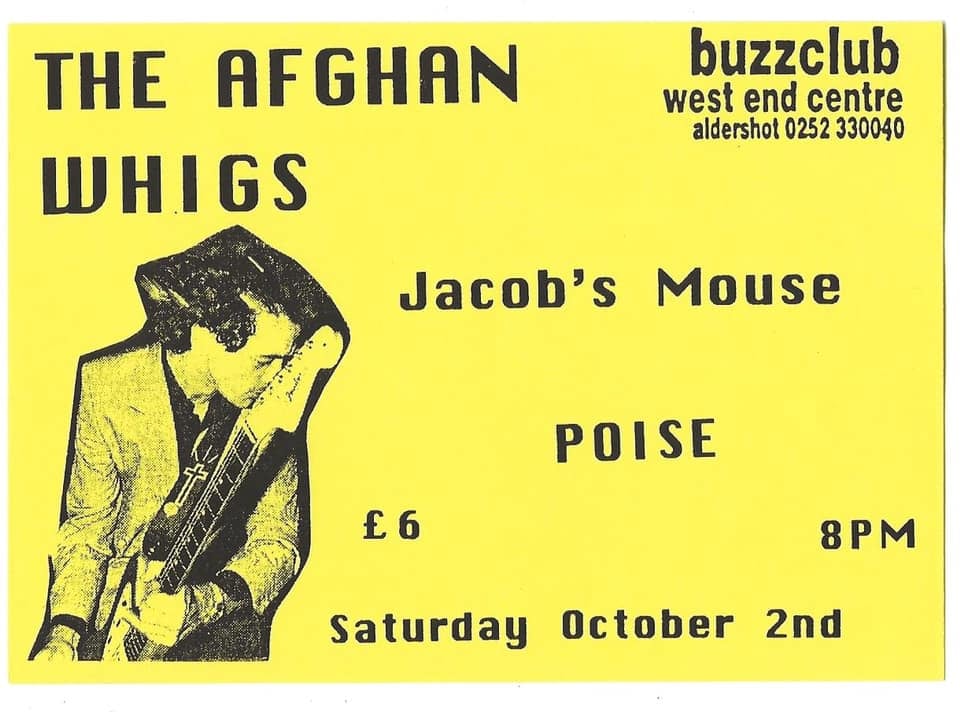
2 October 1993: The Afghan Whigs were replaced by San Francisco-based power pop band, The Loud Family, and Jacob’s Mouse were replaced by Elastica. Poise still appeared. Source: The Surrey & NE Hampshire Music Scene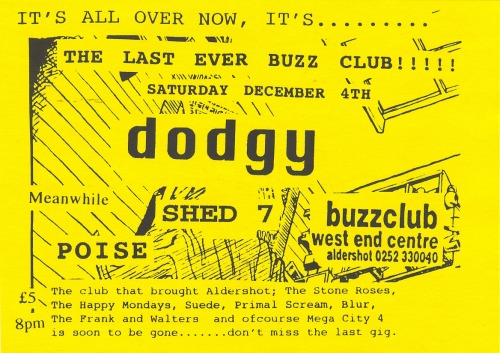
4 December 1993: Dodgy, Shed 7, and Poise. Source: Indie Through the Looking Glass 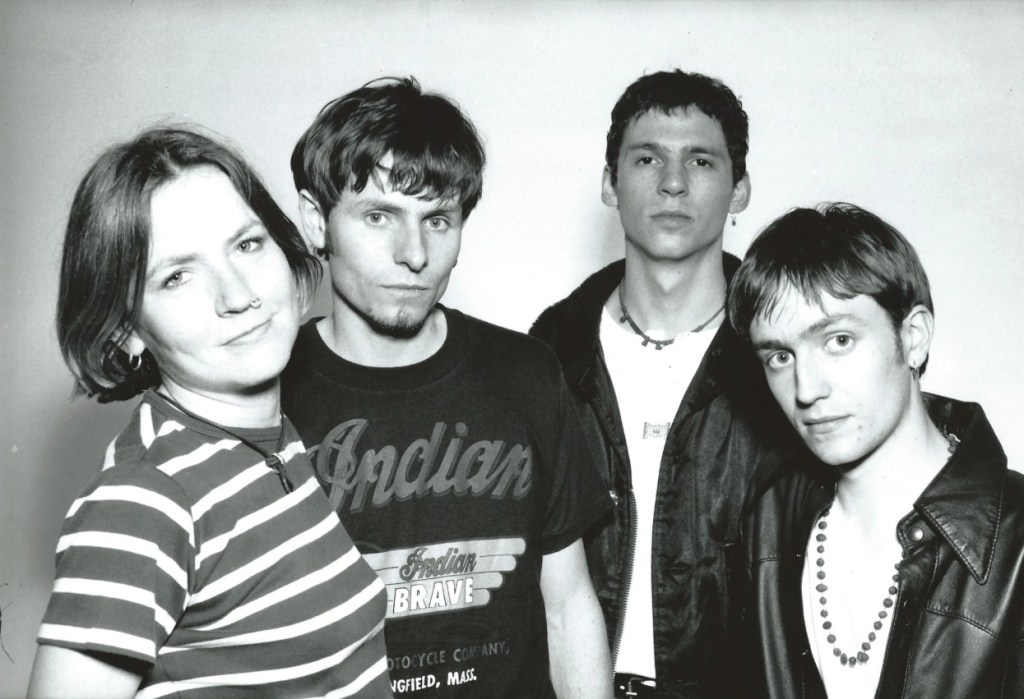
Poise. Source: Indie Through the Looking Glass Agincourt, Aldershot, Buzz Club, Camberley, Camden, Cornershop, Danny Hagan, Dodgy, Elastica, Flavour, Flower Sermon, Fret Blanket, Go! Service, Jacob’s Mouse, Jo Bartlett, Poise, Shed Seven, The Afghan Whigs, The Blow Monkeys, The Falcon, The Loud Family, The Vertigo Club, West End Centre, Zaz Turned Blue -
Last Chance to Dance

(c’83-’85) John Proctor (guitar), Paul Dando (drums), Dave Reece (guitar), Paul Thane (vocals), and Ronnie Johnson (bass).
Last Chance to Dance were formed from the ashes of several local bands in the Frimley area, primarily Out of Order, Thane and Fear of Flying. All the named origins featured the vocals and songwriting of Thane. Reece was the original guitarist in Out of Order, and had played with Proctor in The Ansell Dukes. Dando and Proctor had played in several local bands in the mid 70’s, and Johnson was the bassist in jazz funk band Crosswinds.
As Last Chance to Dance they performed mostly original songs from the three different songwriters: Thane, Reece and Proctor, mixed in with a few covers. Out of step with the musical trends of the 80’s made them hard to categorize. The Farnham Herald notoriously labelled them as “a cheerful boogie band”. They played at various venues across the Surrey/Hants borders (Farnborough, Farnham, and Bordon area), especially the Royal Oak, Hollywater; The White Hart, Frimley, and the Robin Hood, Standford.
The band were certainly at Robin Hood, Standford on 29 August ’83, and in ’83 or ’84, they supported Dave Dee, Dozy BM&T and The Tremeloes at the Recreation Centre, Farnborough. On 21 April ’84, Last Chance to Dance joined In Hill House and Zero Zero at the Easter Disco, held at the Community Centre, Frimley.
Many of the band played together again in various bands from the late 90s onwards, and continue to do so today. Proctor is currently in Debris with Phil Longden and Paul Trew.
Sadly, Thane died in January 2020.
Tracks:Gallery:
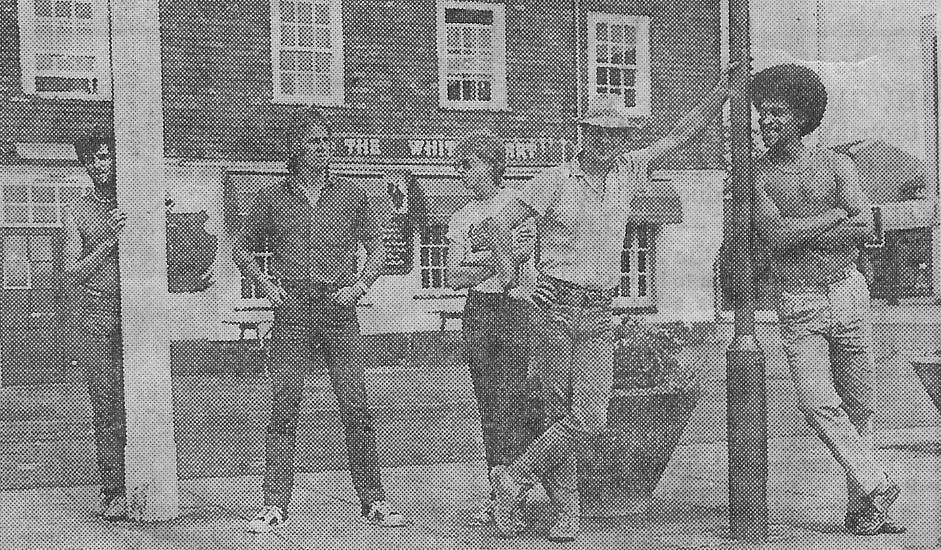
Last Chance To Dance outside The White Hart, Frimley (l-r: Proctor, Dando, Reece, Thane, and Johnson). Picture courtesy of John Proctor. 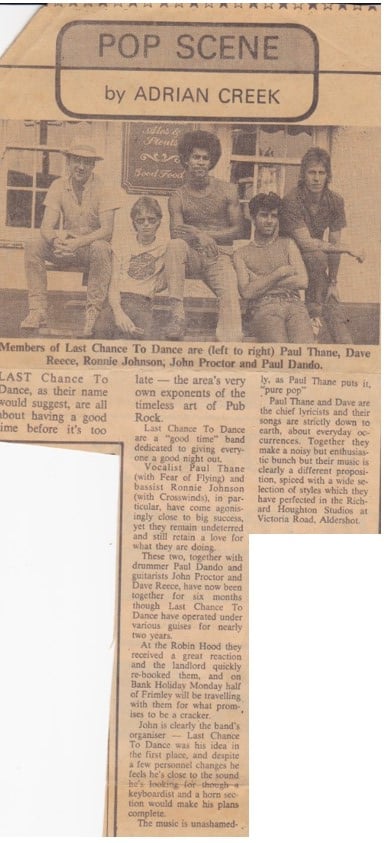
Adrian Creek features Last Chance to Dance in his Pop Scene column from the 26 August 1983 Camberley News. Picture courtesy of John Proctor 
21 April 1984: Last Chance to Dance, In Hill House, and Zero Zero played the Easter Disco at the Community Centre, Frimley. Picture courtesy of Steve Excell Bordon, Community Centre, Crosswinds, Dave Dee Dozy BM&T, Dave Reece, Debris, Farnborough, Farnham, Fear of Flying, Frimley, Hollywater, In Hill House, John Proctor, Last Chance to Dance, Out of Order, Paul Dando, Paul Thane, Paul Trew, Phil Longden, Recreation Centre, Robin Hood, Ronnie Johnson, Royal Oak, Standford, Thane, The Ansell Dukes, The Tremeloes, The White Hart, Zero Zero -
Big Muff

Neil Boyd started and wrote the Big Muff fanzine, named after the Mudhoney LP, in the early ’90’s. He was originally based in Fleet, before moving up to London. The fanzine ran to 10 issues, if you count the halves and renamed releases, and often included a flexidisc or cassette. Each included interviews and reviews which are listed below with a link to the .PDF version hosted on the www.BigMuff.org website – so you can read the whole thing or choice morsels at your leisure.
Big Muff
At a time when cut & paste meant scissors and glue and word processing was a typewriter or very early Brother WP, Boyd knocked out a 24 pages banger of pure fanzinery. It featured articles and interviews with Clare Grogan, Fat Tulips, Motorcycle Boy, Parachute Men, Patsy Cline, PO!, Popguns, Shop Assistants, and Spinning Jennys. The Flexidisc carried Fat Tulips’ A Girl Called Suicide and Spinning Jenny’s Splendid.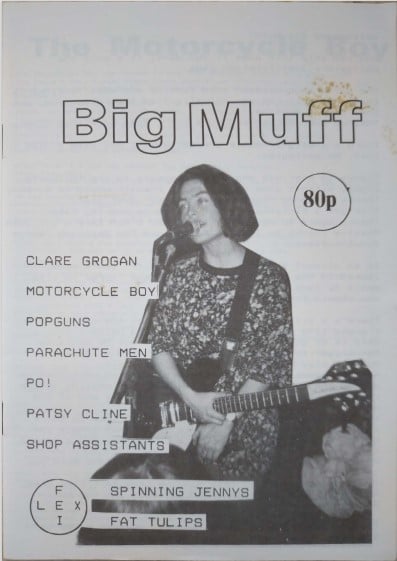
The cover of the first issue of Big Muff. No issue number Big Muff No.2
Boosted to 36-pages Big Muff No.2 hits a broad swathe of indie and unsigned bands from ’90: Bleach, Blur, Lush, Mayomberos Alive, Screaming Custard, The Bollweevils, The Charlottes, Th’ Faith Healers, The Fat Tulips, The Groove Farm, The Joyce McKinney Experience, The KLF, The Love Buttons, The Popinjays, Vicious Kiss, Who Moved the Ground?. The attached Flixidisc carried Th’ Faith Healers’ Domehead, Who Moved the Ground?’s Pretentious, The Love Buttons Banging My Head and Screaming Custard’s Ashtray.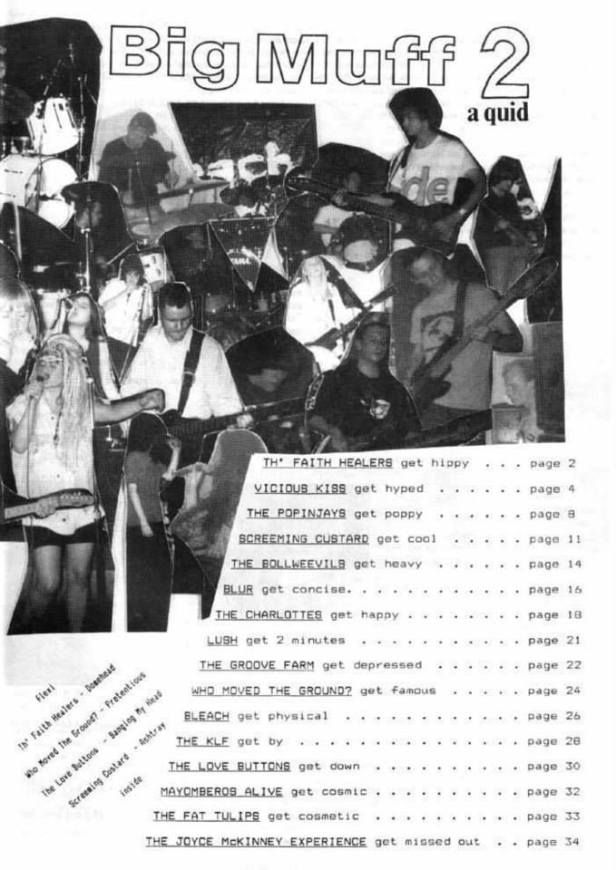
Cover for Big Muff No.2 Big Muff No.3
A rather condensed 16 pages, but it did come with a 22-track compilation tape. There were interviews with The Butterflies, Bubble-Eyed Dog Boys and Daisy Chainsaw; and articles on Heavenly and Babes in Toyland. It also carried a short review of Pretty Green and Frayed Edge‘s gig on 28 March ’91 at The George, Ash Vale by none other than Sid Stovold of Who Moved the Ground? It’s also the first-time reviews appear for releases by A.C. Temple, The Infant God, Ruth’s Refrigerator, Love Dolls, Shlonk, Hush Palace, The Chemistry Set, Nautical William, plus a look at some other fanzines.
The cover for Big Muff 3. Big Muff No. 3 1/2
Boyd himself states that there “must have been in a lull when there were less bands around. It’s kind of half-sized.” It’s still 8 pages bigger that No.3 but didn’t come with a compilation cassette or flexidisc. It still packs a punch with interviews with The Primitives, Whipped Cream, Hole, A.C. Temple and Ween. The review section is much expanded, covering releases from Flood, Tonyall, Phobia, Orzic Tenticles, Some Have Fins, Thin White Rope, Our American Cousins, Jello Biafra, Spitfire, Dead Allison, Trotsky Icepick, Poopshovel, SKAW, Skin Yard, Big Drill Car, No Man, The Cranberries, Chemical People, Flower, The Frames, Great Northern Electrics, Nine Inch Nails, Upsidedown Cross, Young Fresh Fellows, Basinger, Ramblin’ Johnny Stomachpump and The Village Idiots, Big Sun, Pop Am Good, Beat Happening, Hayfoot Strawfoot, Blind Justice, Imaginery, and Spasmodics, as well as a couple of compilations including the Guilford band focused Parafornia ’91.
The cover for Big Muff 3 1/2. Big Muff No.4
Boyd had moved to London by the time No.4 was [published and this may be the reason it focused on a number of American bands who’d visited the UK in the proceeding months. It continued the expanding trend with 32 pages dedicated to interviews with Action Swingers, Blake Babies, The Wedding Present, Our American Cousins, Sunshot, Dharma Bums, Young Fresh Fellows and Zu-Zu’s Petals; and articles about Nina Hagen and The Emotionals. But it was once again Flexidisc free…but the review section literally covers everything Boyd was sent after No.3 1/2 – it’s exhaustive – with his assessment of releases from: The Hair & Skin Trading Company, The Leaving Trains, Fairfield Parlour, Big Wheel, Gobblehoof, Main, Headcleaner, The Death Folk, Sun Dial, Love Battery, Afghan Wigs, theMonkeywrench, Robin Casinader, This is Serious Mum, Jack Brewer Man, The Bedflowers, Endino, Chemical People, All, King Missile, Ed Kuepper, Sproton Layer, Cod, This Replica, Rollins Band, Spitfire, Swans, Jellystone Park, The Marmite Sisters, Trains and Boats and Planes, Love Blobs, Sun Dial, Lydia Lunch, Buffalo Tom, Chicken Scratch, The Daytrippers, Terminal Power Company, Jacobs Mouse, Spinners, 100 Days Like This, Chainsaw Kittens, Dillan Dance, Godflesh, Band of Susans, Moist, Float, Cruel Frederick, The Spectrum Zero, Machines of Loving Grace, Calamity Jane, Roachmill, No FX, The Tony Head Experience, The Hypnotics, The Dylans, Slunk, Passing Clouds, The Mabuses, Nikki Sudden, Moonflowers, The Aints, Hungry I, Pray TV, Dash Rip Rock, Gallon Drunk, Hard-Ons, Daisy Chainsaw, The Bollweevils, The Would Be’s, The God Machine, The Fish John West Reject, Maria Anjelica, Violet Town, American Music Club, Edsel Auctioneer, Darkside, Green Magnet School, Six Finger Satellite, Come, Ozric Tenticles, and Melting Eskimos; plus a number of compilations, of course. Then there are gig reviews for Blowfish and Huggy Bear.
The cover for Big Muff 4. Big Muff No.5
A ‘mediocre issue’ according to Boyd, but the Flexidisc was back with tracks from the Action Swingers and Love Blobs. The cover featured the London home of Big Muff, Boyd’s bedroom in Clapham. But Big Muff was getting the attention of labels press agents, and this saw a number of interviews with Headcleaner, Heavenly, The Scum Pups, Ed Kuepper, Henry Rollins, Milk, Pavement, Senseless Things, All and Antenna, some of which were perhaps were pushed by these PR pros. There is also an interesting piece on The College Music Journal seminar in New York with God Is My Co-Pilot, Velocity Girl, Best Kissers in the World, Holy Rollers and Th’ Faith Healers. But it’s the seven pages of often acerbic one-liner reviews that really take you on a time trip and test your memory and have you undertaking quick Google, covering releases from: Bettie Serveert, Poverty Stinks, The Wanadies, Bad Actors, Tabitha Zu, The Flesh Eaters, Pat Snear, Chainsaw Kittens, Tumbleweed, Polyphenus, Whipping Boy, Blowfish, Beat Happening, Vertigo, Weird Sex, Lovehappy, Lunachicks, Dillon Fence, Naked Truth, Presents of Mind, Buffalo Tom, Carter USM, Sunshot, Poppinjays, Sprinkler, Codeine, Mercury Rev, Scissormen, Monster Zero, Supersuckers, Crazy Alice, Headcleaner, Billy Childish, Passing Clouds, Earwig, Rubicon, Buffalo Tom, Ned’s Atomic Dustbin, Whipped Cream, Eggstone, Freefalling, Peach, Mint 400, Strangelove, Bark Psychosis, Come, China Drum, Neurosis, Daisy Chainsaw, Antenna, No Man, The Haywains, Space Cowboys, Whipped Cream, This Perfect Day, Rein Sanction, Smashing Pumpkins, Cudgels, Young Gods, Hyperhead, Walt Mink, Seconds Out Round One, Mudhoney, Naked i, Juliana Hatfield, Overwelming Colorfast, Afghan Wigs, Poverty Stinks, Eggstone, Ultraviolence, Big Ray, Throwing Muses, Strangelove, Razorblade Smile, Gorgeous Space Virus, James T Rao, Nevertheless, Musical Chairs, Her Tears, Parasites, Our American Cousins, Chainsaw Kittens, Action Swingers, Wat Tyler, The Chameleons, Sunshot, Foam, Sun Dial, Tumblweed, Belly, Radiohead, Seaweed, Cerebral Corps, Hypnolovewheel, X-Tal, The Beastie Boys, This Perfect Day, Freefalling, Cats Pav, Blind Mr Jones, Surgery, Alice Donut, Swineherd, Bel Canto, Flop, Drop Nineteens, Juliana Hatfield, and Antenna.
The cover for Big Muff 5. Big Muff No.6
Described by Boyd as the riot grrl issue, he’d also reportedly stopped letting press agents influence him. No.6 carried interviews with Velocity Girl, Even as We Speak, and Credit to the Nation; an article about Huggy Bear; and the flexidisc gave us tracks by Drugstore and Ventilator. The review section still stretched to six pages, but with fewer one line disses and a little more mainstream, giving us Boyd’s impression of releases from: Hole, Lois, Revolver, Sugar Shack, Mother Goose, Thin White Rope, Mega City Four, PJ Harvey, Cows, Fastbacks, Radial Spangle, Pavement, Antenna, The Fall, Hearts Throbs, Truly, Solace, Lighthouse, Ice-T, Laurels, Hazel, Rocket from the Crypt, Furnace Face, Nice, Gallon Drunk, Animals That Swim, Swineherd, Creaming Jesus, Molly Half Head, Bridget, Maxine, Common Language, DOA, Seefeel, Th’ Faith Healers, Ringmaster, Skyscraper, Sunshot, Young Fresh Fellows, Vanilla Traintrack, Steroid, American Music Club, Blood Sausage, Sudanese Witch Hunt, Dreamscape, Avocado Baby, Capital Wow, Witchdocters, Junk Orange, Sandira, Sloan, Superchunk, Earth, Walkabouts, Crane, Madder Rose, Gumball, Scaredycat, Flinch, Trumens Water, God Machine, ZuZu’s Petals, Osmium, Mint 400, G.W. McLennan, Fastbacks, Chia Pet, Janitor Joe, Delicious Monster, Waking Hours, Pram, Belly, Lovechild, Unsane, Lovechild, Grenadine, Fifth Column, and Lois. Plus there were a smattering of compilations reviews, that included Snakebite City Vol.1.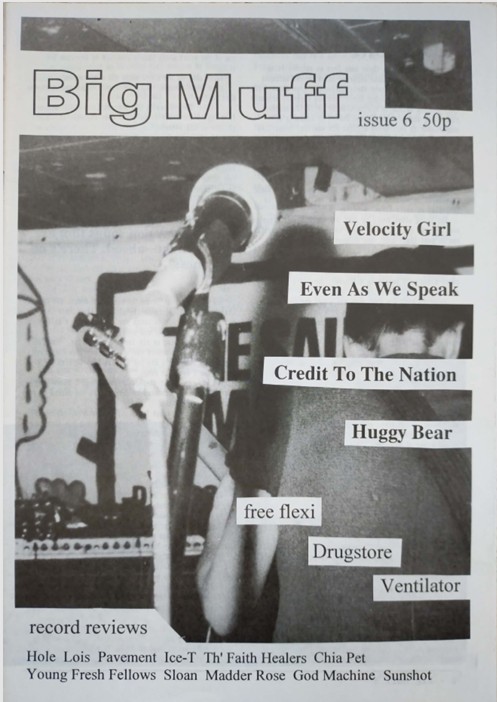
The cover for Big Muff 6. One of Us Should Remove the Shades No.8
There was no No.7, although technically No.6 was No.7, and Boyd changed the fanzines name to One of Us Should Remove the Shades, taken from the French film Subway. There were also changes in style in an attempt to get away from what he described as ‘a factory-produced image.’ The record reviews were now the “pull out and throw away” centre pages called “the shit” section – A dig at the agents who were sending records his way. There were interviews with Pram, Luscious Jackson, Madder Rose, Drugstore, Trumans Water and The Muffs. The attached flexidisc carried tracks by Peach and Flinch. The shit covered, with often just a star rating, way too many releases to list. There was also a letter from Andrea of Garden of Delights.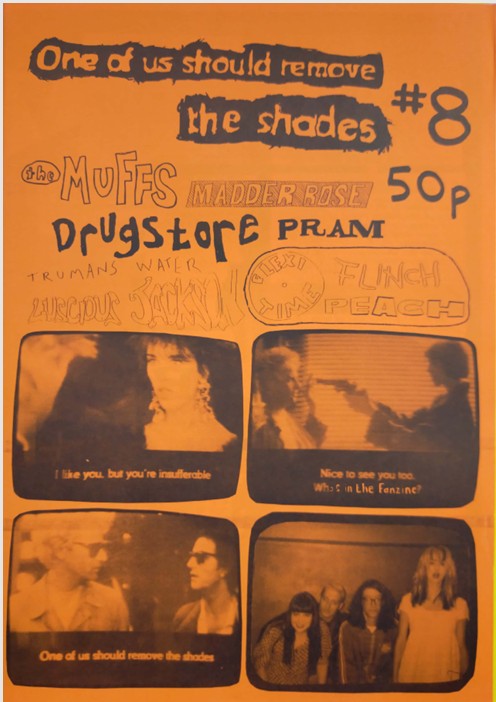
The cover for One of Us Should Removes the Shades No.8 One of Us Should Remove the Shades No.9
The double flexidisc issue, was only 16-pages, but was packed with gig reviews, forgoing the interviews of prior issues, covering Madder Rose at Dingwalls, Camden on 24 June ’94, Tripmaster Monkey, Helium at Dublin Castle on 11 July ’94, Cuckooland and Xerox Girls at the West End Centre, Aldershot on 9 July ’94; God Is My Co-Pilot; and Emperor Julian and 18th Dye at Russell Arms on 22 July ’94; and a very long record review section, that does include a rather nice synopsis of Aldershot’s Who Moved the Ground?’s The Chase / What’s That single; and once again as a centre pullout.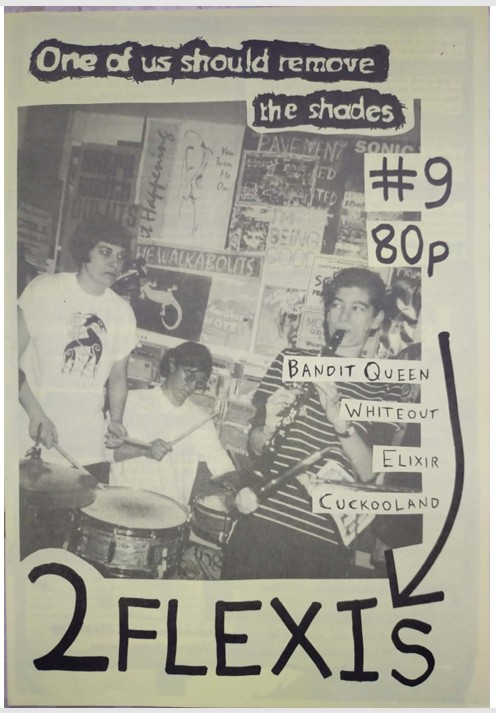
The cover for One of Us Should Removes the Shades No.9 Dog Eared No.10
There was a considerable gap between No.9 and No.10, Dog Eared, Boyd’s latest moniker for his ‘zine, and a return to form, crammed into 14 pages, rekindled by the Go-Go’s!!! In addition to the Go-Go’s, he looked at Persecution Complex, Pink Kross, Yummy Fur, there’s an interview with Butterfingers by Clive Gedge, he of the Waaaah! fanzine, a review of the Slampt label’s Electric Jet Mission compilation, The Muffs, Sky Cries Mary, and Cub.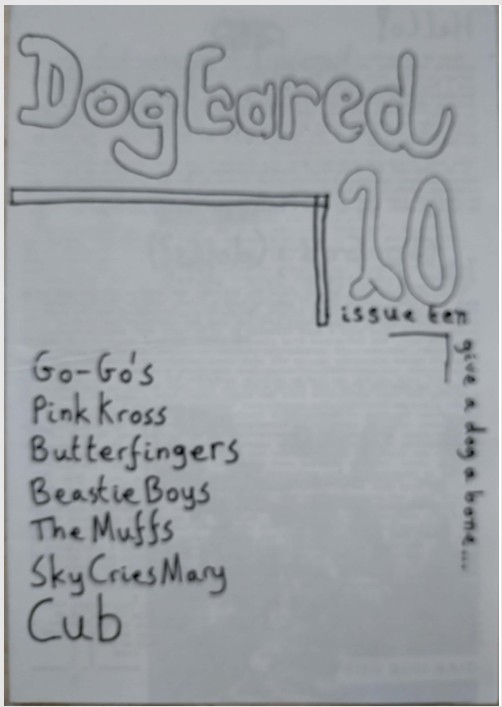
During the height of Big Muff and at the point where the name changed, Boyd was interviewed for Xerox Heaven, the fanzine for fanzines, in which he admits to starting Big Muff in the hopes of ‘speaking’ with Alex Taylor, vocalist with The Motorcycle Boys and formerly of Shop Assistants. Boyd also spent some time writing for early ’90s music magazine Siren.
Gallery:

Page 2 of the first issue of Big Muff, which vaguely lays out Neil Boyd’s approach. 
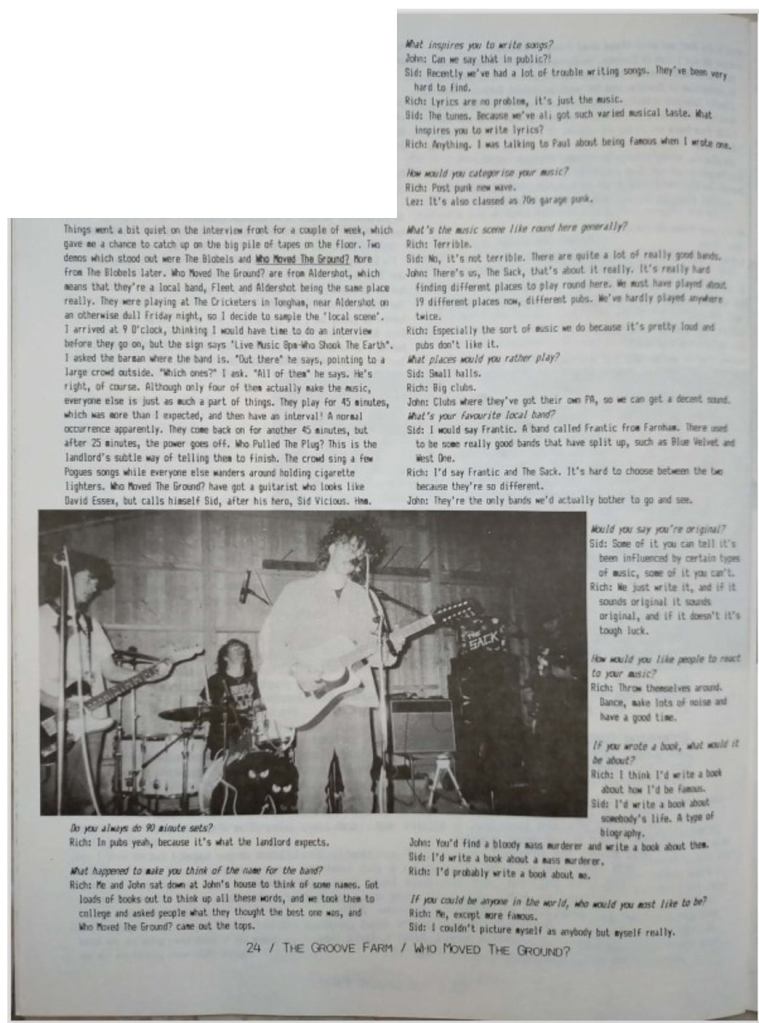
Part 1 of the Who Moved the Ground? interview from page 24 of the Big Muff fanzine No.2 
Part 2 of the Who Moved the Ground? interview from page 25 of the Big Muff fanzine No.2 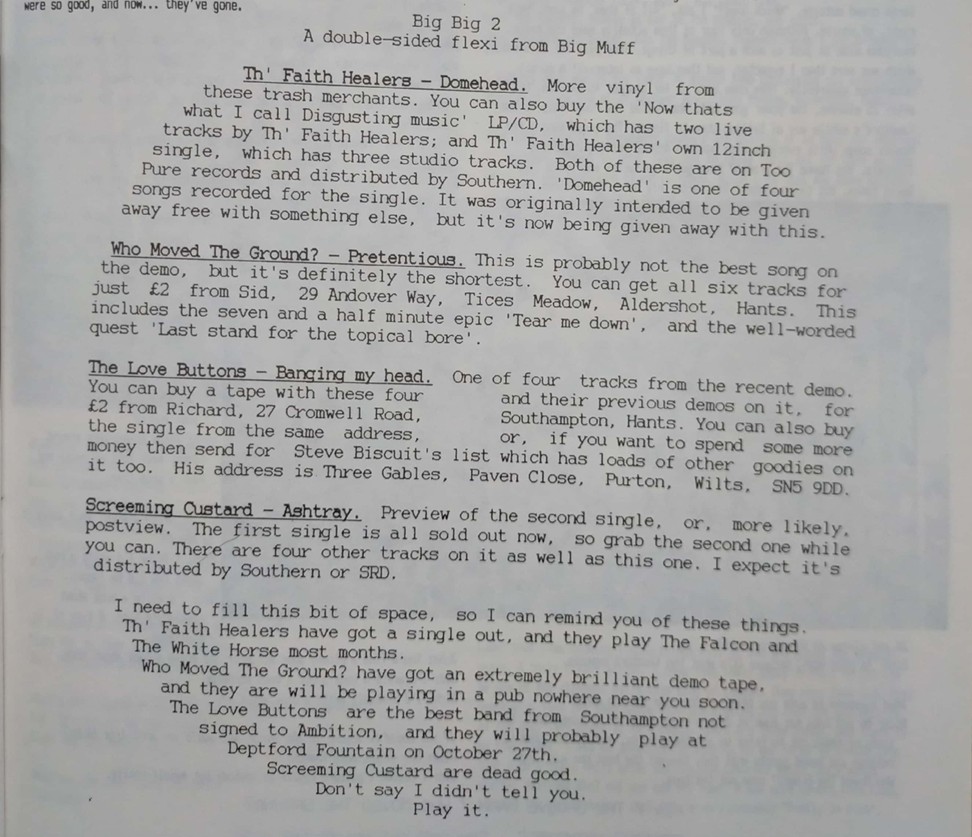
Big Muff 2 Flexidisc Info, featuring Who Moved the Ground? 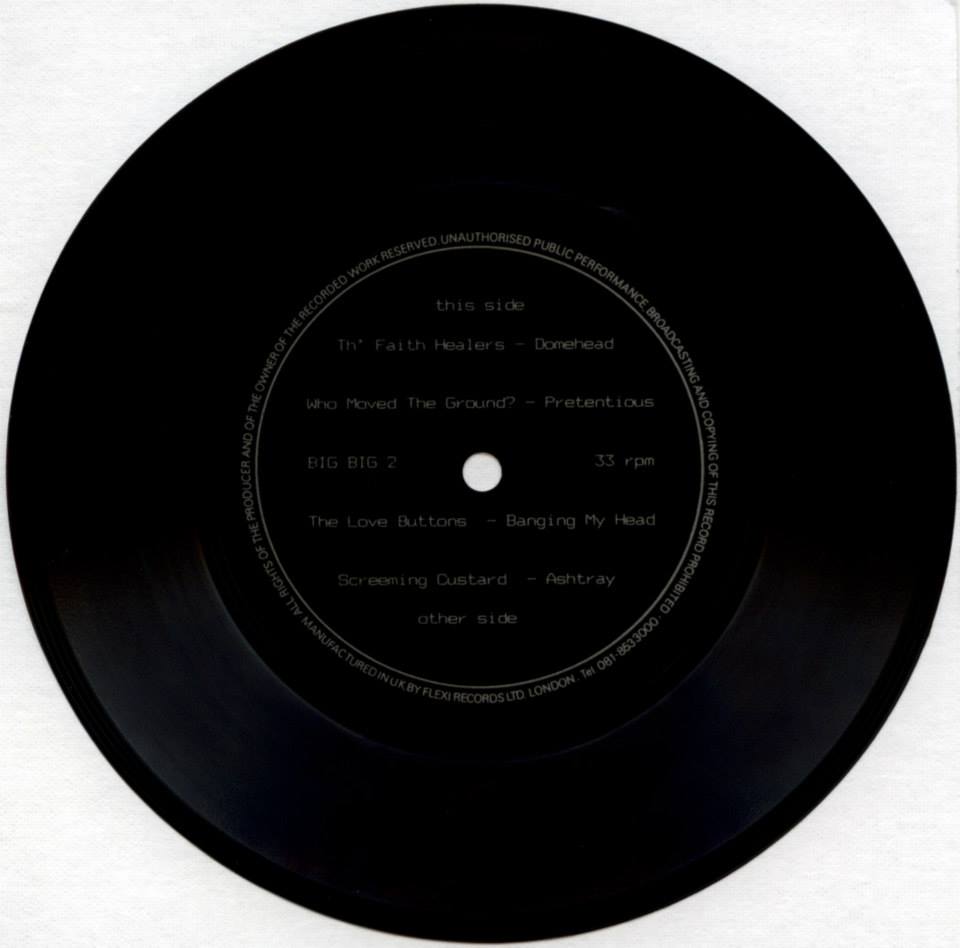
A rather bad pic of The Big Muff Fanzine #2 FlexiDisc featuring WMTG’s “Pretentious” 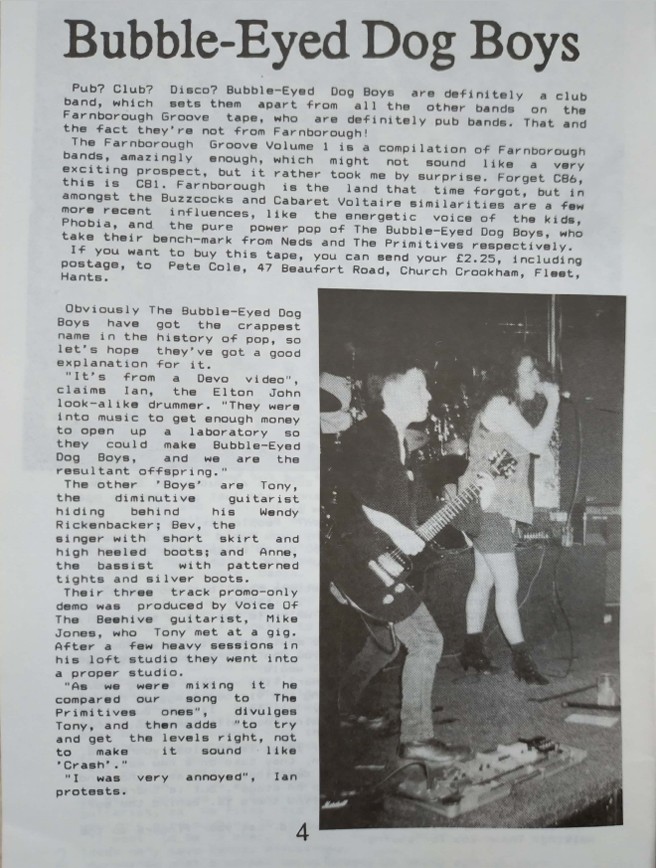
Big Muff 3 Page 4 Bubble Eyed Dog Boys 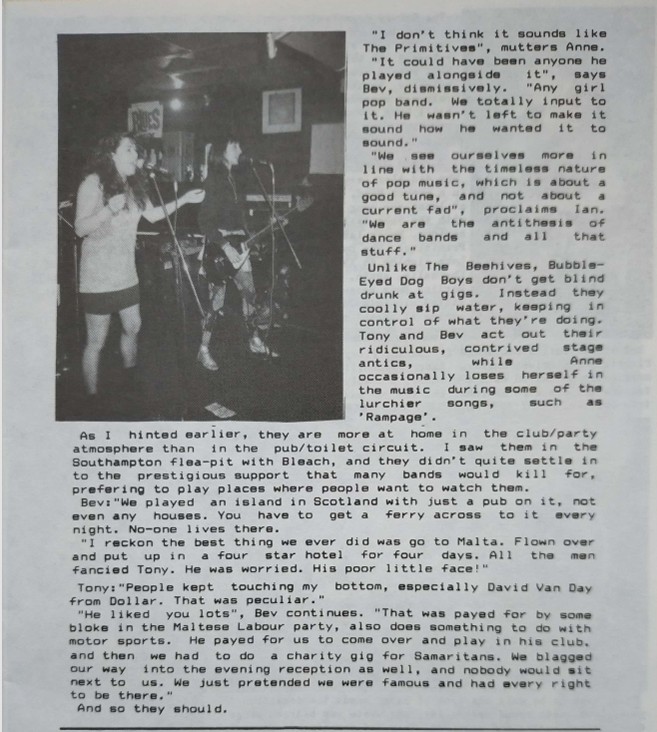
Big Muff 3 Page 5 Bubble Eyed Dog Boys 
Big Muff 3 Page 5 Frayed Edge Pretty Green Gig Review 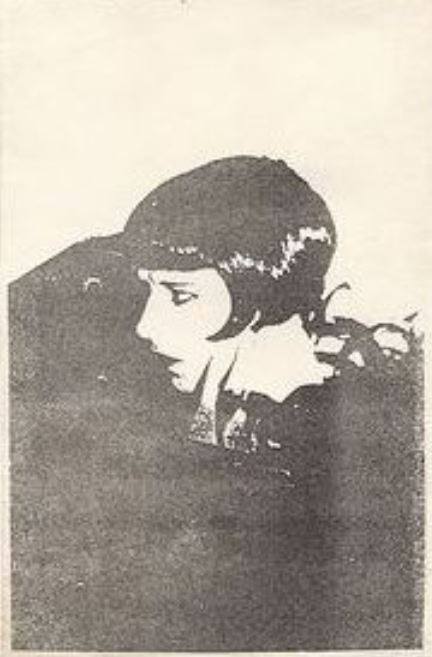
The front cover of the Big Big 3 cassette, featuring “99 (Is Not Enough)” available with the Big Muff fanzine. 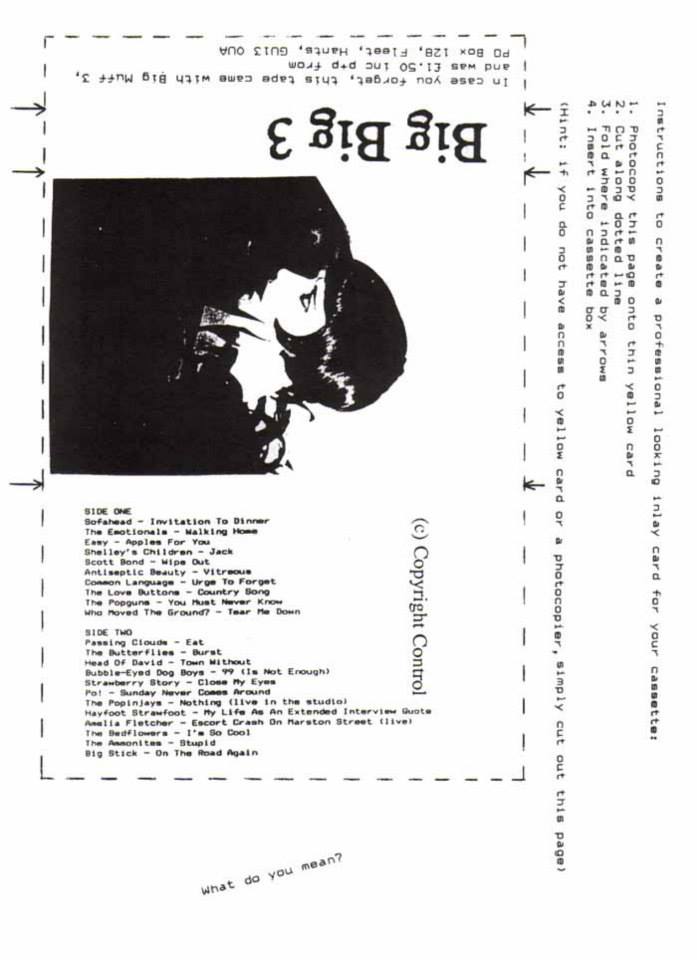
The pre-cut sleeve of the Big Big 3 cassette, featuring “99 (Is Not Enough)” available with the Big Muff fanzine. 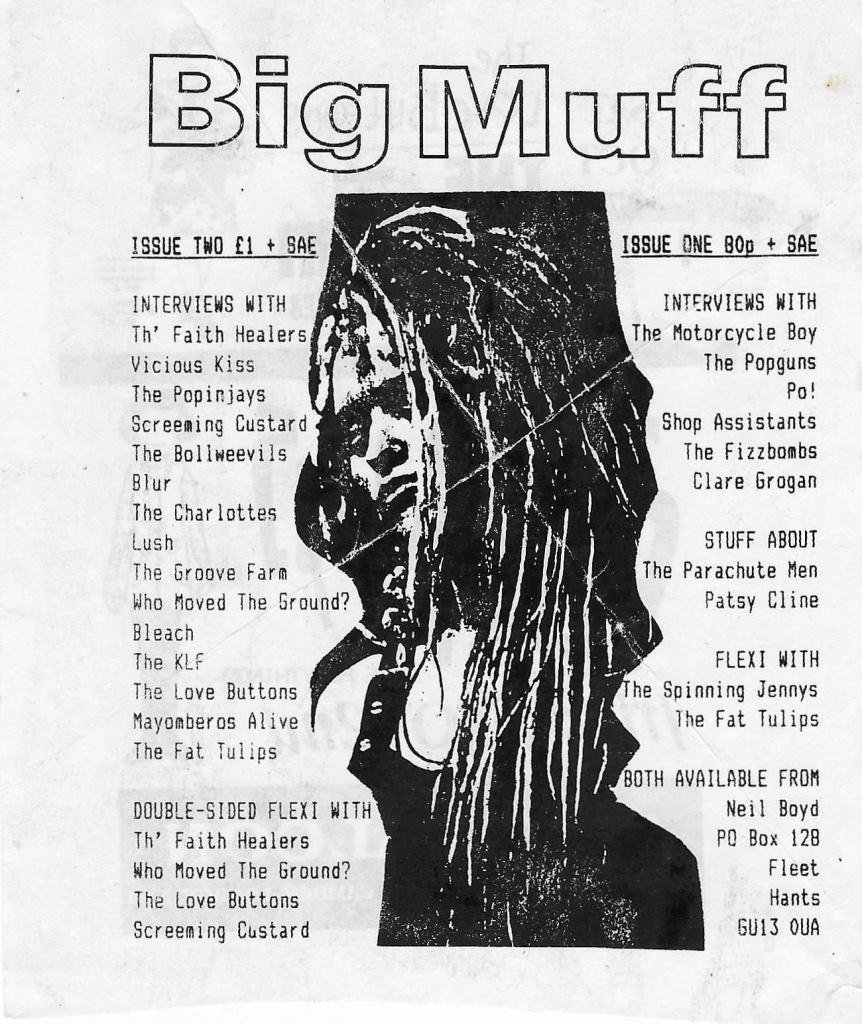
‘Advert’ from Big Muff 3 for Big Muff No.2 and Big Muff. Picture courtesy of Pete Cole 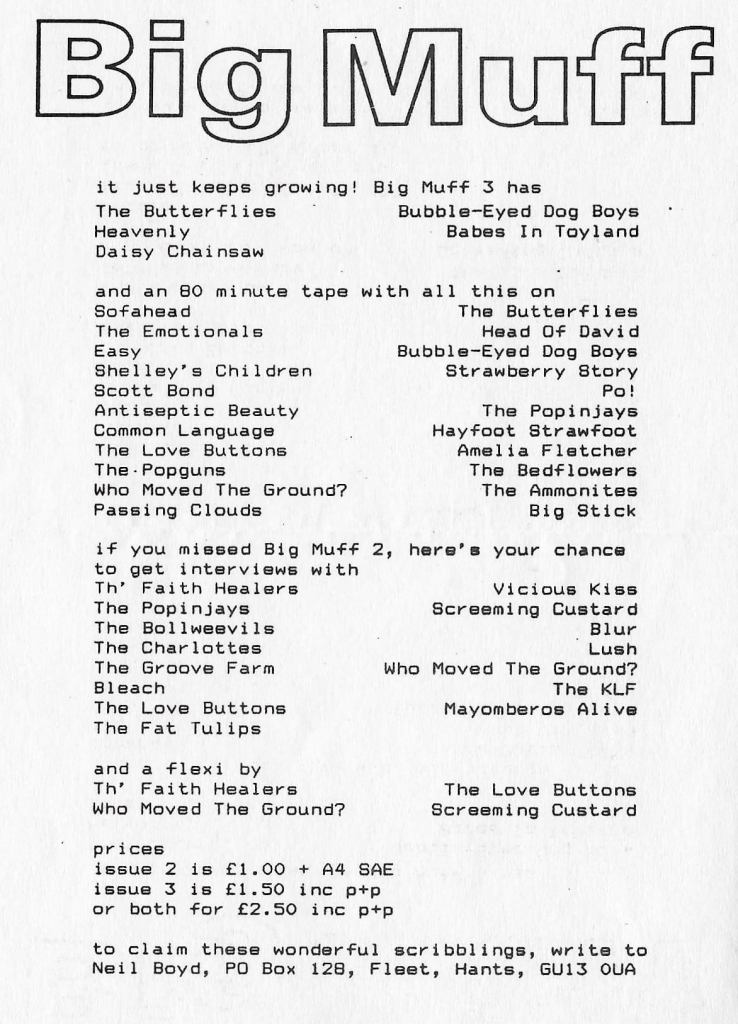
Advert from Big Muff 3 1/2 for Big Muff No.3 and No.2. Picture courtesy of Pete Cole 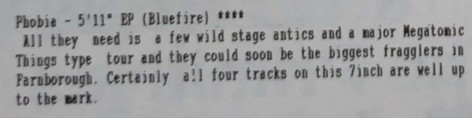
Big Muff 3.5 Page 3 Phobia Release Review 
Big Muff 3.5 Page 22 Big Sun Release Review 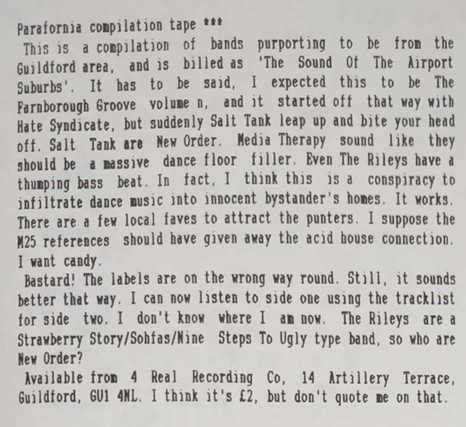
Big Muff 3.5 Page 23 Parafornia compilation review 
Big Muff 4 Page 30 Gallon Drunk release review 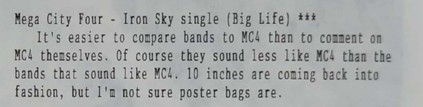
Big Muff 6 Page 18 Mega City Four release review 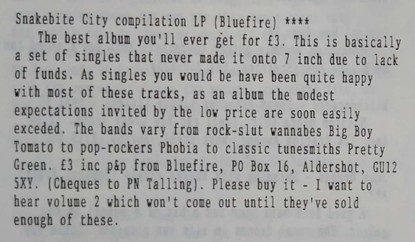
Big Muff 6 Page 22 Snakebite City Vol.1 release review 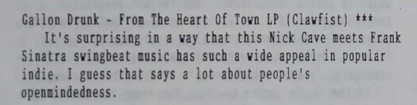
Big Muff 6 Page 20 Gallon Drunk release review 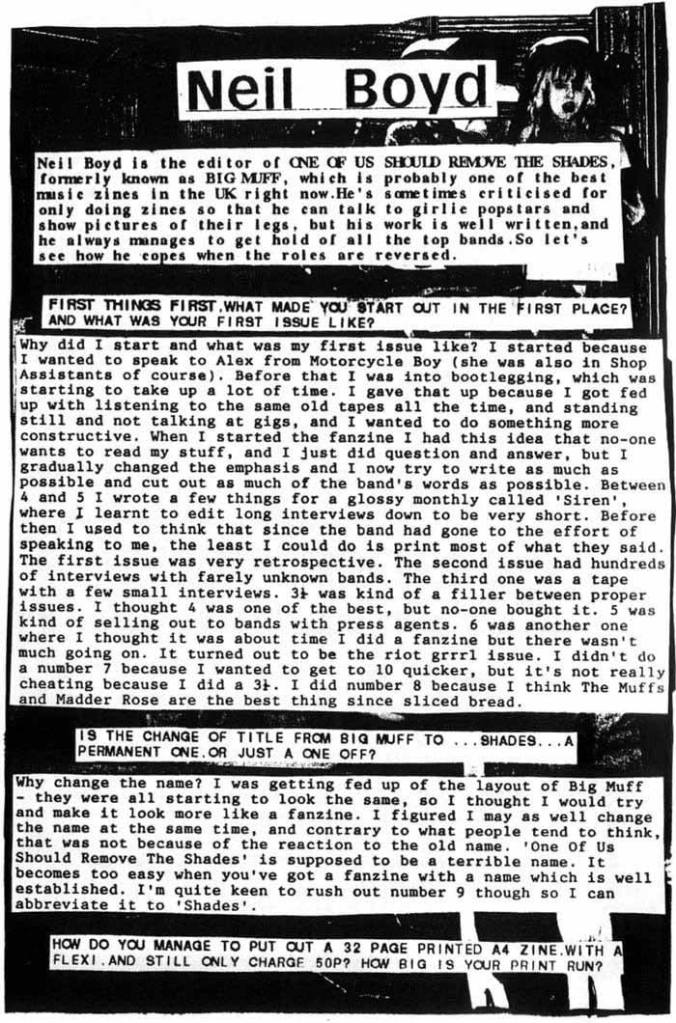
Page 1 of Big Muff creator Neil Boyd’s interview with “Xerox Heaven”, a fanzine about fanzines 
Page 2 of Big Muff creator Neil Boyd’s interview with “Xerox Heaven”, a fanzine about fanzines. 
Page 3 of Big Muff creator Neil Boyd’s interview with “Xerox Heaven”, a fanzine about fanzines. 
Big Muff No9 Page 5 WMTG Release Review 
Big Muff No9 Gig Review Cuckooland and Xerox Girls Weszt End Centre, Aldershot on 9 July 1994 100 Days Like This, A.C. Temple, Action Swingers, Afghan Wigs, Alex Taylor, All, American Music Club, Animals That Swim, Antenna, Ash Vale, Avocado Baby, Band of Susans, Basinger, Beat Happening, Belly, Best Kissers in the World, Big Drill Car, Big Muff, Big Sun, Big Wheel, Blake Babies, Bleach, Blind Justice, Blood Sausage, Blowfish, Blur, Bridget, Bubble Eyed Dog Boys, Buffalo Tom, Butterfingers, Calamity Jane, Capital Wow, Chainsaw Kittens, Chemical People, Chia Pet, Chicken Scratch, Clapham, Clare Grogan, Clive Gedge, Cod, Come, Common Language, Cows, Crane, Creaming Jesus, Credit to the Nation, Cruel Frederick, Cub, Daisy Chainsaw, Darkside, Dash Rip Rock, Dead Allison, Delicious Monster, Dharma Bums, Dillan Dance, DOA, Dreamscape, Drugstore, Earth, Ed Kuepper, Edsel Auctioneer, Endino, Even as We Speak, Fairfield Parlour, Fastbacks, Fat Tulips, Fifth Column, Fleet, Flinch, Float, Flood, Flower, Frayed Edge, Furnace Face, G.W. McLennan, Gallon Drunk, Go-Go’s, Gobblehoof, God Is My Co-Pilot, God Machine, Godflesh, Great Northern Electrics, Green Magnet School, Grenadine, Guildford, Gumball, Hard-Ons, Hayfoot Strawfoot, Hazel, Headcleaner, Hearts Throbs, Heavenly, Henry Rollins, Hole, Holy Rollers, Huggy Bear, Hungry I, Hush Palace, Ice-T, Imaginery, Jack Brewer Man, Jacob’s Mouse, Janitor Joe, Jello Biafra, Jellystone Park, Juliana Hatfield, Junk Orange, King Missile, Laurels, Lighthouse, Lois, London, Love Battery, Love Blobs, Love Dolls, Lovechild, Luscious Jackson, Lush, Lydia Lunch, Machines of Loving Grace, Madder Rose, Main, Maria Anjelica, Maxine, Mayomberos Alive, Mega City Four, Melting Eskimos, Milk, Mint 400, Moist, Molly Half Head, Moonflowers, Mother Goose, Motorcycle Boy, Mudhoney, Nautical William, Neil Boyd, New York, Nice, Nikki Sudden, Nina Hagen, Nine Inch Nails, No FX, No-Man, One of Us Should Removes the Shades, Orzic Tenticles, Osmium, Our American Cousins, Ozric Tenticles, P&O, Parachute Men, Parafornia '91, Passing Clouds, Patsy Cline, Pavement, Peach, Persecution Complex, Phobia, Pink Kross, PJ Harvey, Poopshovel, Pop Am Good, Popguns, Pram, Pray TV, Pretty Green, Radial Spangle, Ramblin’ Johnny Stomachpump and The Village Idiots, Revolver, Ringmaster, Roachmill, Robin Casinader, Rocket from the Crypt, Rollins Band, Ruth’s Refrigerator, Sandira, Scaredycat, Screeming Custard, Seefeel, Senseless Things, Shlonk, Shop Assistants, Sid Stovold, Siren, Six Finger Satellite, SKAW, Skin Yard, Sky Cries Mary, Skyscraper, Slampt, Sloan, Slunk, Solace, Some Have Fins, Spasmodics, Spinners, Spinning Jennys, Spitfire, Sproton Layer, Steroid, Subway, Sudanese Witch Hunt, Sugar Shack, Sun Dial, Sunshot, Superchunk, Swans, Swineherd, Terminal Power Company, Th’ Faith Healers, The Aints, The Bedflowers, The Bollweevils, The Butterflies, The Charlottes, The Chemistry Set, The College Music Journal, The Cranberries, The Daytrippers, The Death Folk, The Dylans, The Emotionals, The Fall, The Fat Tulips, The Fish John West Reject, The Frames, The George, The God Machine, The Groove Farm, The Hair & Skin Trading Company, The Hypnotics, The Infant God, The Joyce McKinney Experience, The KLF, The Leaving Trains, The Love Buttons, The Mabuses, The Marmite Sisters, The Motorcycle Boys, The Muffs, The Popinjays, The Primitives, The Scum Pups, The Spectrum Zero, The Tony Head Experience, The Wedding Present, The Would Be’s, theMonkeywrench, Thin White Rope, This is Serious Mum, This Replica, Tonyall, Trains and Boats and Planes, Trotsky Icepick, Truly, Trumans Water, Trumens Water, Unsane, Upsidedown Cross, Vanilla Traintrack, Velocity Girl, Ventilator, Vicious Kiss, Violet Town, Waaaah!, Waking Hours, Walkabouts, Ween, Whipped Cream, Who Moved the Ground?, Witchdocters, Xerox Heaven, Young Fresh Fellows, Yummy Fur, Zu-Zu’s Petals, ZuZu’s Petals


Human beings takes me back to 1981. Followed them all over the Surrey reading area for a year a great band and 3 good guys playing well written songs of the era. I wish john Tim and steve well what ever they are doing now. Should reform for a few shows just like Oasis but do the wooden bridge.
LikeLiked by 1 person