
-
Ghost Studios, Send

Ghost Production Studio’s was established in ’85, offering audio production, recording and rehearsal studios. Over the years Ghost, based out of the Old Riding Stables, Send Hill, have worked with Paul Connelly, Ben Lovejoy, Sue Macmillan, Social, Satellite State, Go West, Tony Hadley, Heat Wave, Charlie Morgan, Mark Brizickey, Adam Wakeman, Victoria Beckham, Elton John, and Draven.

1990’s “Good Night Danny” recorded and mixed with Pete Mills at Ghost Studios, Send. More locally orientated; in 1990 Who Moved the Ground?‘s “Good Night Danny” was recorded and mixed with Pete Mills at Ghost. That same year, The Sack released a six-track demo cassette titled “Oh, No!”; which had been recorded and mixed at Ghost over three days in July. In November ’91 Thieves of Dreams released the 4-track demo cassette “Florence Ain’t No Nightingale!”. This was also recorded at Ghost Studios, and carried “Children of the Night”, “Smiling Game”, “Am I Happy Now?”, and “Shelter”. TOD recorded a further two demos at Ghost, including “We Were in Love”.

The Sack’s “Oh No!” cassette EP. Picture courtesy of Sid Stovold Blue Velvet were joined by Jim O’Neil on keyboards for the recording of the eight tracks of “On the Eve of Tomorrow”, with its electric and acoustic sides, in November / December ’91; after which Island Records offered encouragement but no contract. Frantic also used the studio to lay down the “Blue” demo cassette, with its hand painted sleeve.
Mills was the bassist / vocalist with The Click before becoming the owner and in-house engineer at Ghost / Send Hill Studios.
Gallery:

Blue Velvet’s “On The Eve of Tomorrow” demo cassette electric side 1. Source Sid Stovold 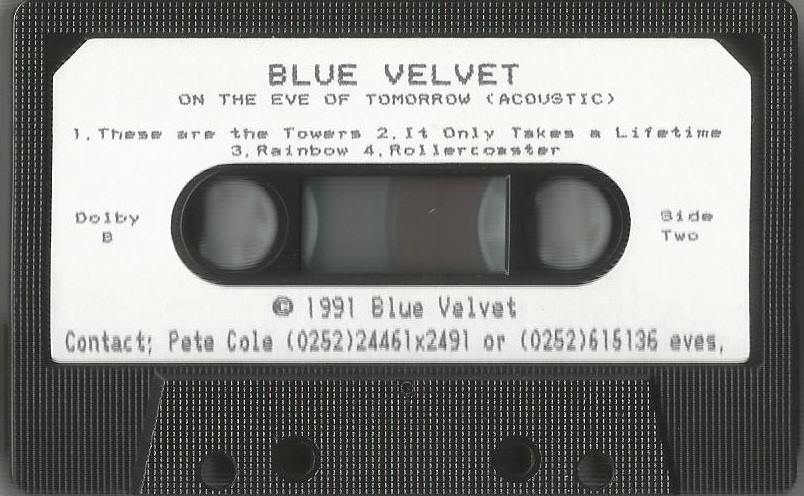
Blue Velvet’s “On The Eve of Tomorrow” demo cassette acoustic side 2. Source Sid Stovold 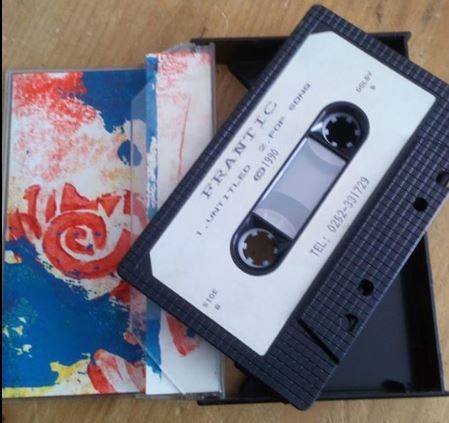
Frantic’s “Blue” demo cassette. Picture courtesy of Steve Porter 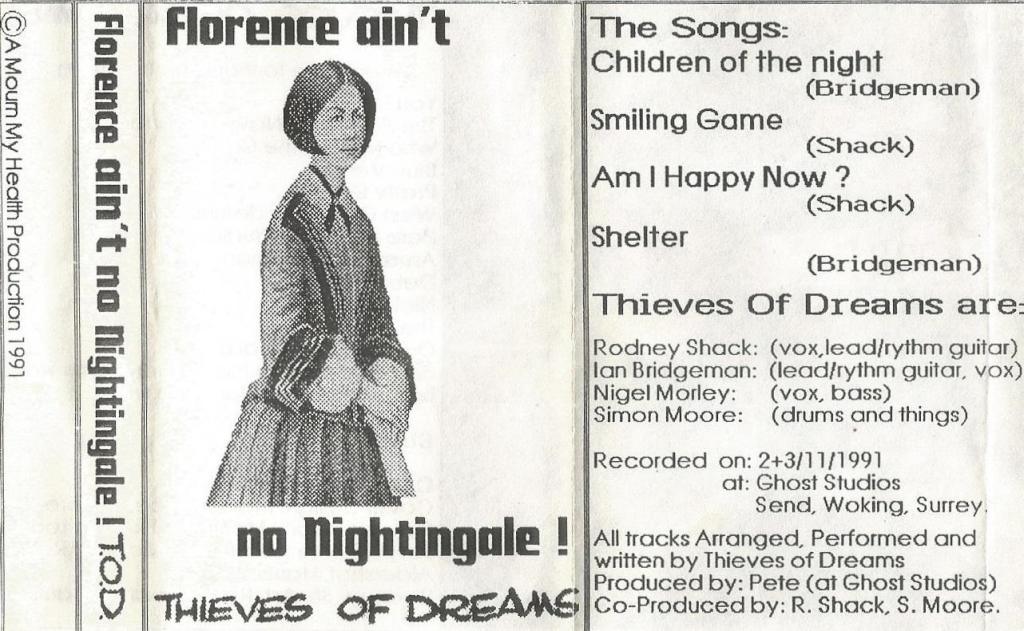
Thieves of Dreams “Florence Ain’t No Nightingale!” Cassette demo inlay. Picture courtesy of Sid Stovold Adam Wakeman, Ben Lovejoy, Blue Velvet, Charlie Morgan, Draven, Elton John, Frantic, Ghost Production Studio, Ghost Studios, Go West, Heat Wave, Jim O'Neil, Mark Brizickey, Paul Connelly, Pete Mills, Satellite State, Send, Send Hill, Send Hill Studios, Social, Sue Macmillan, The Click, The Sack, Thieves Of Dreams, Tony Hadley, Victoria Beckham, Who Moved the Ground? -
Cambridge Hotel, Camberley

The Cambridge, originally erected in 1862, is now flats. Built by Captain Charles Raleigh Knight, a property speculator, in association with the development of the Military Academy across the road, the area around the hotel was/became known as Cambridge Town but was renamed “Camberley” in January 1877 to avoid the General Post Office getting confused. But back in the ’60s there was a regular Jazz Club at the hotel every Sunday night, run by David Saunders.

22 April 1966: High Curley Stompers at Cambridge Hotel, Camberley Source: Camberley Photographs from the 1880s to the 1980s. In ’55/’56, the High Curly Stompers had a Sunday night residency at the Cambridge Hotel, which lasted into the mid-60’s; the band were certainly still playing there on 22 April ’66. Memphis Express played at The Cambridge on either the 10 or 17 October ’68. At some point that same year, the appearance of The Modern Art of Living at The Barn, held at The Cambridge, was delayed briefly when bassist Roger Carson broke a fluorescent tube while putting on his bass, spearing his hand in the process. The performance awaited the glass to be extracted, but ultimately Brian Smith took over playing Carson’s right-hand bass, left-handed. The venue also played host to the likes of Kenny Ball and Acker Bilk, and in addition, the Tremelos are known to have played there.
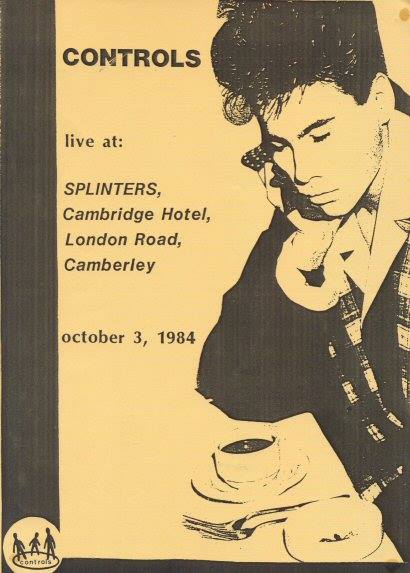
3 October 1984: Controls played Splinters, Cambridge Hotel, Camberley. Source: Stupid Rabbit Tapes On 31 May ’72, The Montanas, the Wolverhampton band whose “You’ve Got to Be Loved” reached number 58 on the U.S. Billboard Hot 100 in ’68, made an appearance at the venue and, on 24 August ’74, Jigsaw, who had a UK Top 10 with “Sky High” the next year, stepped up to play at The Cambridge. Bands, including Thane and The Mode, were still playing at The Cambridge into the ’80’s. On 17 March ’81, Lethal Dose, supported by Strontium 90 (not the Police precurser), played at the venue. Splinters was a club held at The Cambridge and Controls played there on 3 October ’84. The last gig, of which we are currently aware, was Supermodel on 16 October ’96.
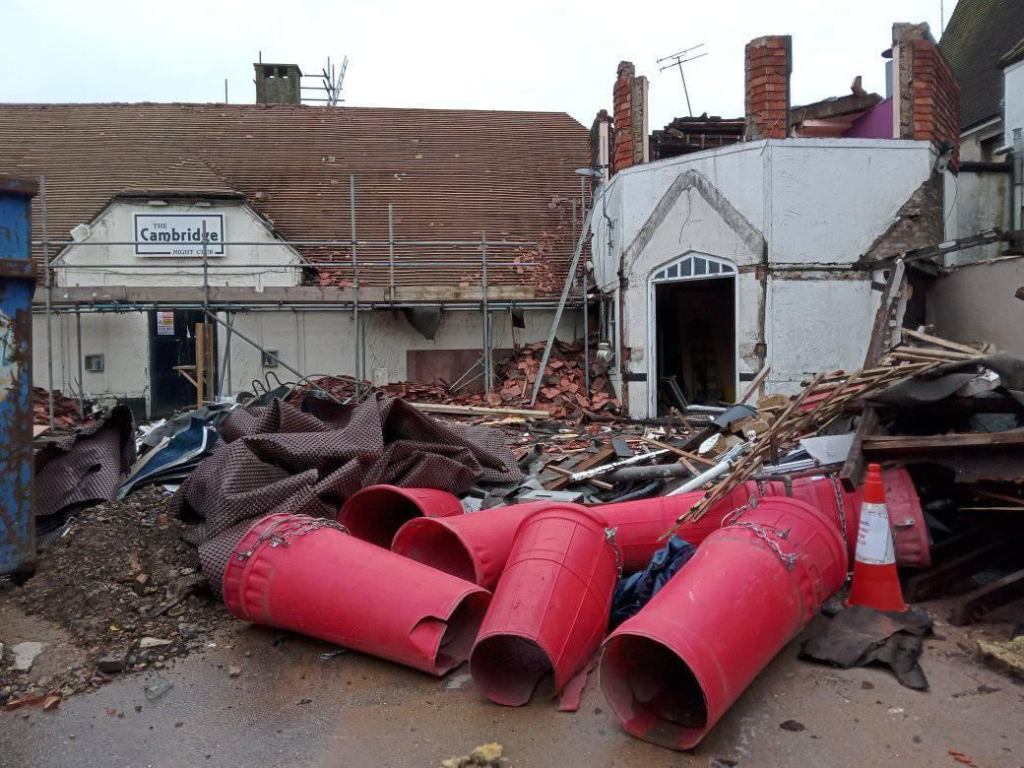
The Cambridge during demolition in 2022. Source: Mark Naylor via Camberley, Frimley & Bagshot & surrounding areas, Some Serious History The venue closed for good in 2016 and was demolished in 2022, with construction starting shortly after of the residential Cambridge Court.
Gallery:
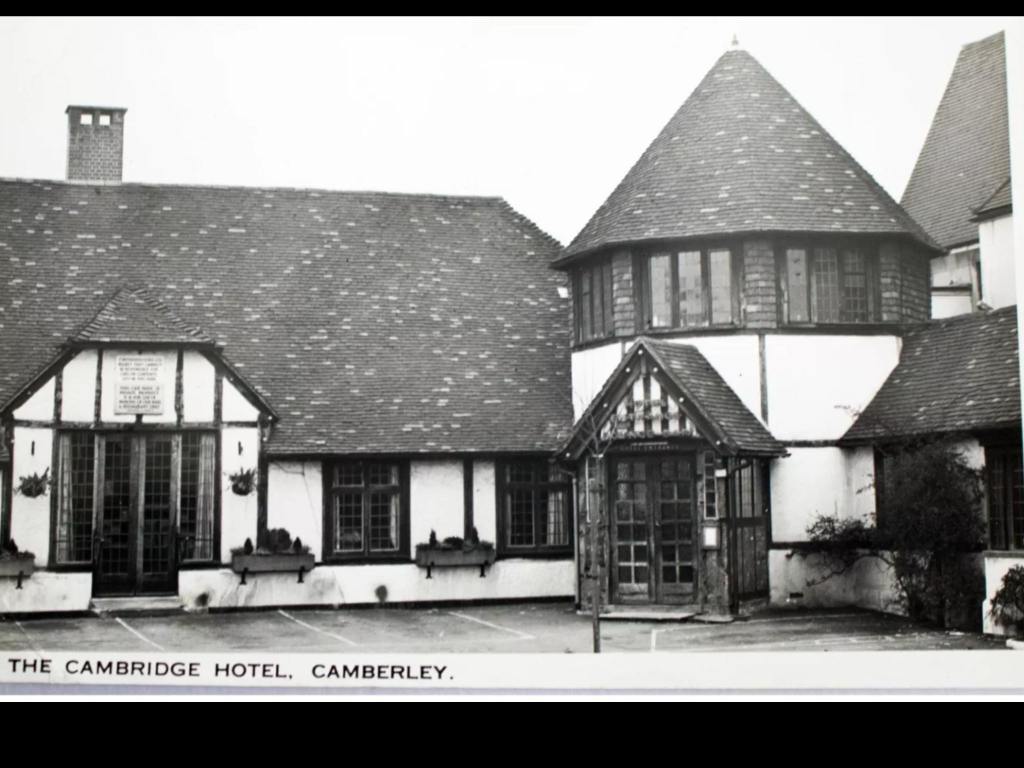
Cambridge Hotel, Camberley in the 1960s. Source: Neil Parker via Camberley, Frimley & Bagshot & surrounding areas, Some Serious History 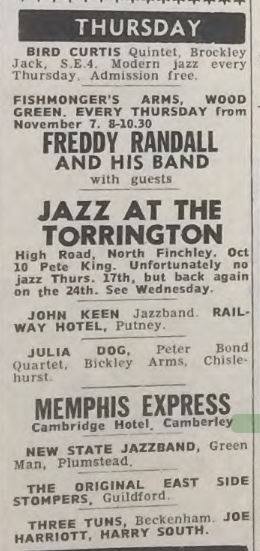
10 or 17 October 1968: Clipping from Melody Maker of 12 October 1968 puts Memphis Express at the Cambridge Hotel, Camberley on one of these two dates. 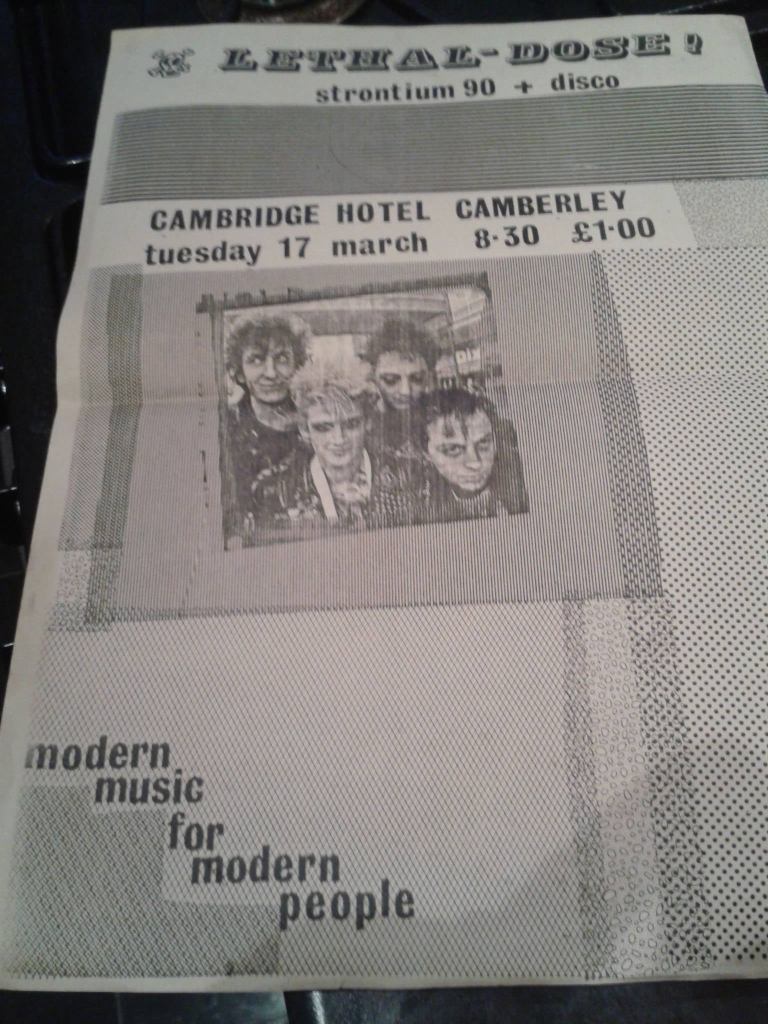
17 March 1981: Lethal Dose, supported by Strontium 90, played at the Cambridge Hotel, Camberley. Source: Paul Pomeroy Acker Bilk, Brian Smith, Camberley, Cambridge Court, Cambridge Hotel, Cambridge Town, Captain Charles Raleigh Knight, Controls, David Saunders, High Curley Stompers, Jazz Club, Jigsaw, Kenny Ball, Lethal Dose, Memphis Express, Roger Carson, Splinters, Strontium 90, Supermodel, Thane, The Barn, The Mode, The Modern Art of LIving, The Montanas, Tremelos, Wolverhampton -
Backhurst

(c’73 -’77) Chris Brayne (drums), Tony Backhurst (guitar/vocals), Dave Tarn (guitar/bass), Sandy Henderson (flute/vocals), Dave Sinclair (keyboards) and Dave Solari (guitar).
Tony Backhurst’s eponymously named band are known to have played at the folk club in Farncombe a few times, exhibiting Lindisfarne influences. The appeared at the Stag Folk Club organized free concert at The Guildford Show on 1 September ’73 along with Derek Sarjeant & Hazel King, Rod Bayton, Ian Russell, Mountain Line, Fred Hayes, and Damien. A couple of years later, on 18 March 1975, Backhurst appeared at the International Folk/Blues Club at the Half Moon Tavern, Herne Hill.
They recorded some material at the University of Surrey, Guildford; where they met Sev Lewkowicz (keyboards/backing vocals), a friend of Tarn and then of Asylum. Lewkowicz was only going to stay for a couple of hours but liked what they were doing and stayed until the session finished in the morning and contributed harmony on one song. Sinclair and Solari both left the band shortly after the University session. The band supported Asylum at the Marquee, London during a month-long residency in early 1976. Asylum’s drummer, Greg Terry-Short, along with Lewkowicz, would join then for a couple of tracks. At the last of the Marquee gigs Dave Reading (acoustic guitar) joined the line up.
At the end of the Marquee residency Backhurst and Lewkowicz formed House. Backhurst would also play in The Famous Rondini Brothers and Poker, before going on to join Mungo Jerry. Brayne, who’d done a stint with Nashville Teens and The Stormsville Shakers, also did his time in Mungo Jerry, The Famous Rondini Brothers, Poker, Manhole, and Cryin’ Out Loud. He was nicknamed “Wheelbarrow” and played drums in the Jackie Lynton’s Happy Days Band for quite a while and is the subject of the bands “The Worlds a Wheelbarrow”; but has now sadly passed. Tim Wheatley joined House in May 1976. Tarn would also appear as a solo folk musician. Sinclair, who was the cousin of Caravan bassist Richard Sinclair, joined his cousin in Camel for the album tour promoting “Breathless” in ’78, co-replacing Peter Bardens with Jan Schelhaas.
Gallery:
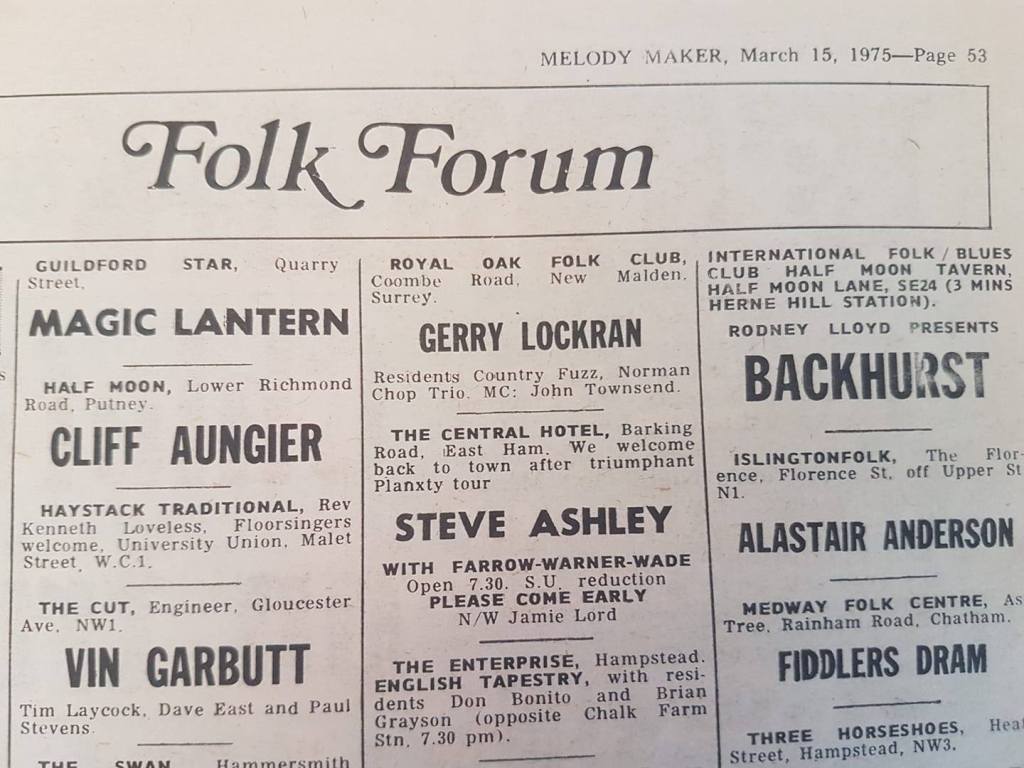
18 March 1975: Backhurst appeared at the International Folk/Blues Club at the Half Moon Tavern, Herne Hill. Picture courtesy of Ben’s Collectors Records Asylum, Backhurst, Camel, Caravan, Chris Brayne, Cryin’ Out Loud, Damien, Dave Reading, Dave Sinclair, Dave Solari, Dave Tarn, Derek Sarjeant, Farncombe, Fred Hayes, Greg Terry-Short, Guildford, Half Moon Tavern, Hazel King, Herne Hill, House, Ian Russell, International Folk/Blues Club, Jackie Lynton's Happy Days Band, Jan Schelhaas, London, Manhole, Marquee, Mountain Line, Mungo Jerry, Nashville Teens, od Bayton, Peter Bardens, Poker, Richard Sinclair, Sandy Henderson, Sev Lewkowicz, Stag Folk Club, The Famous Rondini Brothers, The Guildford Show, The Stormsville Shakers, Tony Backhurst, University of Surrey -
CUT

(c’92-’95) Mark Charles (vocals), Steve Smith (guitar), Steve “Jammo” Jameson (bass), and Pete Chichone (drums).
Jameson had been the bass player with World Domination Enterprises, Smith was from The Vapors, Shoot! Dispute and 1ST, and they got together with Charles of UBz, Shoot! Dispute, 1ST and many other bands, and Chichone to form CUT.
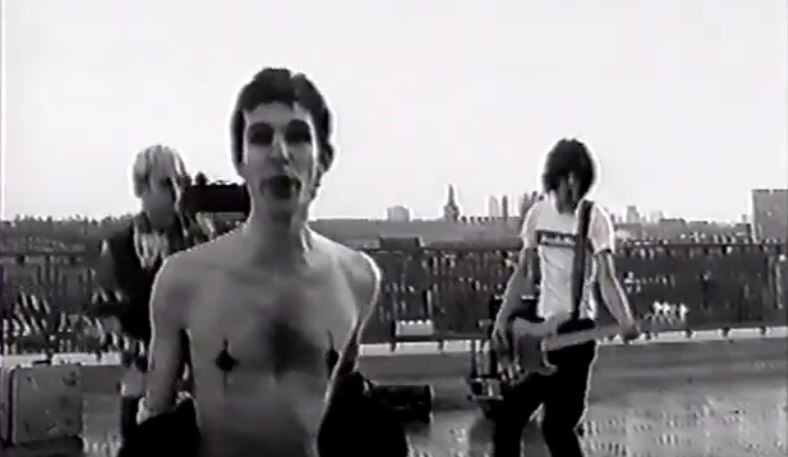
A still from the video for CUT’s “Pickapocket” On 19 January ’95, CUT, along with Headrush and Sil, supported headliners Blameheads at Interspace, held at The Bull & Gate, Kentish Town. In 2012 Mick Mercer’s book “C is for…” was published, which included a number of images of the band playing at the Marquee, London on 12 December 1994; we are also aware of an appearance at University of London Union, Bloomsbury.
Jameson passed in early 2019. From ’98 to 2006, Chichone drummed for Breed 77.
Tracks:Gallery:
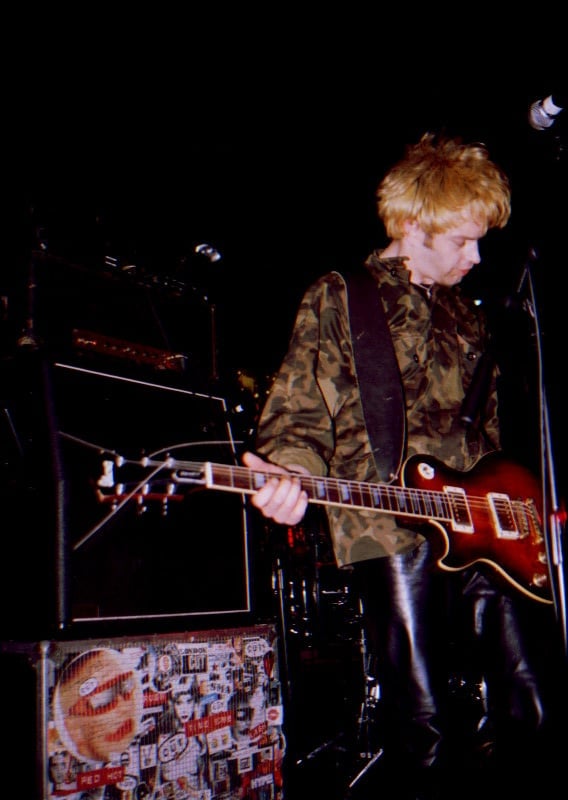
12 December 1994: CUT were photographed at the Marquee by Mick Mercer. Source: Mick Mercer via BULL & GATE MEMORIES – remembering all who sailed in her musical tidal wave 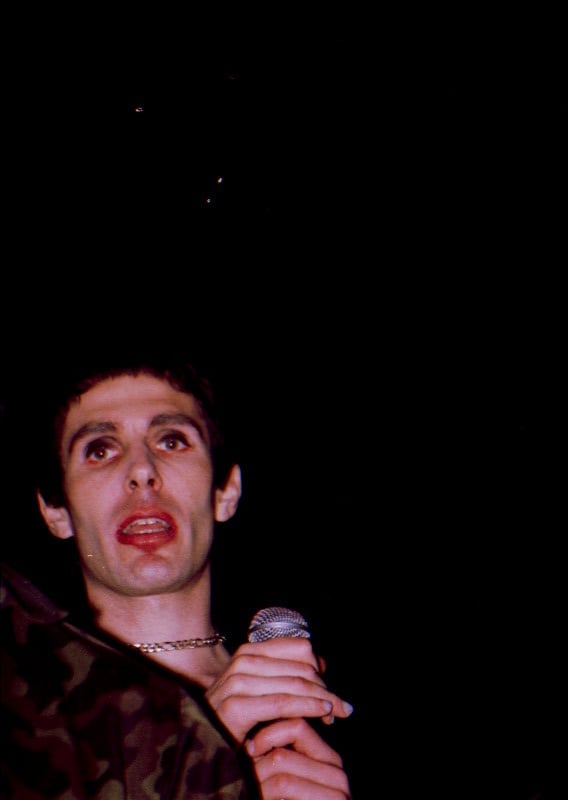
12 December 1994: CUT were photographed at the Marquee by Mick Mercer. Source: Mick Mercer via BULL & GATE MEMORIES – remembering all who sailed in her musical tidal wave 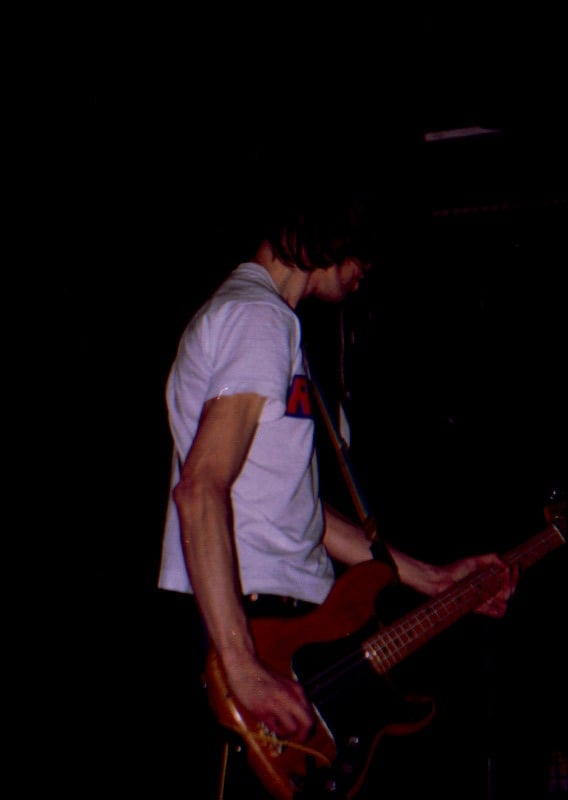
12 December 1994: CUT were photographed at the Marquee by Mick Mercer. Source: Mick Mercer via BULL & GATE MEMORIES – remembering all who sailed in her musical tidal wave 
12 December 1994: CUT were photographed at the Marquee by Mick Mercer. Source: Mick Mercer via BULL & GATE MEMORIES – remembering all who sailed in her musical tidal wave 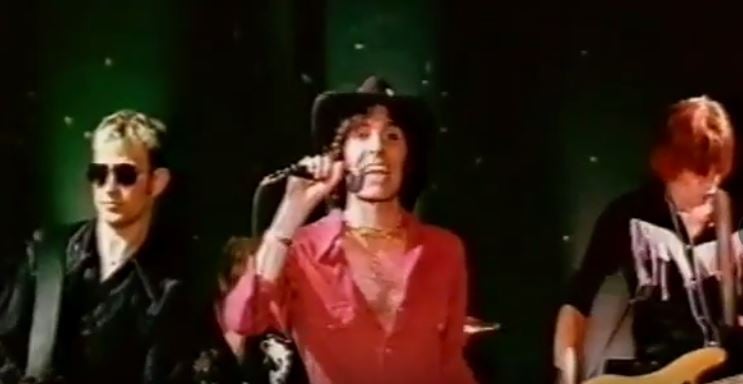
Still from video for CUT’s “Crash Landing”. 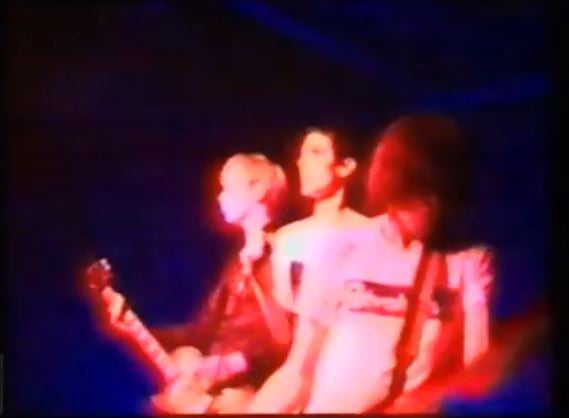
A rather blurry image of CUT on stage at University of London Union, Bloomsbury. 
19 January 1995: CUT, along with Headrush and Sil, supported headliners Blameheads at Interspace, Bull & Gate, Kentish Town, Source: Mick Mercer via BULL & GATE MEMORIES – remembering all who sailed in her musical tidal wave -
Tenth Planet

(c’92-’13) Tenth Plant, along with sub-label Wooden Hill Records formed in ’95, were based at 13 Barricane, St, Johns, Woking and specialized in rare / hard to find psychedelic rock re-issues and compilations, specifically the Syde Tryps series. Between Tenth Planet and Wooden Hill, they re-issued some 65+ titles.
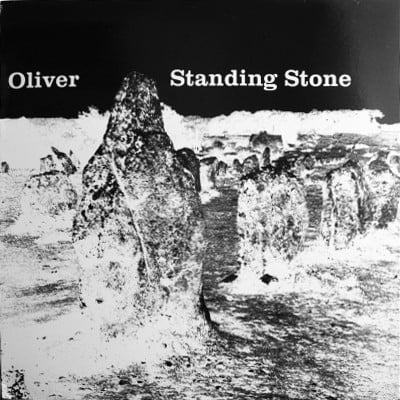
Front of sleeve to 1992’s “Standing Stones” by Oliver on the Tenth Planet label. The first was, a limited 500 numbered copy run, of the LP “Standing Stone” [TP 001] by Oliver (aka Oliver Chaplin) in ’92, a rarity that had originally been self-released in ’74, with liner notes credited to David ‘Dog Man’ Wells. We know that the test pressing occurred on 19 August ’92, so we assume that the runs printing and pressing schedule, which was done in France, would have led to a September/October release date. A CD version was issued on the newly established Wooden Hill, then based at 48 Armadale Road, Woking, in ’95.

Front of sleeve to Tenth Plant’s “Syde Tryps One” compilation released in 1992 “Syde Tryps One” [TP 002] was also released in ’92 and featured 14 tracks by The Pleasure Garden, Giorgio & Marco’s Men, Whispers of Truth, Free Expression, The Purge, The Poets, The Maniax, Tidal Wave, Blackthorn Winter, Euphoria, and Kat. Wells handled the liner notes and Steve McCarthy the cover art, as he had on ‘Standing Stone‘. The production run was once again 500 copies and Wooden Hill dropped a CD version, with an additional track by Fringe Benefit, in ’95.
In 2016, Wells compiled Grapefruit Records [CRSEGBOX033] “Let’s Go Down and Blow Our Minds: The British Psychedelic Sounds Of 1967” 3-CD compilation box set, that included The Late’s “Family Tree”. The Late also recorded, around ’69, several acetates, demos and private recordings, some recorded in Bob Potter’s studio in Mytchett, Surrey, on an Ampex 4 and many are now included on Wooden Hill Records compilation “Songs from the Family Tree” [WHCD021].
(Ed – So much more to add when we get to it…)Gallery:
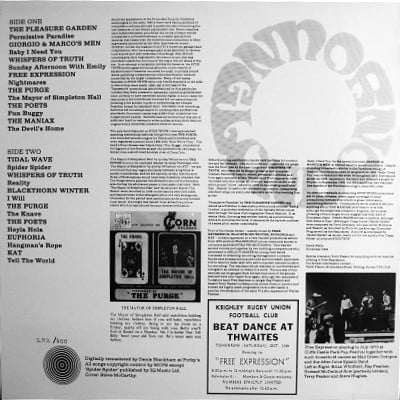
Back of sleeve to Tenth Plant’s “Syde Tryps One” compilation released in 1992 
Tenth Plant’s “Syde Tryps One” compilation released in 1992 
Front sleeve of 1995’s CD release of “Standing Stones” by Oliver on the Wooden Hill Records label. 
Front sleeve of 1995’s CD release of “Standing Stones” by Oliver on the Wooden Hill Records label. 
Wooden Hill Records’ Syde Tryps One CD cover released in 1995 Blackthorn Winter, Bob Potter, David Wells, Euphoria, Free Expression, Fringe Benefit, Giorgio & Marco’s Men, Grapefruit Records, Kat, Mytchett, Oliver, Oliver Chaplin, St. Johns, Steve McCarthy, Tenth Planet, The Late, The Maniax, The Pleasure Garden, The Poets, The Purge, Tidal Wave, Whispers of Truth, Woking, Wooden Hill Records -
Hot Vultures

(c’73-’79) Ian A. Anderson (guitar/slide guitar/vocals) and Maggie Holland (bass/banjo/guitar/vocals).
This Farnham based duo were popular on the UK and European folk scene and college circuits. They were often at The Copper Family’s Sussex folk nights and played early Cambridge Folk Festivals, and they released three LPs.

“Carrion On” was released in 1975 by Hot Vultures The duo were at Sheffield University’s Folk Club on 17 October ’74, billed as ian A. Anderson’s Hot Vultures. The next year “Carrion On” was issued in the UK and Belgium and was recorded with help from Dave Griffiths (fiddle/mandolin), Dave Peabody (harmonica), Al Jones (guitar) and John Pilgrim (washboard). Late in ’76, we find the pair at The Cob & Pen Folk Club, Swan Pub, Sherborne St. John on 10 December. “The East Street Shakes” [RRR 015] named for East Street, Farnham come out in ’77 on the Reg Rag Recordings label, having been recorded at Riverside Studio, London and engineered by John Gill. The duo returned to The Cob & Pen Folk Club on 20 January ’78 and were at Crofter’s Folk Club, The Wheatsheaf, Alton, along with Earthforce, and John Lathey, on 13 September ’78.
Early the next year there was another return visit, on 19 January, to the The Cob & Pen Folk Club. Also, in ’79, “Up the Line” LP [PLR 018] was released on the Plant Life label and by Sierra Briar Records [SBR 4212] in the US. It was once again engineered by John Gill, but recorded at Leader Studios, Halifax with Pete Coe (mandolin/vocals), Chris Coe (hammered dulcimer/vocals) and Martin Simpson (banjo/guitar/acoustic bass/vocals) making appearances.
In ’80 they were invited to the States by Al Stewart, not long before their third and final album was released in the US (a rare occurrence for English folk artists of the day). While stateside they appeared on the Folk Scene show on KPFK Santa Monica, where they played live and were interviewed by the host, the late Howard Larman, about their music and the UK folk scene of the day. shortly after their stateside sojourn Hot Vultures joined the Tannahill Weavers, on 22 March ’80, at The Haymarket Theatre, Basingstoke.

Hot Vultures in Germany… Around this time Anderson and Holland had started performing with Simpson as The Scrub Jay Orchestra. In 1980 the Plant Life label carried “The Preacher’s Blues” [PLRS 002] 7″ vinyl single; taken from the “Up the Line” LP. Eventually the duo expanded into The English Country Blues Band with the addition of Rod Stradling, Sue Harris (who was later replaced by Chris Coe) and later the ’80s electric country dance band Tiger Moth and then Orchestre Super Moth. In ’98 the Hot Vultures best of anthology CD titled “Vulturama” [WEBE 9031] was released on Anderson’s own The Weekend Beatnik label, pitched as ‘The best 74 minutes of Hot Vultures, ever!’
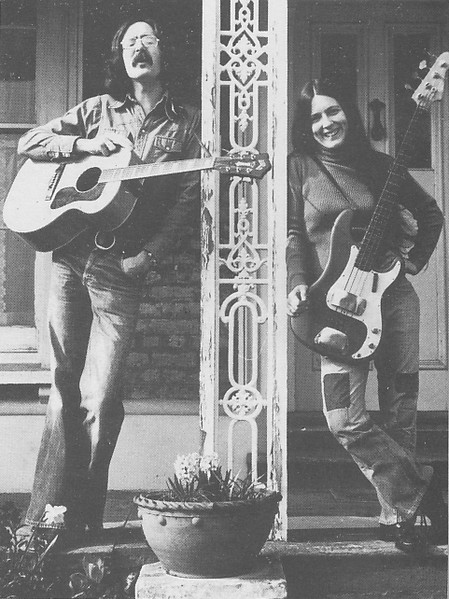
Hot Vultures Latterly, Anderson has been in the duo The False Beards with Ben Mandelson. In ’82, he founded Farnham Folk Day, an annual event at The Maltings, Farnham running it until ’88. From ’87-’89 he directed the Bracknell Folk & Roots Festivals at South Hill Park, Bracknell and many other folk events in London and Bristol from ’87-’16. He organized tours for other artists and acted as agent for other folk and world music artists via his Farnham based Folk Music Services. Anderson also contributed to Blues Unlimited, the Western Daily Press, Melody Maker, Folk Review and Folk Scene. In ’79, he co-founded The Southern Rag, a local quarterly folk music magazine that grew to a 12,000 worldwide circulation. He founded an independent record label Rogue Records which became The Weekend Beatnik. Anderson presented a weekly folk, roots and world music show on County Sound in the mid ’80s and a weekly folk show on the BBC World Service for 12 years from 1987; and appeared on many other stations.
Holland pursued a successful solo and songwriting career with songs recorded by June Tabor and Martin Carthy. She released her first solo album, Still Pause, in ’83. In ’85 she was the female lead singer in the National Theatre’s three-month run of Tony Harrison’s Mysteries trilogy, and she toured the far east as a duo with Chris Coe. She moved from Farnham to Oxford in ’86. Holland won the BBC Folk Awards ‘Best Song of 1999’ with “A Place Called England” and was last heard playing in The Broonzies with Jez Lowe and living in Jez Lowe.
Radio:
Gallery: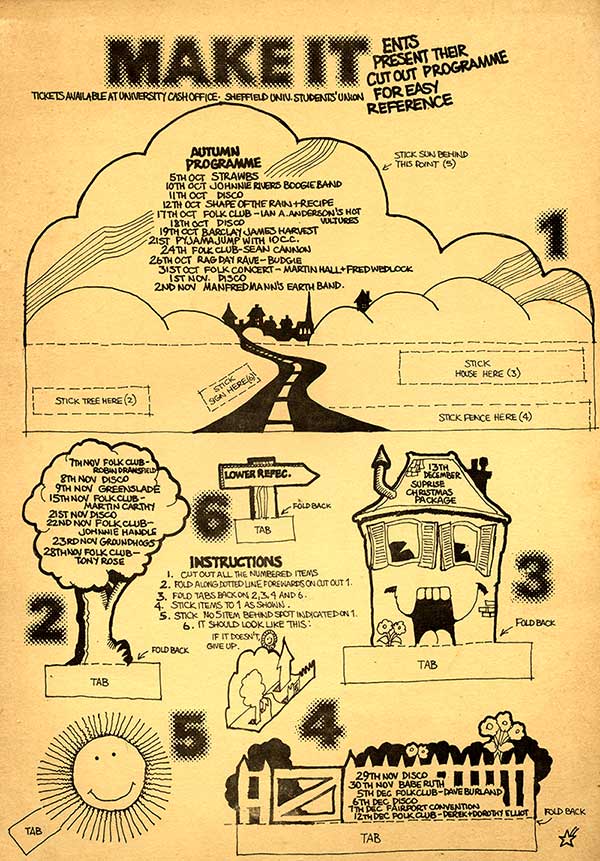
17 October 1974: Hot Vultures played Sheffield University’s Folk Club 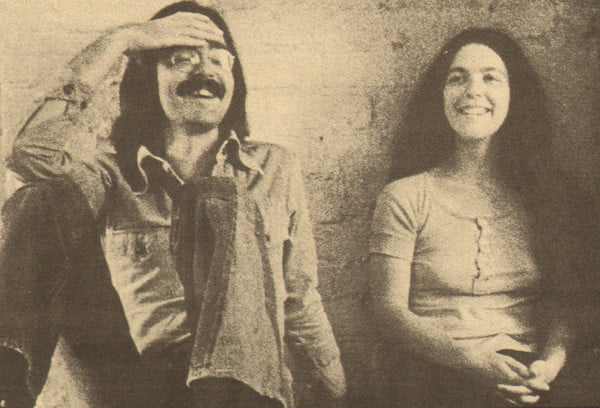
Hot Vultures 
In 1977 Hot Vultures released the “East Street Shake” LP. 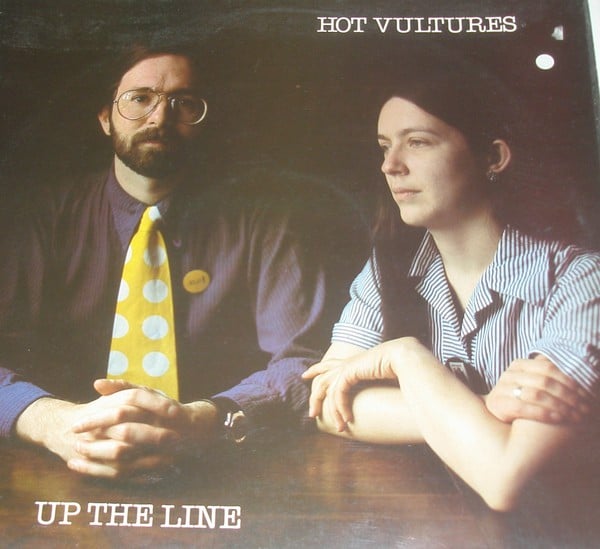
1979’s “Up The Line” LP 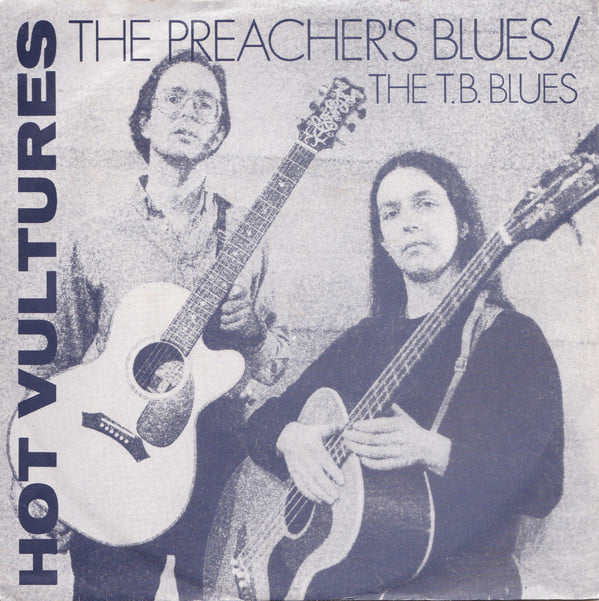
Hot Vultures’ “Preachers Blues” single from 1980 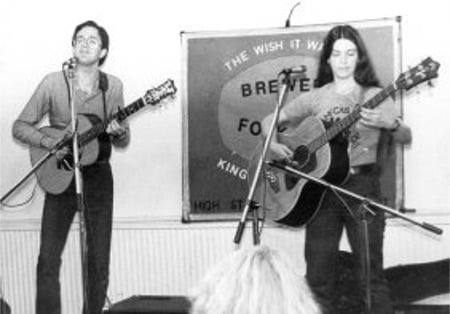
Hot Vultures at Brewery Folk Club, Rochester, Kent. Source: Colin Reece via Brewery Folk Club Tribute 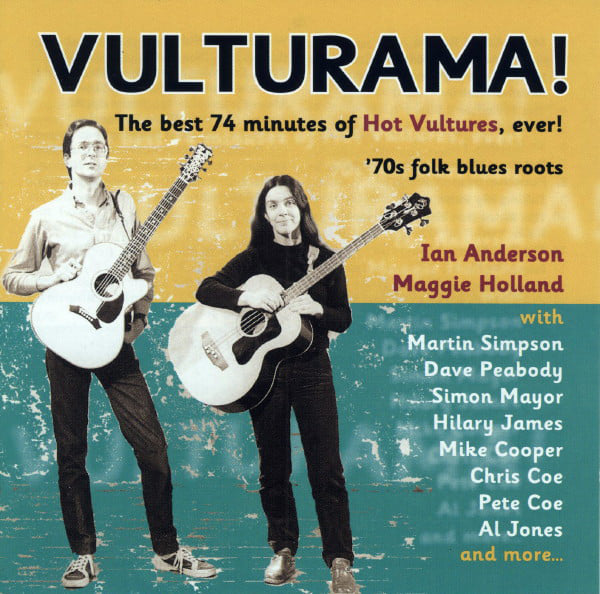
Front cover of Hot Vultures’ 1998 compilation “Vulturama” Al Jones, Al Stewart, Alton, Basingstoke, BBC Folk Awards, BBC World Service, Ben Mandelson, Blues Unlimited, Bracknell, Bracknell Folk & Roots Festival, Cambridge Folk Festival, Chris Coe, County Sound, Crofter’s Folk Club, Dave Griffiths, Dave Peabody, Earthforce, Farnham, Farnham Folk Day, Folk Club, Folk Music Services, Folk Review, Folk Scene, Halifax, Hot Vultures, Howard Larman, Ian A. Anderson, Jez Lowe, John Gill, John Lathey, John Pilgrim, June Tabor, KPFK Santa Monica, Leader Studios, Leith, London, Maggie Holland, Martin Carthy, Martin Simpson, Melody Maker, National Theatre, Orchestre Super Moth, Oxford, Pete Coe, Plant Life, Reg Rag Recordings, Riverside Studio, Rod Stradling, Rogue Records, Sheffield, Sheffield University, Sherborne St. John, Sierra Briar Records, South Hill Park, Sue Harris, Swan Pub, Tannahill Weavers, The Broonzies, The Cob & Pen Folk Club, The Copper Family, The English Country Blues Band, The False Beards, The Haymarket Theatre, The Maltings, The Scrub Jay Orchestra, The Southern Rag, The Weekend Beatnik, The Wheatsheaf, Tiger Moth, Tony Harrison, Western Daily Press -
Duke Of Wellington, Farncombe

We know that Innocent Bystanders had gigs at this Farncombe Street location in 1987. They had just lost their regular slot at The Talbot Hotel, Ripley and the band secured two or three gigs at the Duke after persuading the landlord at short notice. The Flying Tigers played the venue in 1988/89 – and a recording of one of these gigs exists somewhere – as did The Piccadilly Mudmen, many times a few years earlier (c’85-88).
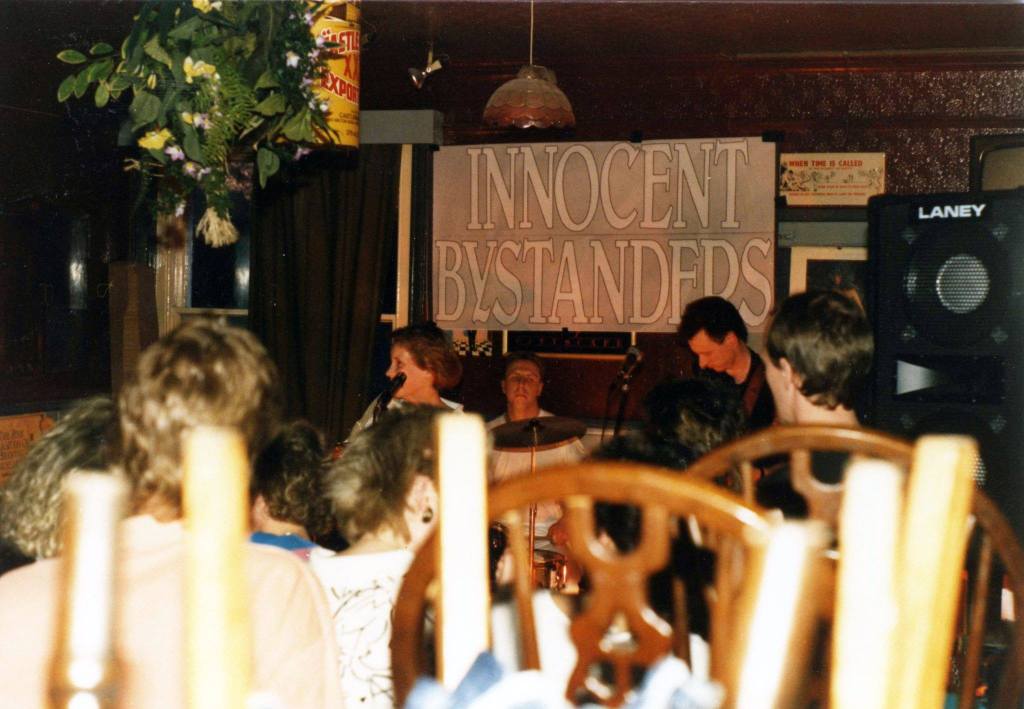
1987: Innocent Bystanders at the Duke of Wellington, Farncombe. Picture courtesy of John Hudson We know more about The Duke’s history than we do its live music pedigree: It was a beerhouse on Farncombe Street in 1841, having opened in the 1830s, as a direct result of an Act of Parliament passed by the Duke of Wellington’s government. In 1851 it was run by 27-year-old Alfold man, Charles Boxall and his wife Mary. The original pub burnt down in 1880 and was replaced by the building in the photo and was owned by the Guildford’s Friary Brewery. Pheasant Griffith was landlord here from 1898 or possibly slightly earlier. His license was transferred to George Smith in 1908. During the Second World War the local ARP wardens command post was situated in the pubs back yard.
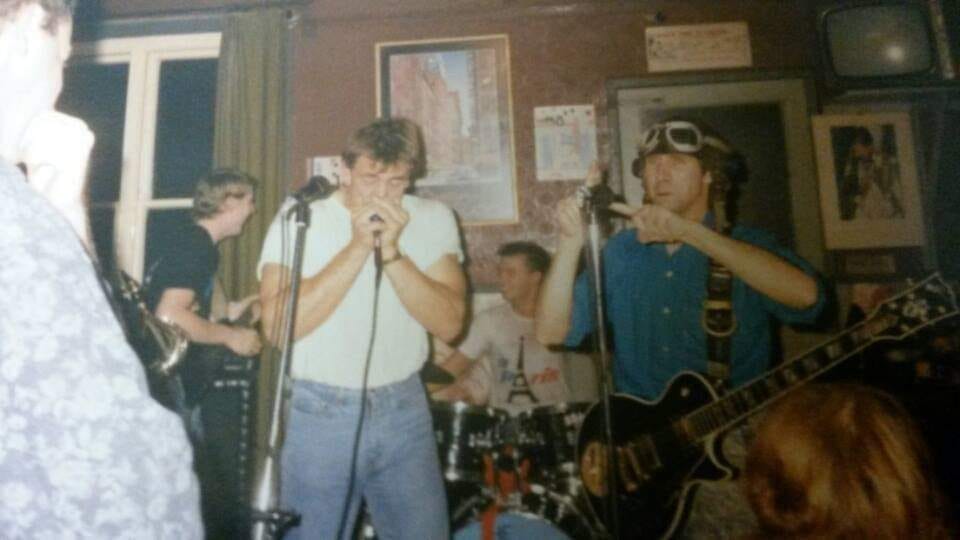
The Flying Tigers at the Duke of Wellington, Farncome in ’89. Picture courtesy of Ben’s Collectors Records It closed in 1997, was demolished and replaced by houses.
Gallery:

1987: Innocent Bystanders at the Duke of Wellington, Farncombe. Picture courtesy of John Hudson 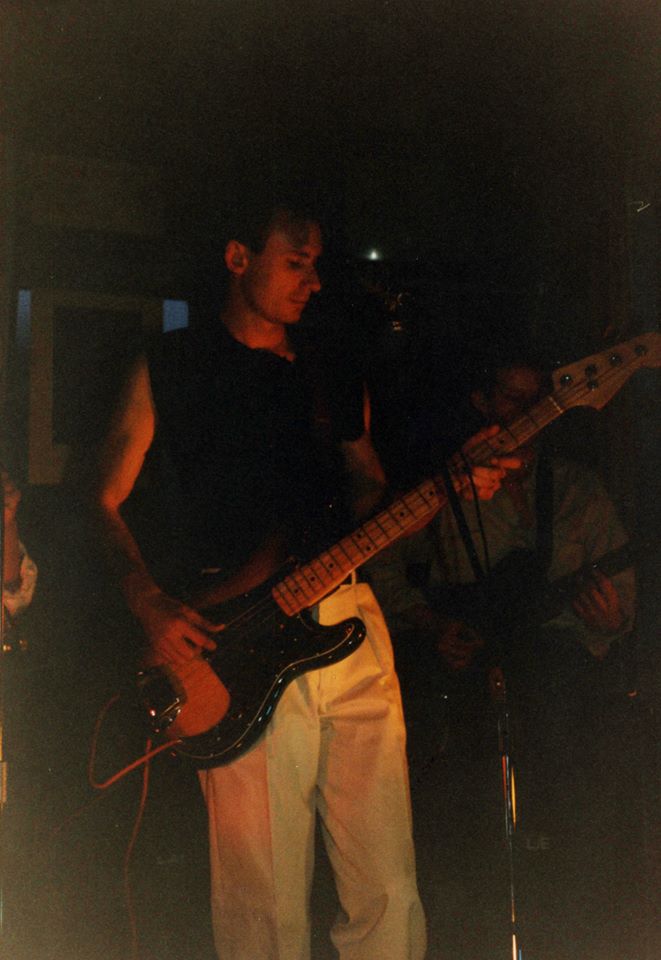
1987: Innocent Bystanders at the Duke of Wellington, Farncombe. Picture courtesy of John Hudson 
1987: Innocent Bystanders at the Duke of Wellington, Farncombe. Picture courtesy of John Hudson 
The Flying Tigers’ Chris Turner takes the mic at the Duke of Wellington, Farncome in ’89. Picture courtesy of Ben’s Collectors Records 
The Flying Tigers at the Duke of Wellington, Farncome in ’89. Picture courtesy of Ben’s Collectors Records 
The Flying Tigers at the Duke of Wellington, Farncome in ’89. Picture courtesy of Ben’s Collectors Records 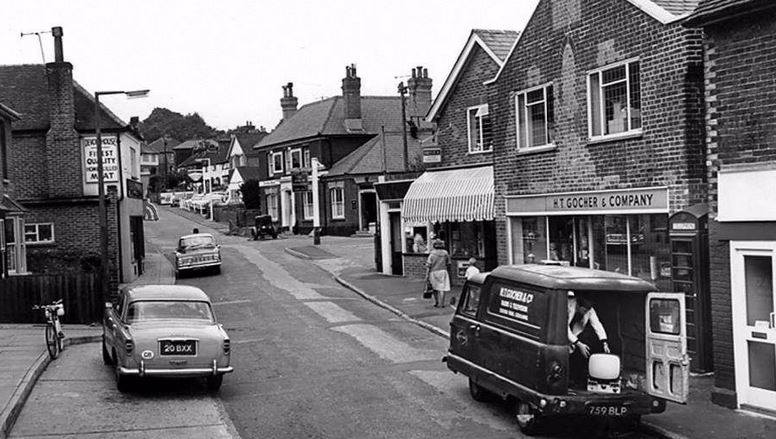
The Duke of Wellington, Farncombe was on the right as you headed up Farncombe Street. -
Chestnut Studios, Churt

The Surrey Sound Hub That Defined an Era (1976-1986)
Nestled in the Surrey countryside, Chestnut Studios became a cornerstone of the local, and broader, music scene during its decade of operation. Owned by Tim Wheatley—a musician and producer with ties to bands like Good Earth, Taggart, House, Gracious, Cryin’ Out Loud, and Poker, as well as being the engineer at Keynote Studios, Frensham—Chestnut Studios played a vital role in shaping the sounds of punk, new wave, and experimental music. Though frequently cited as being in Churt, the studio’s location has also been linked to Guildford, Frensham, and Farnham, adding an air of mystique to its storied history.
The Birthplace of Iconic Tracks
Chestnut Studios first rose to prominence in 1976 when Headwaiter recorded early demos featuring Camel’s Andy Latimer on guitar and flute. That same year, Anthony “Dyl” Meynell, under the moniker The Numbers, recorded ten tracks with his brother, catching the attention of Sniffin’ Glue fanzine founder Mark Perry. The Numbers however never made it onto Perry’s Step Forward label, as Meynell joined Squire. Worthing based punk band The Bats also entered Chestnut in ’77 to record a demo.
By 1978, Chestnut had become a haven for emerging punk and new wave acts. The Vapors, who would later achieve international fame with “Turning Japanese,” recorded their original demos at Chestnut and nearby Shalford Village Hall. The studio also contributed to Who Invited Them?, a compilation showcasing Guildford-area bands: Poker, Jackie Lynton’s H.D. Band, House, and Headwaiter, reinforcing its reputation as a creative nucleus. Squire would also record four tracks at the studio: ‘Modern Love’, Get Ready to Go’, Getting Better’ and ‘Living in the City’ during ’78.
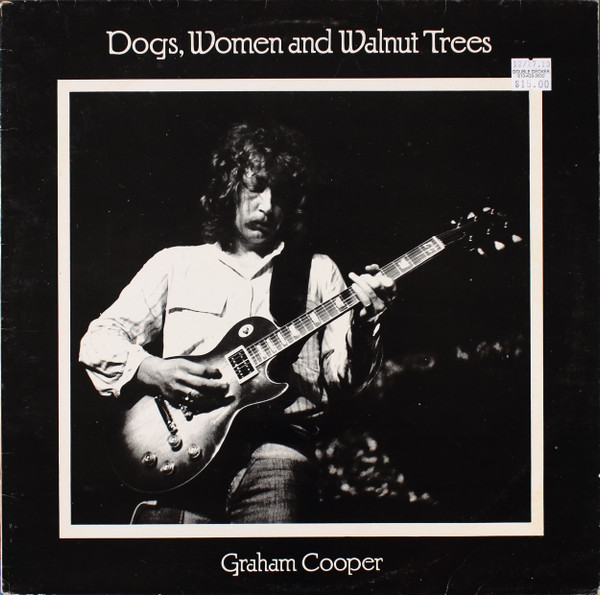
Cover of 1979’s Dogs, Women and Walnut Trees LP In September ’79, Graham Cooper entered Chestnut Studios and ably assisted by Greg Terry-Short on drums and fellow Soho member Terry Campbell on bass, who split those duties with engineer Wheatley, recorded nine rock and blues tracks, including Cupcakes Boogie. There were also backing-vocals provided by Tammy and Teri Collins on the title track, with the Bloodhound‘s Mick Hogsden, along with Greg Watkins and Terry-Short doing the same on Lar-De-Dar. These would be released as the solo vinyl LP: Dogs, Women and Walnut Trees on Fat Toad Records [FTR001]. There were also two bonus tracks on the B-side: Rollover Beethoven and Tamel recorded live with The Jackie Lynton Band and the Golden Lion, Fulham on 18 November ’78.
Camberley punk band, Lethal Dose received their master tape from Wheatley in the control room at Chestnut Studio an image that made the local press in 1980.
A Studio for All Genres
Beyond punk, Chestnut Studios supported a diverse array of artists:
- Richard Ashworth: The singer-songwriter’s M3 Revisited EP (1978) was produced by Sev Lewkowicz, a frequent collaborator in Ashworth’s backing band White Dub, at the studio.
- Warrior: Their Trouble Maker LP (1980) featured Lewkowicz on keyboards and was produced by David Clifton, who later worked with Tanita Tikaram and Julia Fordham.
- The Cast: Their album In Order of Appearance [CS 001], which was partly mastered at the studio, became the first release on Chestnut Studios’ label in 1981.
- Voltz: Laid down most of the “Knight’s Fall” LP there in 1982; which was re-released in 2019.
- The Click: Recorded three demos at the studio in 1982, and while there got the call from manager John Glover that they were being signed to A&M records.
Tim Wheatley’s connections also extended to custom pressings. Under the “NUT” label series, the studio released Twenty Flight Rock [NUT-1] by Starchase, and Sounds of The Penthouse Dance Band [NUT-2] by The Penthouse Dance Band. In early ’81, Tumbling Dice’s Thing Called Love [NUT-4] and Hipnosis’ Shaping Up [NUT-5A] were produced. This practice appears to have stopped toward the middle of ’81 with the Round Tower [NUT-6] by Truffle.

Front cover of Louise Tucker and Charlie Skarbek’s Midnight Blue (1982) After the demise of Soho, Tim Smit and Charlie Skarbek got together with opera singer Louise Tucker. Tucker’s Midnight Blue (1982) became a European chart-topper, co-produced by Wheatley and Smit. The album also featured Guildford sax player David Sherrington.
A Hotbed for Talent
The 6-piece Bloodhound spent time in Chestnut Studios in late ’79 early ’80 with Tim Wheatley producing their demo cassette. Polaris are also known to have recorded tracks at Chestnut, as are Out of Order, Matrix, T. T. Transmission, The Desotos, Pushmepullyou (produced by The Vapors Steve Smith there), The Linx, Panther, and Umpty’s Balcony / UBz who invoked a plague of frogs, that leapt about the live room, on their second visit.
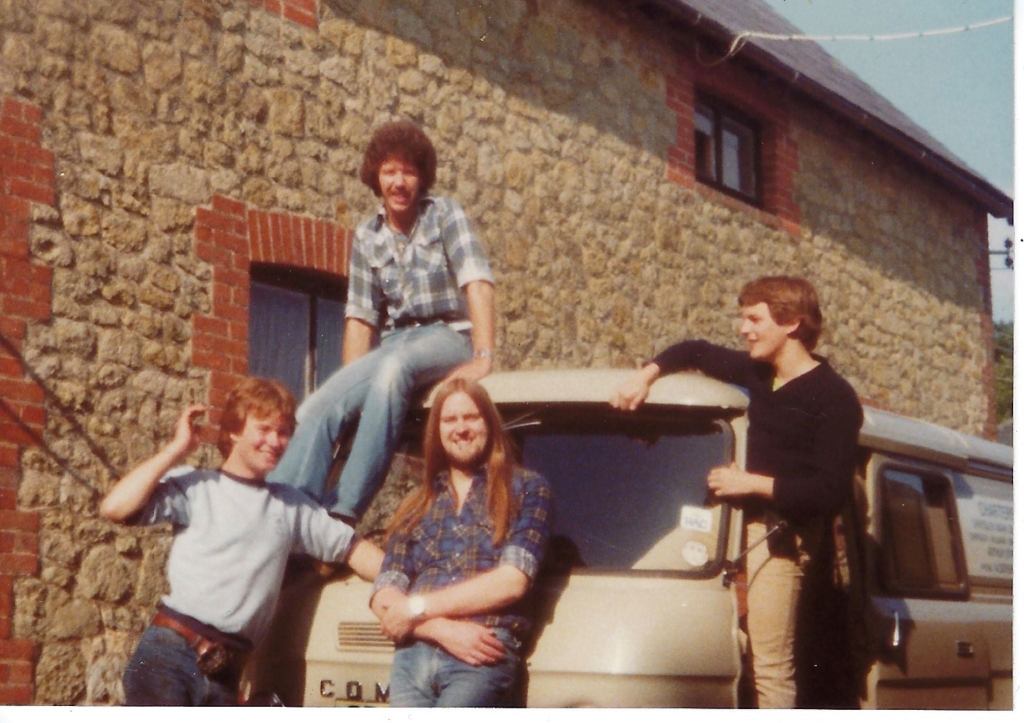
T. T. Transmission, outside Chestnut Studios. Picture courtesy of Mark Terry. Throughout its run, Chestnut Studios attracted an eclectic mix of artists. Folk musicians Maggie Holland and Jon Moore recorded the A Short Cut EP in 1986. Twickenham Streaker, Erika Rowe recorded a single “Remember Then” [PVR/CM/1] in November ’82 with Joker. The Soul Agents produced their independently released single Red Car / The Way I Feel, marking one of the studio’s final projects before its transformation into The Music Room in Farnham.
Also recorded at Chestnut in ’82 was “The Fishing Song” – Theme From “Go Fishing with Jack Charlton” issued on EMI [5286]. Written by Smit, it featured ex-The Rivals singer Stuart Reffold (vocals), Dick Middleton [guitar / banjo] and was co-produced by Smit and Lewkowicz, under the ‘band’ name Banjax (after a word used by Terry Wogan). Smit and Skarbek also produced The Reactors “Walking Wounded” at Chestnut, and photographer Herbie Knott used the studios’ location as the backdrop for a photo shoot of the duo.
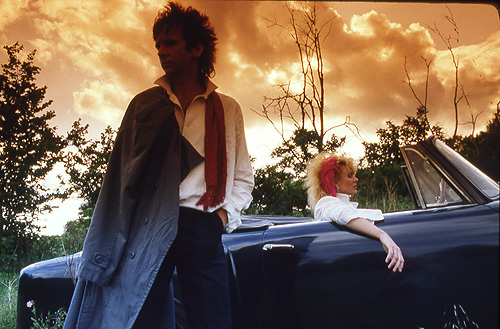
The Reactors outside Chestnut Studios in 1984 by Herbie Knott. The Legacy of Chestnut Studios
Susie Wadey and local journalist / songwriter, Dave Reading laid down some very 80’s sounding tracks – now lost to time; and John Hine recorded Silver and White, his only LP, in 1984.
In ’85, after adding real-time duplication, two Yamaha DX7’s, a Linn 2 and Linn 9000, and air conditioning, the studio started offering full residential facilities in the farmhouse adjacent. As much as Chestnut Studios symbolized a specific moment in British music history, it also served as a launchpad for significant careers. Tim Smit, who co-produced several projects at the studio, would later achieve global recognition for founding the Eden Project. Artists like Lewkowicz and Clifton carried the studio’s spirit into their future endeavors, contributing to its enduring influence.
While its doors closed in 1986, the echoes of Chestnut Studios remain, enshrined in the records and memories of those who passed through its hallowed rooms. From punk anthems to folk ballads, its contributions to the Surrey music scene—and beyond—are undeniable. But while Chestnut was no more, the studio lived on, after a refurb, as The Music Room, Churt.
Tracks:
Gallery:
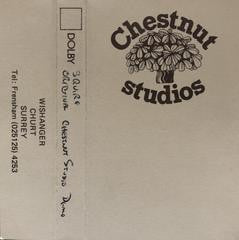
Chestnut Studios cassette inlay. This one is for a copy of Squire’s Original Chestnut Studios Demo c’78. 
1978’s various artist compilation [TR001] on the Thumb label recorded at Chestnut Studios. Picture courtesy of Ben’s Collectors Records 
1978’s various artist compilation [TR001] on the Thumb label recorded at Chestnut Studios. Picture courtesy of Ben’s Collectors Records 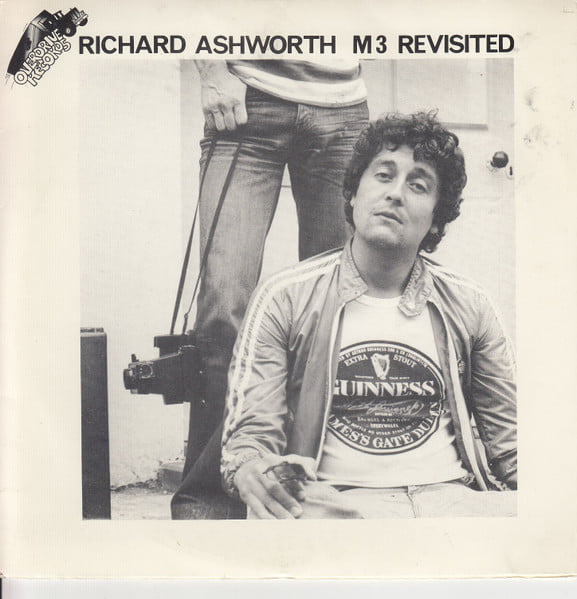
Front cover of 1978s “M3 Revisted” by Richard Ashworth, produced at Chestnut Studios. 
Back cover of 1978s “M3 Revisted” by Richard Ashworth, produced at Chestnut Studios. 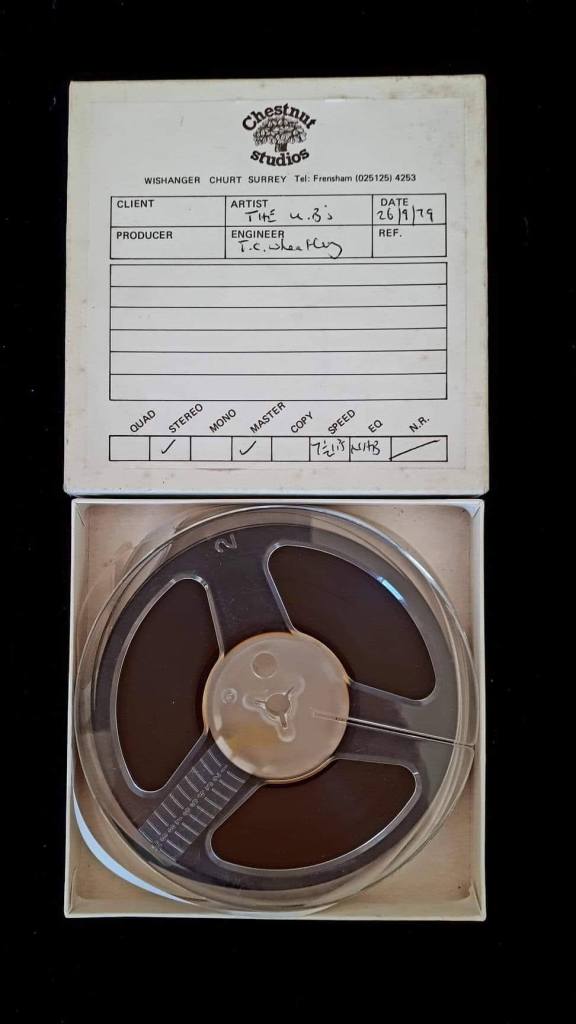
UBz’s master tape from a recording session at Chestnut Studios on 26 September 1979. Picture courtesy of Mark Charles. 
Back cover of 1979’s Dogs, Women and Walnut Trees LP 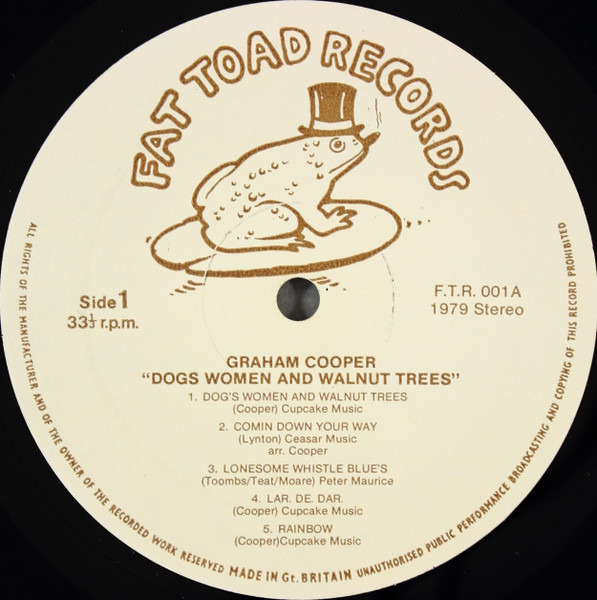
Side 1 of 1979’s Dogs, Women and Walnut Trees LP 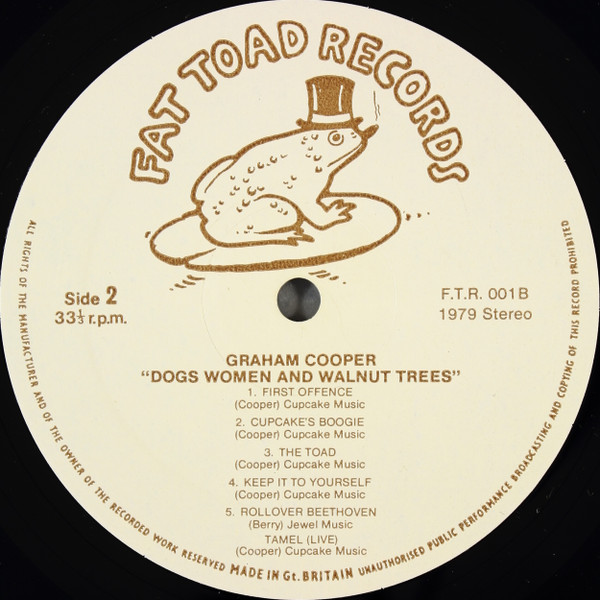
Side 2 of 1979’s Dogs, Women and Walnut Trees LP 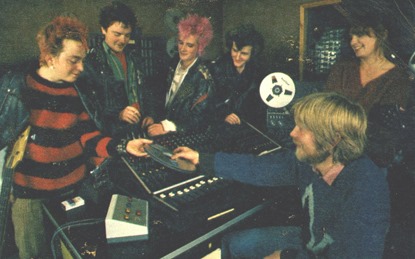
Lethal Dose in the control room at Chestnut Studio receiving a master from Tim Wheatley, owner and engineer at Keynote Studios. and Liz Wheatley in 1980. Picture courtesy of Mick Magic 
Warrior recorded their 1980 LP “Trouble Maker” at Chestnut. 
The Cast mastered most of “In Order of Appearance” in December ’81 
Also recorded at Chestnut in ’82, Banjax’s “The Fishing Song” 
Voltz entered Chestnut in ’82, laying down most of the “Knights Fall” LP there. 
Back cover of Louise Tucker and Charlie Skarbek’s Midnight Blue (1982) 
Twickenham Streaker, Erika Rowe recorded a single “Remember Then” [PVR/CM/1] in November ’82 with Joker. 
“Silver and White, John Hine’s only LP, was recorded at Chestnut in ’84. 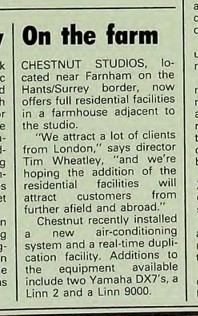
Article on Chestnut Studios from Page 40 of Music Week 18 August 1985 
Advert for Chestnut Studios from Page 40 of Music Week 18 August 1985 
Soul Agents worked on their 7″ single, “Red Car / The Way I Feel”, at Chestnut c’86 
Maggie Holland & Jon Moore recorded 6-track EP “A Short Cut” in 1986. 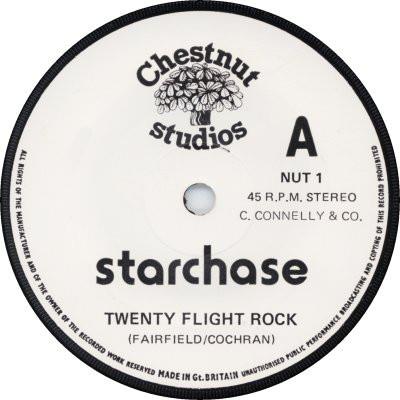
Starchase’s Twenty Flight Rock 
Penthouse Dance Band’s The Sounds of… 
Hipnosis’ Shapping Up 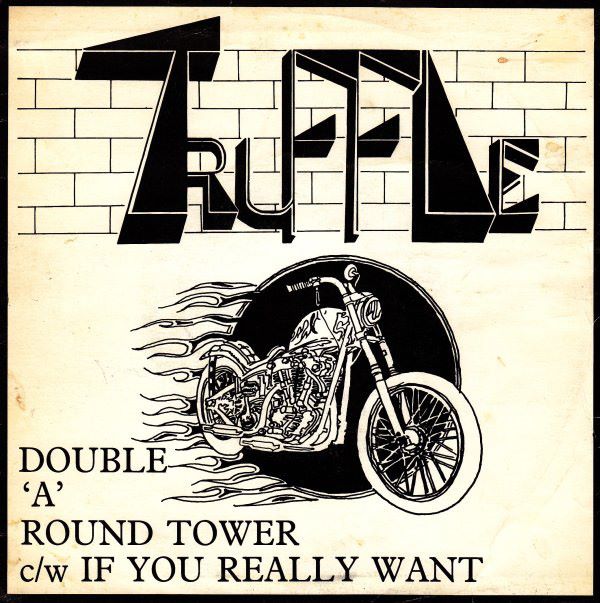
Truffle’s 7″ double A-side A&M Records, Andy Latimer, Anthony Meynell, Banjax, Bloodhound, Camel, Charlie Skarbek, Chestnut Studios, Churt, Cryin’ Out Loud, David Clifton, David Reading, David Sherrington, Dick Middleton, Eden Project, EMI, Erika Rowe, Farnham, Fat Toad Records, Frensham, Fulham, Golden Lion, Good Earth, Gracious, Graham Cooper, Greg Terry-Short, Greg Watkins, Guildford, Headwaiter, Herbie Knott, Hipnosis, House, Jackie Lynton H.D. Band, John Glover, John Hine, Joker, Jon Moore, Julia Fordham, Keynote Studios, Lethal Dose, Louise Tucker, Maggie Holland, Mark Perry, Matrix, Mick Hogsden, Out of Order, Panther, Poker, Polaris, Pushmepullyou, Richard Ashworth, Sev Lewkowicz, Shalford, Sniffin' Glue, Soho, Squire, Starchase, Step Forward, Steve Smith, Stuart Reffold, Susie Wadey, T. T. Transmission, Taggart, Tammy Collins, Tanita Tikaram, Teri Collins, Terry Campbell, The Bats, The Cast, The Click, The Desotos, The Jackie Lynton Band, The Linx, The Music Room, The Numbers, The Penthouse Dance Band, The Reactors, The Rivals, The Soul Agents, The Vapors, Tim Smit, Tim Wheatley, Truffle, Tumbling Dice, UBz, Umpty’s Balcony, Village hall, Voltz, Warrior, White Dub, Worthing -
Burst Out Laughing
(c’82-’84) Alan Neve (vocals) Tim Avory (drums) Grahame Monty (bass) and ? Solomon (guitar).
The Consenting Adults‘ Neve, Soloman and Avory coalesced with Monty to form Burst Out Laughing, who played at The Royal, Guildford and Cricketers, Westfield. Clive Searle joined the band on guitar, possibly replacing Solomon, at some point.
Managed by Nils Stevenson, who also managed Siouxsie and the Banshees, one of their gigs at the Cricketers saw Rob Pursey (Jimmy Pursey of Sham 69’s younger brother) take a dislike to Avory’s drum kit and ‘wrestled’ with it. Their ‘3 Titles’ demo cassette carried a 7″ and 12″ version of “Love Intervention” and a third track titled “Medley”.
Searle and Monty would form Indigo Swing in March ’84, out of the ashes of Burst Out Laughing. Avory is the nephew of The Kinks drummer Mick Avory. Neve, who went on to work as an auditor at the Performing Right Society (PRS), is sadly no longer with us following a traffic accident in London on 15 July 2013.
Gallery:

Short piece on Burst Out Laughing from the Bitch Bitch fanzine, Issue No1, Pg3. Picture courtesy of John Hudson 
Burst Out Laughing demo cassette. Picture courtesy of Alan Fred Pipes -
Aitch’s Wine Bar, Godalming

Aitch’s, which made it into the 1994 edition of the Good Beer Guide, was situated close to the site of the old Gin Mill Club and The Angel, Godalming, in Angel Court, and was known by many a name over the years: Cafe Mila, Angels Wine Bar, Aitch’s Bar Café, JR’s (c’79-’81), Cheers Wine Bar (c’88), Harlequins, Carl’s Wine Bar (c’85-’87), Cobwebs (c’88), Glasshouse, The Grapevine, etc. It is now closed and was converted into a yoga studio with cafe in 2011.
Its heyday as a, paying, music venue was the early 90’s, when the likes of The Four Marys and The Sugar Plums appearing there, with the painting of Jimi Hendrix / Derek Griffiths (If you have seen it, you know what we mean) behind them on the stage.On 19 September ’92 we found Backtracks filling the void with sound, followed by Ritch n’ Famus the next night. While this Soundcene writer was at The Cricketer’s, Westfield for Backlash and Peachrazor, Aitch’s Wine Bar welcomed Kambium on 9 October ’92, and Ritch n’ Famus would return on 22 November. FIB were on form on 21 February ’93, and Who Moved the Ground? made an appearance a few days later on 27 February. The Trifecta of Backlash, Summersalt, and Kambium made for a memorable night on 2 June ’93. Summersalt returned on 17 July that year to support Vox Pop.
On 5 January ’94, Aitch’s hosted Who Moved the Ground? with support provided by Backlash; and Crazy Face performed at the venue ten days later, on 15 January, then Nitch on 19 January. Bananafish traveled up from Portsmouth on 26 February and on 12 and 14 September ’94, b.l.o.w. (ex-Little Angels), who were regulars at The Anchor Inn, Godalming, where they also played, blew through. It was on the itinerary for Who Moved the Ground?’s promo tour for their second single, “The Chase”/”What’s That”, on 21 September ’94, when they were supported by Skipper.
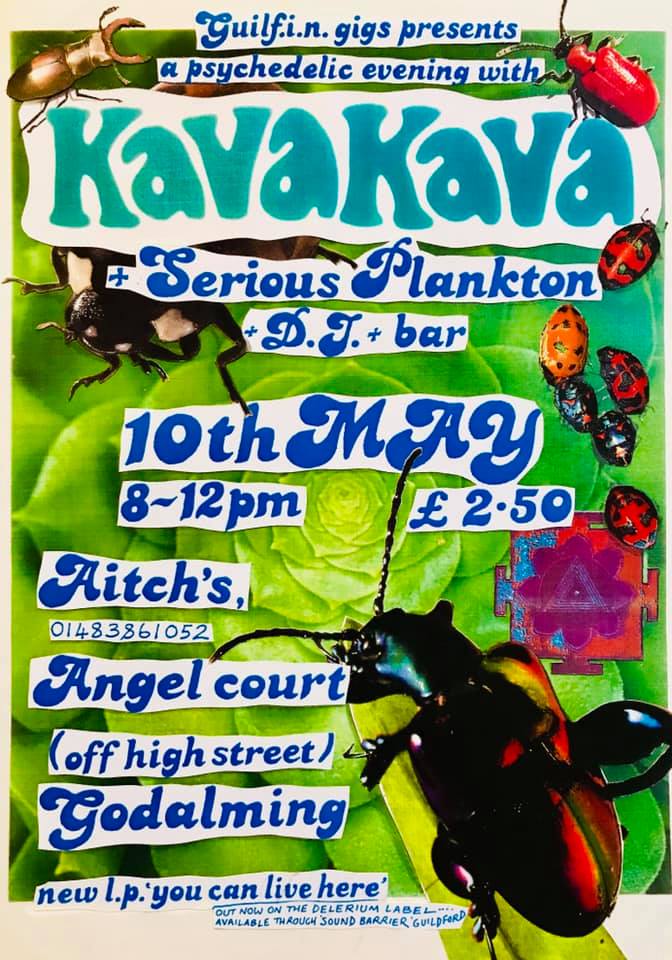
10 May 95: Serious Plankton support Kava Kava (colour version) at Aitch’s, Godalming. Source: GuilFin It was also the location for a Guilfin fund raiser with Kava Kava – who had just released the “You Can Live Here” LP – and Serious Plankton on the bill on 10 May ’95. But it wasn’t just local bands who appeared at the upstairs venue; Bracket from the US, and China Drum from Ovingham also gigged there. There is also an as yet unverified tale that Doctor and The Medics were rocking there one night.
Gallery:

21 September 1994: Who Moved The Ground? released their 2nd single: “The Chase”/”What’s That”. This clipping, from an unknown mag, lists the promo tour dates. Source: Who Moved the Ground?
10 May 95: Serious Plankton support Kava Kava (mono version) at Aitch’s, Godalming. Source: GuilFin Aitch’s, Aitch’s Bar Cafe, Aitch’s Wine Bar, Angels Wine Bar, b.l.o.w., Backlash, Backtracks, Bananafish, Bracket, Cafe Mila, Carl’s Wine Bar, Cheers Wine Bar, China Drum, Cobwebs, Crazy Face, Doctor and The Medics, FIB, Gin Mill, Glasshouse, Godalming, Guilfin, Harlequins, Kambium, Kava Kava, Little Angels, Nitch, Peachrazor, Ritch n’ Famus, Serious Plankton, Skipper, Summersalt, The Anchor Inn, The Angel, The Cricketers, The Four marys, The Grapevine, The Sugar Plums, Vox Pop, Westfield, Who Moved the Ground?
 Our Soundscene
Human beings takes me back to 1981. Followed them all over the Surrey reading area for a year a great band and 3 good guys playing well written songs of the era. I wish john Tim and steve well what ever they are doing now. Should reform for a few shows just like Oasis but do the wooden bridge.
LikeLiked by 1 person