
-
Jack Smith

(c’50’s-?) Jack Smith (singer)
A self-proclaimed settled gypsy, Smith lived in Milford and earnt his crust as a knife and scissors grinder.
He was a familiar, and beloved, sight with his donkey cart or bike, that he called his ‘Factory’, around Godalming. Jack’s faithful donkey would take him home to Chapel Lane from the Red Lion when he was a bit tipsy, or as told, if he were to meander out of the Merry Harrier’s, Hambledon, he’d light the candles covered by jam jars on his trap and clamber aboard, slap the beast which would then take him home while he slept.
Not so many were familiar with Jack Smith the folk singer. On 19 April ’59 he was recorded on reel-to-reel tape by Horsham amateur recorder of folklore Tony Wales, for his Field Collection. He partook in many folk clubs and friend Tom Dillon would take him to the Fighting Cocks in Kingston, where he performed on 26 Feb, 22 Oct, 5 Nov ’69. He was reportedly also a poaching pal of Pop Maynard, and it would seem that they both poached much of each other’s folk song repertoires.
Recordings of Smith, singing six songs and performing the opening toast, appear on MTCD356-7: King’s Head Folk Club, Traditional Performers 1968-70, released in 2012, as well as on MTCD358: A Second Catalogue Sampler.
Tracks:Gallery:
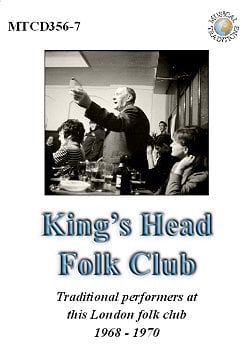
Jack Smith sings six songs and performs the opening toast for this compilation: King’s Head Folk Club, Traditional Performers 1968-70 [MTCD356-7] 
Jack Smith and son. Picture shared by Dave King. 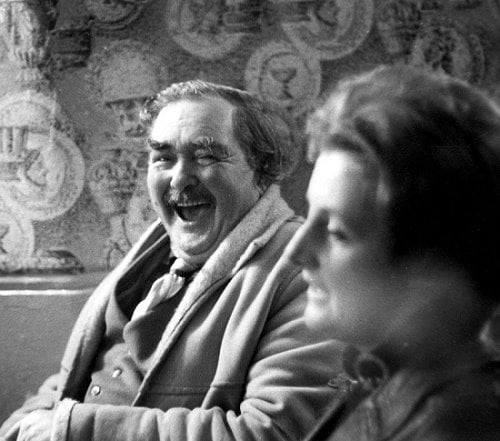
Jack Smith with Marian Dillon at Fighting Cocks, Kingston. Source: www.mustrad.org.uk 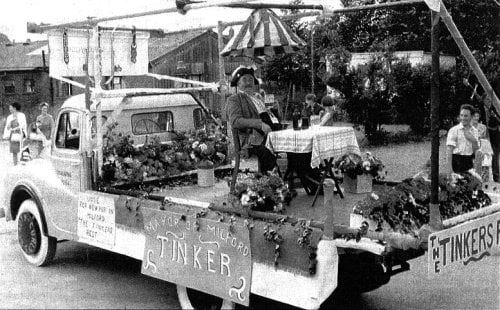
Jack Smith at Godalming Fayre as Tinker, The Mayor of Milford having a pint in The Tinker’s Rest. Source: www.mustrad.org.uk -
Tom Dillon

(c’66-?) Tom Dillon (floor singer)
Past members of the Stag Folk Club, Shackleford often recall the local floor singers (unpaid local performers who get the chance to sing in public for pleasure, to learn/hone their skills in front of an audience that has maybe turned out for a ‘pro’). One popular floor singer was Tom Dillon, who lived in Godalming, and was often seen at the Ram Cider House and the Vintners Arms, Guildford in the late ‘60’s for folk sessions.
Stag organizer David Johnson recalls Dillon singing many times at StagFolk and more than once having a guest singer ask after him. Dillon also became a resident performer the Guildford Folk Music Club from ’64-’66, and the Folk Night held at The Red House, Woking; organised by the Woking Folk Club. This club also organized a benefit performance, that included Dillon, at the Civic Hall, Guildford for Medical Aid to Vietnam. Dillon would also head up to Kingston’s Fighting Cocks for their folk club meetings and we know he took fellow Godalming singer Jack Smith with him on occasion.
The last we heard was that Dillon performed at The Volunteer, Sidmouth -during Folk Week – singing “Sonny’s Dream” amongst other classics in August 2001.
Tracks:Gallery:

Tom Dillon 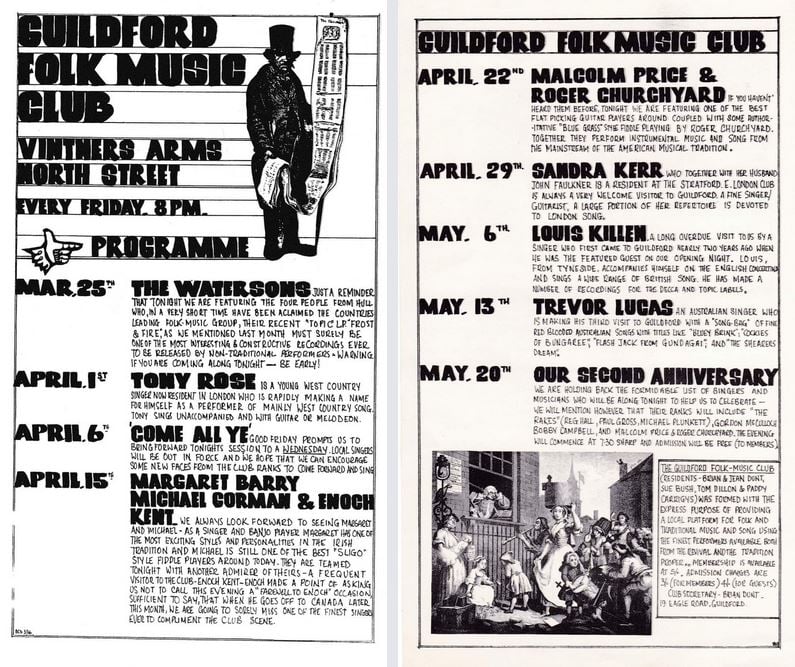
Programme, designed by Brian Dunt, for the Guildford Folk Music Club held at The Vintners Arms, Guildford in 1966. Picture courtesy of Ben’s Collectors Record 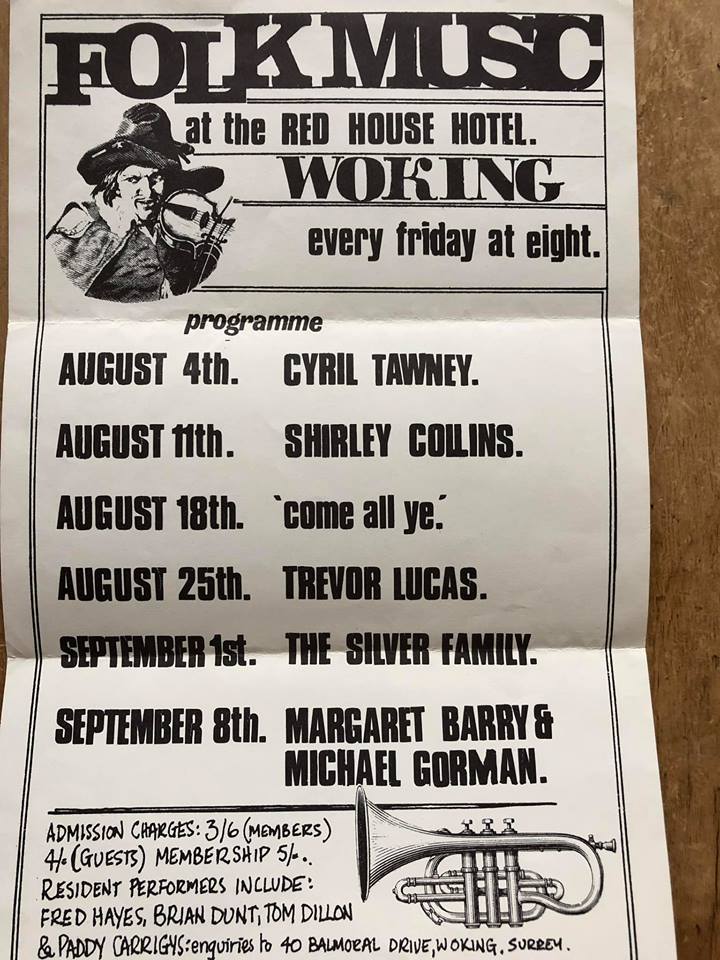
The Red House held a regular Folk Night in the mid to late 60’s, This is from 1967 and lists Dillon as a resident performer. Source: Sue Bradman via WOKING-OLD and NEW (memories and history). 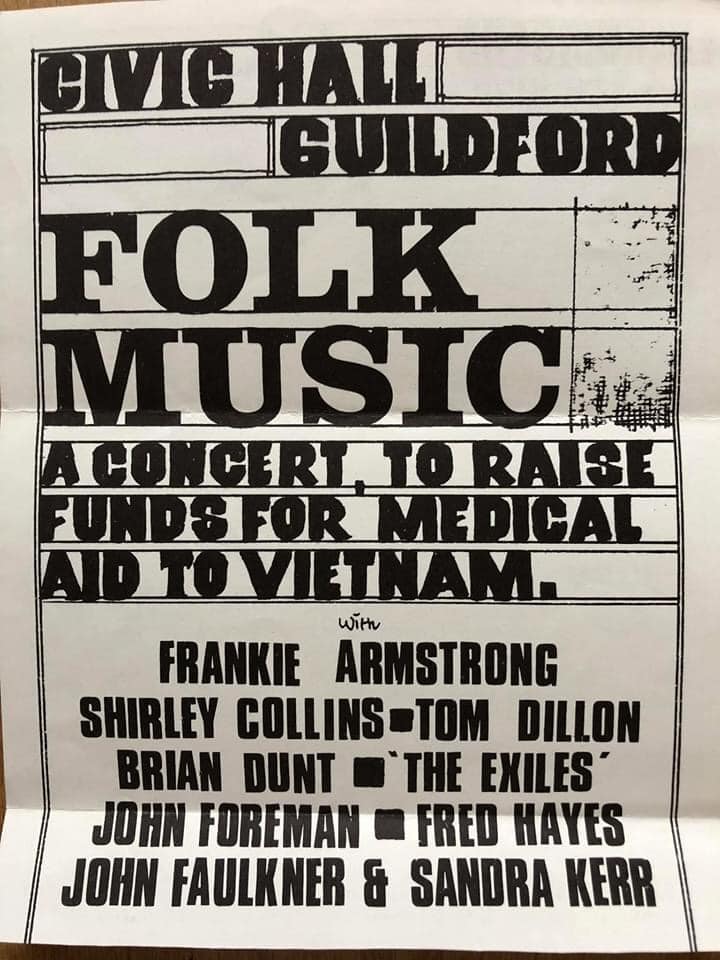
Front of hand bill for the Woking Folk Club benefit that included Dillon, at the Civic Hall, Guildford. Picture courtesy of Sue Bradman. 
Back of hand bill for the Woking Folk Club benefit that included Dillon, at the Civic Hall, Guildford. Picture courtesy of Sue Bradman. -
The Workhouse, Aldershot

The Workhouse Rehearsal Studios, on Sebastopol Road – well known to fans of Mega City Four who rehearsed here – in Aldershot; was a rehearsal and workspace for many a band. It was run by Mark Davenport, who was also in Who’s the Spy?, and bands booked rooms, with names like Slammer and Asylum, on an ad hoc basis.

Harding & Ernest of Redefining Beautiful at The Workhouse, Aldershot. Image courtesy of Matt Harding J.C. Regulator referred to The Workhouse as their spiritual home for many years, and the Twister duo also wrote and rehearsed at Workhouse Studios. The Flowers of Sacrifice recorded “Flower Power” there, on a 4-track, booking a space from midnight onwards. The building was industrial in its feel and the lifts were quirky, and a fair warning was oft given to not record during a home match for Aldershot; for if they scored, you’d hear it. Another band to rehearse at The Workhouse were Redefining Beautiful, whose vocalist / guitarist, Martin Warren manned the reception desk on Sunday mornings for a while. Another to work the front desk was Study in Scarlet’s drummer Keith ?.
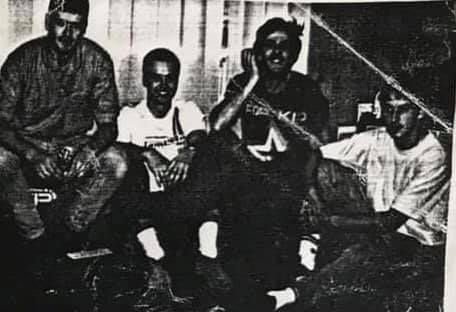
Thieves of Dreams waiting for the Workhouse lift c’90/’91. Image courtesy of Ian Bridgeman The Workhouse also had some backline equipment, reportedly of dubious quality, that was available to rent. After a while, Davenport passed the business on to a new proprietor called Alan ?; who made an arrangement with bands, including J.C. Regulator and Thieves of Dreams, to rent rooms on a permanent basis, allowing gear to be left set up for rehearsals at any time. Serious Plankton released the “Three from Five on Four” demo cassette in ’93, which was recorded at The Workhouse; and engineered / mixed by Mega City Four‘s Gerry Bryant. Also recorded, by Splat the singer with Disturbing Guests, at The Workhouse was Cornered‘s “Life Injection” cassette demo in ’97.
Alan sold it to a guy called Tony who owned the printing business elsewhere in the building. Kelly managed it for Tony until it closed and Tony sold it off for demolition.

J.C. Regulator rehearsing c’92 at Workhouse Rehearsal Studios, Aldershot. Picture courtesy of Bruno Bannerman After the business ceased trading, Alan sold is to Tony ?, the owner of the building who owned a priniting business elsewhere in the complex. Kelly ? managed it for Tony and carried over the rental agreement/s and some bands, such as J.C. Regulator, continued annoying the neighbours, including Burger King who were a regular complainer, until the premises were sold by Tony for demolition in the late ’90s.
Gallery:
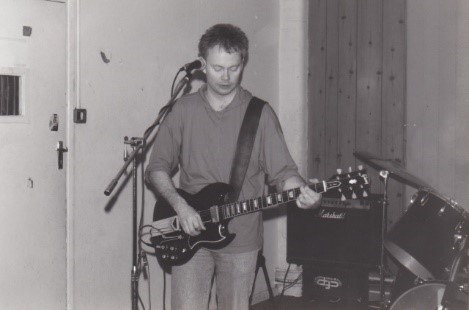
J.C. Regulator at The Workhouse, Aldershot. Photo by Dirty Dave and here courtesy of Bruno Bannerman 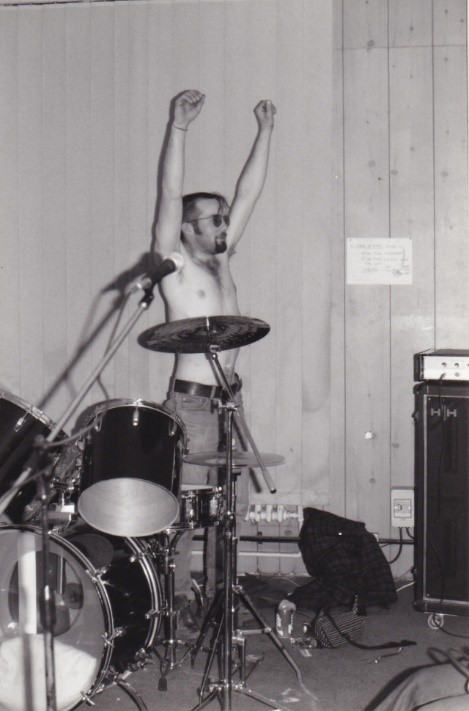
J.C. Regulator at The Workhouse, Aldershot. Photo by Dirty Dave and here courtesy of Bruno Bannerman 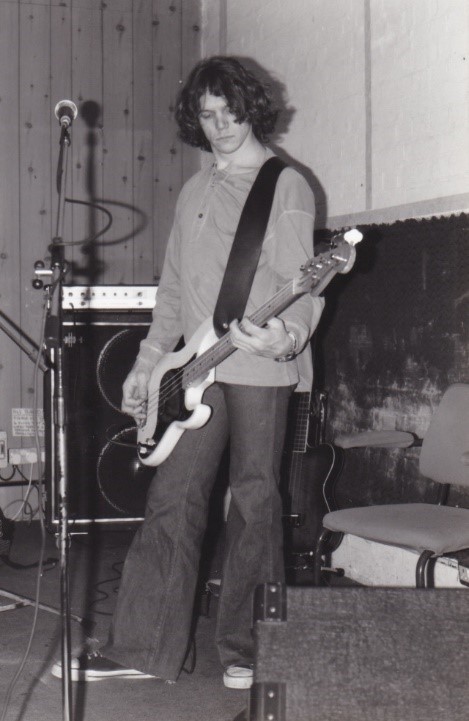
J.C. Regulator at The Workhouse, Aldershot. Photo by Dirty Dave and here courtesy of Bruno Bannerman 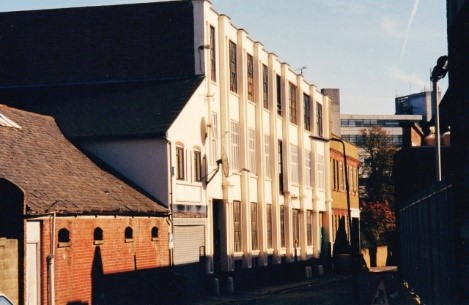
The Workhouse, Sebastopol Road, Aldershot. Picture courtesy of Bruno Bannerman 
Redefining Beautiful at The Workhouse, Aldershot. Image courtesy of Matt Harding 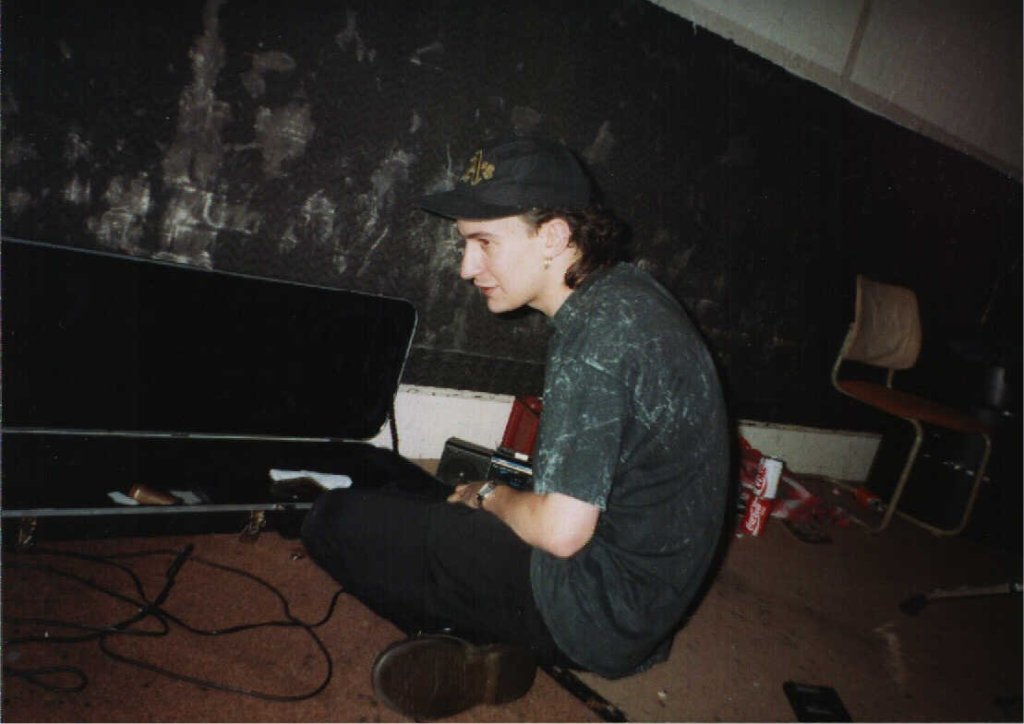
Harding of Redefining Beautiful at The Workhouse, Aldershot. Image courtesy of Matt Harding 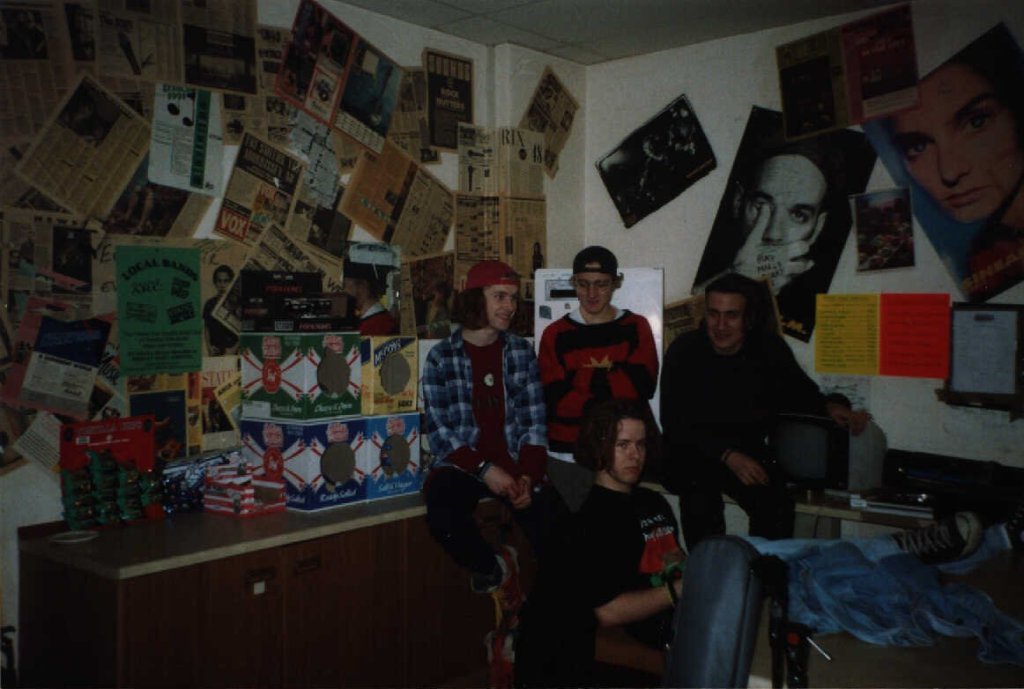
Redefining Beautiful in The Workhouse’s reception area. Image courtesy of Matt Harding 
Redefining Beautiful, and Keith of Study in Scarlet, in The Workhouse’s reception area. Image courtesy of Martin Warren 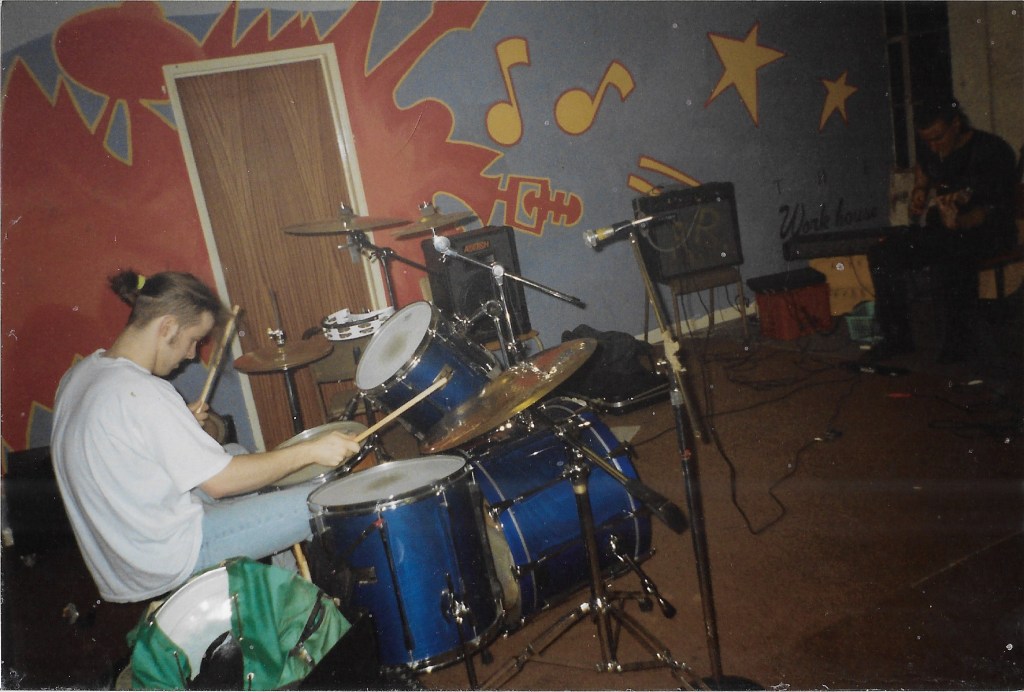
Russ (drums) and Harding (guitar) from Redefining Beautiful at The Workhouse. Image courtesy of Martin Warren 
Harding of Redefining Beautiful at The Workhouse. Image courtesy of Martin Warren 
Warren of Redefining Beautiful at The Workhouse. Image courtesy of Martin Warren Aldershot, Burger King, Cornered, Disturbing Guests, Gerry Bryant, J.C. Regulator, Mark Davenport, Martin Warren, Mega City Four, Redefining Beautiful, Sebastopol Road, Serious Plankton, Study in Scarlet, The Flowers of Sacrifice, The Workhouse, The Workhouse Rehearsal Studios, Thieves Of Dreams, Twister, Who’s the Spy? -
The Musicians

(c’78) Martin Adams (bass), Graham Humphreys (drums), Kevin Gould (guitar), and Mark Stock (vocals).
The band formed as The Musicians for Oak Farm Comprehensive’s production of “The Weirdstone of Brisingamen” in March 1978. During the performance Adams played some of the bass parts with a violin bow, Jimmy Page style.
Over the following months the band ‘toured’ a number of schools doing live interludes for parties and discos. Humpreys ended up in a band touring on cruise ships after leaving Oak Farm. Stock was in another school band after The Musicians and other rock bands, playing gigs in the Hampshire area. Last we heard Adams was still playing bass.
Gallery:

The Musicians c’78. Source: Mark Stock via FHN 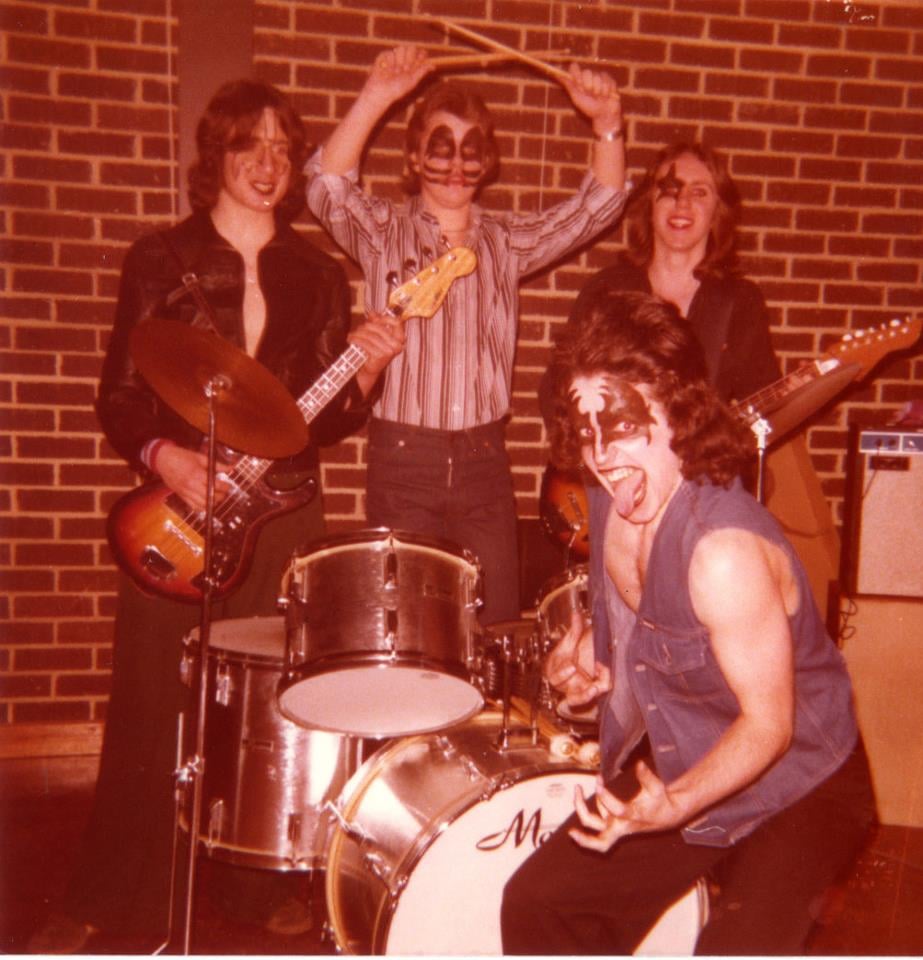
The Musicians c’78. Source: Mark Stock via FHN -
The F1-11s

(c.’86-’88) Chris Keating (bass / backing vocals) Carl Launchbury (drums) Bruno Skrastins (guitar / vocals).
Based around Ash/Aldershot, the F-One-Elevens (F1-11s) formed in August ’86 following a jam session at the Strawberryfields Rehearsal Studio at Burrows Lea Farm, Peaslake. The F1-11s aimed to write, arrange and play punk edged power-pop, in the style of Stiff Little Fingers, The Jam, The Clash etc.
Keating had previously played with Maxi Puch and the Macho Moped Men and The Plague; Launchbury with The Vulgar Brothers; Skrastins with This Breed of Heroes, The Little Winkies/Press Gang and Cheap Thrills. Throughout the remainder of ’86 and into ’87, the band played repeat gigs at the Lion Brewery Ash, and The Crimea, The Rising Sun and The Beehive in Aldershot. Although well received, the band struggled to get away from the local pub circuit and into the indie/punk scene.
The Vulgar Brothers revival led to the departure of Launchbury, who was replaced by Colin Brook-Jones. The new line up recorded a 2-song demo tape at the Limelight Recording Studios located in the West End Centre, Aldershot. However, following lacklustre gigs at the Rising Sun, Aldershot and the Thurlow Arms near Cranleigh, the F1-11s faded, then folded.
Following a chance meeting in July ’88 with Patrick James of West One; The F1-11s were invited to reform to support West One and the Rising Signs at a forthcoming gig at the West End Centre. The band re-recruited Launchbury, rehearsed throughout the Summer and on 2nd September 1988 played to a packed out and enthusiastic crowd at the Westy. The band, regarding this as going out in a blaze of glory, called it a day for good.
Skrastins was a founding member of J.C. Regulator in ’92.
Gallery:

The F1-11s at the Beehive, Aldershot. (L-R: Skrastins, Launchbury, and Keating). Picture courtesy of Bruno Bannerman 
The F1-11s during rehearsals at Strawberryfields Studios, Peasmarsh. Picture courtesy of Bruno Bannerman. 
The F1-11s during rehearsals at Strawberryfields Studios, Peasmarsh. Picture courtesy of Bruno Bannerman. 
Colin Brook-Jones of The F1-11s. Picture courtesy of Bruno Bannerman. 
2 September 1988: Flyer for West One supported by Rising Signs, and F1-11 at the West End Centre, Aldershot. Source: West One 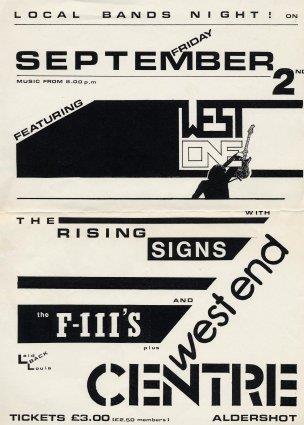
2 September 1988: Poster for West One supported by Rising Signs, and F1-11 at the West End Centre, Aldershot. Source: West One 
2 September 1988: Poster for West One at the West End Centre, Aldershot. They were supported by supported by Rising Signs, and F1-11. Source: West One
2 September 1988: The F1-11s at the West End Centre, Aldershot. Picture courtesy of Bruno Aldeshot, Ash, Bruno Skrastins, Carl Launchbury, Cheap Thrills, Chris Keating, Colin Brook-Jones, Cranleigh, F-One-Elevens, J.C. Regulator, Limelight Recording Studios, Lion Brewery Ash, Maxi Puch and the Macho Moped Men, Patrick James, Peaslake, Press Gang, Strawberryfields Rehearsal Studio, The Beehive, The Crimea, The F1-11s, The Plague, The Rising Signs, The Rising Sun, This Breed of Heroes, Thurlow Arms, Vulgar Brothers, West One -
The 1995 Gig List

What follows is a list of gigs, with images of tickets, adverts and flyers where possible, either at GU postcode venues or featuring bands, listed in bold, we like to claim are part of the Woking/GU Soundscene in 1995:
January 5
Marquee, London: Moondigger w/ Headnoise
Kerrang, January 1995 January 6
Railway Enthusiasts Club, Farnborough: Who Moved the Ground?January 7
Cellar Bar, South Hill Park, Bracknell: J.C. Regulator (Kidney Foundation Charity Event)January 14
Granby Tavern, Reading: Who Moved the Ground? w/ J.C. Regulator (Kidney Foundation Charity Event)January 19
Interspace, Bull & Gate, Kentish Town: Blameheads w/ Headrush, Silt, and CUT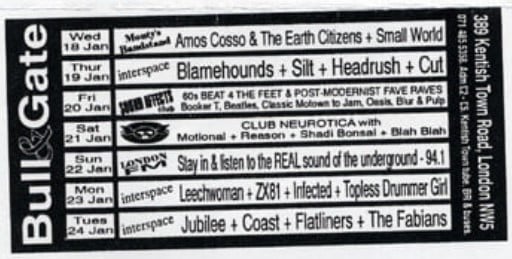
19 January 1995: CUT at Interspace, Bull & Gate, Kentish Town, Source: Mick Mercer via BULL & GATE MEMORIES – remembering all who sailed in her musical tidal wave January 28
65 London Road, Camberley: Who Moved the Ground?February 1
Steps Wine Bar, Dorking: Who Moved the Ground?February 3
Splatch!, Civic Hall, Guildford: The Baby South w/ Skipper, Meanwhile and Redefining Beautiful
3rd February 1995: Skipper were on the bill of the first Splatch!. Source: The Surrey & NE Hampshire Music Scene February 9
Dublin Castle, Camden: Who Moved the Ground?February 10
Labour Club, Lewisham: Who Moved the Ground? w/ Doo The Moog?February 18
Lord Nelson, Clacton-On-Sea: Who Moved the Ground? w/ Couch Potatoes
West End Centre, Aldershot: The Perfect Circles w/ Serious Plankton, and J.C. RegulatorFebruary 21
Wedgewood Rooms, Portsmouth: S*M*A*S*H w/ Spitfire, and Headnoise
21 February ’95: Headnoise, along with Spitfire, supported S*M*A*S*H at the Wedgewood Rooms, Portsmouth. Source: The Surrey & NE Hampshire Music Scene February 23
Cellar Bar, Bracknell: Who Moved the Ground? w/ Perfect CirclesFebruary 25
White Lion, Streatham: Who Moved the Ground?February 26
Cellar Bar, South Hill Park, Bracknell: J.C. Regulator (Hunt Sabs Benefit)February 28
The Falcon, Camden: Who Moved the Ground?March 2
Flapper & Firkin, Birmingham: Who Moved the Ground? w/ SubaqwaMarch 4
West End Centre, Aldershot: Who Moved the Ground?March 9
The Shed, South Hill Park, Bracknell: Skipper w/ HeadcopterMarch 11
The Swan, Fulham: Haze w/ The X-Factor, and J.C. RegulatorMarch 14
St. John’s Tavern, London: Summerbee w/ Casual, and Mood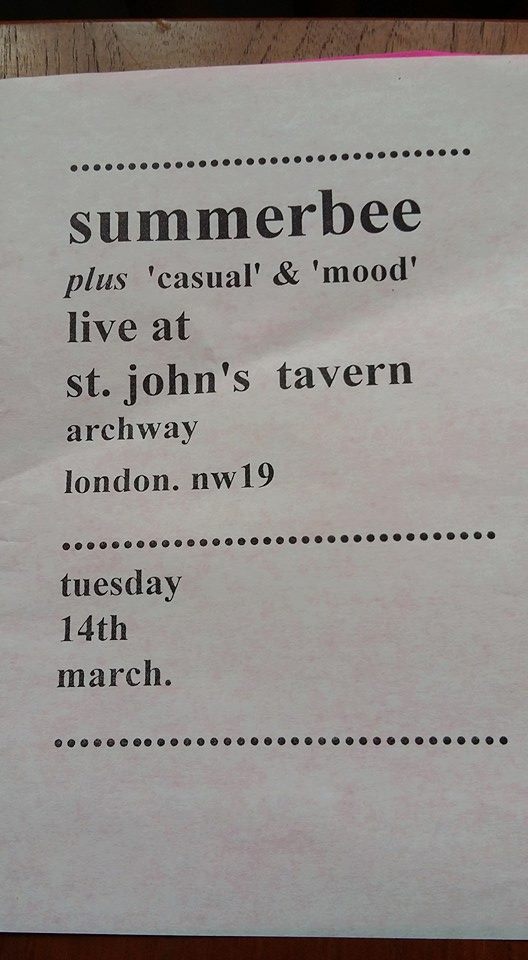
14 March 1995. Photo courtesy of Michael Bailey March 15
Aitch’s, Godalming: Who Moved the Ground?March 17
Olivers, Gosport: Who Moved the Ground?March 25
Marquee, London: Dirty Strangers w/ Orphic Soop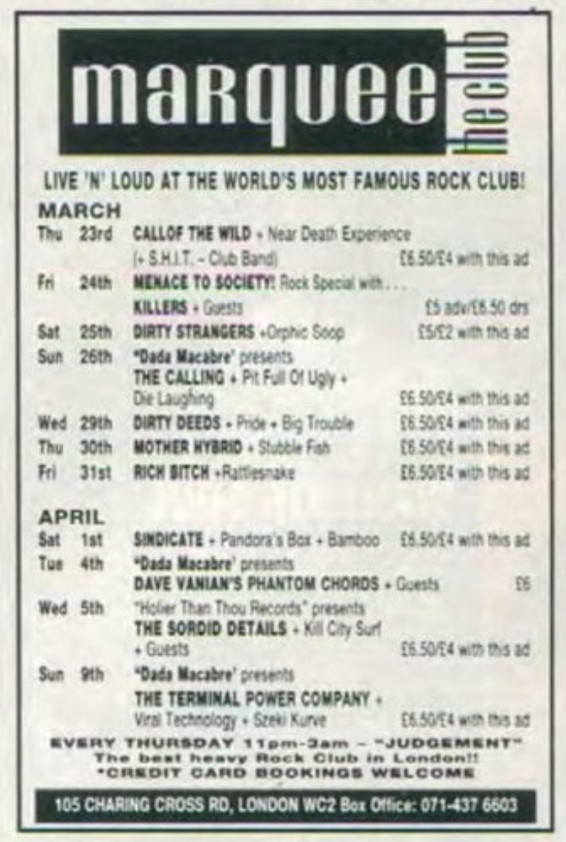
25 March 1995: Orphic Soop support Dirty Strangers. Source: Steve Gray via Marquee Club London March 30
Golden Cross, Coventry: Who Moved the Ground? w/ Swamp DonkeyMarch 31
Bitterne Park Hotel, Southampton: Who Moved the Ground?April 1
Civic Hall, Guildford: Who Moved the Ground? w/ Toys in the Attic, and BloomApril 4
The Anvil, Basingstoke: Who Moved the Ground? w/ BashApril 5
Wedgewood Rooms, Portsmouth: b.l.o.w.April 8
The Mill, Banbury: Who Moved the Ground?April 13
Cellar Bar, Bracknell: Who Moved the Ground?April 14
The Cricketers, Westfield: Sideways w/ XLR8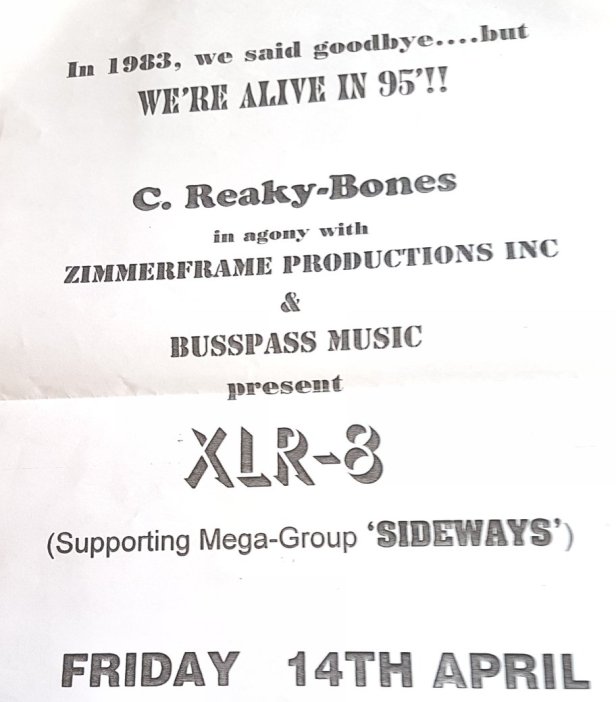
14 April 1995. Picture courtesy of William de Kock April 15
Hydons Ball, Hydons Heath, Godalming: Who Moved the Ground?April 18
Lichtwirtschaft, Leipzig, Germany: Who Moved the Ground? w/ J.C. RegulatorApril 20
Klub Domino, Slupsk, Poland: Who Moved the Ground? w/ J.C. RegulatorApril 21
Kino Teatr Tecza, Warsaw, Poland: Who Moved the Ground? w/ Sanctus Iuda, and J.C. Regulator
21 April 1995: Who Moved the Ground? and J.C. Regulator played Kino Teatr Tecza, Warsaw, Poland. Source: Who Moved The Ground? April 22
Klub Bilardowy, Zdunska Wola, Poland: Who Moved the Ground? w/ J.C. RegulatorApril 23
Klub Futurysta, Kalisz, Poland: Who Moved the Ground? w/ J.C. RegulatorApril 25
Lichtwirtschaft, Leipzig, Germany: Who Moved the Ground? w/ J.C. RegulatorApril 26
Gerber Strasse 3, Weimar, Germany: Who Moved the Ground? w/ J.C. RegulatorMay 5
The Windmill, Four Marks: Who Moved the Ground?May 7
The Wheatsheaf, Farnham: Who Moved the Ground?May 10
Aitch’s Wine Bar, Godalming: Kava Kava w/ Serious Plankton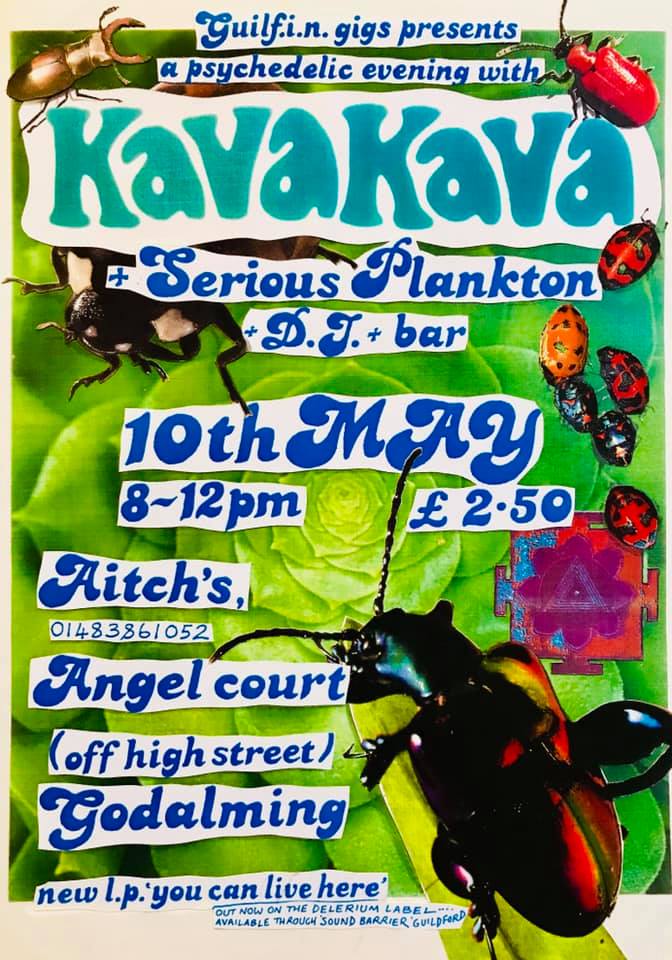
10 May 95: Serious Plankton support Kava Kava (colour version) at Aitch’s, Godalming. Source: GuilFin 
10 May 95: Serious Plankton support Kava Kava (mono version) at Aitch’s, Godalming. Source: GuilFin May 13
The Cricketers, Westfield: Under Cover Sex Gods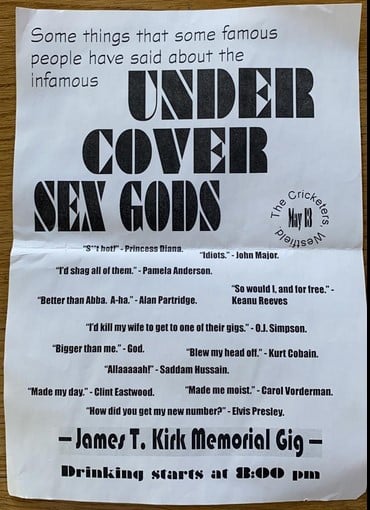
13 May 1995: The Cricketers, Westfield hosted the Under Cover Sex Gods. Picture courtesy of Daniel Hiscocks Reading University, Reading: Snuff w/ China Drum, Who Moved the Ground?, and Ampersand

13 May 1995: Snuff played Reading University supported by China Drum, Who Moved The Ground? and Ampersand. Source: Who Moved The Ground? May 14
The Wheatsheaf, Farnham: Who Moved the Ground?May 15
The Dolly, Oxford: Who Moved the Ground?May 19
Wilde Theatre, Bracknell: Who Moved the Ground?May 24
Lockwood Centre, Guildford: J.C. RegulatorMay 25
Olivers, Gosport: Who Moved the Ground?May 26
Hydons Ball, Hydons Heath, Godalming: Who Moved the Ground? w/ The SmallsMay 27
Blades Bar, Ice Rink, Basingstoke: Who Moved the Ground? w/ World SuicideMay 28
Firm Foundations Festival, Hemel Hempstead: Who Moved the Ground?June 2
Lord Wandsworth College, Long Sutton: Who Moved the Ground?June 3
Princes Hall, Aldershot: Who Moved the Ground? w/ Riser, and J.C. Regulator (afternoon, outside)June 9
West End Centre, Aldershot: Who Moved the Ground? w/ Blessed Ethel, and TongueJune 10
Tuxedo Junction, Eastbourne: Who Moved the Ground?June 13
Busby’s, Charing Cross: Mega City Four w/ The Rosehips, and The Sect.
13 June 1995: Band pass for Busby’s, Charing Cross for Mega City Four, Rosehips, and The Sect. Source: Kevin Maunsell via Mega City Four June 16
Splatch!, Civic Hall, Guildford: Supermodel w/ Redwood, Headnoise, and Disturbing GuestsJune 17
Technical College, Aldershot: Who Moved the Ground? w/ Headnoise, and SilversphereJune 21
Aitches, Godalming: J.C. Regulator w/ SynSynicsJune 22
Cellar Bar, South Hill Park, Bracknell: Riser w/ Mandate and Thieves of Dreams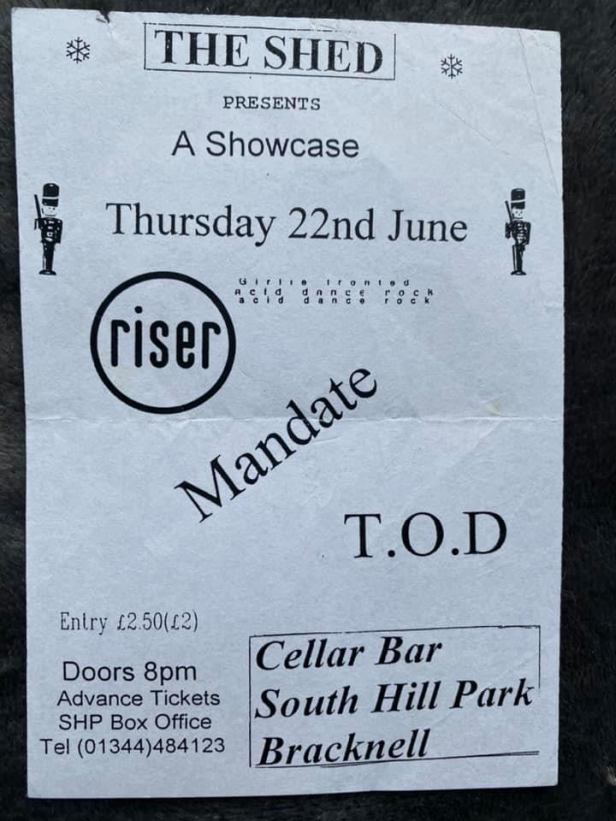
22 June 1995: Riser, Mandate and Thieves of Dreams all appeared at the Cellar Bar, South Hill Park, Bracknell. Source: TOD Thieves of Dreams June 27
The Falcon, Camden: Who Moved the Ground?June 28
Woodland Tavern, Gillingham: Who Moved the Ground? w/ Alvin Purple
Bull & Gate, London: SkipperJune 30
Olivers, Gosport: Who Moved the Ground?
Blades Bar, Basingstoke: Feckle w/ The Pershers and Skipper
30 June 1995: Advert from Donut Vol.2 (June 1995) has Skipper supporting Feckle, along with The Perishers, at Blades Bar, Basingstoke. Source: www.razrazzle.wordpress.com July 1
Main Stage, Out There Festival, Bracknell: Who Moved the Ground? w/ Jah Wobble, and J.C. RegulatorJuly 2
A Boat, Surrey to Thames Barrier: Nightshift
Folk Festival, Bracknell: Blyth Power w/ Equation, Cuckooland, WOB, and MaccabeesJuly 3
Princes Hall, Aldershot (outside): J.C. RegulatorJuly 6
Aitchs, Godalming: Who Moved The Ground?July 8
Surrey Police HQ, Guildford: Who Moved the Ground? (afternoon)
The Ship Inn, Fordingbridge: NightshiftJuly 9
Viaduct Inn, Hanwell: Who Moved the Ground? w/ The FeatherheadsJuly 12
Duke Of Wellington, Shoreham by Sea: Who Moved the Ground?July 14
Granby Tavern, Reading: Who Moved the Ground?
Trades Club, Gosport: Restless Natives w/ Thieves of Dreams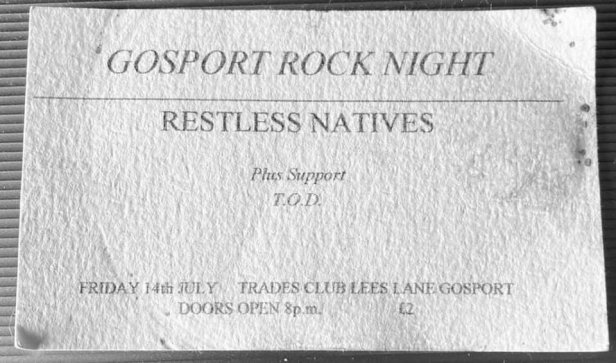
14 July 1995: Thieves of Dreams supported Restless Natives at Trades Club, Gosport. Source: Steve of Restless Natives via TOD Thieves of Dreams July 15
Imperial College, Ascot: Who Moved the Ground? w/ Cuckooland
Phoenix Stage, Pheonix Festival, Long Marston, Stratford-Upon-Avon: Faith No More w/ Public Enemy, Terrorvision, Paradise Lost, Body Count, Ice-T, EMF, Senseless Things (no-show), Gallon Drunk, Shootyz, Groove, and PitchshifterJuly 20
The Stage, Worcester: Who Moved the Ground? w/ Half Term & National Speed LimitJuly 23
Upper Street, Islington: Who Moved the Ground?July 25
The Cartoon, Croydon: Who Moved the Ground?July 26
The Mill (Theatre), Banbury: Who Moved the Ground?
Lockwood Centre, Guildford: J.C. RegulatorJuly 27
Olivers, Gosport: Who Moved the Ground?August 8
Splash Club, The Water Rats, Kings Cross: Dreamhouse w/ Dominic Miller, Redwood, Margo Buchanan and John Wiffin.
8 August 1995: Redwood supported Dreamhouse and Dominic Miller, along with Margo Buchanan and John Wiffin at Splash Club at The Water Rats, Kings X. Source: The Surrey & NE Hampshire Music Scene August 18
Splash Club, The Water Rats, Kings Cross: Beautiful People w/ ?August 27
Guildford Folk & Blues Festival, Loseley Park, Guildford: Richard Thompson w/ Peter Sarstedt, Chumbawamba, The Hamsters and Oysterband.August 28
The Bandstand, Greenbelt Festival, Northants: Who Moved the Ground?
Blue Boy, Farnham: J.C. Regulator (Shoestring Festival)
Guildford Folk & Blues Festival, Loseley Park, Guildford: Richard Thompson w/ Peter Sarstedt, Chumbawamba, The Hamsters and Oysterband.September 2
Tuxedo Junction, Eastbourne: Who Moved the Ground?
Woodcock, Grayshott: The Smalls w/ J.C. RegulatorSeptember 4
The Square, Harlow: Who Moved the Ground?September 7
The Cartoon, Croydon: Who Moved the Ground?September 8
Free Butt, Brighton: Who Moved the Ground? w/ Big Jim and the WeedkillersSeptember 9
Hallamshire Hotel, Sheffield: Who Moved the Ground? w/ Velodrome 2000 & Surge
Splatch!, Civic Hall, Guildford: WOB w/ ?September 10
The Fountain, Betws-Y-Coed: Who Moved the Ground? (afternoon)September 11
The Forum, Tunbridge Wells: Who Moved the Ground?September 13
Aitchs, Godalming: Who Moved the Ground? w/ J.C. RegulatorSeptember 14
Dublin Castle, Camden: Who Moved the Ground?September 15
Olivers, Gosport: Who Moved the Ground?September 16
The Rodmill, Eastbourne: Who Moved the Ground?September 20
Hand & Spear, Weybridge: Bloom w/ J.C. RegulatorSeptember 21
The Event, Brighton: Who Moved the Ground? w/ Birdhouse Project (afternoon)September 22
Olivers, Gosport: Thieves of Dreams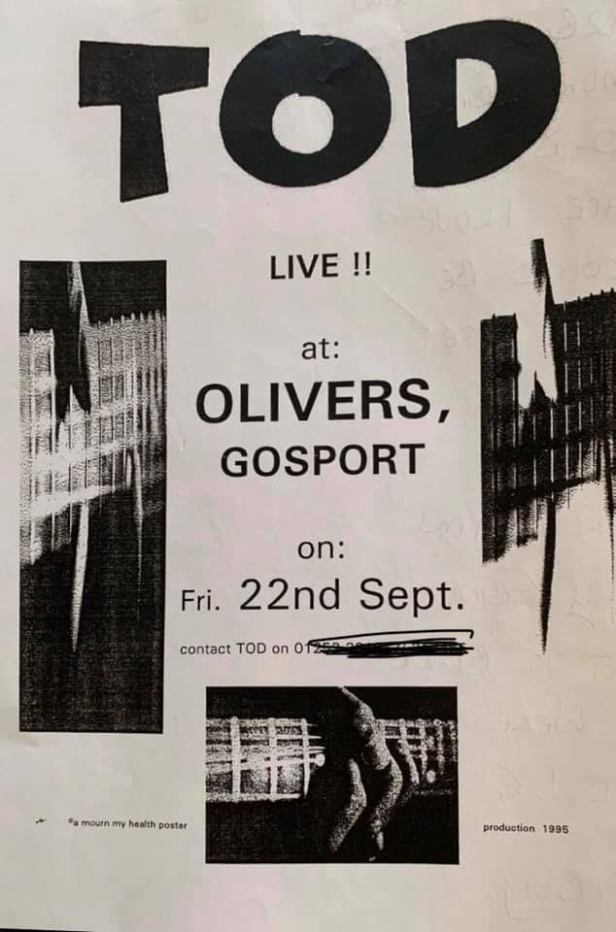
22 September 1995: Thieves of Dreams were at Olivers, Gosport. Source: TOD Thieves of Dreams September 24
Jolly Farmer, Newton Abbot: Who Moved the Ground?September 25
The Pirate, Falmouth: Who Moved the Ground?October 3
Mr. Smiths, Bournemouth: Who Moved the Ground?October 4
Hand & Spear, Weybridge: Who Moved the Ground? w/ Doo The MoogOctober 5
George Fourth, Brixton: Who Moved the Ground?October 6
The Windmill, Four Marks: Who Moved the Ground?October 7
The Spectrum, Guildford: Who Moved the Ground? w/ J.C. Regulator
The New Inn, Basingstoke: The Perfect Circles
7 October 1995: The Perfect Circles were at The New Inn, Basingstoke according to this ad from ‘ragazine’ Donut Vol.6 (Oct 95). October 8
The Wheatsheaf, Farnham: Who Moved the Ground?October 12
The Underworld, Camden: Who Moved the Ground? w/ Sugar Cane and Redwood
12 October 1995: Splatch Goes to London and presents Redwood, Who Moved the Ground? and Sugar Cane at The Underworld, Camden, London. Source: Who Moved The Ground? October 20
Olivers, Gosport: Who Moved the Ground?October 21
Railway Inn, Winchester: Who Moved the Ground? w/ HubOctober 23
Penny Theatre, Canterbury: Who Moved the Ground?October 24
University, Bath: Who Moved the Ground? w/ Mild Mannered JanitorsOctober 25
The Grand, Clapham: Who Moved the Ground?October 26
Cellar Bar, Bracknell: Who Moved the Ground?
Starfish Club, Dublin Castle, Camden: The Mystics w/ Skipper and Sludge Nation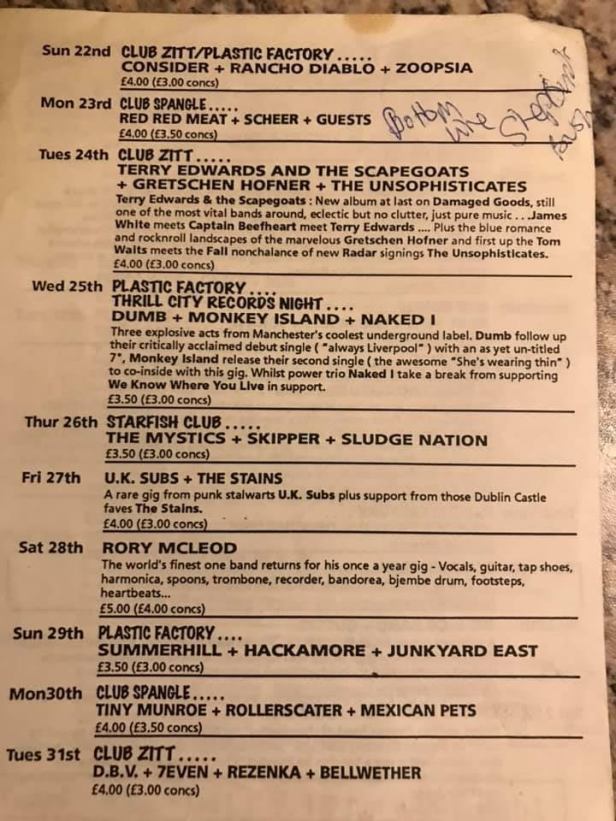
26 October 1995: The Starfish Club, Dublin Castle, London – The Mystics supported by Skipper and Sludge Nation. Source: Wendy McNally via BULL & GATE MEMORIES – remembering all who sailed in her musical tidal wave November 2
White Hart, Frimley: Who Moved the Ground? w/ TamberlaineNovember 5
Shades Bar, Victoria Club, Swanage: Who Moved the Ground?November 8
Richmond Arms, Chichester: Who Moved the Ground?November 9
Aitchs, Godalming: Who Moved the Ground? w/ Hand Me Down, and LunchboxNovember 12
The Wheatsheaf, Farnham: Who Moved the Ground?November 13
Clapham Grand, London: Who Moved the Ground?November 17
West End Centre, Aldershot: Who Moved the Ground? w/ Flinch, and MeanwhileNovember 18
The First & Last Inn, Sennen: Who Moved the Ground?November 23
Bradys, Brixton: Who Moved the Ground?November 24
Civic Hall, Guildford: Redwood, Doo the Moog, Bennet, Who Moved the Ground? w/ Mega City Four
November 25
Royal Northern College of Music, Manchester: Who Moved the Ground?
McDevitt’s, Reading: WOBNovember 28
Hare & Hounds, Brighton: Who Moved the Ground?November 30
Olivers, Gosport: Who Moved the Ground?December 7
Railway Inn, Winchester: Who Moved the Ground? w/ Doo the MoogDecember 8
Stoke Hotel, Guildford: Who Moved the Ground? w/ Riser, and MindwireDecember 9
Goldsmiths Tavern, New Cross: Who Moved the Ground?December 13
Lockwood Centre, Guildford: Who Moved the Ground? w/ J.C. RegulatorDecember 16
The White Hart, Frimley: Doctor Rocket
16 December 1995: Doctor Rocket list their White Hart, Frimley gig in the December ’95 issue of the Basingstoke ragzine Donut Vol.8. Source: www.razrazzle.wordpress.com December 17
The Shed, South Hill Park, Bracknell: Who Moved the Ground? w/ J.C Regulator
December 19
The Crown, Midhurst: Who Moved the Ground?December 21
Bradys, Brixton: Who Moved the Ground?Back to
The 1994 Gig ListForward to
The 1996 Gig List1995, Aitch’s, Aitch’s Wine Bar, Aldershot, Alvin Purple, Ampersand, Ascot, b.l.o.w., Banbury, Bash, Basingstoke, Bath, Beautiful People, Bennet, Betws-Y-Coed, Big Jim and the Weedkillers, Birdhouse Project, Bitterne Park Hotel, Blades Bar, Blameheads, Blessed Ethel, Bloom, Blue Boy, Blyth Power, Body Count, Bournemouth, Bracknell, Bradys, Brighton, Brixton, Bull & Gate, Busby's, Camberley, Camden, Canterbury, Casual, Cellar Bar, Charing Cross, Chichester, China Drum, Chumbawamba, Civic hall, Clacton-On-Sea, Clapham, Couch Potatoes, Coventry, Croydon, Cuckooland, Cut, Dirty Strangers, Disturbing Guests, Doctor Rocket, Dominic Miller, Doo the Moog, Dorking, Dreamhouse, Dublin Castle, Duke of Wellington, Eastbourne, EMF, Equation, Faith No More, Falmouth, Farnborough, Farnham, Feckle, Firm Foundations Festival, Flinch, Fordingbridge, Four Marks, Free Butt, Frimley, Fulham, Gallon Drunk, George Fourth, Gerber Strasse 3, Germany, Gillingham, Godalming, Golden Cross, Goldsmiths Tavern, Gosport, Granby Tavern, Grayshott, Greenbelt Festival, Groove, Guildford, Guildford Folk & Blues Festival, Half Term, Hallamshire Hotel, Hand & Spear, Hand Me Down, Hanwell, Hare & Hounds, Harlow, Haze, Headcopter, Headnoise, Headrush, Hemel Hempstead, Hub, Hydons Ball, Hydons Heath, Ice Rink, Ice-T, Imperial College, Interspace, Islington, J.C. Regulator, Jah Wobble, John Wiffin, Jolly Farmer, Kalisz, Kava Kava, Kentish Town, King's Cross, Kino Teatr Tecza, Klub Bilardowy, Klub Domino, Klub Futurysta, Labour Club, Leipzig, Lewisham, Lichtwirtschaft, Lockwood Centre, London, Long Marston, Long Sutton, Lord Nelson, Lord Wandsworth College, Loseley Park, Lunchbox, Maccabees, Main Stage, Manchester, Mandate, Margo Buchanan, Marquee, McDevitt’s, Meanwhile, Mega City Four, Midhurst, Mild Mannered Janitors, Mindwire, Mood, Moondigger, Mr. Smiths, National Speed Limit, New Cross, Newton Abbot, Nightshift, Northants, Olivers, Orphic Soop, Out There Festival, Oxford, Oysterband, Paradise Lost, Penny Theatre, Peter Sarstedt, Pheonix Festival, Phoenix Stage, Pitchshifter, Poland, Portsmouth, Princes Hall, Public Enemy, Railway Enthusiast's Club, Reading, Reading University, Redefining Beautiful, Redwood, Restless Natives, Richard Thompson, Richmond Arms, Riser, Royal Northern College of Music, S*M*A*S*H, Sanctus Iuda, Sennen, Senseless Things, Serious Plankton, Shades Bar, Sheffield, Shootyz, Shoreham by Sea, Sideways, Silverspere, Skipper, Slit, Sludge Nation, Slupsk, South Hill Park, Southampton, Spitfire, Splash Club, Splatch, St. John's Tavern, Starfish Club, Steps Wine Bar, Stoke Hotel, Stratford-Upon-Avon, Streatham, Subaqwa, Sugar Cane, Summerbee, Supermodel, Surge, Surrey Police HQ, Swamp Donkey, Swanage, SynSynics, Tamberlaine, Technical College, Terrorvision, Thames Barrier, The Anvil, The Baby South, The Bandstand, The Cartoon, The Cricketers, The Crown, The Dolly, The Event, The Falcon, The First & Last Inn, The Forum, The Fountain, The Grand, The Hamsters, The Mill, The Mystics, The New Inn, The Perfect Circles, The Pershers, The Pirate, The Rodmill, The Rosehips, The Sect, The Shed, The Ship Inn, The Smalls, The Spectrum, The Square, The Stage, The Swan, The Underworld, The Water Rats, The Wheatsheaf, The Windmill, The X-Factor, Thieves Of Dreams, Tongue, Toys in the Attic, Trades Club, Tunbridge Wells, Tuxedo Junction, Under Cover Sex Gods, Upper Street, Velodrome 2000, Viaduct Inn, Victoria Club, Warsaw, Wedgewood Rooms, Weimar, West End Centre, Westfield, Weybridge, White Hart, White Lion, Who Moved the Ground?, Wilde Theatre, WOB, Woodcock, Woodland Tavern, Worcester, World Suicide, XLR8, Zdunska Wola -
Bush Hotel, Farnham

The Bush Hotel is still there, on The Borough, but now run by Accor as a Mercure Hotel.
Many will have fond memories of the Hotel’s Vine Bar in the 60’s when the likes of The Conchords (’63) played there and into the 70’s, with The River Bottom Band in residency, playing a repertoire of jug and country rock. Pre-January 1959, you might also have caught sight of Britain’s first Formula 1 World Champion, Mike Hawthorn, in the Saloon Bar on a Saturday lunchtime.
The Bush was a more active participant in Farnham life back then and hosted events like the Farnham Herald’s Youth in Action “An Evening with the Blues”, partly organised by Jerry Gilbert, who worked on the Herald and eventually moved on to Melody Maker, on 5 July ’68. This featured Mike Chapman, Mike Vines, John Davies, Andy Fernbach, John Lathey and Ian A. Anderson.
The next year, John Lathey’s blues band performed at the hotel, at an event hosted by Radio 1 The next year, John Lathey’s blues band performed at the hotel, at an event compered by, BBC Radio 1 R&B show host, Mike Raven. Singer/songwriter Al Stewart also appeared at the hotel.
Gallery:
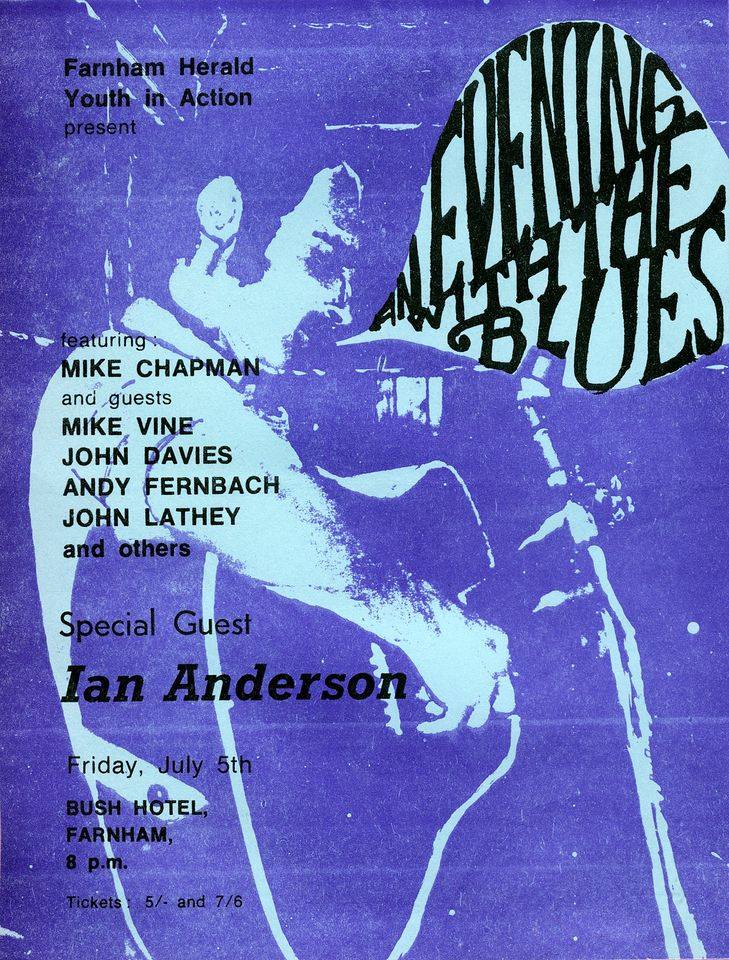
5 July 1968: The Bush Hotel hosted “An Evening With The Blues”. Source: Ian Anderson via Historic Farnham Town & Surrounding Villages -
Headnoise

(c’93-’96) Ming (drums), Ian “Ed/Woodcheese” Edwards (guitar), Matt “Moo” Pain (vocals), and Pat “Mahoot” Hughes (bass).
Headnoise, who rehearsed at The White Hart, Frimley, comprised a number of ex-members of This Witness, although we also have a reference to P45’s, and Pain had previously fronted Watch the Turtle. The band attracted the attention of Skunk Anansie; opening for them on a couple of tour dates and supported Reef and Stiff Little Fingers, and were managed by The Jam‘s Bruce Foxton.

Sleeve for Headnoise’s “Mahoygalloy” cassette EP. Source: The Surrey & NE Hampshire Music Scene On 28 November ’93, Headnoise were at The Powerhaus, Islington supporting Candyman along with Revhead. The band kicked off ’94 with an appearance at the Orange, West Kensington on 30 January opening for 800 Deep with Canes Able. On 17 May ’94, Headnoise, supported Apes Pigs and Spacemen, at the Marquee, London. The next night, 18 May ’94, they won the ‘Battle for the Limelight’ held at Princes Hall, Aldershot; beating Who Moved the Ground?, Strange World, Parmaviolet, Blind, Punching Judy, and Redefining Beautiful. That same year saw the release of “Mahoygalloy” a 6-track cassette EP recorded at Studio Sparkes. Sound was handled by sound engineer Paul “Ramrod” Ramsay, who was with the band most of the time. Bassist Hughes replaced Adam Pain, brother of the vocalist, who’d stepped in for Gary “Pit Bull/Chin” Tozer, sometime after the release of “Mahoygalloy“. Late ’94 saw the band opening for Who Moved the Ground? at West End Centre, Aldershot, on 4 November.

Early Headnoise (LtoR): Tozer, Edwards, Ming, and Pain outside the White Hart, Frimley. Back at the Marquee, Headnoise supported Croydon’s Moondigger, featuring Guitar Magazine’s ‘Guitarist of the Year 1994’, Dave Colquhoun, on 5 Janaury ’95. The band, along with Spitfire, supported S*M*A*S*H at the Wedgewood Rooms, Portsmouth on 21 February ’95 and joined Redwood, Supermodel and Disturbing Guests at the Civic Hall, Guildford on 16 June ’95 for Splatch! That same year their track “Shake” appeared on Farnborough Groove Strikes Back Vol.5. Regularly at the Marquee Club during ’95, Headnoise received the venue’s ‘Unsigned Band of the Year 1995’ award.
In ’96 the band released the “Kick in the Dick” cassette EP, which was recorded live at the Tumbledown Dick, Farnborough. Disturbing Guests supported them that night, enjoying the massive PA Headnoise had hired for that show. Issue #3 of Gerfump!, which came out in April ’96, carried a review of the J.C. Regulator, Headnoise, and Sandwich Box gig at the West End Centre on 22 March.
Ramsay has gone on to mix at FOH for The Who, Annie Lennox, The Doves, Kasabian, and Skunk Anansie. Edwards spent 17 years working at the Academy of Contemporary Music (ACM), Guildford before joining The Institute of Contemporary Music Performance (ICMP UK), London as Head of Operations. He has since founded Guitar Breaks and London Academy of Modern Music (LAMM Italia) and is a Director at Band Workshops.
Tracks:Gallery:

17 May 1994: Headnoise, supported Apes, Pigs and Spacemen, at the Marquee. Source: The Surrey & NE Hampshire Music Scene 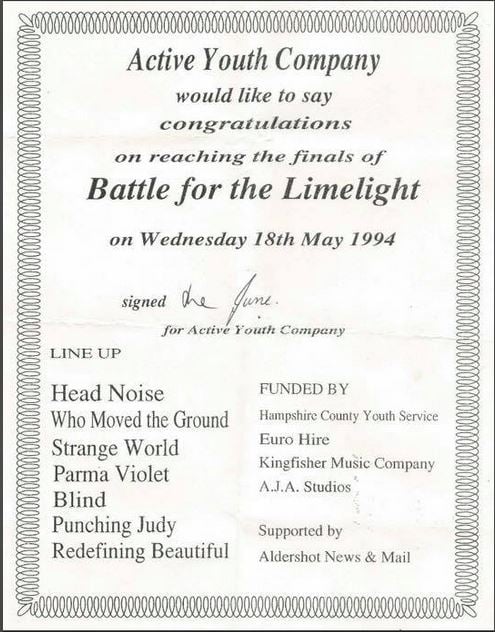
Headnoise won the 1994 ‘Battle for the Limelight’ final held at the Princes Hall, Aldershot. Source: Who Moved The Ground? Kerrang, January 1995 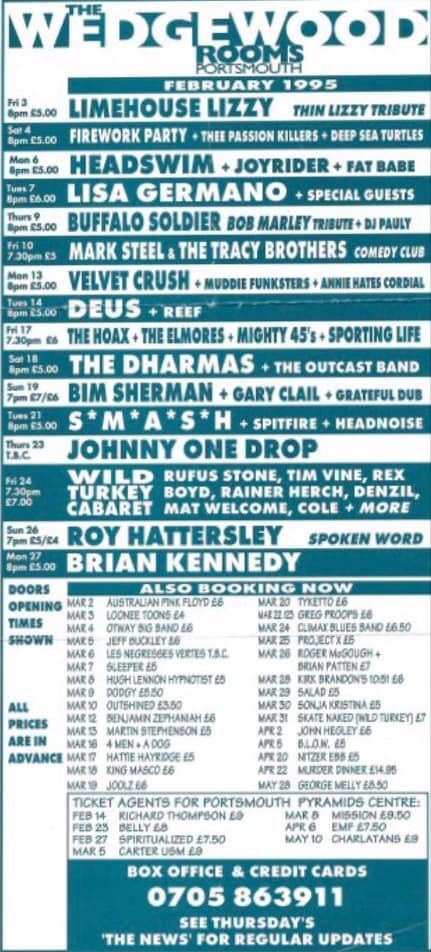
21 February ’95: Headnoise, along with Spitfire, supported S*M*A*S*H at the Wedgewood Rooms, Portsmouth. Source: The Surrey & NE Hampshire Music Scene 
In ’95 Headnoise’s track “Shake” appeared on Farnborough Groove Strikes Back Vol.5. Picture courtesy of Pete Cole 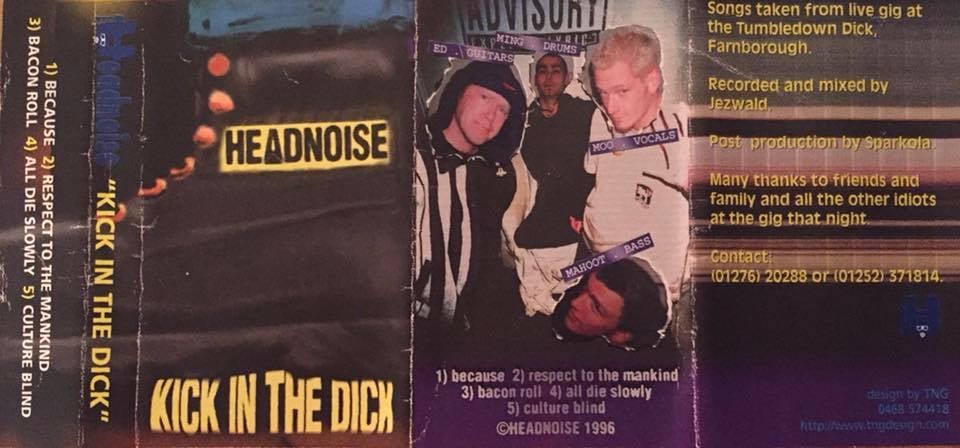
Sleeve for Headnoise’s “Kick in the Dick” cassette EP. Source: The Surrey & NE Hampshire Music Scene 
Part of issue #3 from 1996. Picture courtesy of The Surrey & NE Hampshire Music Scene 800 Deep, Academy of Contemporary Music, ACM, Adam Pain, Aldershot, Annie Lennox, Apes Pigs And Spacemen, Band Workshops, Battle for the Limelight, Blind, Bruce Foxton, Candyman, Canes Able, Civic hall, Dave Colquhoun, Disturbing Guests, Farnborough, Farnborough Groove, Frimley, Gary Tozer, Gerfump, Guildford, Guitar Breaks, Guitar Magazine, Headnoise, Ian Edwards, ICMP UK, Islington, J.C. Regulator, Kasabian, LAMM Italia, London, London Academy of Modern Music, Marquee, Marquee Club, Moondigger, Orange, Parmaviolet, Pat Hughes, Paul Ramsey, Portsmouth, Punching Judy, Redefining Beautiful, Redwood, Reef, Revhead, S*M*A*S*H, Sandwich Box, Skunk Anansie, Spitfire, Splatch, Stiff Little Fingers, Strange World, Studio Sparkes, Supermodel, The Doves, The Institute of Contemporary Music Performance, The Jam, The P45’s, The Powerhaus, The White Hart, THe Who, This Witness, Tumbledown Dick, Unsigned Band of the Year, Watch the Turtle, Wedgewood Rooms, West End Centre, West Kensington, Who Moved the Ground? -
The Embers

(c’64-’71) Terry Sherring (vocals), Gary Cooper (?), Dave Porter (bass) and Everett Cresswell (drums).

The Embers agency sheet. Picture courtesy of Richard Prest of http://kernowbeat.co.uk/ Under Bob Potter’s management they often double billed with Sweet Life and gigged across the south, including The Barn, Penzance; Atalanta, Woking; and White Buck, Burley. They were also booked for a season or two at Sunshine Holiday Camp, Hayling Island. Alan ‘Algie’ Watkin (drums /vocals) replaced Cresswell; and Kirk Riddle (bass) replaced Porter, then Brian Smith replaced Riddle; and Seb Smith (?) was a member at some point.
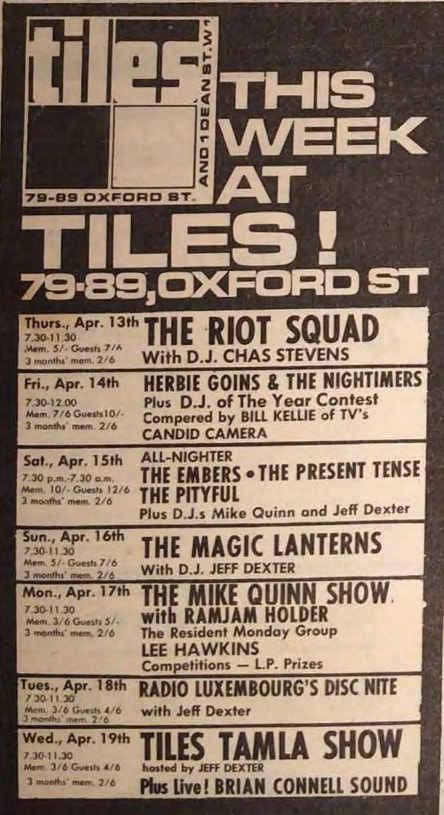
Advert from Melody Maker 15 April ’67 The Present Tense and The Pityful supported The Embers at Tiles, Soho on 15 April ’67. Two years later we find The Embers, along with Third Ear Band, supporting The Who at Poole College’s Rag Ball held on 2 April ’69 at the pavilion Ballrooms, Bournemouth. On 1 October ’69, The Embers were one of the many bands, including Sky, Wishful Thinking, The Late, Canterbury Tales, Crazy Paving, Chimera, and Magic Alice that played a benevolent concert at Samantha’s Club, as the Agincourt, Camberley was called for a time. This was compered by Dave West and also featured the Radio 1 D.J. Ray Moore.The Village Hall, Hartley Witney hosted The Embers on 18 December ’70, and the next year, on 6 March ’71, St. Luke’s Hall, Overton did the same. At some point after 2009 the bands track “Looking Glass” appeared on Pop Cycles Vol.12, as the opening track on the second disc.

“Looking Glass” appeared on Pop Cycles Vol.12 In ’72 Sherring, who was based in Ash, Cooper, and Porter, with others, formed Farnborough Firework Factory. Watkin had been in Aldershot based Grapevine, before The Embers; he then joined agency band Rubber Duck, had the occasional appearance in House, joined Jackie Lynton’s Happy Days Band and then become a Bloodhound. Riddle passed in November 2017.
Gallery:
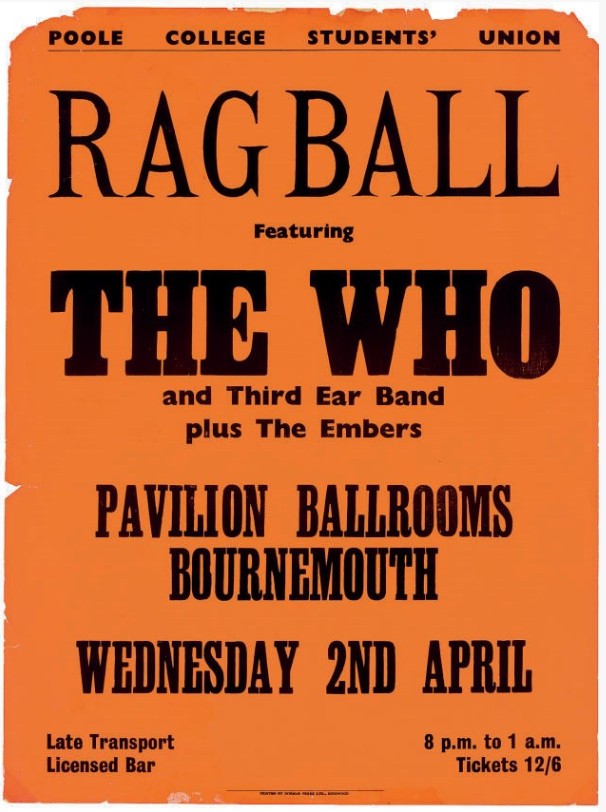
2 April 1969: Poster for Poole College Rag Ball 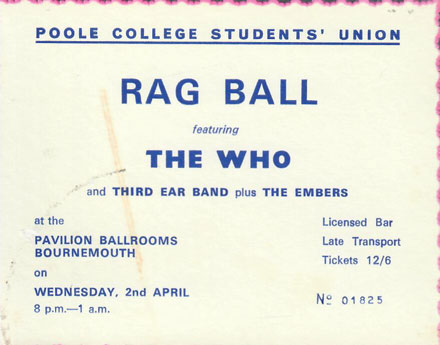
2 April 1969: Ticket for Poole College Rag Ball 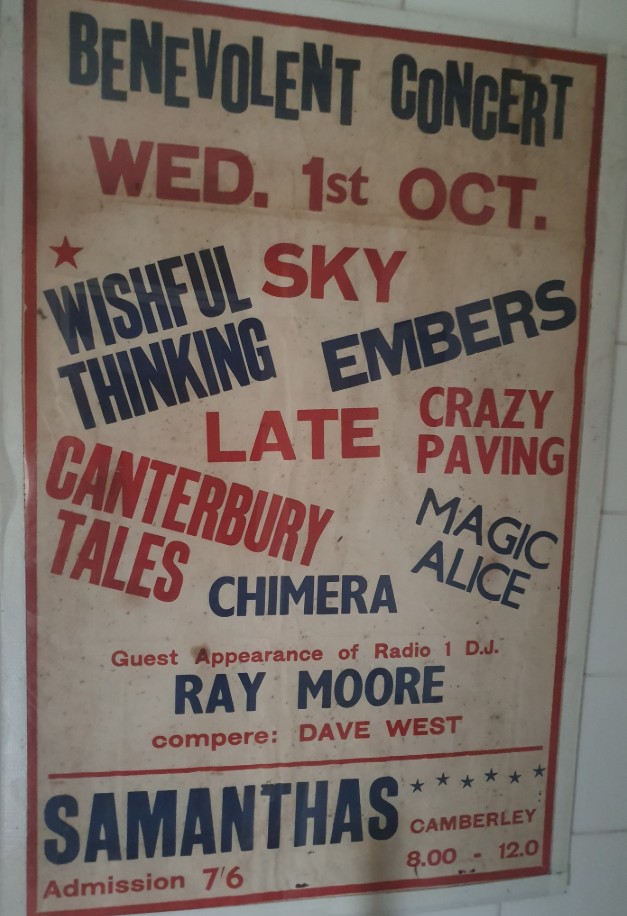
1 October 1969: Crazy Paving played Samanthas (Agincourt Camberley). Image courtesy of Maureen Gamble 
The Embers. Picture courtesy of Richard Prest of http://kernowbeat.co.uk/ 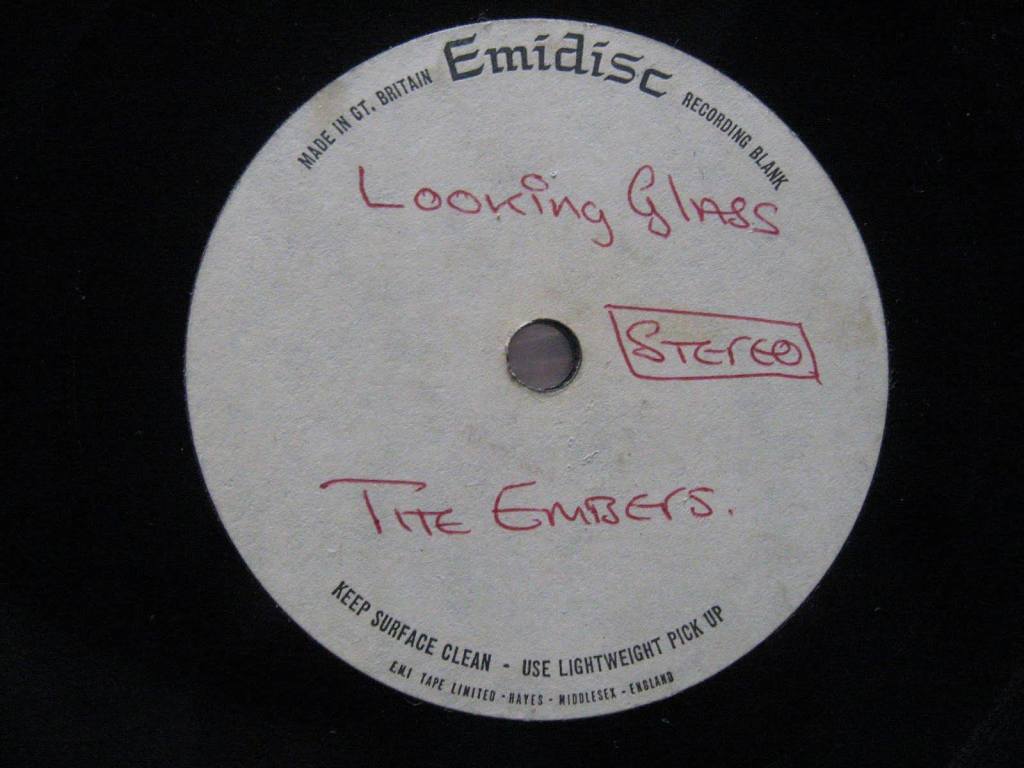
The Embers “Looking Glass”. Picture courtesy of Richard Prest of http://kernowbeat.co.uk/ 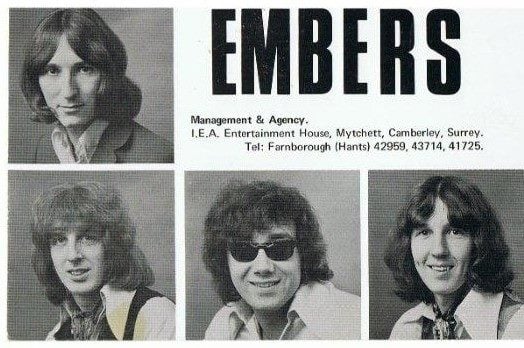
The Embers agency sheet unsigned. Picture courtesy of Richard Prest of http://kernowbeat.co.uk/ 
The Embers and pony. Picture courtesy of Richard Prest of http://kernowbeat.co.uk/ 
The Embers. Picture courtesy of Richard Prest of http://kernowbeat.co.uk/ 
The Embers. Picture courtesy of Richard Prest of http://kernowbeat.co.uk/ 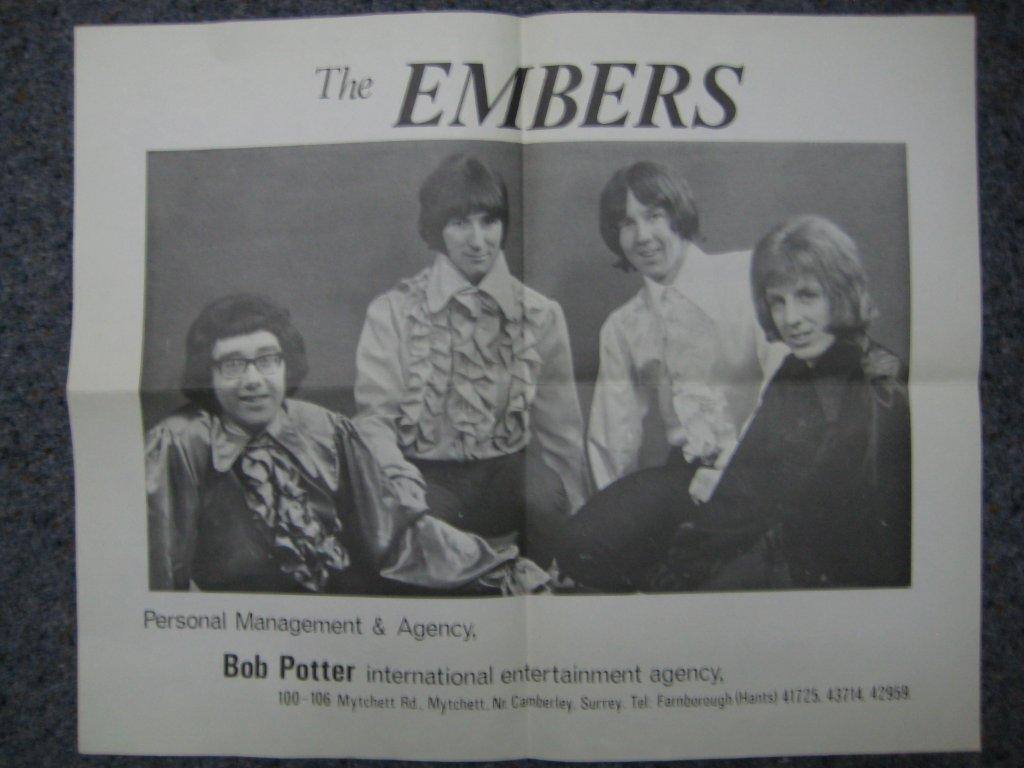
The Embers agency sheet. Picture courtesy of Richard Prest of http://kernowbeat.co.uk/ 
Signed Embers agency sheet. Source: Paul Morehead via Bob Potter’s Bands in the 60s and 70s 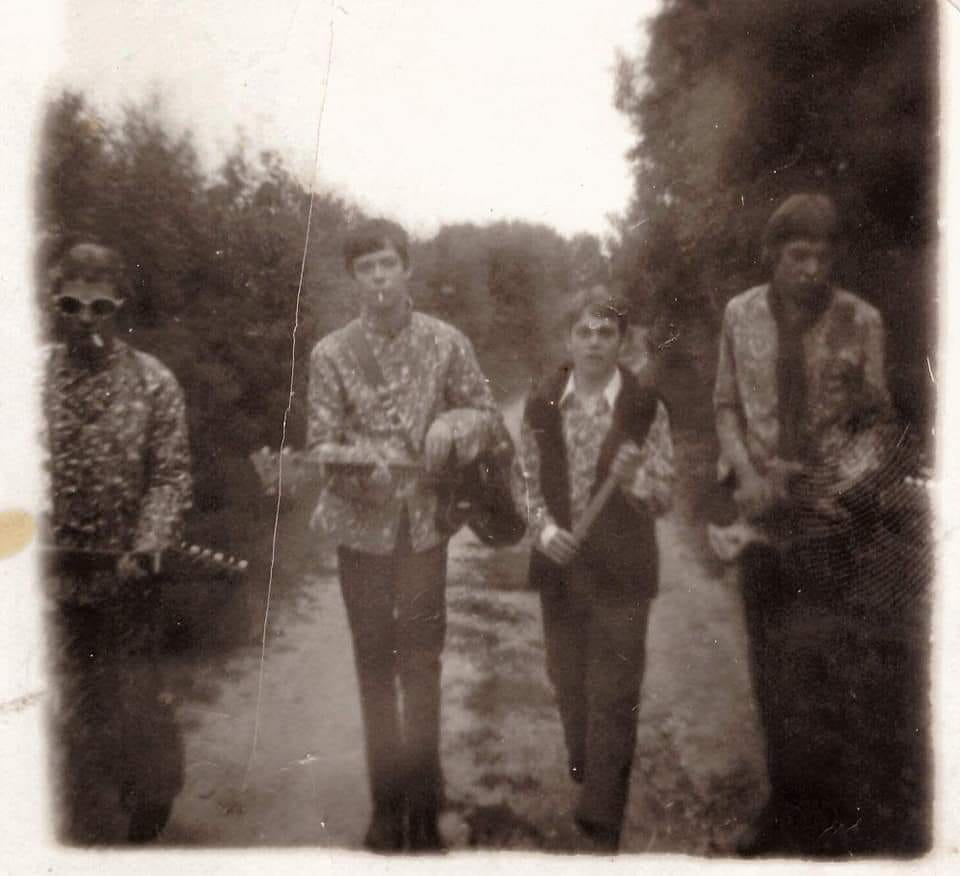
The Embers in a line in a lane! Source: Brian Smith via Bob Potter’s Bands in the 60s and 70s 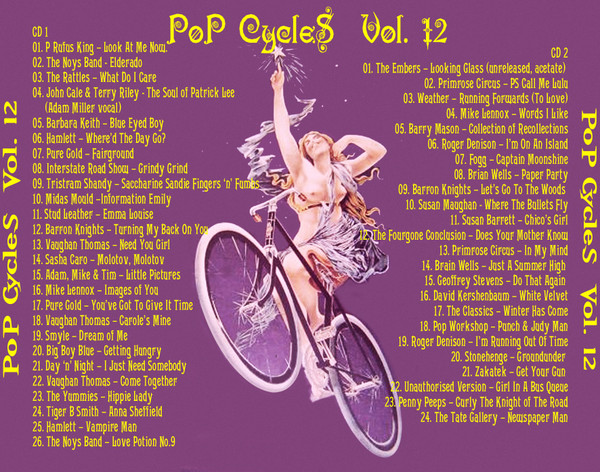
“Looking Glass” appeared on Pop Cycles Vol.12 Agincourt, Alan Watkin, Ash, Atalanta, Bloodhound, Bob Potter, Bournemouth, Brian Smith, Burley, Camberley, Canterbury Tales, Chimera, Crazy Paving, Dave Porter, Dave West, Everett Cresswell, Farnborough Firework Factory, Gary Cooper, Grapevine, Hartley Witney, Hayling Island, House, Jackie Lynton's Happy Days Band, Kirk Riddle, Magic Alice, Overton, Pavilion Ballrooms, Penzance, Poole College, Pop Cycles, Radio 1, Ray Moore, Rubber Duck, Samantha's Club, Seb Smith, Sky, Soho, St. Luke’s Hall, Sunshine Holiday Camp, Sweet Life, Terry Sherring, The Barn, The Embers, The Late, The Pityful, The Present Tense, THe Who, Third Ear Band, Tiles, Village hall, White Buck, Wishful Thinking, Woking -
Guilfest, Guildford

Guilfest was started as the Guildford Folk Festival in ’92 by Tony Scott in Stoke Park, Guildford. Originally a one-day event, it grew and grew over the proceeding 20+ years to a full three-day ‘medium’ sized festival with multiple stages and a range of genres including rock, folk, blues, and in later years pop; until financial troubles ended its run.
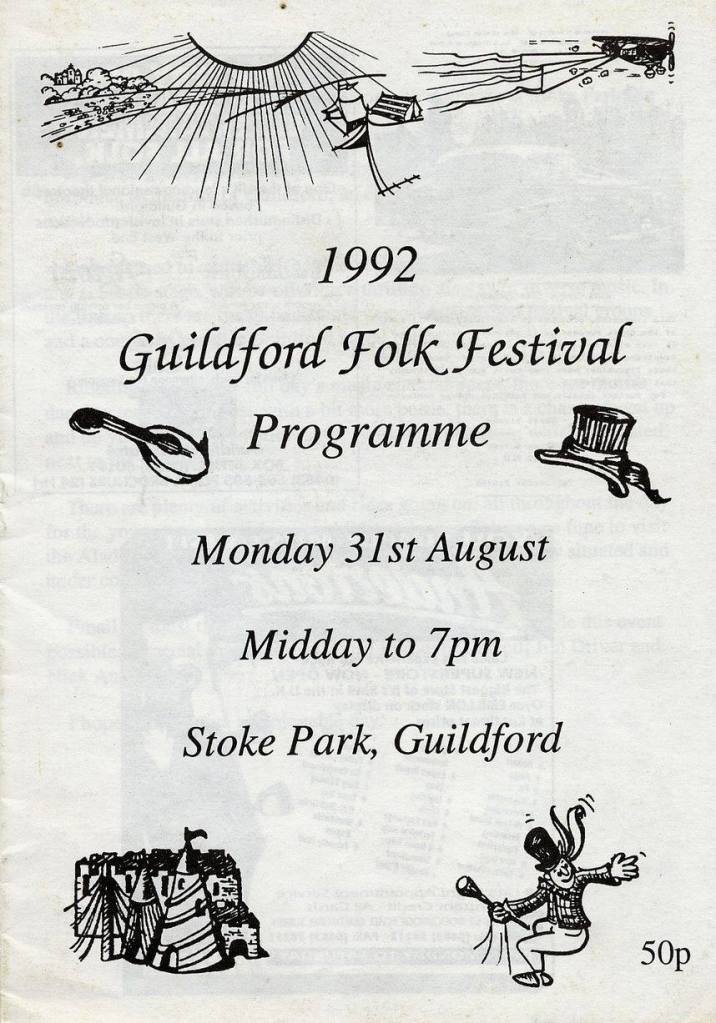
31 August 1992: Guildford Folk Festival Programme cover. Performances by Peter Sarstedt, John Otway, Macavity’s Cat were witnessed by 500 people in 1992, across two stages. They all shared festival toilets that had piped music and flowers! In ’93, the Guildford Folk Festival added blues; becoming the Guildford Folk & Blues Festival and doubled in audience size and had The Blues Band and Wilko Johnson Band topping the bill. 1,500 people turned up to watch the acts, that included Tom Robinson Band, Ralph McTell, John Otway Big Band, and local bands such as Womb, across three stages in ’94. Then in ’95 Chris Evans auditioned to play at the festival on his Radio 1 show. The audience doubled again to 3,000 and the event moved to Loseley Park and became a two-day event with onsite camping and Richard Thompson, Peter Sarstedt, Chumbawamba, The Hamsters and Oysterband.
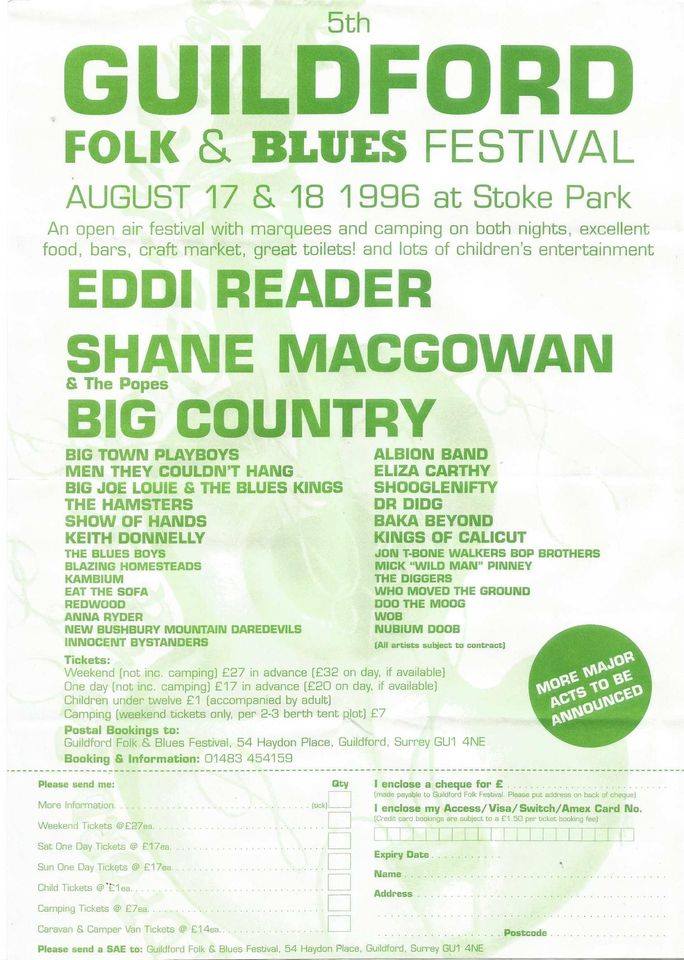
17-18 August 1996: Guildford Folk & Blues Festival flyer. It was back to Stoke Park for the 5th Guildford Folk & Blues Festival in ’96. The ~6,000 attendees watched as a man in black took to the stage and launch into Otis Rush’s “It Takes Time”. Nigel Watson led the first few songs, but Peter Green started to come alive during Jimi Hendrix’s “Can You See Me”. The encore (Freddie King’s “Goin’ Down”) was described by Martin Clemens in The Independent as “one of the happiest musical spectacles of the year.” In addition to Green, the was Eddi Reader, The Hamsters, Shane MacGowan & The Popes. The event was to remain at Stoke Park, expanding to three-days in ’97 under the Guildford ’97 Festival moniker and headlined by Jethro Tull. It was also officially supported by Guildford Borough Council, CMR Radio and 96.4 Eagle Radio with Scott later saying it was the year people started to take GuilFest seriously. 8,000 people occupied Stoke Park that year with The Levellers, Saw Doctors, Carter USM and Dreadzone. ’98’s festival, just called Guildford ’98, saw BBC GLR getting onboard and Space, Shed Seven, The Lightning Seeds, Asian Dub Foundation, Bentley Rhythm Ace, Beth Orton, and The Levellers on the bill, entertaining just over 9,000 punters at what was now the UK’s 6th largest outdoor music festival. Guildford Live ’99, continued the events connection to BBC GLR and added BBC Radio 2, with Stoke Park reverberating to the sounds of James, The Saw Doctors, Bob Geldof and Jools Holland & His Rhythm and Blues Orchestra across the four stages for 10,000.
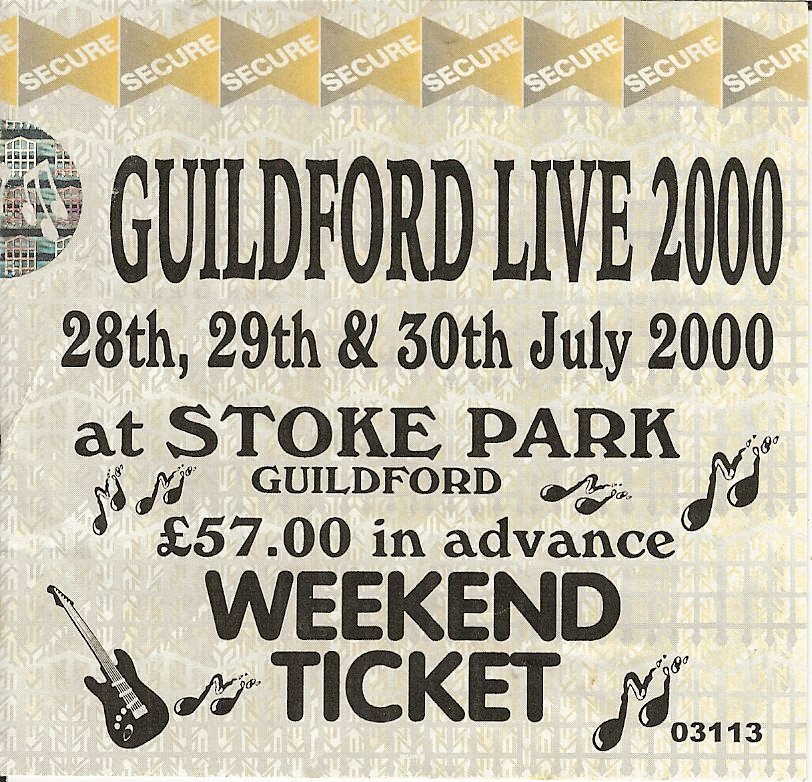
Guildford Live 2000 Weekend Ticket. Source: Chewtonia.com Still going by the Guildford Live sobriquet, the 9th (2000) and 10th (2001) festivals continued to expand the events status. 12,000 people attended to see Van Morrison, Joan Armatrading, Jools Holland, David Gray, Culture Club, Motörhead and Rolf Harris in 2000. The following year Pulp, James, Reef, Dreadzone, Lonnie Donegan, Catatonia, The Wurzels, Bentley Rhythm Ace and Dead Men Walking did the same. 2001 also saw the first Comedy Tent introduced and the number of stages increase to five, with 13,000 people in attendance. Jools Holland was back in July 2002, for the first festival officially called Guilfest, with the likes of Fun Lovin’ Criminals, Echo and The Bunnymen, Billy Bragg, New Model Army, The Stranglers, and The Pretenders. Uncut Magazine supported Guilfest 2003, rocking out to Madness, Alice Cooper, The Darkness, Atomic Kitten, Skin and Daniel Bedingfield. The phalanx of sponsors continued to grow over 2004 and 2005 as the event reached towards its zenith. Blondie, Simple Minds, and UB40 were the headliners in 2004, with an ever-expanding number of supporting acts across the six stages; that included Ocean Colour Scene, Katie Melua, The Damned, Midge Ure, and Steve Harley & Cockney Rebel. The 2005 event, the biggest in the event’s history, featured 6 stages and a comedy tent. 15,000 people turned up to watch Paul Weller, Status Quo, The Pogues, The Subways, The Proclaimers, Chas and Dave, Nizlopi, and The Storys. Also in 2005, The Surrey Advertiser sponsored the Guilfest 2005 Unsigned Heroes CD featuring: Black Night Crash, Get Amped, Ariel X, Kovak, The Roosters, Who Will Miss Mary?, Epuldugger, The Citadel, Daybreak, This is Seb Clarke, Stylus, Big Wednesday, The True Deceivers, Intervurt, and United Stoats Of America; but was this this Big Wednesday?. The Storys were back in 2006 with Embrace, Gary Numan, A-ha, Billy Idol, The Wonder Stuff, Kosheen, Blue Oyster Cult, Newton Faulkner, Sandi Thom, Nizlopi, The Lightning Seeds, The Stranglers, and Gary Numan. This was the year GuilFest won the Best Family Festival Award, introduced a Theatre Tent, and members of Sammy Rats Big Big Blues Band, having reformed in 2005, appeared at Guilfest under the name Sammy Rat and The Resonators.
In 2007 the BBC Radio 2 main stage was headlined by Supergrass, Squeeze and Madness, who were supported by The Magic Numbers, over the three-days. The second, Ents24, stage featured Richard Thompson, The Saw Doctors, and Uriah Heep. Morcheeba, Jimmy Cliff, The Ordinary Boys, and The King Blues also appeared on one of the ten stages. While we are not sure which stage they were on Sammy Rat and The Resonators returned and Redwood, who reformed in 2006/07, played at GuilFest that year, releasing a collection of B-sides and unreleased tracks, titled “Roadtrip” [GTR001MCD] on 15 July 2007 especially for Guilfest 2007. Redwood returned in 2008 for the University of Surrey, Guildford sponsored festival that secured The Levellers, Blondie, The Australian Pink Floyd Show, Kula Shaker, Cerys Matthews, Bowling for Soup, and Seth Lakeman. On the Rock Cave stage, sponsored by Rock Sound, Fightstar, The Ghost of a Thousand and The Blackout played. Now marketed as a three-day camping festival set in the idyllic grounds of Stoke Park, Guildford; Guilfest ’09 included: Motörhead, Goldie Lookin’ Chain, You Me at Six, Nouvelle Vague, Brian Wilson, Joe Bonamassa, Happy Mondays, The Wailers, The Charlatans, Athlete, Toploader, Will Young, Eureka Machines, DJ Yoda, Rusko, The Love Band, The Fins and Andrew Morris, Pendulum and local band Hundred Reasons. The event rolled on. 2010’s 20,000 attendees saw Status Quo, N-Dubz, Hawkwind, The Blockheads, 10cc, Orbital, The Human League, Level 42, Just Jack, Tinie Tempah, Chase & Status, The Blackout, Rock Choir, and Hadouken!, among others.
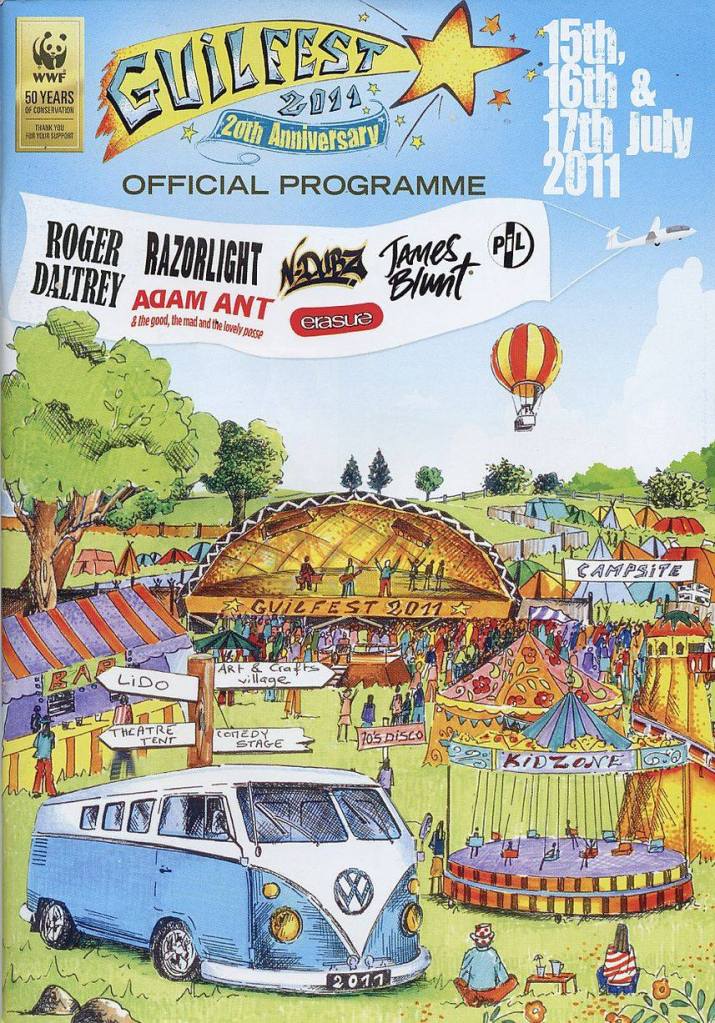
15-17 July 2011: GuilFest 2011 Programme cover 2011 saw Roger Daltry, Razorlight, James Blunt, Adam Ant, The Farm, Erasure, Ziggy Marley, The Rifles, DJ Fresh, Funeral for a Friend, and Peter Andre take the stages. And 2012’s line-up included Olly Murs, Bryan Ferry, Gary Numan, Ash, Alvin Startdust, Slider, Tim Minchin, Cher Lloyd and Ash; but a plethora of competing events, including the London Olympics, and some pretty poor weather, that turned Stoke Park into a quagmire, took their toll.
After 21 years, Guilfest shut down. Tony Scott reported that the company had been left with debts of about £300,000 after 2012 and matters were in the hands of an insolvency practitioner. The event owed taxes and money to Surrey Police and Guildford Borough Council amongst many others. Reasons cited by organisers included the abundance of competing major events in that year, most notably the London Olympics. Poor weather also contributed with the rain turning Stoke Park into a “quagmire by Saturday – and by Sunday it had turned into sticky bog”. Two events popped up to fill the gap in 2013: Magic FM’s “Summer of Love” held at Stoke Park, headlined by Jamiroquai and Bryan Adams; and the protest event, standing against the “corporate takeover” of the former Guilfest by Magic FM’s promoters Live Nation, called “GU1 Free Festival” at the Holroyd Arms. The line-up at The Holroyd included The Feathers, Louise Distras, Shakespearos, Anarchistwood, The Unbelievable Freeloaders From Mars, P45, Unexpected Item in the Bagging Area, Archive 45, Gobsausage, Black Anchor, Collage of Sound, Snork and Kerb.

18-20 July 2014: GuilFest 2014 Programme cover. Guilfest was back in 2014 with The Boomtown Rats, Kool & The Gang, The Human League, Fun Lovin’ Criminals, Boney M., and The Blackout. It went into insolvency again shortly after on the back of late permissions/licensing, a bad weather forecast, and low ticket sales.
WE are also aware that the GuilFin Ambient Lounge, a 24-hour performance and campaign venue that toured a number of UK festivals appeared at GuilFest one year, led by event producer Liam Rich. Eight years would pass before GuilFest returned again, still being run by Scott, on 16–17 July 2022 at Hurtwood Polo Club, Cranleigh, headlined by Peter Hook and Sister Sledge. Although this was on a much smaller scale to earlier event, 2022 enabled the festival to gear up for its return to Stoke Park in 2024, and a surprise announcement was made in December 2023 with the line-up.
Gallery:

30 August 1993: Guildford Folk & Blues Festival Programme cover. 
30 August 1993: The Blues Band at 2nd Guildford Folk and Blues Festival. Photograph by and courtesy of Tim Langner. 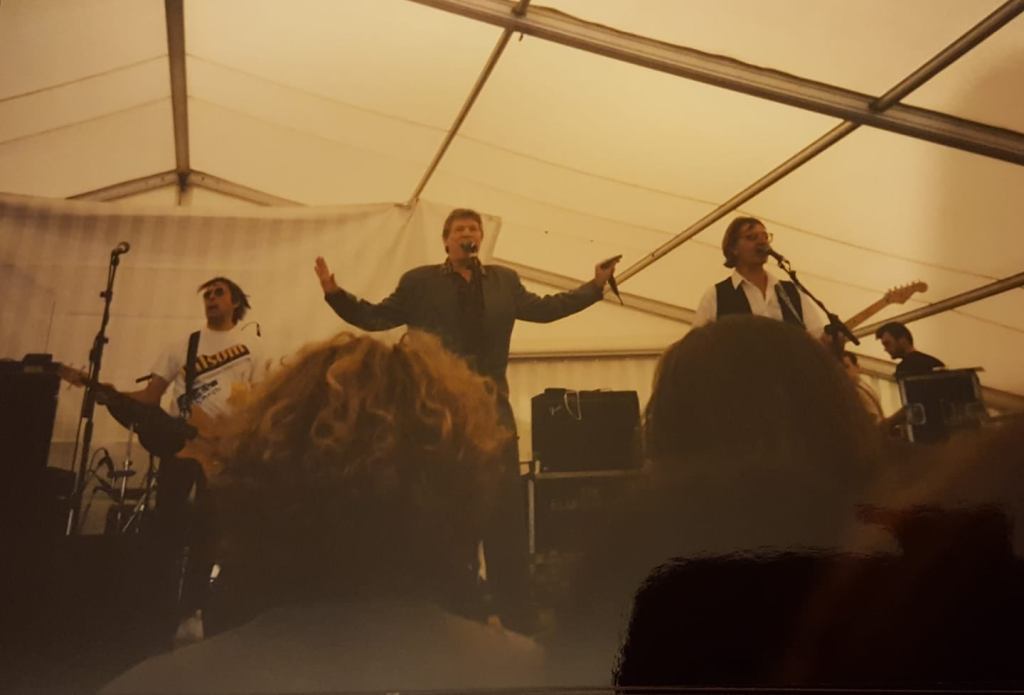
30 August 1993: The Blues Band at 2nd Guildford Folk and Blues Festival. Photograph by and courtesy of Tim Langner. 
30 August 1993: The Blues Band at 2nd Guildford Folk and Blues Festival. Photograph by and courtesy of Tim Langner. 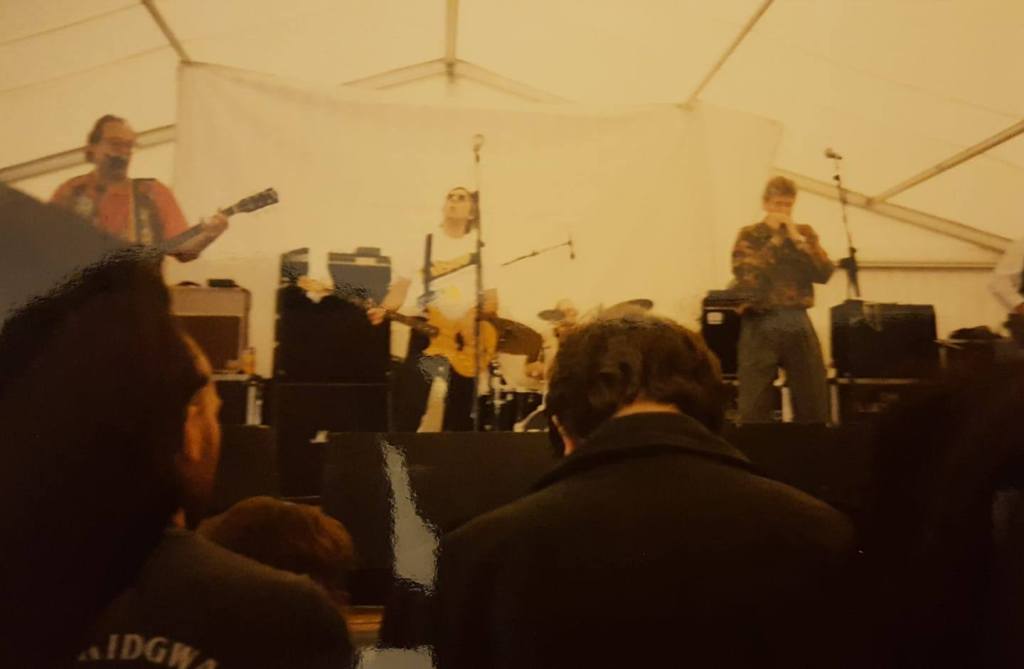
30 August 1993: The Blues Band at 2nd Guildford Folk and Blues Festival. Photograph by and courtesy of Tim Langner. 
30 August 1993: The Blues Band at 2nd Guildford Folk and Blues Festival. Photograph by and courtesy of Tim Langner. 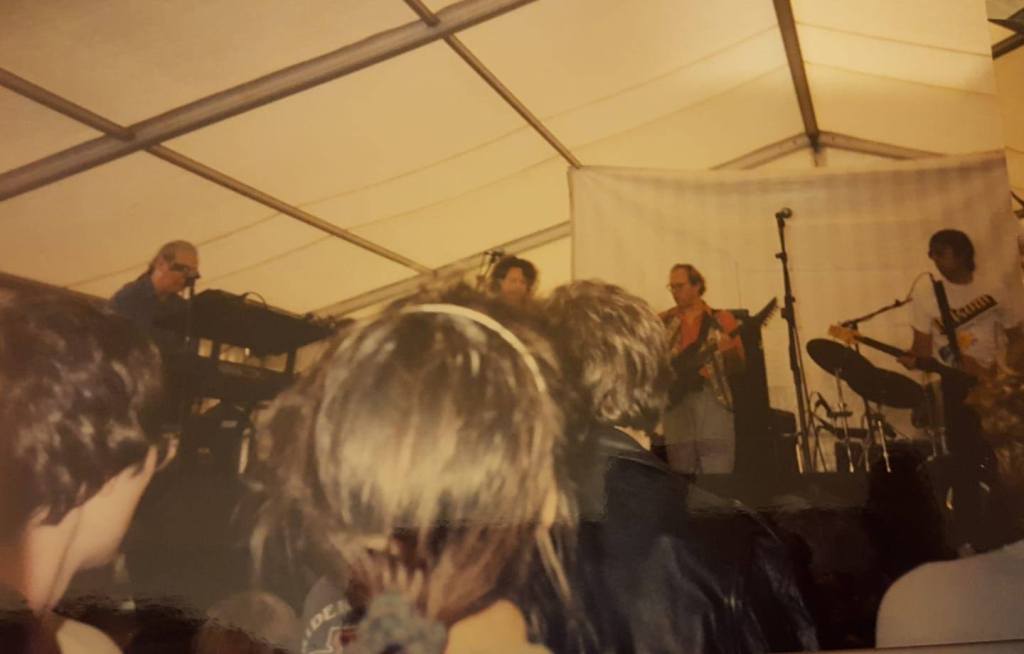
30 August 1993: The Blues Band at 2nd Guildford Folk and Blues Festival. Photograph by and courtesy of Tim Langner. 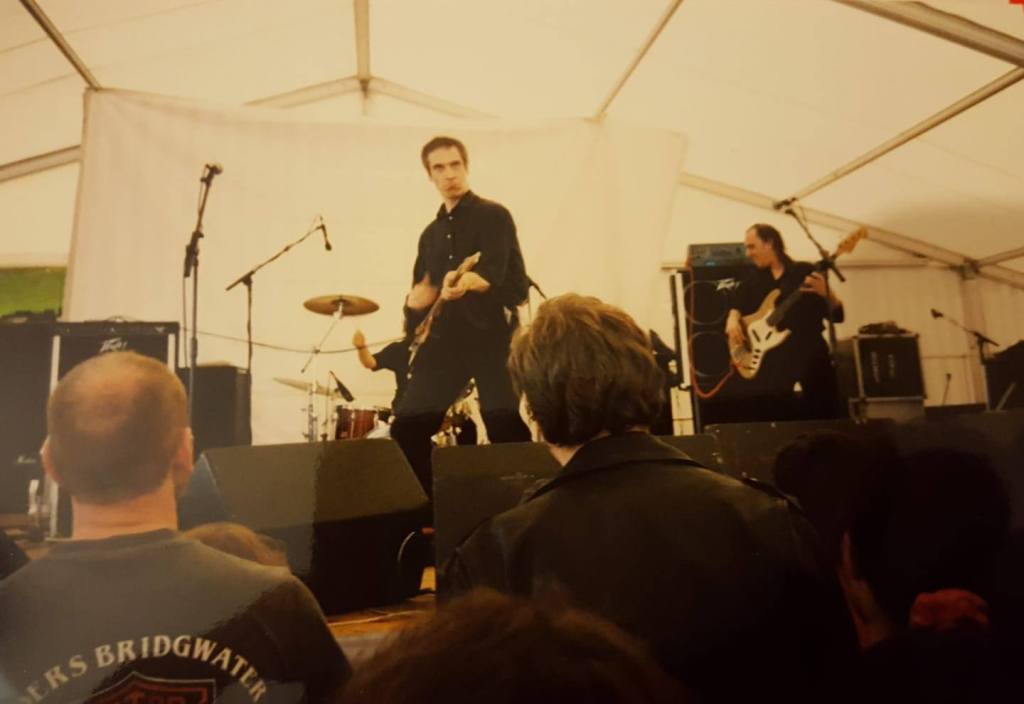
30 August 1993: The Wilko Johnson Band at the Guildford Folk & Blues Festival. Photograph by and courtesy of Tim Langner 
30 August 1993: The Wilko Johnson Band at the Guildford Folk & Blues Festival. Photograph by and courtesy of Tim Langner 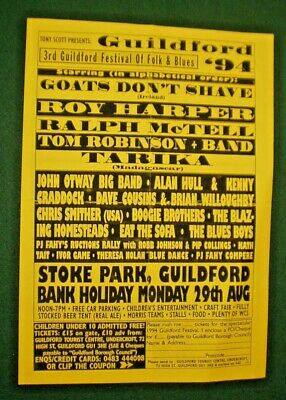
29 August 1994: Guildford Folk & Blues Festival flyer 
29 August 1994: Guildford Folk & Blues Festival Programme cover. 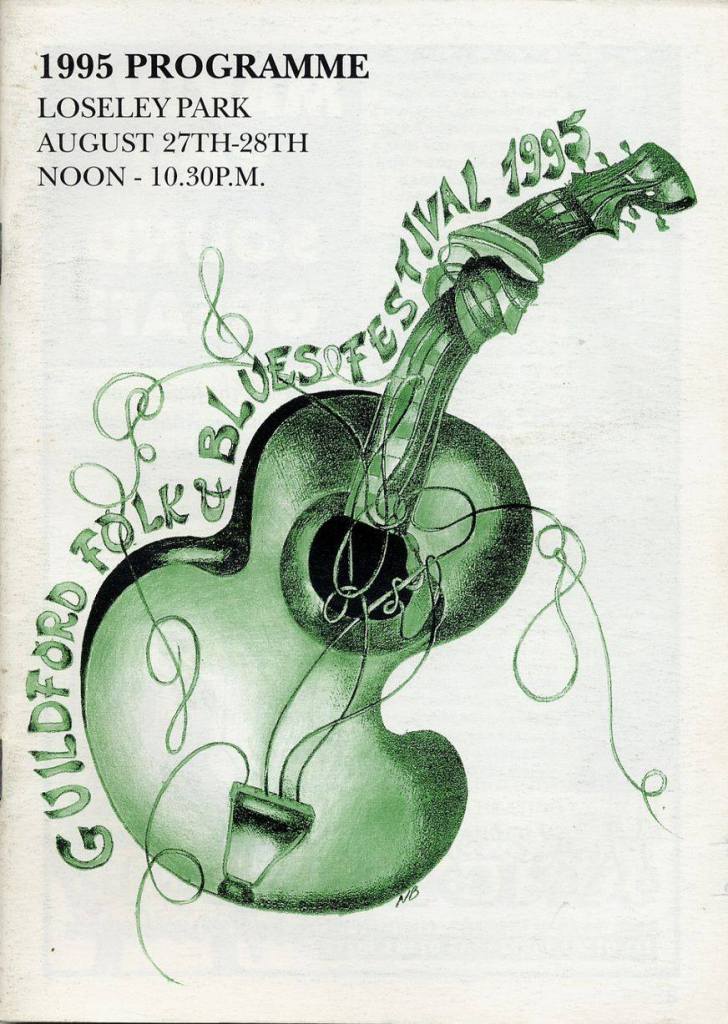
27-28 August 1995: Guildford Folk & Blues Festival Programme cover. 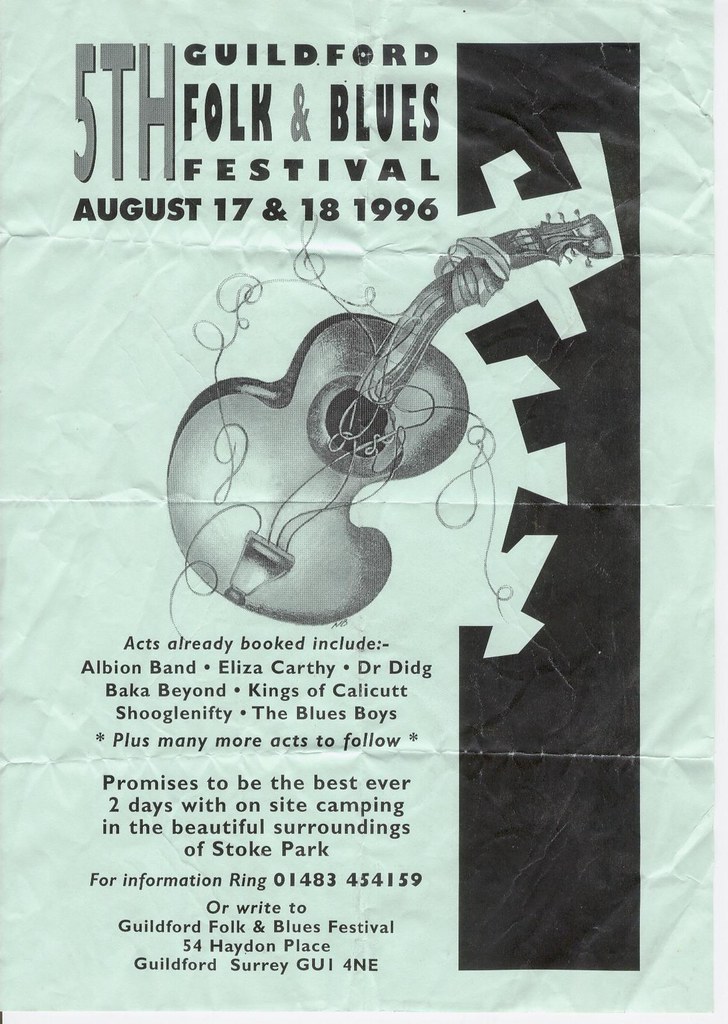
17-18 August 1996: Guildford Folk & Blues Festival flyer. 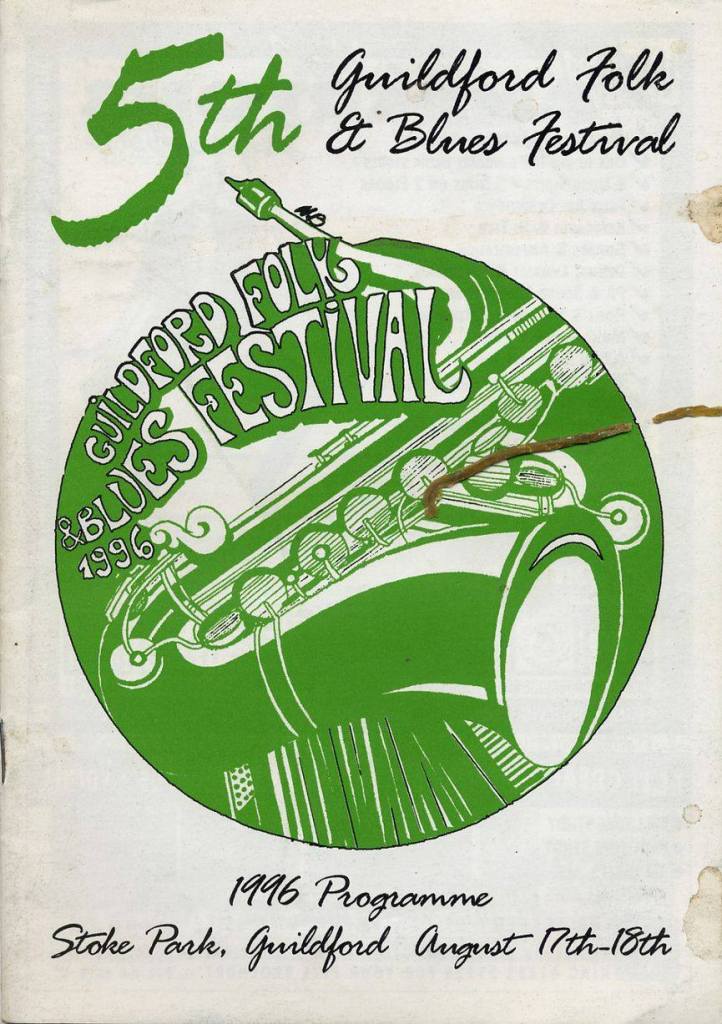
17-18 August 1996: Guildford Folk & Blues Festival Programme cover. 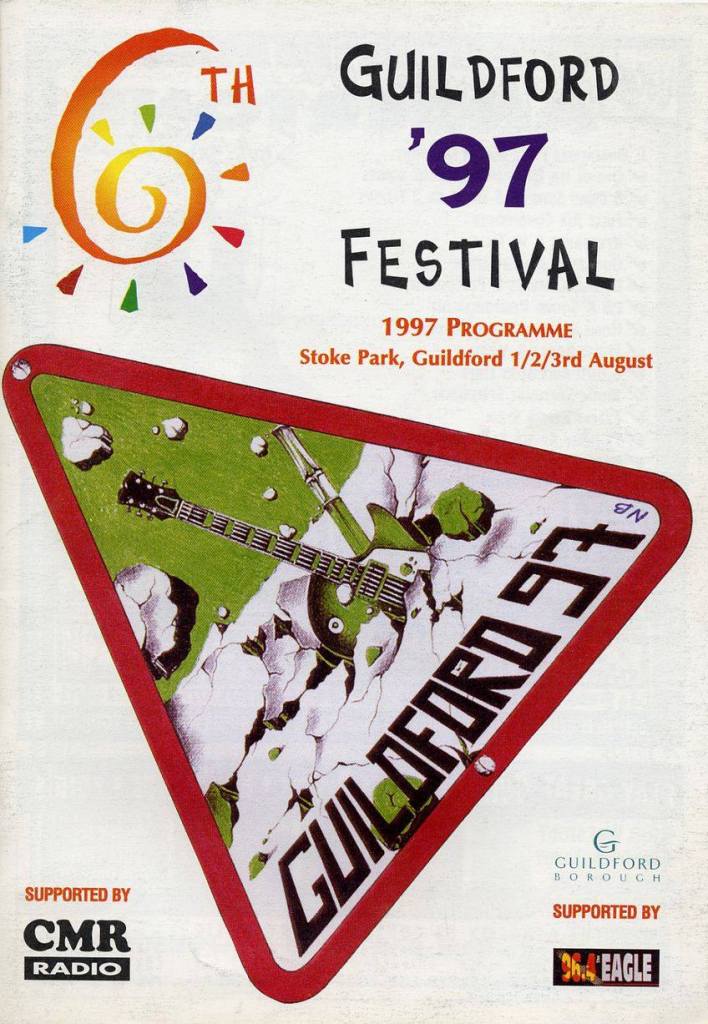
1-3 August 1997: Guildford ’97 Festival Programme cover. 
Guildford ’98 Camping Ticket. Source: Chewtonia.com 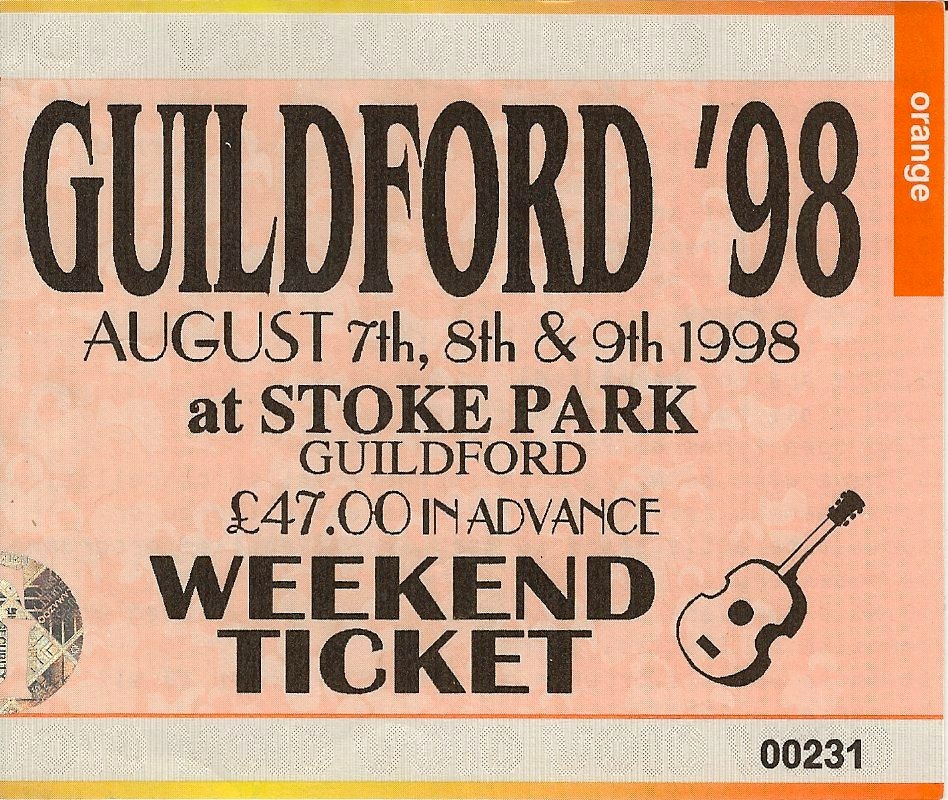
Guilford ’98 Weekend Ticket. Sourc: Chewtonia.com 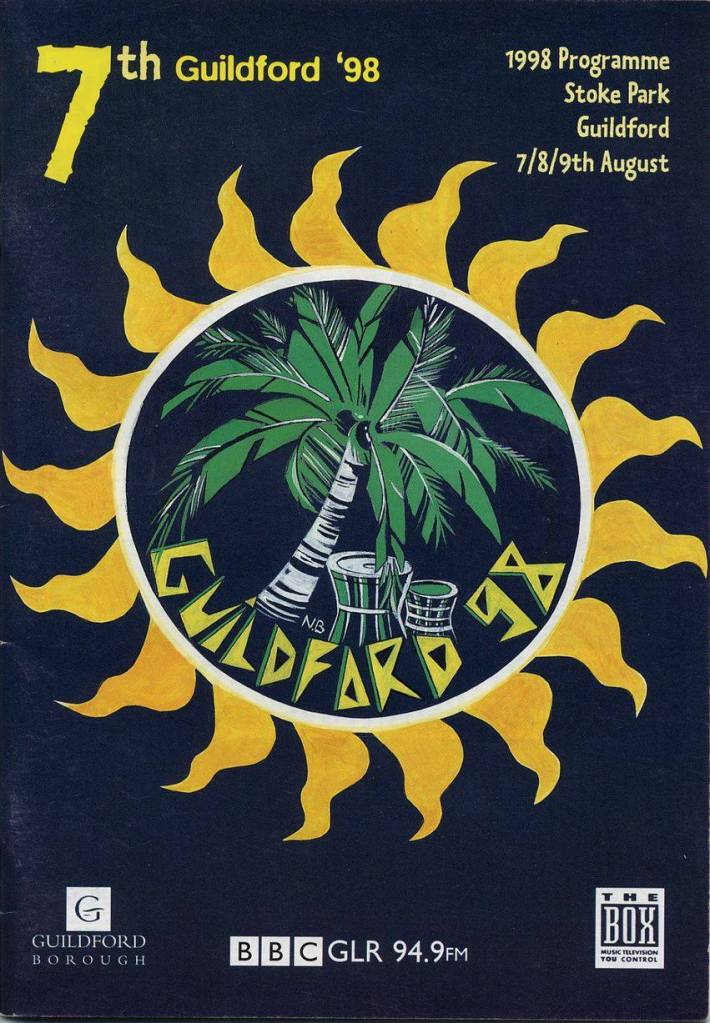
7-9 August 1998: Guildford ’98 Festival Programme cover. 
Guilford 1999 Camping Ticket. Source: Chewtonia.com 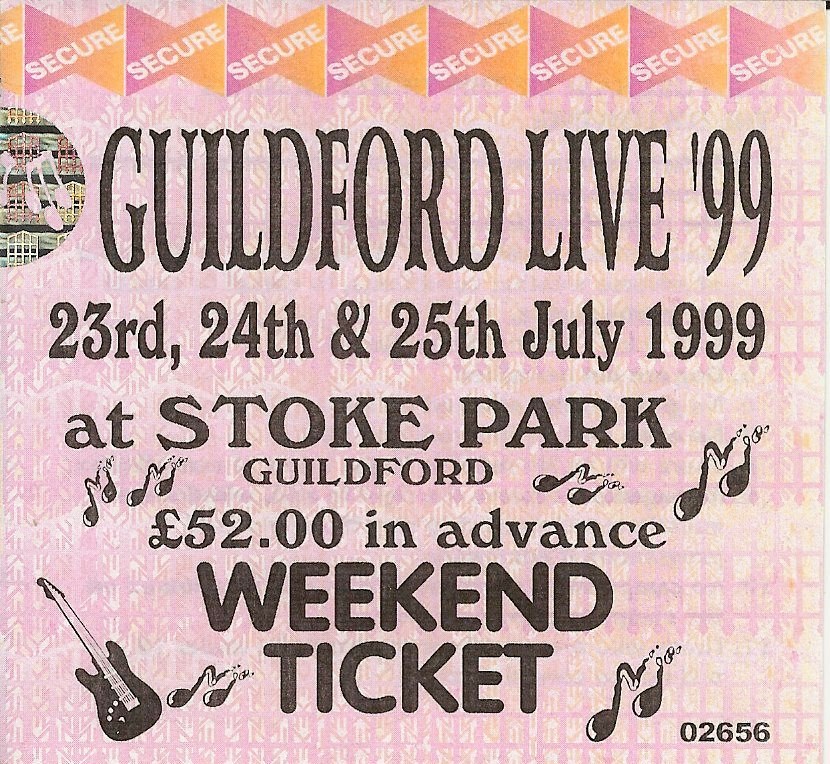
Guilford Live 1999 Weekend Ticket. Source: Chewtonia.com 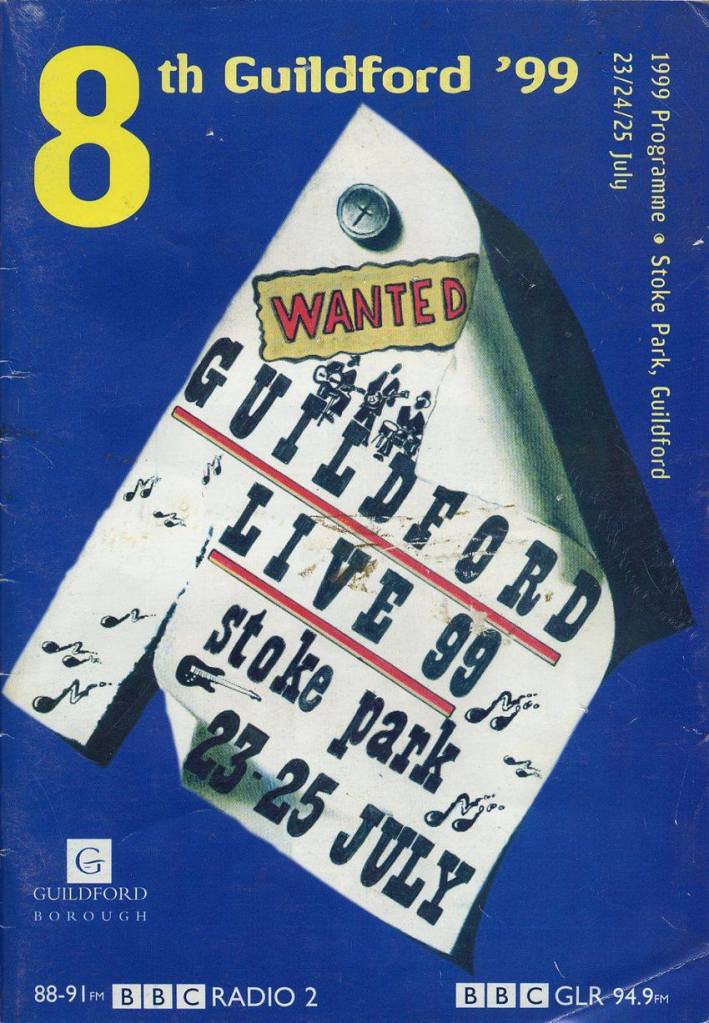
23-25 August 1999: Guildford ’99 Festival Programme cover. 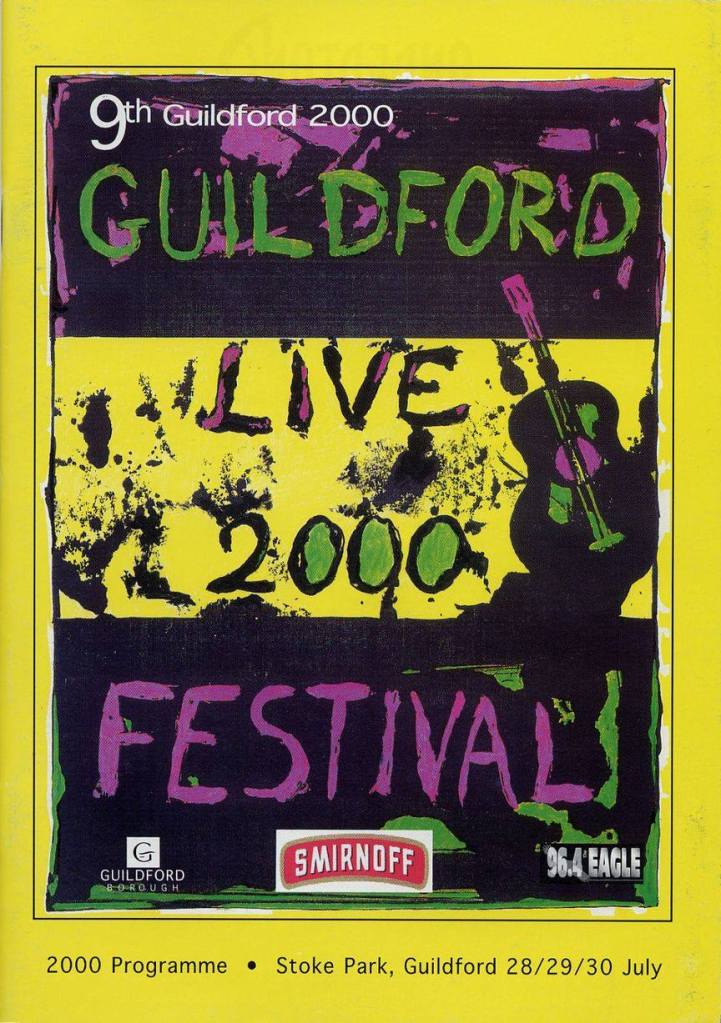
28-30 August 2000: Guildford Live 2000 Festival Programme cover. 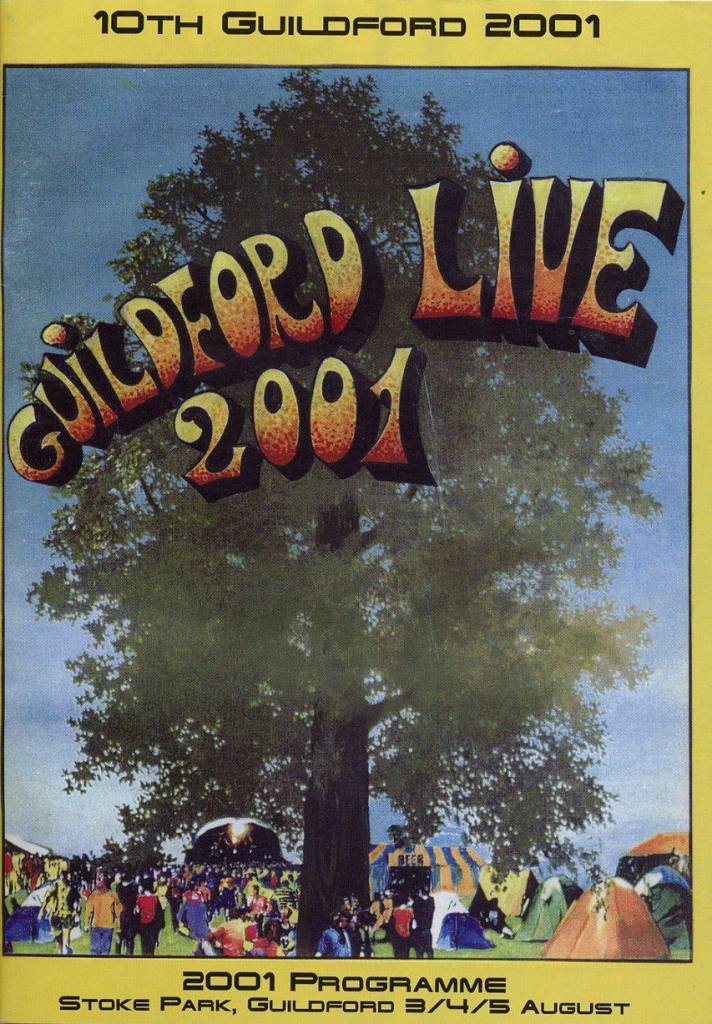
3-5 August 2001: Guildford Live 2001 Festival Programme cover. 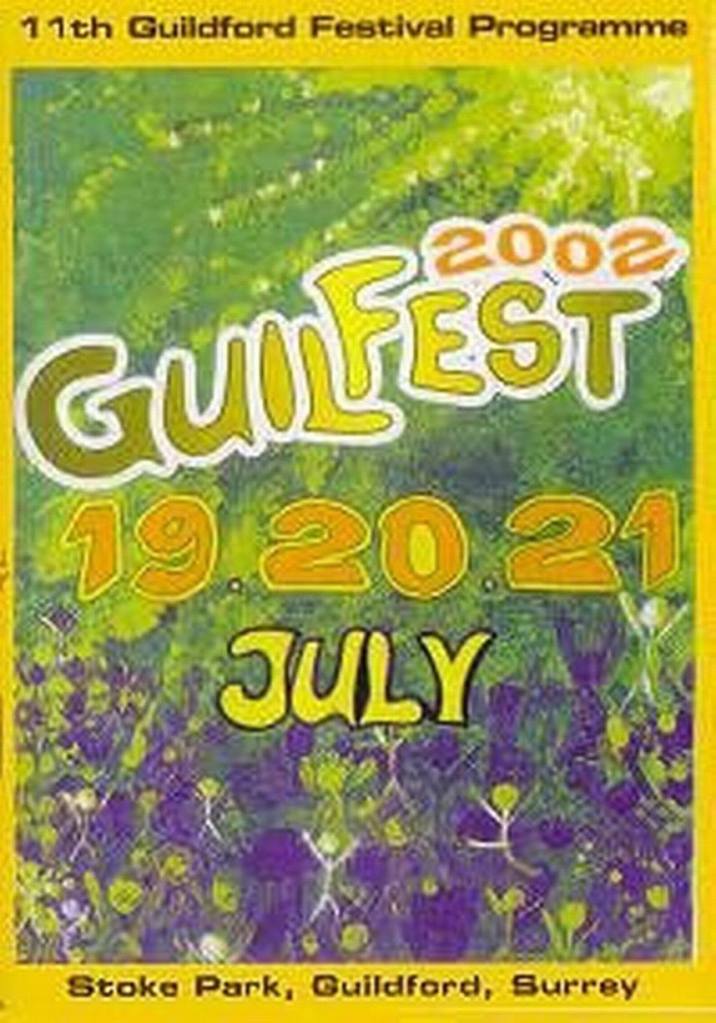
19-21 August 2002: GuilFest 2002 Programme cover. 
4-6 August 2003: GuilFest 2003 Programme cover. 
16-18 August 2004: GuilFest 2004 Programme cover. 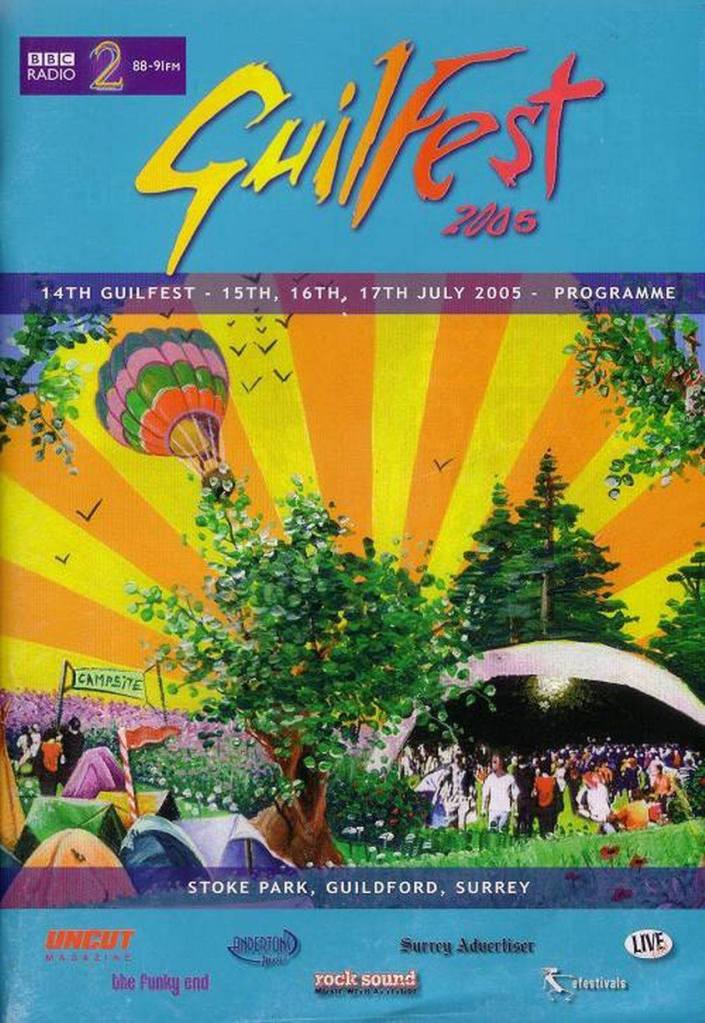
15-17 July 2005: GuilFest 2005 Programme cover 
The Surrey Advertiser sponsored Guilfest 2005 Unsigned Heroes CD. Picture courtesy of Ben’s Collectors Records 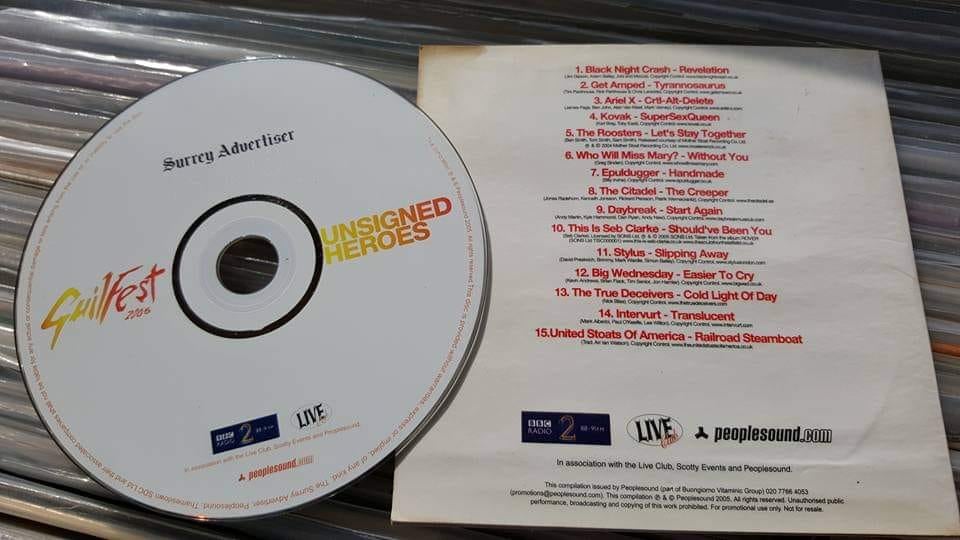
The Surrey Advertiser sponsored Guilfest 2005 Unsigned Heroes CD. Picture courtesy of Ben’s Collectors Records 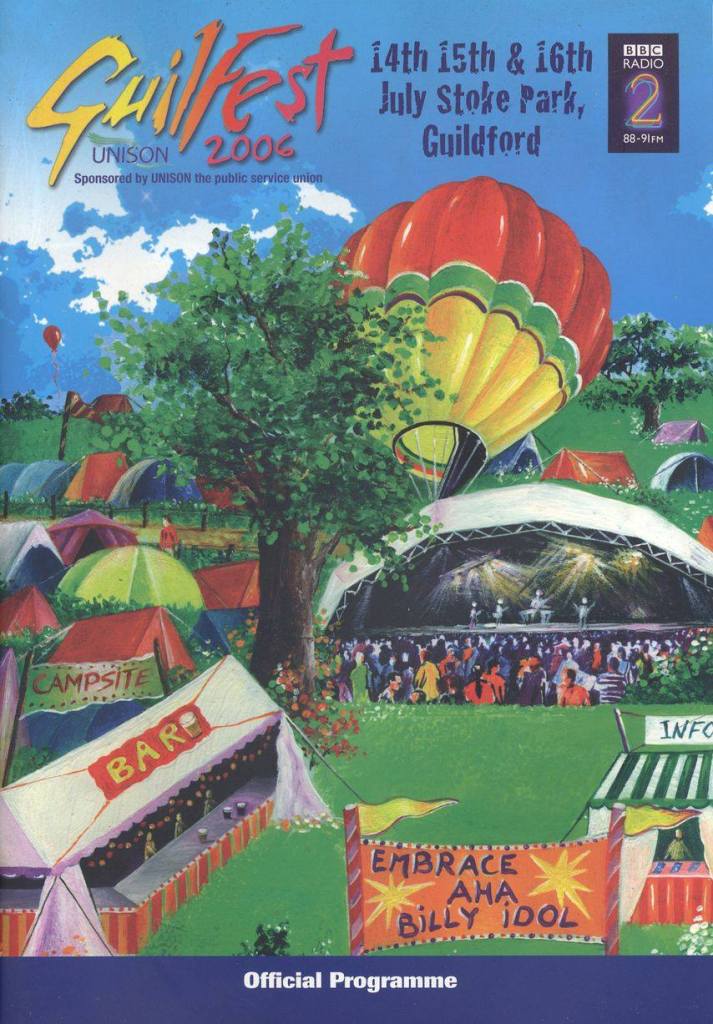
14-16 July 2006: GuilFest 2006 Programme cover 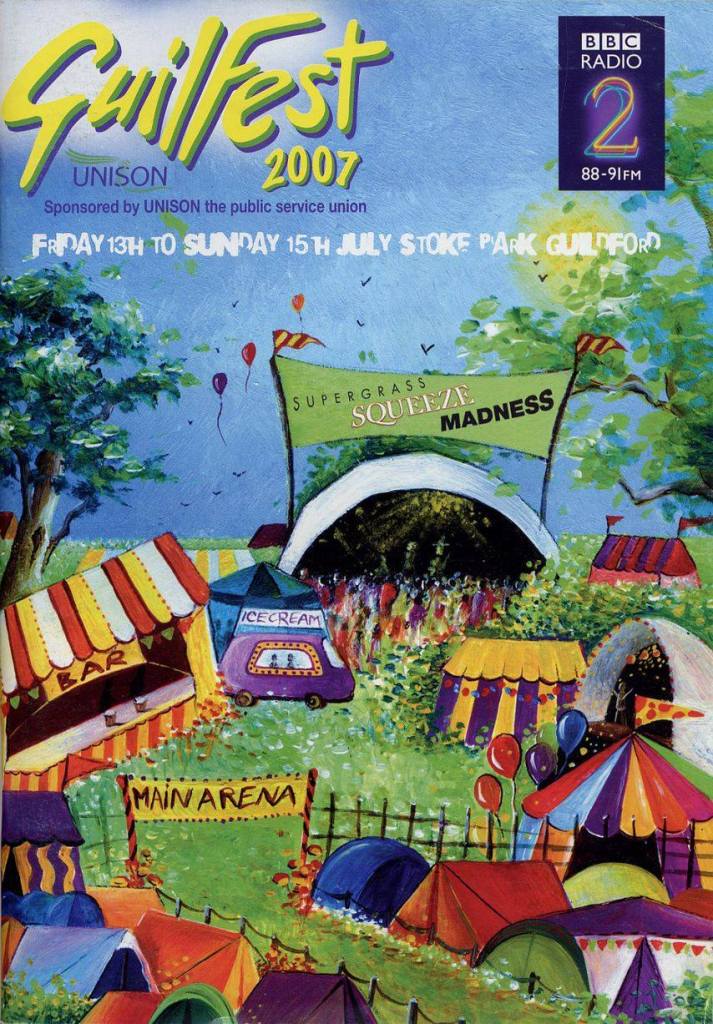
13-15 July 2007: GuilFest 2007 Programme cover. 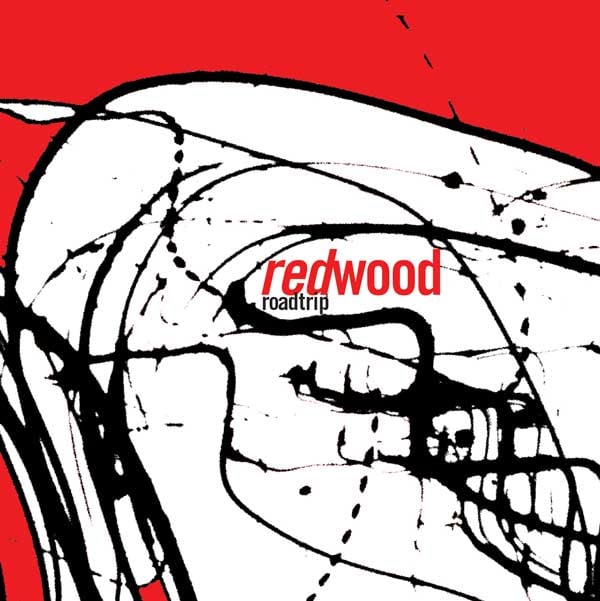
On 15 July 2007 Redwood released the “Roadtrip” [GTR001MCD] CD LP. compiled especially for Guilfest 2007, carrying various remastered B-sides and unreleased tracks. 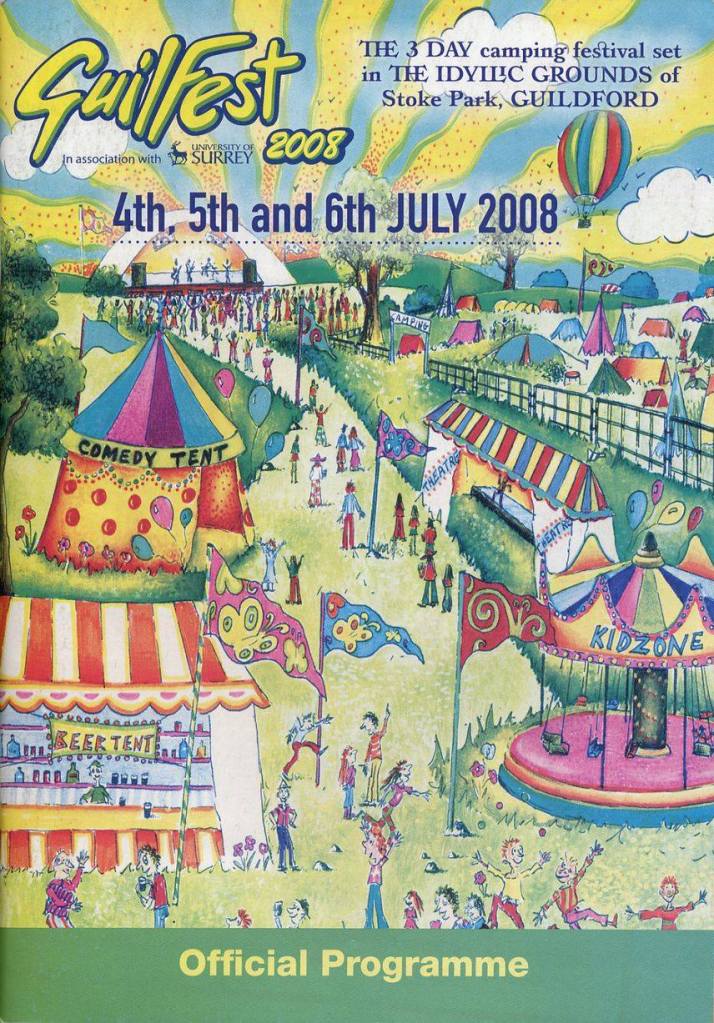
4-5 July 2008: GuilFest 2008 Programme cover 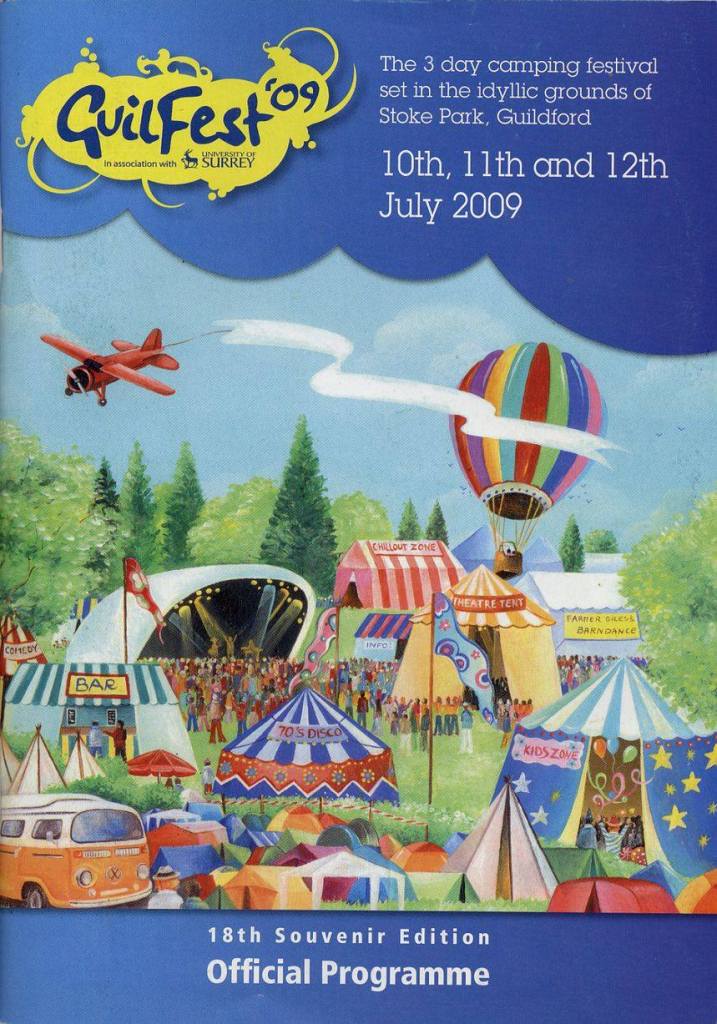
10-12 July 2009: GuilFest 2009 Programme cover. 
16-18 July 2010: GuilFest 2010 Programme cover. 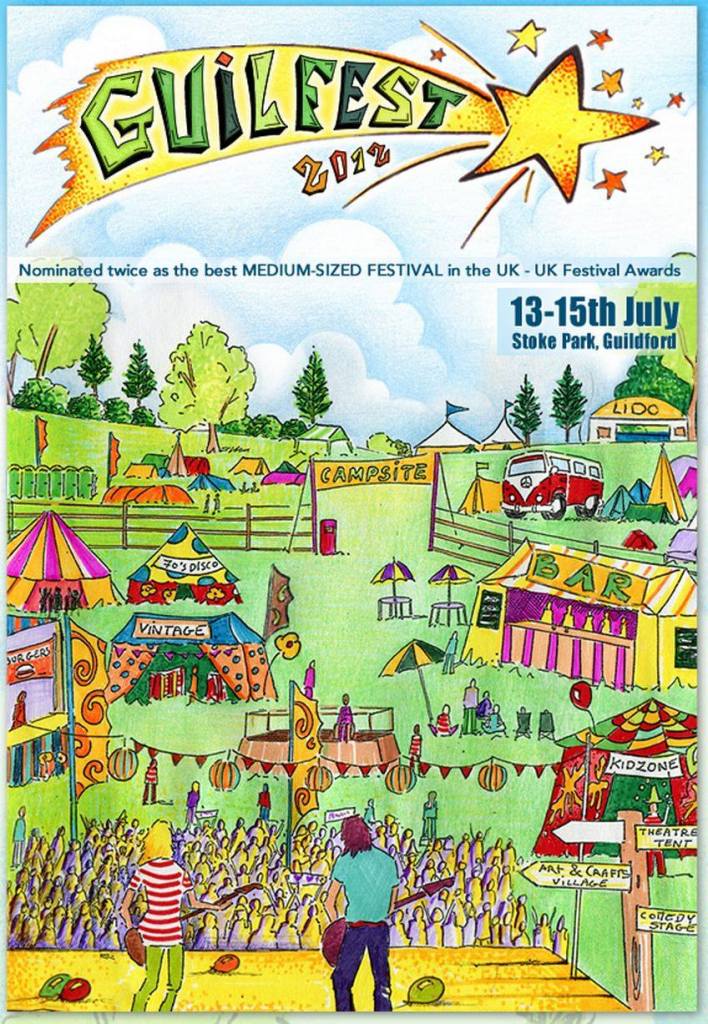
13-15 July 2012: GuilFest 2012 Programme cover 10cc, 96.4 Eagle Radio, A-ha, Adam Ant, Alice Cooper, Alvin Startdust, Anarchistwood, Andrew Morris, Archive 45, Ariel X, Ash, Asian Dub Foundation, Athlete, Atomic Kitten, BBC GLR, BBC Radio 2, Bentley Rhythm Ace, Best Family Festival Award, Beth Orton, Big Wednesday, Billy Bragg, Billy Idol, Black Anchor, Black Night Crash, Blondie, Blue Oyster Cult, Bob Geldof, Boney M, Bowling For Soup, Brian Wilson, Bryan Adams, Bryan Ferry, Carter USM, Catatonia, Cerys Matthews, Chas and Dave, Chase & Status, Chris Evans, Chumbawamba, CMR Radio, Collage of Sound, Culture Club, Daniel Bedingfield, David Gray, Daybreak, Dead Men Walking, DJ Fresh, DJ Yoda, Dreadzone, Echo and the Bunnymen, Eddi Reader, Embrace, Ents24, Epuldugger, Erasure, Eureka Machines, Fightstar, Fun Lovin’ Criminals, Funeral for a Friend, Gary Numan, Get Amped, Gobsausage, Goldie Lookin’ Chain, GU1 Free Festival, Guildford, Guildford Borough Council, Guildford Festival., Guildford Folk & Blues Festival, Guildford Folk Festival, GuilFest, Guilfest 2005 Unsigned Heroes CD, Guilfin, Hadouken!, Happy Mondays, Hawkwind, he Magic Numbers, Holroyd Arms, Hundred Reasons, Hurtwood Polo Club, Intervurt, James, James Blunt, Jamiroquai, Jethro Tull, Jimmy Cliff, Joan Armatrading, Joe Bonamassa, John Otway, John Otway Big Band, Jools Holland, Jools Holland & His Rhythm and Blues Orchestra, Just Jack, Katie Melua, Kool & The Gang, Kosheen, Kovak, Kula Shaker, Level 42, Levellers, Liam Rich, Live Nation, London Olympics, Lonnie Donegan, Loseley Park, Louise Distras, Macavity's Cat, Madness, Magic FM, Martin Clemens, Midge Ure, Motorhead, N-Dubz, New Model Army, Newton Faulkner, Nigel Watson, Nizlopi, Nouvelle Vague, Ocean Colour Scene, Olly Murs, Orbital, Oysterband, P45, Paul Weller, Pendulum, Peter Andre, Peter Green, Peter Sarstedt, Pulp, Radio 1, Razorlight, Redwood, Reef, Richard Thompson, Rock Cave, Rock Choir, Rock Sound, Roger Daltry, Rolf Harris, Rusko, Sandi Thom, Saw Doctors, Seth Lakeman, Shakespearos, Shane MacGowan & The Popes, Shed Seven, Simple Minds, Skin, Slider, Space, Squeeze, Status Quo, Steve Harley & Cockney Rebel, Stoke Park, Stylus, Summer of Love, Supergrass, Surrey Police, The Australian Pink Floyd Show, The Blackout, The Blockheads, The Blues Band, The Boomtown Rats, The Charlatans, The Citadel, The Damned, The Darkness, The Farm, The Feathers, The Fins, The Ghost of a Thousand, The Hamsters, The Human League, The Independent, The King Blues, The Levellers, The Lightning Seeds, The Love Band, The Ordinary Boys, The Pogues, The Pretenders, The Proclaimers, The Rifles, The Roosters, The Saw Doctors, The Storys, The Stranglers, The Subways, The Surrey Advertiser, The True Deceivers, The Unbelievable Freeloaders From Mars, The Wailers, The Wonder Stuff, The Wurzels, This is Seb Clarke, Tim Minchin, Tinie Tempah, Tom Robinson Band, Tony Scott, Toploader, UB40, Uncut Magazine, Unexpected Item in the Bagging Area, United Stoats Of America, Uriah Heep. Morcheeba, Van Morrison, Who Will Miss Mary?, Wilko Johnson Band, Will Young, Womb, You Me at Six, Ziggy Marley


Human beings takes me back to 1981. Followed them all over the Surrey reading area for a year a great band and 3 good guys playing well written songs of the era. I wish john Tim and steve well what ever they are doing now. Should reform for a few shows just like Oasis but do the wooden bridge.
LikeLiked by 1 person