
-
Lethal Dose

(c’80-’81) Chris Carter (vocal), Rob Anderson (guitar), Martin Dyson (bass), and Gary Fisher (drums).
Lethal Dose were a Camberley punk band influenced by Crass and Discharge. They were not favored by John Peel, but did well enough to claim royalties from The Grain. It’s rumored that they supported Crisis once, and played the downstairs bar at the Civic Hall, Guildford. In late ’80 they were scheduled to appear in the Observer’s color magazine in an article on the recording of demo tapes – although we are not sure if it was ever published.
On 17 October ’80, Splodgenessabounds played the University of Surrey, Guildford with Lethal Dose in support. Interestingly, we also show a listing for then Alvin Lee on the same day. The Mo-dettes played the Technical College, Basingstoke on 7 November ’80, and they had Lethal Dose in support. The next week Farnborough Tech’s Rugby Union Football Club hosted the band, along with headliner Deadlock, on 14 November ’80, after the cancellation of a gig at the same venue on 31 October due to licensing issues.
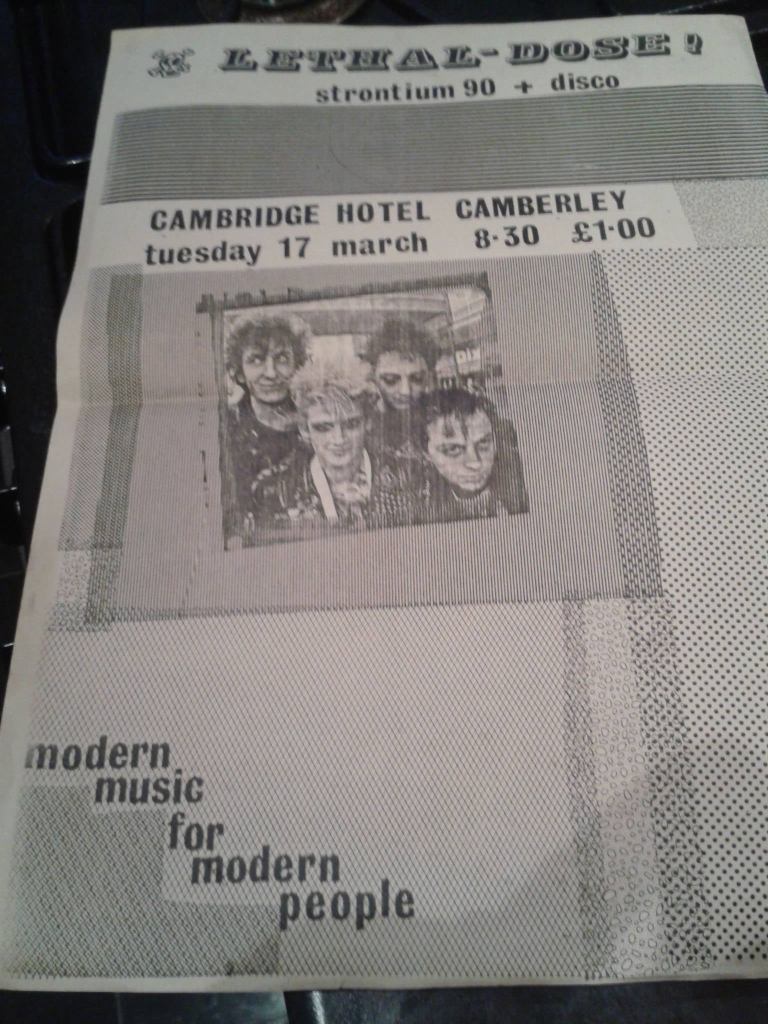
17 March 1981: Lethal Dose, supported by Strontium 90, played at the Cambridge Hotel, Camberley. Source: Paul Pomeroy The next year, on 17 March ’81, Lethal Dose, supported by Strontium 90 (not the Police precurser), played at the Cambridge Hotel, Camberley.
Heroin led to the demise of Dyson. Carter went onto Panzer Korps, then The Charles.
Tracks:
Gallery:
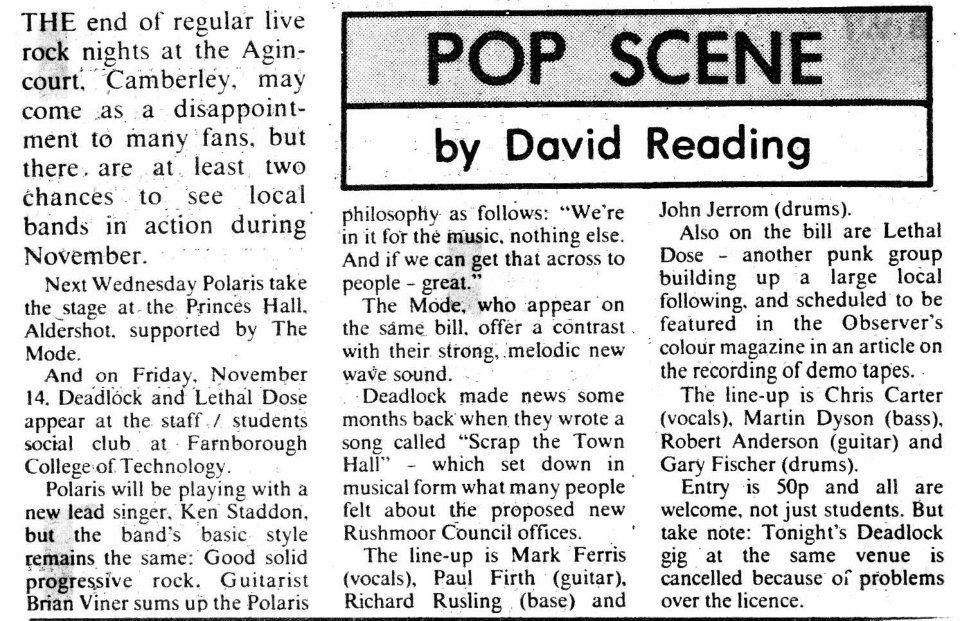
David Reading’s Pop Scene column from Aldershot News, 31 October ’80 has Lethal Dose supporting Deadlock at the Farnborough Tech on 14 November. 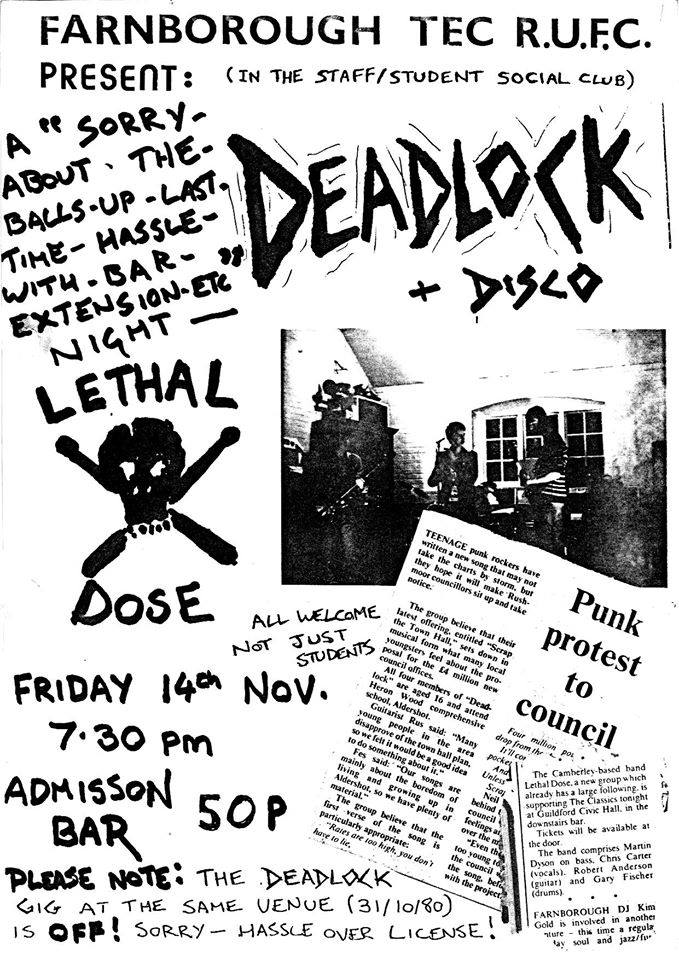
Deadlock Flyer from 1980 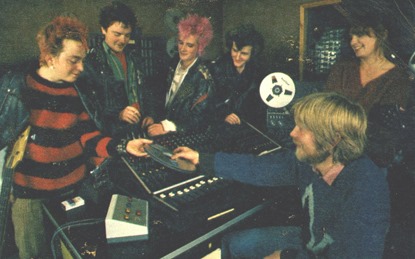
Lethal Dose in 1980 were (L-R) Dyson, Anderson, Carter and Fisher with two studio folk. Picture courtesy of Mick Magic Alvin Lee, Basingstoke, Camberley, Cambridge Hotel, Chris Carter, Crisis, Deadlock, Farnborough, Farnborough Tech, Farnborough Tech R.U.F.C., Gary Fisher, Guildford, John Peel, Lethal Dose, Martin Dyson, Panzer Korp, Rob Anderson, Splodgenessabounds, Strontium 90, Technical College, The Charles, The Grain, The Mo-dettes, University of Surrey -
Call of Cain

(c’89) Anton Joiner (?), Jason Kendall (?), Paul Flannery (bass), and Steve Fisher (keyboards / backing vocals / drums).
While we are unsure if they ever gigged they were influenced by New Model Army and Fields of the Nephilim. Fisher had been the driving force behind Herbaceous Borders before joining Call of Cain
Flannery went on to form The Hype. Joiner went to Australia for a few months late in ’89 and on his return, carried on at the contributing to Woking News & Mail for a while.
Gallery:

PG Tips from February ’89. -
The Maltings, Farnham

The venue started life as a tannery in the 1750s and was converted to a brewery in 1845 and expanded, with part of it becoming a malt house. Courage Breweries took over in 1925 and continued malting activities until 1956. Abandoned and in disrepair the property was sold to the town in ’69, to turn into an arts and community center with work converting the building taking years – some would say it’s still ongoing.
The people of Farnham raised £18,000, in a month, towards the £30,000 (significantly under market value) required by Courage Breweries to purchase The Maltings. The Farnham Trust raised the remaining £12,000 with grants from Surrey County Council, the Pilgrim Trust, and, it is believed, a contribution by Sir John Verney. The 31st Annual Report and Accounts 1975-1976 of The Arts Council of Great Britain, sub-headed ‘The Arts in Hard Times’ features a £15,000 line item Farnham Maltings Association Limited. Farnham Planning Officer John Wainwright also supported the late Alan Fluck, who’d co-created the Farnham Festival of Music, in developing live music at the venue from ’75 to ’85. Before then, it is reported that, around September ’70 Mike Rutherford’s father helped Genesis, with the newly recruited Phil Collins, rent The Maltings where they rehearsed for six weeks and wrote what was to become their album ‘Nursery Crymes’.
From ’75, The Maltings has been ‘officially’ a thriving arts and performance centre and is commonly referred to as Farnham Maltings. Farnham College’s Music Club moved to The Maltings in ’75 arranging a number of concert series at the venue.
American, Stefan Grossman bought his acoustic fingerstyle guitar playing and singing to The Maltings on 5 February ’76. On 27 April ’76, BBC TV’s “Old Grey Whistle Test” recorded Rick Wakeman at the venue; some of the recordings from which would appear on “Rick Wakeman – Live at The BBC” released on Hux Records [HUX 085] on 26 February 2007. In 2013, a double LP of Wakeman’s 1976 recordings were released on Gonzo Multimedia [RICK002] titled ‘Rick Wakeman – Live At The Maltings 1976’. Originally intended to run during September ’76, the 1st Farnham Beer Festival was push back to April ’77 and featured live music from local musicians and a band called Paul, Peter, and Mary’s Brother, as well as a few beers over the events two days. In ’78 the original line-up of The Vapors performed at The Maltings, this was shortly after they dropped the ‘u’ from Vapours. In contrast, Yale Symphony Orchestra’s tour of Great Britain in May ’78 took in Farnham and they performed at the venue.

The Vapors at Farnham Maltings in 1978 At some point early in 1980 the Surrey / Hants Music Competition was held at The Maltings, Farnham. We know that UBz came 3rd, Phantom Zone came 2nd, and Stripes won the 500 quid recording contract with Ray Dorset’s Satellite Label after competing against Impulse, and Lynx. The venue also hosted the Farnham Blues Festival for many years, to the point it was called the Farnham Maltings Blues Festival. The Farnham Folk Day, organized by creator of Folk Roots magazine Ian Anderson, was also held at The Maltings. He organized it from ’82 to ’88; skipping ’86 as the Maltings had double booked the date.
The Maltings hosted more than folk and blues, one of punk band Black Easter‘s first gigs was at The Maltings on 7 February ’82. The 1st Farnham Folk Day took place on 18 April ’82 and featured Martin Carthy, Michael Chapman, The English Country Blues Band, Dave Evans, John Kirkpatrick & Sue Harris, The Old Swan Band, The Watersons, Peta Webb & Webb’s Wonders, Maggie Holland, Spredthick, Dogfludd, Alan Harlow & Maggie St. George, Heavy Weather, Keith James, Don & Sarah Morgan, Nigel Thornbory, Toffs, and Bob Walton. On 7 September ’82, punk returned with a gig headlined by Black Easter with support from Mutant Babies, Disease, Maxi Puch and the Macho Moped Men, Longpig, and Zylch. Folk rockers, Home Service also appeared, a couple of months later, on 4 November ’82. Then on 16 December, Death in June performed at the venue.
The Farnham Film Company used the venue as one of the locations to record the videos and promos for Ob-Jay-Da‘s “It’s So Strange” and “As If To Say” on 1 November ’83, they also used the multi-storey car park on Barrack Road, Aldershot; and Farnham Castle; with The Maltings providing the venue for the indoor performance elements.
On 29 April ’84 the 3rd Farnham Folk Day featured Brass Monkey, The Cooper Family, The Andrew Cronshaw Band, The Dead Sea Surfers, The English Country Blues Band, Flowers & Frolics with Eddie Upton, Jo-Ann Kelly with Pete Emery and Mike Deacon, La Ciapa Rusa, R. Cajun, Martin Simpson, and Peta Webb & Pete Cooper.
Another great of the folk rock era and a familiar sight at a number of other local venues, Fairport Convention reformed in ’85 and were at The Maltings on 7 January. Every year the Folk Day was getting bigger and The 4th Farnham Folk Day, on 14 Apri ’85, was no different with Alistair Anderson, The Blades, The Boothill Foot-Tappers, Cluster Of Nuts Band, Eric, Dick Gaughan, Maggie Holland & Chris Coe, Sarah & Dave Horne, Dave Hunt, Joe Hutton with Willie Taylor & Will Atkinson, Flaco Jimenez Tex-Mex Band featuring Peter Rowan, Debby McClatchy, The Oyster Band, Rogue Morros, The Seven Champions, Kathryn Tickell, Trubshaw’s Hawaiians, Eddie Upton, and Bob Walton. On 30 October ’86, Bill Boazman, then using the persona of “Sonny Black”, was in town as were 3 Mutaphas 3, who claimed to originate in the Balkans but were actually a British world music band, on 2 November ’86.

26 April 1987: An outside session at The 5th Farnham Folk Day, with too many musicians to name. Source: Ian Anderson via Historic Farnham Town And Surrounding Villages Jo-Ann Kelly, Pete Emery, and Chinese musicians The Guo Brothers entertained the crowd on 1 February ’87. This was followed by Model T Slim on 16 April. In ’87 the Folk Day included a session called “Many Stringed Things From Far Flung Places” featuring Dembo Konte and Kausu Kuyateh on koras, Hassan Erraji on oud & bendir, and Sue Harris on English hammered dulcimer. The ensemble laid down a 20 minute set of what was described as ‘sublime music from the sky’. The phone rang for weeks with people asking if it had been recorded. Of course not…but those there on 26 April ’87 also got to see The Oyster Band, Dick Gaughan, Andy White, The Easy Club, John Kirkpatrick, The Old Swan Band with Dave Hunt, Brendan Crocker & The 5 O’Clock Shadows, The Copper Family, Peta Webb & Pete Cooper, Rory McLeod, Pete Morton, Crazy Hearts, Maggie Holland & Dave Parry, and Andy Turner & Chris Wood at the 5th Farnham Folk Day. On 10 September ’87 Sonny Black returned and towards the end of ’87 the Crane River Jazz Band filled the venue on 21 October, followed a week later by the Grits and Molasses Jazz Band on 28 October; the next night the Oyster Band took to the stage; Sammy Rat’s Big Big Blues Band on Guy Fawkes night, and Guildford band Strange Occupation on 12 November ’87. The Cuff Billett Jazz Band were at The Malting six days later, on 18 November ’87; followed by Big Road Roller Blues on 26 November; Magna, featuring Benny Cohen, on 2 December; Humphrey Littleton and his Jazz Band on 7 December; and the return on the local Sonny Black’s Blues Band on 10 December ’87
On 20 April ’88 The Solent City Jazz Men visited Farnham’s Maltings. Late in ’87, Anderson had moved away, leaving the Farnham Folk Day in the capable hands of Steve Heap and ? Casey for the next few years. On 24 April ’88, eleven hours of international roots music rolled into the venue in the form of the sixth annual Farnham Folk Day. Roots music was represented that day by Martin Carthy, Michelle Shocked, Ali Farka Toure, Kathryn Tickell, Sileas, Jali Musa Jawara & Musicians, Malcolm’s Interview, Maggie’s Farm, Howlin’ Wilf & The Vee Jays, Gas Mark V, The Old Hat Concert Party, Calicanto, Ralph Jordan with Fi & Jo Fraser, Paul James & Nigel Eaton, Roger Wilson, and Broken Ankles. On 26 May ’88 Blues Stew performed followed on 8 June by Blues n’ Trouble. Seven months after the Folk Day the Blues Festival rolled in on 20 November with Ruthless Blues, Blues Burglars, Hot Club Plus Friends, Rolling Drunks, T Model Slim, Sammy Rat’s Big Big Blues Band and Chuff Train Hot Dogs. The last gig listing at the venue we have at this time for ’88 is Cryin’ Out Loud on 1 December. A year later, The Hamsters were at The Maltings on 16 December ’89, followed by Hot Club on 28 December.

24 April 1988: Poster / Flyer for The 6th Farnham Folk Day. Source: Ian Anderson via Historic Farnham Town And Surrounding Villages On-again, off-again concern, Blodwyn Pig visited on 10 March ’90 and toward the end of march, on 29th, Sonny Black was back at The Malting followed a few days later by the return of The Hamsters on 1 April ’90. On 22 November ’90, Snatch It Back took to the venue stage and eight days later on 28 November it was the turn of Basingstoke’s Rod Garfield Blues Band. The Summer Blues Bonanza Festival hit The Maltings on 23 June ’91 and featured: Hot Club Plus Friends, The Hamsters, The Gutter Brothers, Mick Pini Band, Buick 6, Root Doctors, The Poorboys, Angelina & The Corn Babies, and The Ant Hill Mob. Pub rockers Dr. Feelgood dropped in just before Christmas ’91, with a gig on 7 December.
After just over five years together, The Hamsters played their 1000th gig at The Maltings, Farnham on 4 April 1992. A Summer Blues Festival was held on 21 June ’92 with Giles Headley and The Bogus Brothers in attendance. Jazz clarinetist, sax and harmonica player, Ian Wheeler recorded a concert at venue, releasing an LP titled ‘Ian Wheeler At Farnham Maltings’ in 1993 that also featured Colin Bowden (drums), Ray Foxley (piano), Vic Pitt (double bass), Rod Mason (trumpet) and on trombone, special guest, Fesser Lindgrun. Later that year, on 21 November ’93, Nine Below Zero were off the hook.

Released in 1993 On 2 July ’94 The Gutter Brothers performed at The Maltings again and The Eighth Farnham Maltings Blues Festival was held on 20 November ’94. Local band Womb opened The Maltings based Farnham Fusion Festival in ’94, but we are currently lacking any real detail on the event. The next year The Mighty 45’s, who you may recall as Angela Brown’s backing band, took over the venue on 13 July. American singer-songwriter, Loudon Wainwright III performed on 8 November ’95, followed the next day by the oft underrated blues rock of the Saiichi Sugiyama Band.
The Folk Festival ’96 was tinged with rock on 21 April in the form of Redwood along with Kathryn Tickell, Dr Didg, Labi Siffri, Edward II, and John Otway. Who Moved The Ground? headlined on 6 May ’96 with Redwood in support. Shed Club and Bluefire Records/Snakebite City presented Farnham ’96 on 23 November ’96 booking These Animal Things, Dweeb, Posh, Supermodel, Posh, Chuck, Redwood, The Hairy Things, The Bigger God, Inter, Pharmacy, JC Regulator, PA Skinny, Oizone, Twister, Avalanche and Snowball.

23 November 1996: Flyer for Farnham ’96 presented by Shed Club and Bluefire/Snakebite City. Source: Sarah Drover via Inter The Farnham Fusion Festival took place at The Maltings again, on 15 February ’97, and featured Alabama 3, Womb, Beth Orton, Loop Guru, Dr Didg, Orphic Soop, Terminal Head, Redwood, The Dolman, Pineapple Tribe, Fish Pig, Seed & The Bridge, Decon Prom, Jabanna, Alien Mutation, Peter Sarstedt, Blazing Homesteads, and Past Caring. A couple of months later, on 26 April ’97, Shed Club and Snakebite City once again presented Farnham ’97, aka Indie Band Fest 1997, with Carter USM, Bennet, Spacemaid, The Bigger God, Garageland, Sons of The Tribe, Jolt, Pullover, Dustball, Inter, Disco Pistol, Descent, Gel and Oizone all performing. In late ’97, when Splatch! and Geronimo events could no longer be held at the Civic Hall, Guildford the folks at Farnham Maltings stepped up.
As a result of the Civic’s move, Midget – who’d have singles in the UK Singles Chart later in the year – and Glitterbox performed at The Malting on 10 January ’98 and the following week, on 17 January, Vex Red, Sonic Blue, Mindwire and Enertia. The Maltings hosted Farnham ’98, on 28 March ’98, featuring 20 bands across three stages at the all day festival. My Life Story, Drugstore, Libido, Ballroom, Jaguar, Salamanda, and Cato played on the Shed Club stage. On the Snakebite City stage: Glitterbox, Seafood, Inter, Spillage, Twister, Avalanche, Oizone, and Co Star played. Enertia, Vex Red, Taxi Driver, and Snide Line performed on the third. ’98 was also the year that classical pianist and composer John Lenehan was recorded at The Maltings, resulting in Classic FM’s CD release ‘John Lenehan – Satie Piano Miniatures including 3 Gymnopedies’ [75605 57022 2]. Technival was held on 11 April that year with Serpico, Jetpak, The Monsoon Bassoon, Jolt, Fourth Quarter, and Magoo. Redwood’s Colour Blind tour included The Maltings on the roster of venues on 17 July ’98 and the following month, on 21 August ’98, Kilter booked the venue for a gig.
The L.A. Doors performed at the venue again on 23 January ’99. A few weeks later the Skunk Festival 1999 #1 hit The Maltings, on 12 February ’99, and featured Mindwire and Hipslinky. Easter Sunday 1999 saw The Maltings packed with six performance areas for Technoval: The Geronimo Guitar and Noises Swamp featured Stella Maris, Fourth Quartet, The Scrutineers, Mindwire, Blue Swimmer, and Caretaker. The Coalition Dance Emporium hosted Mark Sinclair, who’d started the Pendragon parties in ’92 and was a pioneer of Trance/Hard Trance in the UK; Defiant’s Paulo & The Sad Bastard; along with Tey, a key figure in the UK’s free party scene in the 90’s co-running ‘Sabbatical Sound’ and would be found later in the year banging out techno at Guilfin‘s Ambient Lounge at Glastonbury; Matt 505, and Tristan. The Guilfin Ambient Lounge at Technoval was headlined by the top dog of the Megadog / Club Dog club nights, Michael Dog; supported by Kinetic’s Dr Psychedelic; Frontside; and Alien Mutation. Cultural Images Dub Zone built up from Da Vinci’s Turk & Miles; to Sunray; back to Da Vinci with Natto P; and wrapping it up with Tufty Gee & The Fyne Tymes Crew. Funky Lloyd Jesus headlined the Superfly Funk Bunker with Me Camembert and Mr Spud, Duke Zuke, and Linz. Finally the Basement Bar held Essenes, Hipslinky, and Hotel Lounge. The Skunkhouse Festival 1999 #2 presented Mindwire and Enertia on 7 May ’99; and a month later, on 22 June, Kilter took to The Maltings’ stage again.

Dreyfuss, Vex Red and Me Against It All play Farnham Maltings. Picture courtesy of The Surrey & NE Hampshire Music Scene In 2000, Dreyfuss played the The Maltings, Farnham with Vex Red and Me Against It All in aid of Reef Protection on 22 February. That same year, on 22 January and 30 March, Dr JJ’s Blues Band recorded their sessions laying 11 of the tracks down their ‘Live’ CD Album released later in the year on Hal E. Tosis Records [CD HAL 003]. Booaloo went down at the Farnham Maltings on 16 November 2000, with The Guv’nors performing.
Blues, Classical, Folk, Funk, Indie, Jazz, Prog, Punk, Rock, Techno, Trance the venue has accomodated them all and more and continues to this day; celebrating 50 years recently.
Gallery:

The Vapors at the Farnham Malting in 1978 
The Vapors at the Farnham Malting in 1978 
May 1978: Yale Symphony Orchestra rehearsing at Farnham Maltings 
May 1978: Yale Symphony Orchestra take a break at Farnham Maltings 
Taken from the May/June 1980 issue of Barbed Wires – Vol 3 No 2 (issue 6) – Picture courtesy of Fred Pipes 
7 February 1982: A member of Black Easter restringing backstage at The Maltings 
18 April 1982: Poster / Flyer for The 1st Farnham Folk Day. Source: Ian Anderson via Historic Farnham Town And Surrounding Villages 
10 April 1983: Poster / Flyer for The 2nd Farnham Folk Day. Source: Ian Anderson via Historic Farnham Town And Surrounding Villages 
1 November ’83’s video promo ‘call sheet’. Source: Ob-Jay-Da 
29 April 1984: Poster / Flyer for The 3rd Farnham Folk Day. Source: Ian Anderson via Historic Farnham Town And Surrounding Villages 
14 April 1985: Poster / Flyer for The 4th Farnham Folk Day. Source: Ian Anderson via Historic Farnham Town And Surrounding Villages 
26 April 1987: Poster / Flyer for The 5th Farnham Folk Day. Source: Ian Anderson via Historic Farnham Town And Surrounding Villages 
26 April 1987: Backstage at The 5th Farnham Folk Day with Rory McLeod, Hassan Erraji, Chris Wood, Dembo Konte, Musa Joh, and Kausu Kuyateh. Source: Ian Anderson via Historic Farnham Town And Surrounding Villages 
26 April 1987: Dembo Konte, Kausu Kuyateh, Hassan Erraji, and Sue Harris’ session called “Many Stringed Things From Far Flung Places” at The 5th Farnham Folk Day. Source: Ian Anderson via Historic Farnham Town And Surrounding Villages 
26 April 1987: Andy Turner and Chris Wood at The 5th Farnham Folk Day. Source: Ian Anderson via Historic Farnham Town And Surrounding Villages 
4 April 1992: The Hamsters 1000th gig was held at The Maltings, Farnham. Source: Neil Thompson via Keep It Out Of Sight 
Cover of 1994 Farnham Blues Festival program, held at The Maltings. Source Chewtonia.com 
23 November 1996: Ticket and flyer for Farnham ’96 presented by Shed Club and Bluefire/Snakebite City. Source: Sarah Drover via Inter 
15 February 1997: The Farnham Fusion Festival took place at the Maltings. 
26 April 1997: Flyer for Farnham ’97 presented by Shed Club and Snakebite City. Source: Sarah Drover via Inter 
Page 1 of a letter from Barney Jeavons to Splatch! attendees in late ’97. Source: The Surrey & NE Hampshire Music Scene 
Page 2 of a letter from Barney Jeavons to Splatch! attendees in late ’97. Source: The Surrey & NE Hampshire Music Scene 
28 March 1998: The Maltings hosted Farnham 98, with three stages. Source: Seafood 
1998: John Lenehan recorded ‘John Lenehan – Satie Piano Miniatures including 3 Gymnopedies’ at Farnham Maltings 
4 April 1999: Compared by Vis The Spoon, Technival arrived at Farnham Maltings on Easter Sunday. Source: Mindwire 3 Mustaphas 3, Alabama 3, Alan Fluck, Alan Harlow, Ali Farka Toure, Alien Mutation, Alistair Anderson, Andy Turner, Andy White, Angelina & The Corn Babies, Avalanche, Ballroom, Bennet, Benny Cohen, Beth Orton, Bill Boazman, Black Easter, Blazing Homesteads, Blodwyn Pig, Blue Swimmer, Bluefire Records, Blues Burglars, Blues n’ Trouble, Blues Stew, Bob Walton, Booaloo, Brass Monkey, Brendan Crocker & the 5 O'Clock Shadows, Broken Ankles, Buick 6, Calicanto, Caretaker, Carter USM, Cato, Chris Coe, Chris Wood, Chuck, Chuff Train Hot Dogs, Civic hall, Club Dog, Cluster Of Nuts Band, Co. Star, Colin Bowden, Courage Breweries, Crane River Jazz Band, Crazy Hearts, Cryin’ Out Loud, Da Vinci, Dave Evans, Dave Hunt, Dave Parry, Death in June, Debby McClatchy, Decon Prom, Defiant, Dembo Konte, Descent, Dick Gaughan, Disco Pistol, Disease, Dogfludd, Don & Sarah Morgan, Dr Didg, Dr JJ's Blues Band, Dr Psychedelic, Dr. Feelgood, Dreyfuss, Drugstore, Duke Zuke, Dustball, Dweeb, Eddie Upton, Edward II, Eric, Essenes, Fairport Convention, Farnham, Farnham '96, Farnham '97, Farnham '98, Farnham Beer Festival, Farnham Blues Festival, Farnham Castle, Farnham College, Farnham Festival of Music, Farnham Film Company, Farnham Folk Day, Farnham Fusion Festival, Farnham Maltings, Farnham Maltings Association Limited, Farnham Maltings Blues Festival, Fesser Lindgrun, Fi & Jo Fraser, Fish Pig, Flaco Jimenez Tex-Mex Band, Flowers & Frolics, Folk Roots, Fourth Quarter, Fourth Quartet, Frontside, Funky Lloyd Jesus, Garageland, Gas Mark V, Gel, Genesis, Geronimo, Giles Headley, Glitterbox, Gonzo Multimedia, Guildford, Guilfin, Hassan Erraji, Heavy Weather, Hipslinky, Home Service, Hot Club, Hot Club Plus Friends, Hotel Lounge, Howlin' Wilf & The Vee Jays, Humphrey Littleton and his Jazz Band, Hux Records, Ian Anderson, Ian Wheeler, Impluse, Indie Band Fest 1997, Inter, Jabanna, Jaguar, Jali Musa Jawara & Musicians, JC Regulator, Jetpak, Jo-Ann Kelly, Joe Hutton, John Kirkpatrick, John Lenehan, John Otway, John Wainwright, Jolt, Kathryn Tickell, Kausu Kuyateh, Keith James, Kilter, Kinetic, L.A. Doors, La Ciapa Rusa, Labi Siffri, Libido, Linz, LongPig, Loop Guru, Loudon Wainwright III, Lynx, Maggie Holland, Maggie St. George, Maggie's Farm, Magna, Magoo, Malcolm's Interview, Mark Sinclair, Martin Carthy, Martin Simpson, Matt 505, Maxi Puch and the Macho Moped Men, Me Against It All, Me Camembert, Megadog, Michael Chapman, Michael Dog, Michelle Shocked, Mick Pini Band, Midget, Mike Deacon, Mike Rutherford, Mindwire, Mr Spud, Mutant Babies, My LIfe Story, Natto P, Nigel Eaton, Nigel Thornbory, Nine Below Zero, Ob Jay Da, Oizone, Old Grey Whistle Test, Orphic Soop, Oyster Band, Pa Skinny, Past Caring, Paul James, Paulo & The Sad Bastard, Pendragon, Peta Webb, Peta Webb & Webb's Wonders, Pete Cooper, Pete Emery, Pete Morton, Peter Rowan, Peter Sarstedt, Phantom Zone, Pharmacy, Phil Collins, Pilgrim Trust, Pineapple Tribe, Posh, Pullover, R. Cajun, Ralph Jordan, Ray Dorset, Ray Foxley, Redwood, Rick Wakeman, Rod Garfield Blues Band, Rod Mason, Roger Wilson, Rogue Morros, Rolling Drunks, Root Doctors, Rory McLeod, Ruthless Blues, Sabbatical Sound, Salamanda, Sammy Rats Big Big Blues Band, Sarah & Dave Horne, Satellite Label, Seafood, Seed & The Bridge, Serpico, Shed Club, Sileas, Sir John Verney, Skunk Festival 1999, Snakebite City, Snatch It Back, Snide Line, Snowball, Sonic Blue, Sonny Black, Sons of the Tribe, Spacemaid, Spillage, Splatch, Spredthick, Stefan Grossman, Stella Maris, Steve Heap, Strange Occupation, Stripes, Sue Harris, Summer Blues Bonanza Festival, Sunray, Supermodel, Surrey County Council, T Model Slim, Taxi Driver, Technival, Technoval, Terminal Head, Tey, The Andrew Cronshaw Band, The Ant Hill Mob, The Arts Council of Great Britain, The Bigger God, The Blades, The Bogus Brothers, The Boothill Foot-Tappers, The Cooper Family, The Crane River Jazz Band, The Cuff Billett Jazz Band, The Dead Sea Surfers, The Dolman, The Easy Club, The English Country Blues Band, The Farnham Trust, The Guo Brothers, The Gutter Brothers, The Guv’nors, The Hairy Things, The Hamsters, The Maltings, The Mighty 45’s, The Monsoon Bassoon, The Old Hat Concert Party, The Old Swan Band, The Oyster Band, The Poorboys, The Scrutineers, The Seven Champions, The Vapors, The Watersons, These Animal Things, Toffs, Tristan, Trubshaw's Hawaiians, Tufty Gee & The Fyne Tymes Crew, Turk & Miles, Twister, UBz, Vex Red, Vic Pitt, Who Moved the Ground?, Will Atkinson, Womb, Yale Symphony Orchestra, Zylch -
Flow Motion

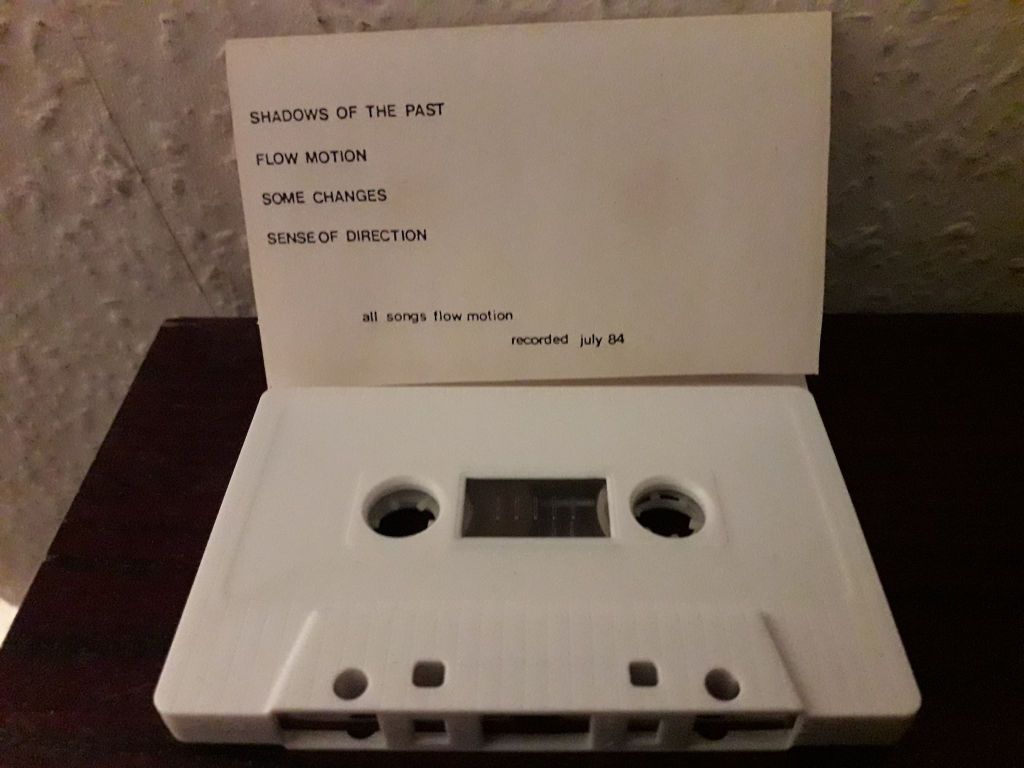
(c’84-’85) Karl Selfe (vocals / percussion), Phil Bushen (bass), Duncan “Du Kane” Elder (guitar) and David Howick (drums).

Picture courtesy of Du Kane In the ’80’s, the landlord of The Cranley Hotel, Cranleigh appealed for live bands to play the venue in a number of local music columns, Flow Motion responded playing The Cranley many times c’83/84. The band recorded four tracks: “Shadows of the Past”, “Flow Motion”, “Some Changes”, and “Sense of Direction” in July ’84. These were then released on their eponymous cassette EP demo. The band were still gigging locally as of ’85, including at The Royal, Guildford on 1 February ’85 supported by Siere Novar.
The band had a friendly rivalry with Parallel Motion, and Elder, Bushen, and Howick would later join forces with Parallel vocalist Anna-Lucy Torjussen and Ian “Scampi” Fullwood in ’85 to form Yellow Lifetime. This group went on to became Lax Lifetime in July ’87, morphing again in ’88 to become Fab Daze.
In ’89 Kane went on to form Beautiful People. He also spent time as a contributing editor for Front magazine and ran session recording outfit Replicant. With David Maskrey, Kane can now be seen in The Shakespearos, along with The Vapors‘ Steve Smith, mostly gigging in the Worthing area.
Gallery:
Picture courtesy of Du Kane 
Poster for Flow Motion supported by Siere Novar at The Royal, 1 Feb 1985. Picture courtesy of Du Kane 
Flow Motion’s ‘progressive’ discography. Picture courtesy of Du Kane Anna Lucy, Beautiful People, Cranleigh, David Howick, David Maskrey, Du Kane, Duncan Elder, Fab Daze, Flow Motion, Front Magazine, Guildford, Ian Fullwood, Karl Selfe, Lax Lifetime, Parallel Motion, Phil Bushen, REplicant, Scampi, Siere Novar, Steve Smith, The Cranley Hotel, The Royal, The Shakespearos, The Vapors, Worthing, Yellow Lifetime -
Pozer

(c’79-81) Rob Kemp (guitar / vocal), Ian Goral (guitar), Bruce Richins (drums) and Dave Gilbraith (bass).
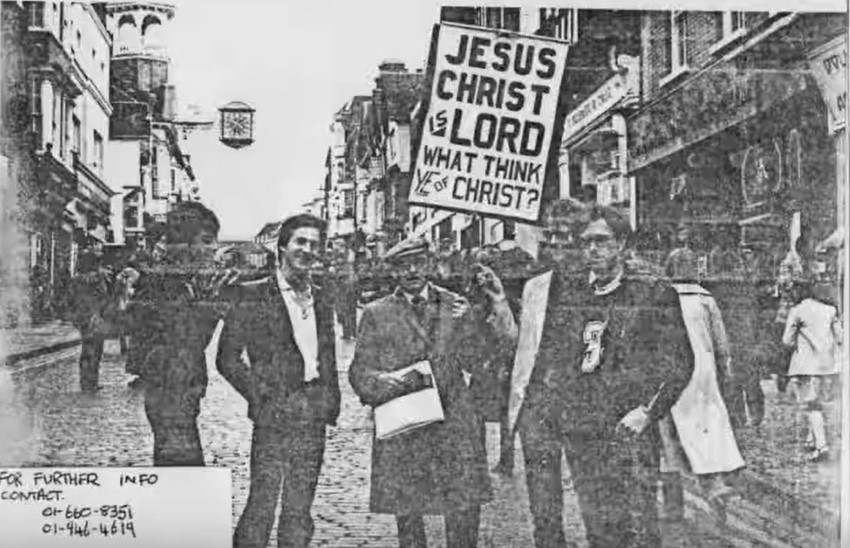
Pozer in Guildford High Street Prior to getting this Farnham based new wave / power pop combo together Goral and Richins had been rehearsing in a band with Bruce Dickerson and Kemp had been in The Vapors. Shortly after forming, Pozer moved from Farnham to Croydon.
Chris Smith became their roadie with Simon Clothier. After a short while Gilbraith left and returned to Farnham; with Goral switching from guitar to bass. The three remaining members continued to gig and rehearsed in Wimbledon. While playing at a party they were joined by Mark Landini on sax, who subsequently joined the band as vocalist. After moving rehearsals to the railway arches near Waterloo they found themselves getting better gigs.

Pozer fanzine A record company audition fell through but the band kept gigging. A new roadie, Adie Street was now getting them to gigs, such as opening for Classix Nouveau and on 31 May ’80 supporting Gary Glitter at the University of Surrey, Guildford. They were back in London on 13 August ’80 to support Mungo Jerry at the Rock Garden. We also know that they appeared at Bunters, Guildford on 13 October ’80. Goral quit sometime in 1980. He was replaced on bass by Bernie Griffiths and Rock Bottom music store employee Paul Sheldrick (guitar) also joined. Without Goral’s songwriting, and Griffiths and Landini being more new romantic versus Kemp and Richins’ rock sensibilities the band was struggling. Then Sheldrick was in a serious car accident forcing the band to play an awful gig as a four piece at Farnborough Technical College. The band never recovered and called it a day in ’81.
Kemp went on to own Total Video, Farnham before moving to the US in 1986. He sadly died in 2016 as a result of a heart attack. Goral had a long battle with drug and alcohol addiction before leaving this world in 2007 as a result of Hodgkin’s Lymphoma. Gilbraith is believed to be in Basingstoke and Richins is in Farnham. Landini emigrated to Australia.
Tracks:
Gallery:

Pozer in Guildford High Street 
Pozer photo shoot 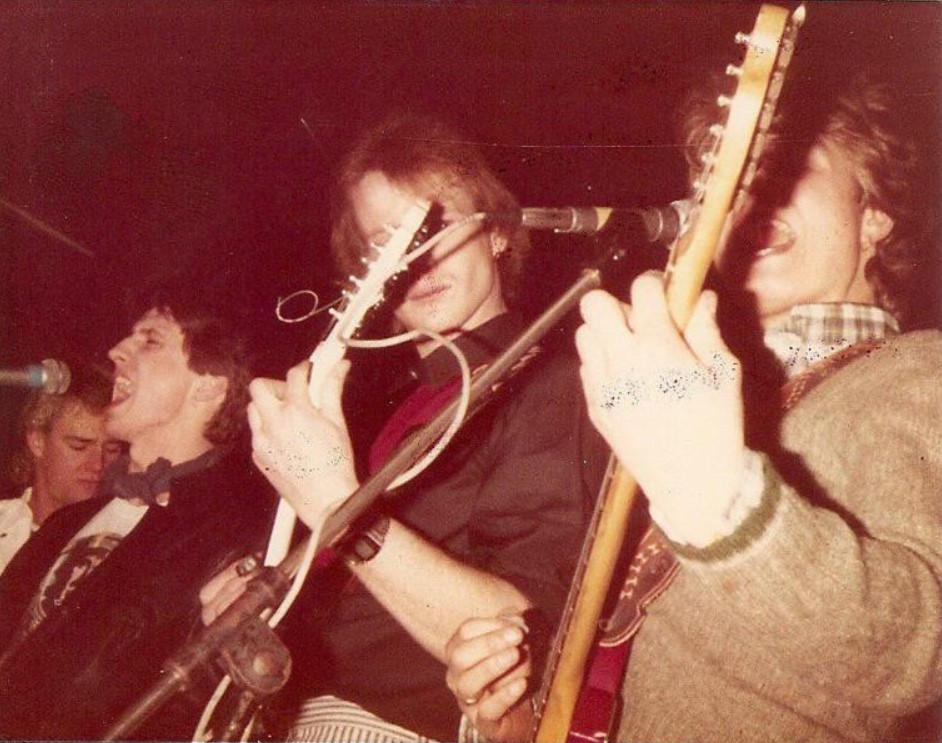
Pozer at a unknown venue, possibly The Royal, Guildford… 
Pozer at a unknown venue, possibly The Royal, Guildford… 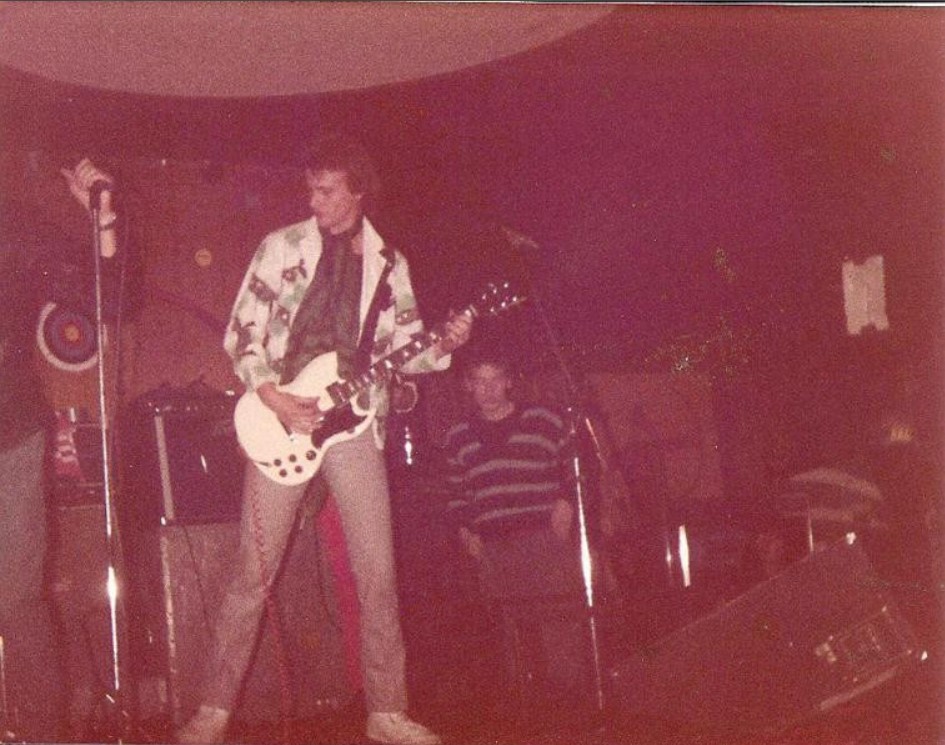
Pozer at a unknown venue, possibly The Royal, Guildford… 
Pozer at a unknown venue, possibly The Royal, Guildford… 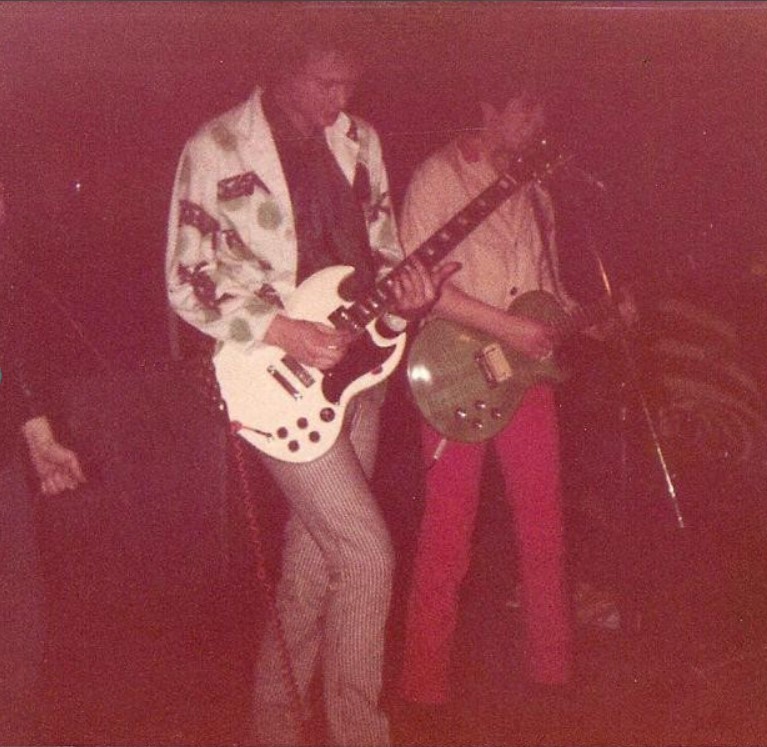
Pozer at a unknown venue, possibly The Royal, Guildford… 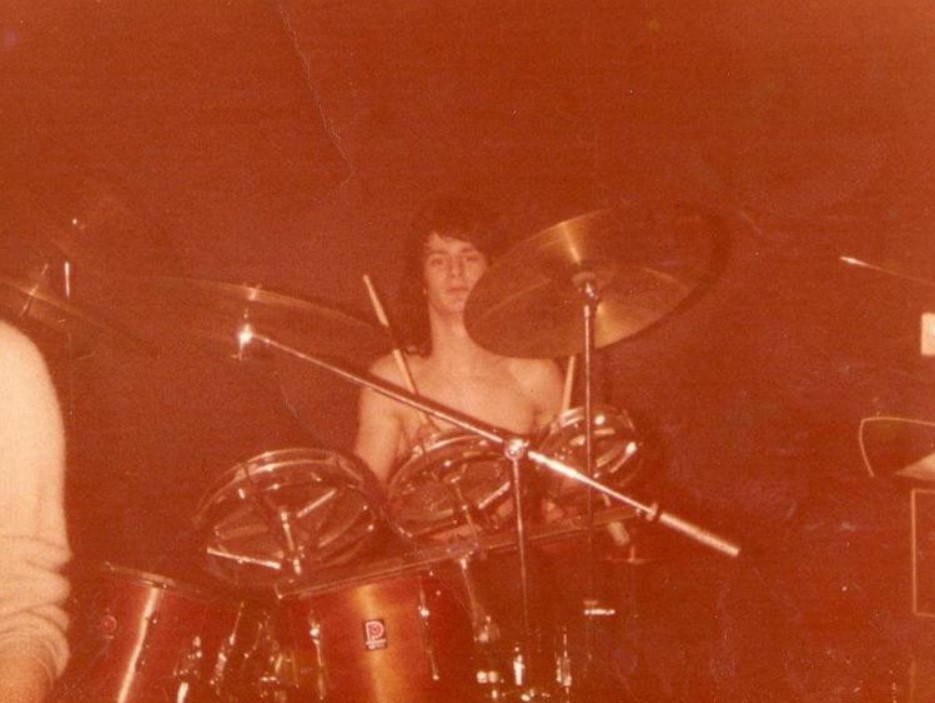
Pozer at a unknown venue, possibly The Royal, Guildford… 
Pozer at a unknown venue, possibly The Royal, Guildford… Adie Street, Bernie Grffiths, Bruce Dickerson, Bruce Richins, Bunters, Chris Smith, Classix Nouveau, Croydon, Dave Gilbraith, Farnborough, Farnborough Tech, Farnham, Gary Glitter, Guildford, Ian Goral, Mark Landini, Mungo Jerry, Paul Sheldrick, Pozer, Rob Kemp, Rock Bottom, Rock Garden, Simon Clothier, Technical College, The Vapors, Total Video, University of Surrey, Waterloo -
Fab Daze
(c’88-’89) Du Kane (vocal / guitar), Phyl Bushen (bass / vocals), David Maskrey (guitar), Anton Lloyd-Daniels (percussion / vocals) and ? Heward (drums).
Yellow Lifetime became Lax Lifetime, then in late ’88 the band morphed again, becoming Fab Daze. The group released the “Fab Daze” demo in Jan/Feb ’89 carrying three tracks: “Think I’ve Had Enough”, Big Papa”, and “I’m Everything”.
Later in ’89 Kane went on to form Beautiful People with Luke Baldry and Robin Goodridge; a project in which Fab Daze members Daniels and Maskrey were also involved. Kane went on to be a contributing editor for Front magazine for a few years and runs session recording outfit Replicant. With Maskrey, Kane can now be seen in The Shakespearos, along with The Vapors‘ Steve Smith, mostly gigging in the Worthing area.
Gallery:
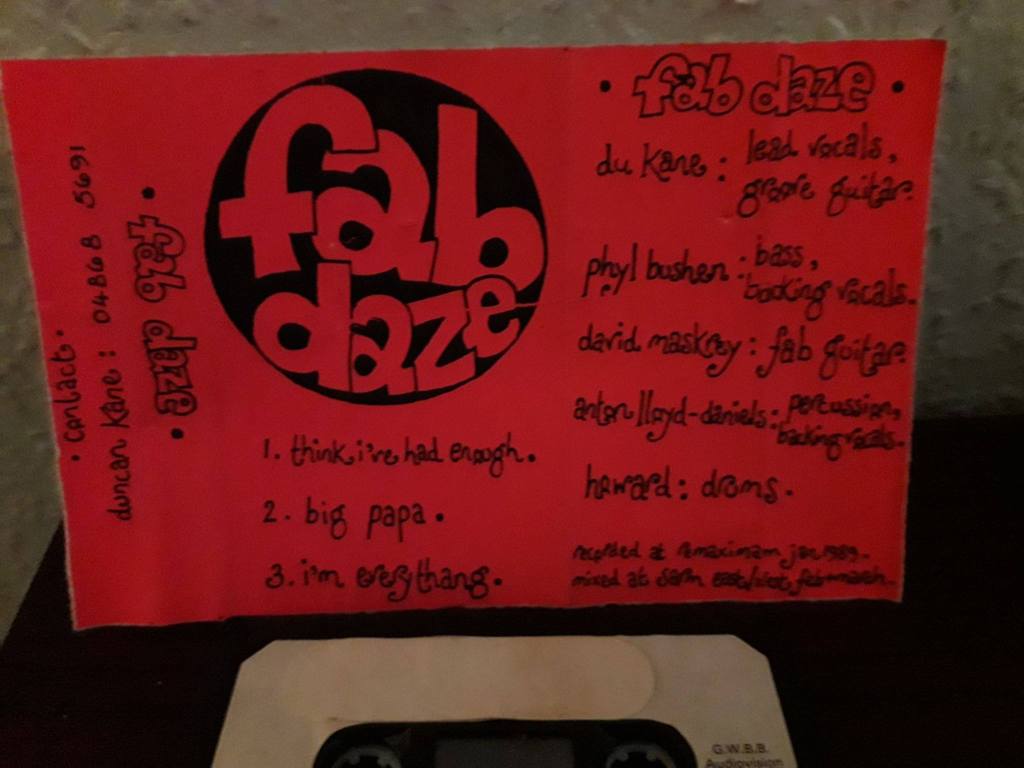
Fab Daze Demo 1989. Picture courtesy of Du Kane 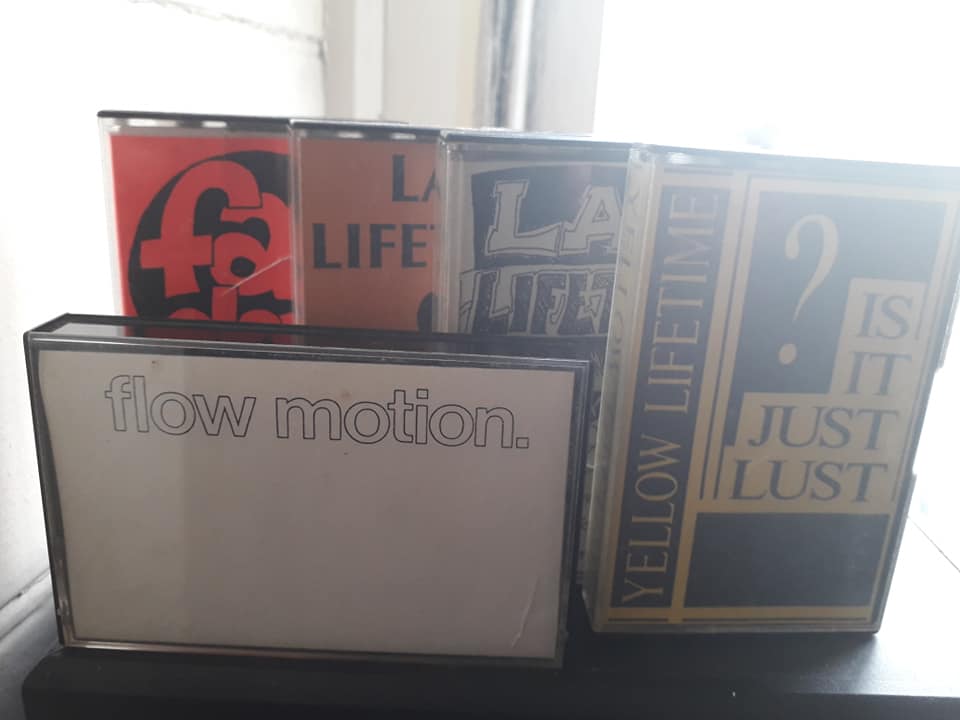
The progression that eventually become Fab Daze, then Beautiful People… Picture courtesy of Du Kane -
Elephant Talk
(c’93-’95) Dave Crofts (vocals), Tim Hawes (guitar), Kevin Arthur (drums), Dave Roberts (bass) and Jon McDonald (guitar).
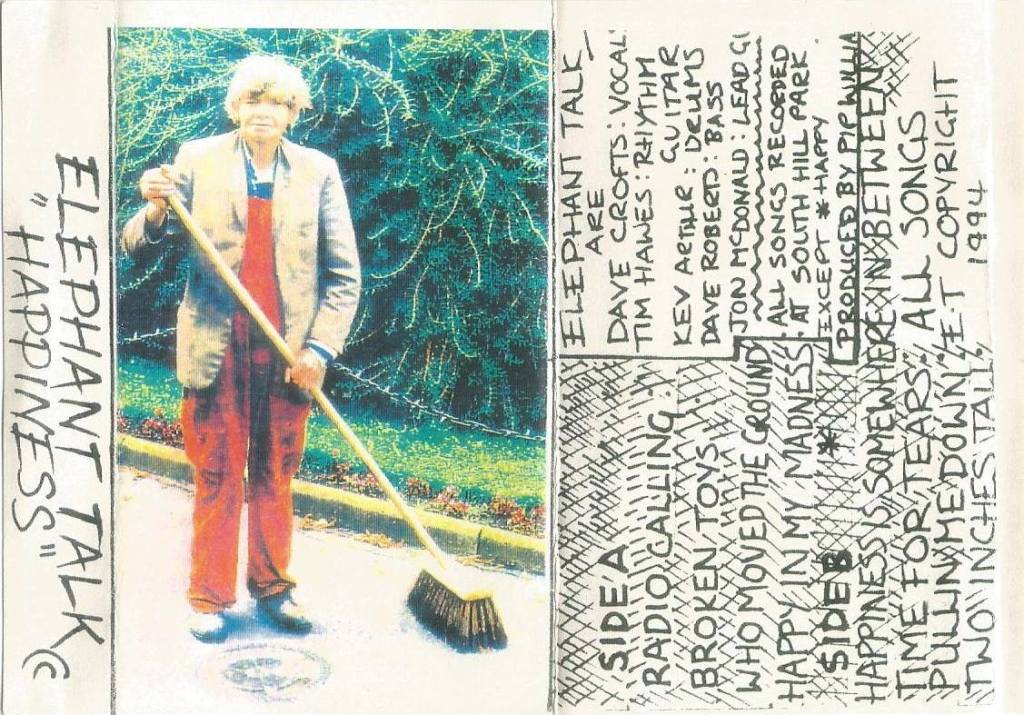
Cover of “Happiness” by Elephant Talk. Picture courtesy of Sid Stovold This 5-piece recorded most of their 8-track demo cassette “Happiness” at South Hill Park, Bracknell with production by Pip Willia. It was released in late ’93. In ’95 Elephant Talk’s “Stop” appeared on Farnborough Groove Strikes Back Vol.5.

In ’95 Elephant Talk’s “Stop” appeared on Farnborough Groove Strikes Back Vol.5. Picture courtesy of Pete Cole Hawes and Arthur had both been in Fra Angelico / FRA in the mid to late ’80s. Hawes is now a songwriter, record producer and music publisher with more than ten million record sales, and five number one singles having worked with Spice Girls, Five, Hear’Say, and Sugababes, amongst many others. He has also received of the Ivor Novello award for songwriting. Hawes is currently the CEO of Zebra1 and has been collaborating on the Skylephant project.
Tracks:
Gallery:
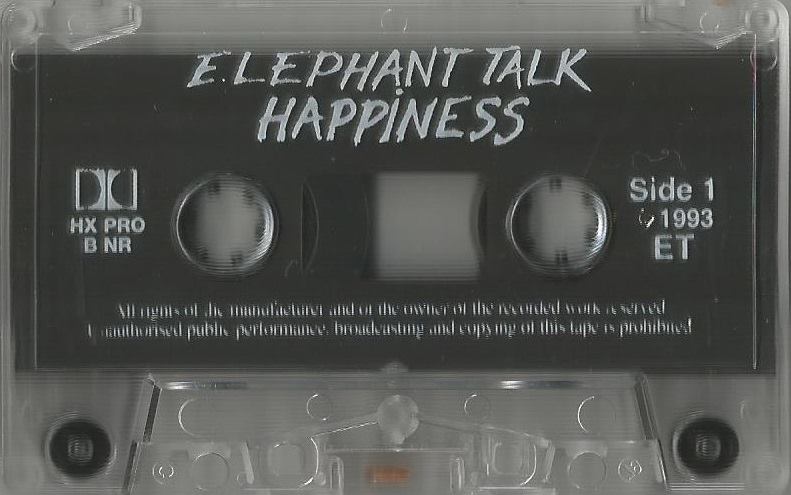
Side 1 of “Happiness” by Elephant Talk. Picture courtesy of Sid Stovold 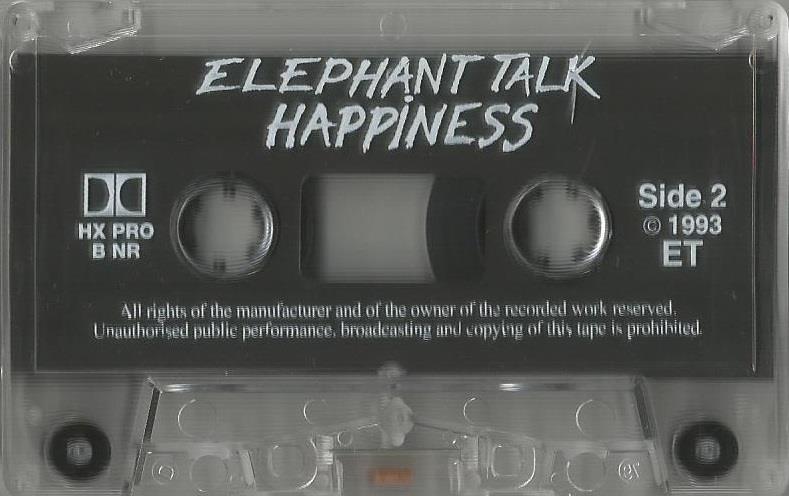
Side 2 of “Happiness” by Elephant Talk. Picture courtesy of Sid Stovold -
Crescendos

(c’60 to date) Tony Spencer (vocals), Laurie “Charlie” Way (drums), Mick Douglas (guitar), John Kelly (guitar), and Dave Brice (bass) and John Moon (piano).
Also known as Johnny Kelly & the Crescendos they are still gigging today as The Rockin’ Crescendos. Originally, Brice – the guitarist with The Rhythm Five – got together with Les Owen (bass) – who been in The Doolahats – Way, Moon, Douglas and Spencer to form, black suited, red tied, rock n’ roll combo, the Crescendos.
Sid Norris would book then as a support band for gigs at Dorking Halls. Way was replaced on drums by Kenny Pate and there was a new guitarist in Kelly, a second ex-Doolahat, and a pianist, possibly Chris Andrews, who joined. It was about this time that they started to be more commonly known as John Kelly and the Rocking Crescendos. They played schools, such as St. Francis School, Westborough and at venues across the region like the Plaza Ballroom, Guildford amongst others.

The Crescendos at The Plaza, Guildford. Sitting on the stage is Vince Taylor. Source: Nick Way via Guildford Town Past & Present Pete Chester caught The Crescendos at The Plaza – he’d previously in The Five Chesternuts with Hank Marvin and Bruce Welch of The Shadows, and his band had a brief residency at The Plaza – asked members of the band if they could go pro’ and fill in for members of his band. The Crescendos, sans Pate, as Chester played drums, and Brice as he had to finish an apprenticeship, subsequently played The Dorking Halls as The Pete Chester Combo. Also while playing at The Plaza, The Cresendos were joined on stage by Vince Taylor of Vince and His Playboys.
Douglas went to Germany with The Pete Chester Combo in 1961, going on to tour Israel for three months with the group. He backed Adam Faith on a single and contributed to Sandie Shaw’s first single in ’64, the B-side of which was written by fellow Pete Chester Combo member Chris Andrews. Also in ’64, Douglas ‘temporarily’ picks up the axe, standing in for Ivor Shackleton, in The Stormsville Shakers. From ’65-’67, he was a member of The Hi-Fis. In the Spring of ’82, Douglas took on Brian Robinson’s role in Grapevine. Latterly, Douglas formed a Bill Haley tribute band called Razzle Dazzle with ex-Natural Gass drummer Chuck Pengilly and Richard Hodgins, who’d both played in Threewheel; and is currently playing in The Rocking Rogers and Nick of Time.
Kelly also went to Germany to hone / flex his professional musicians chops. He played with Five’s A Crowd, in which Douglas was also a member, at Hamburg’s Big Apple Club before returning to the UK, and was also the rhythm guitarist for Marty Wilde.
Gallery:
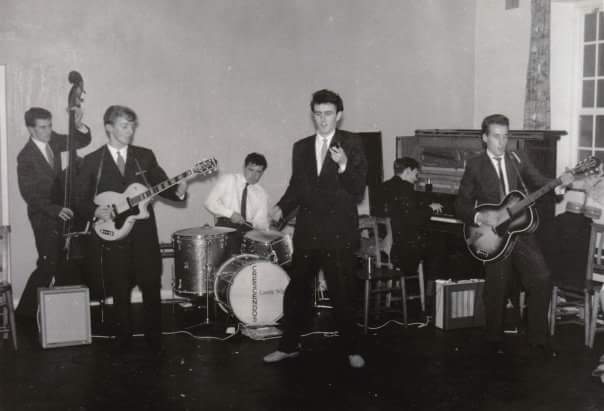
The Crescendos. Source: Paula Spencer via Guildford Town Past & Present Adam Faith, Bill Haley, Brian Robinson, Bruce Welch, Chris Andrews, Chuck Pengilly, Crescendos, Dave Brice, Dorking, Dorking Halls, Germany, Grapevine, Guildford, Hank Marvin, Ivor Shackleton, John Kelly, John Kelly and the Rocking Crescendos, John Moon, Johnny Kelly & The Cresendos, Kenny Pate, Laurie Way, Les Owen, Mick Douglas, Natural Gass, Nick of Time, Pete Chester, Plaza Ballroom, Razzle Dazzle, Richard Hodgins, Sandie Shaw, Sid Norris, St. Francis School, The Doolahats, The Five Chesternuts, The Pete Chester Combo, The Plaza, The Rhythm Five, The Rockin’ Crescendos, The Rocking Rogers, The Shadows, The Stormsville Shakers, Threewheel, Tony Spencer, Vince and His Playboys, Vince Taylor, Westborough -
Jim Jiminee

(c’86-89) Lindsay Jamieson (drums), Kevin Jamieson (vocals), Nick Hannan (bass), Pete Dyes (guitar), and Delphi Newman (keyboard / vocals).

Jim Jiminee Agent Card. Source: Chris Ward via BULL & GATE MEMORIES – remembering all who sailed in her musical tidal wave This Fleet based (the Jamieson boys were from Church Crookham) indie pop band formed in September ’86. Jim Jiminee were managed by Chris Ward’s Third Angle Projection Band Management, who booked the band many gigs through ’87 with record company RCA attending one, followed by a meeting, but no deal.
More gigs followed including with old friends, listed as Green Gables for the gig, who’d go on to be The Sundays; and another with Second Balcony Jump opening. Indie label Cat & Mouse showed interest resulting in the release of their first EP, “Do It On Thursday” [ABB 01] in late ’87, a bit of a radio hit, including being played by Simon Bates on daytime Radio 1. The video for the release appeared on TV and it reached No.6 in the UK Indie chart; it also performed well in Germany. During the next three years, they would release the LP “Welcome to Hawaii” on Cat & Mouse [ABB 02] in ’88 and the EPs “Town & Country Blues” on Beatwax [Beatwax 01T] and “I Wanna Work!” again on Cat & Mouse [ABB 04], that same year. This was all while appearing on ITVs ‘Night Network’; playing gigs at various locations throughout England and a few European sojourns,

Jim Jiminee playing at The Buzz Club bar, West End Centre, Aldershot. The bar area at the West End Centre, Aldershot was often made use of by The Buzz Club to display videos and a band, and on 7 February ’87 – while Mighty Mighty, The Jeremiahs, and The Bridge were on the main stage – the club’s promoters put Jim Jiminee in the spotlight in the bar. The next month the band performed a ten track set at Reading University’s Student Union on 3 March ’87, supporting The Primitives. David Rose reports that the wrong PA had been ordered and a replacement didn’t arrive until 10:30, so once things were set up Jim Jiminee didn’t start their set until 11.30! Later in the year the band performed at Timebox, on 2 September ’87, held at The Bull & Gate, Kentish Town.
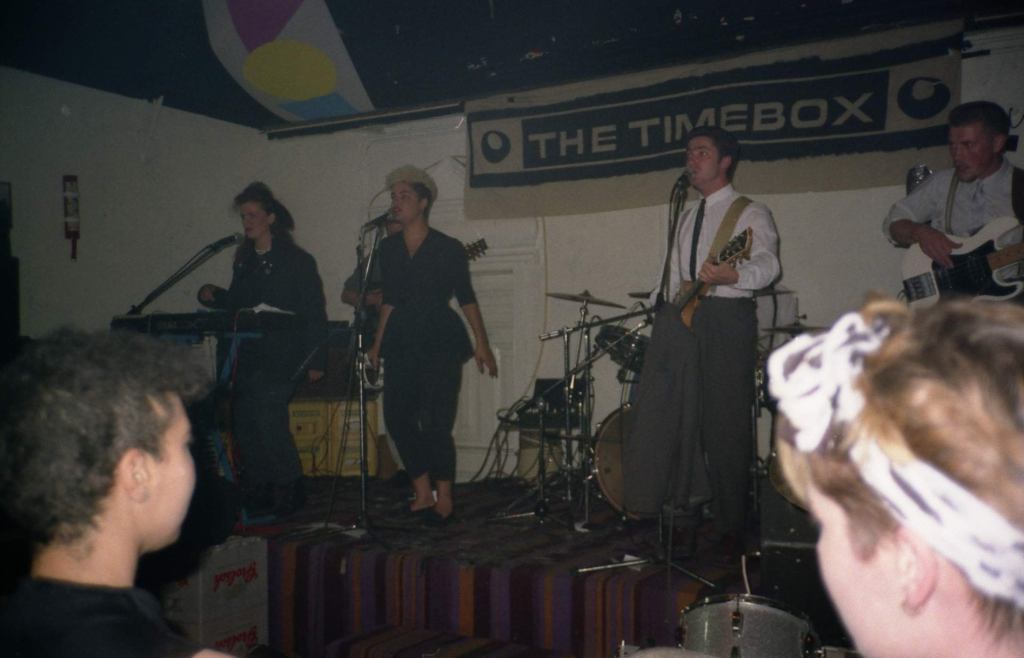
2 September 1987: Jim Jiminee at Timebox, The Bull & Gate, Kentish Town. Picture by Mick Mercer via BULL & GATE MEMORIES – remembering all who sailed in her musical tidal wave On 18 February ’88, Jim Jiminee headlined at The Tunnel Club, London, with Disguise and Thrilled Skinny in support. A few days later, on 23 February, Jim Jiminee were supported by John Shuttleworth and Green Gables at The Cricketers, Kennington and on 28 February the band supported The Passmore Sisters at Underground, Croydon. Jim Jiminee headlined at Fleet Football Club with North of Cornwallis and International Resque in support, on 28 May ’88. The next night they were at the Civic Hall, Guildford, where they were supported by Handsome Bastards and Go Go Amigos. It was then back to Fleet Football Club on 30 May with The Company She Keeps and The Splendids in support. They were supporting North of Cornwallis on 1 June ’88 at The Marquee, London. Toward the end of ’88 the band appeared at the Circus, Gammelsdorf, Germany, on 28 December.
The following week, they were back at the Circus, Gammelsdorf, on 5 January ’89. Newman left in ’89 and the group officially disbanded shortly after; with the band members going on to other projects.
The Jamiesons and Hannan went on to form The Deep Season, and later produced and provided backing for Perry Rose’s album “The Bright Ring of the Day”. Hannan also joined his brother Patrick “Patch” Hannan at Blah Street Studio. Patch played drums for The Sundays, Star 69 and Arnold. While there, Hannon appeared on numerous albums for a variety of artists, including Arnold, Jack Henderson and Bennet. Newman along with guitarist Paul Greendale formed the band World Without Tigers in 1998. The “Welcome to Hawaii” LP was re-released by Vinyl Japan [ASKCD 91] in ’99, and the same label did the same for “Town & Country Blues” EP [ASKLP 82] in 2000. Vinyl Japan, in addition to the LP and EP, also released “The EP” [TASK68] in 2000 and the full-length album “The Thatcher Years” [ASKCD93] of previously unreleased material. In 2002, Newman sang on Mark Flanagan’s album “The Chosen Few”. After Deep Season, Lindsey Jameson was also in Supermodel, Departure Lounge, and Astronaut Pushers just before joining Ben Folds in 2005. Ward, who became a charity campaigner and adventure cyclist, recently had his booked “Less Perfect More Happy” published, about his journey to understand OCPD.
Tracks:
Gallery:
7 February 1987: Buzz Club 
Jim Jiminee playlist from Reading University Student Union, Tuesday 3 March 1987 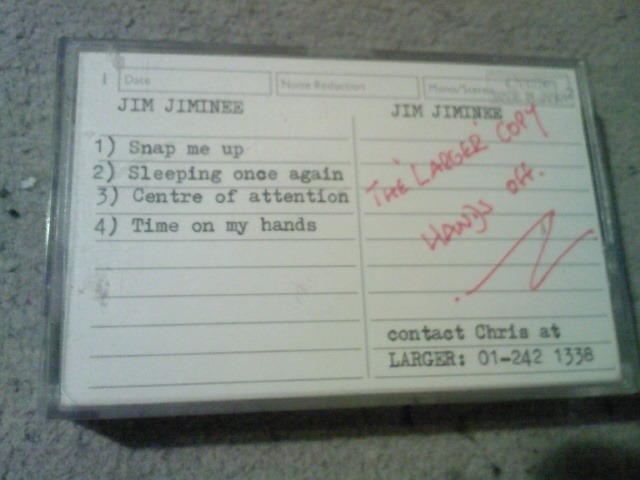
Early demo 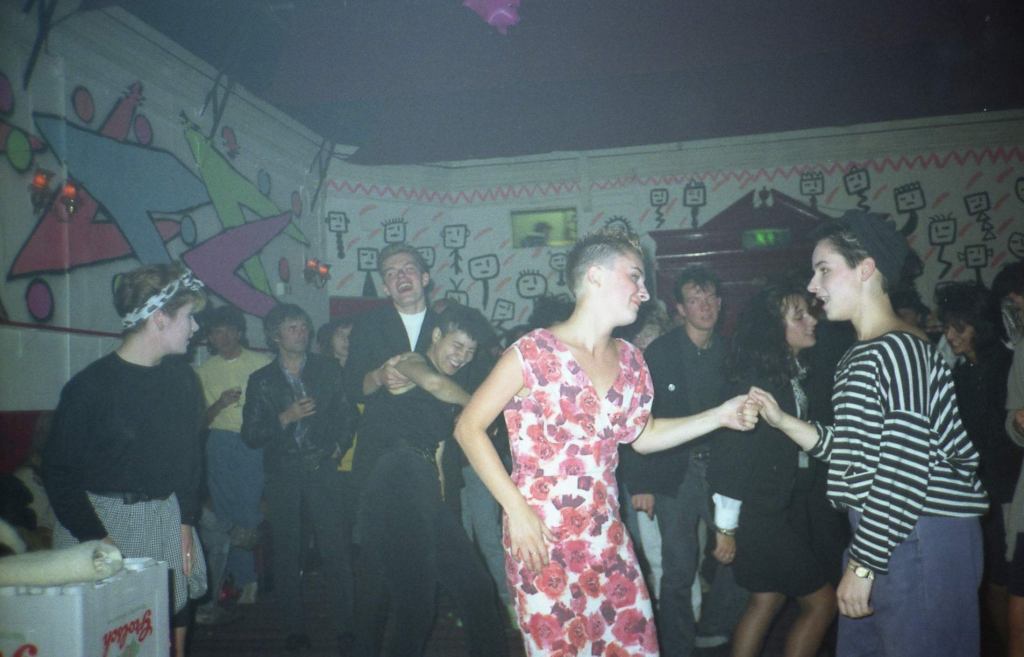
2 September 1987: Audience for Jim Jiminee’s performance at Timebox held at The Bull & Gate, Kentish Town. Picture by Mick Mercer and originally posted to BULL & GATE MEMORIES – remembering all who sailed in her musical tidal wave 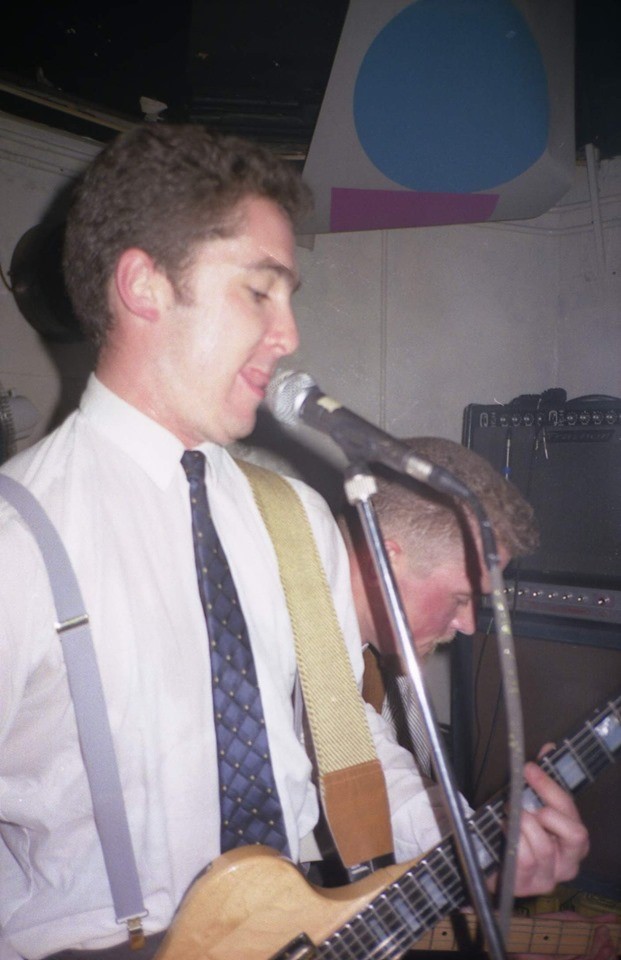
2 Sept 87: Jim Jiminee were at The Bull & Gate, Kentish Town. Picture courtesy of Mick Mercer 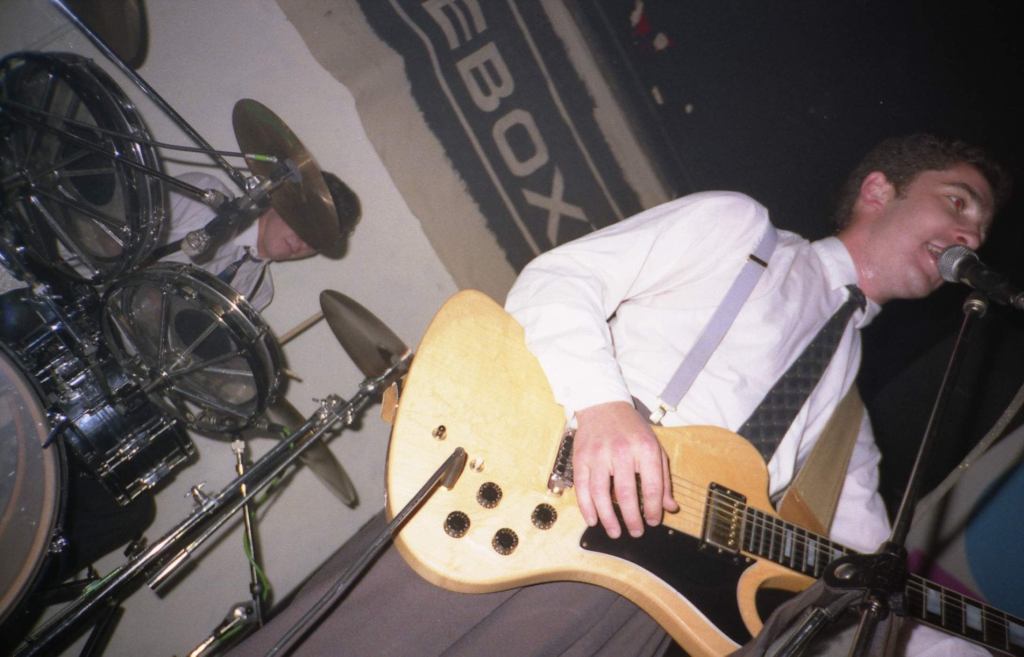
2 September 1987: Jim Jiminee performed at Timebox held at The Bull & Gate, Kentish Town. Picture by Mick Mercer and originally posted to BULL & GATE MEMORIES – remembering all who sailed in her musical tidal wave. 
2 Sept 87: Jim Jiminee were at The Bull & Gate, Ketish Town. Picture courtesy of Mick Mercer 
2 September 1987: Jim Jiminee performed at Timebox held at The Bull & Gate, Kentish Town. Picture by Mick Mercer and originally posted to BULL & GATE MEMORIES – remembering all who sailed in her musical tidal wave 
Gig Review of Jim Jiminee at the Mean Fiddler, 27 Sept 87 from The Felix Newspaper of Imperial College Union. 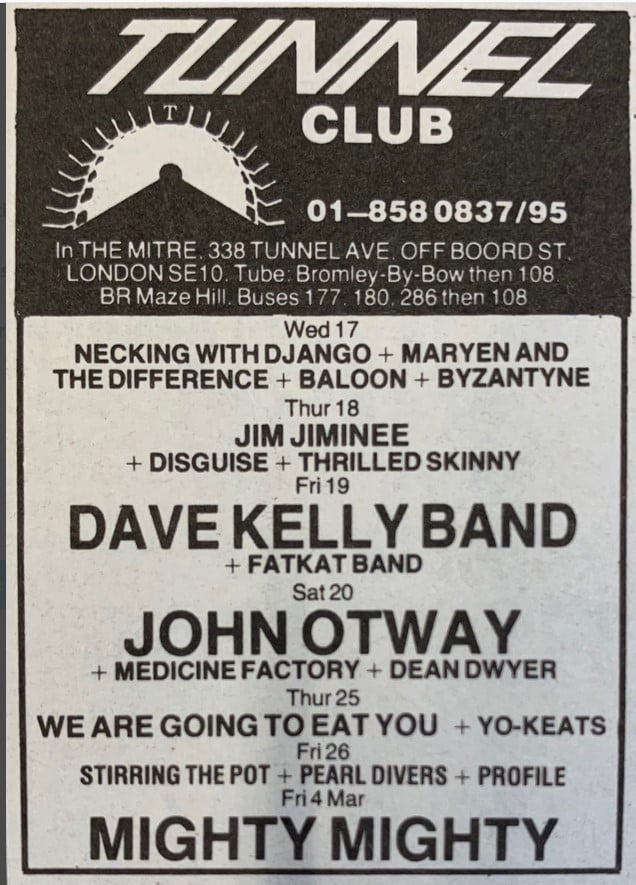
18 February 1988: Jim Jiminee headlined at the Tunnel Club, London, with Disguise and Thrilled Skinny in support; according to this advert clipped from NME, 20 February 1988. Picture courtesy of Pete Cole 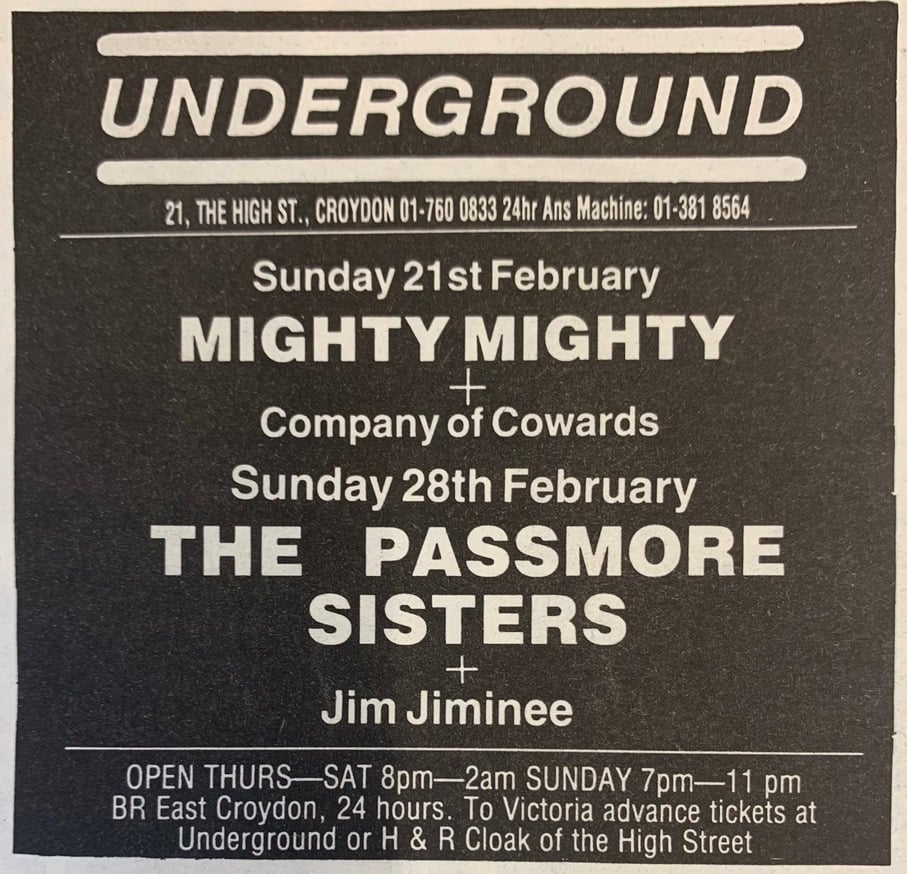
28 February 1988: Jim Jiminee supported The Passmore Sisters at Underground, Croydon according to this advert clipped from Melody Maker, 20 February 1988. Picture courtesy of Pete Cole 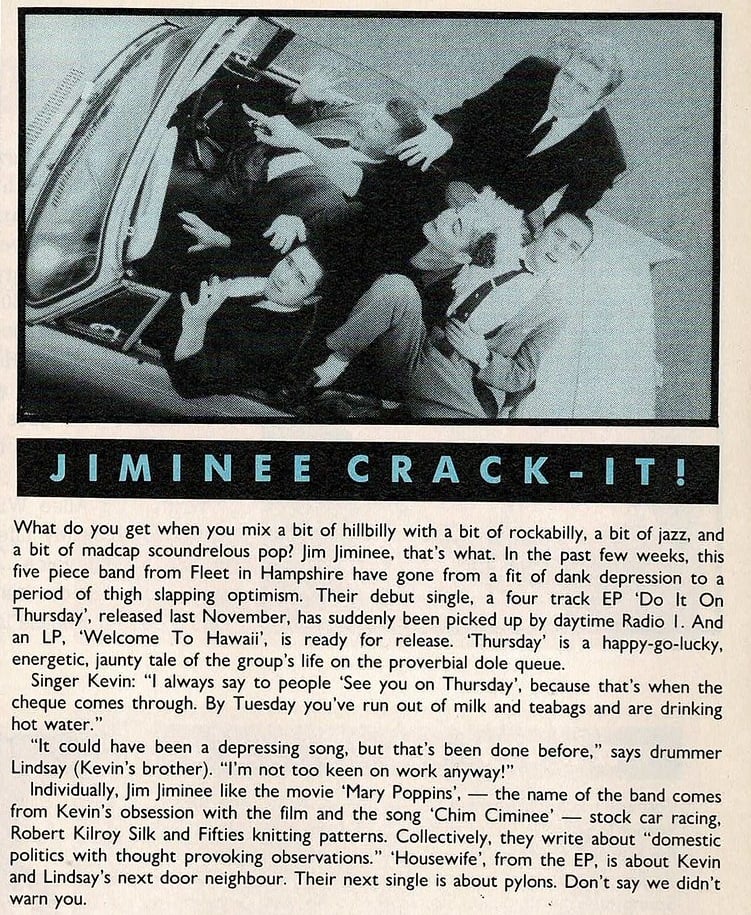
Jim Jiminee clipping from Record Mirror 20 Feb1988 issue, Image courtesy of Pete Cole. 
28 February 1988: Jim Jiminee supported The Passmore Sisters at Underground, Croydon per this Melody Maker advert from 27 February 1988. Picture courtesy of Pete Cole 
23 February 1988: Jim Jiminee, supported by John Shuttleworth, and Green Gables played The Cricketers, Kennington. Source: Neil Thompson via Keep It Out Of Sight 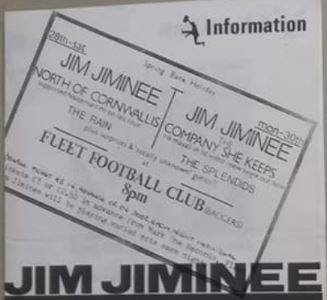
Jim Jiminee Gig Info Card. Two gigs at Fleet Football Club on Saturday 28 May 1988 and Monday 30 May 1988. Source Chris Ward via BULL & GATE MEMORIES – remembering all who sailed in her musical tidal wave 
Steve Lemacq reviews Jim Jiminee’s “Welcome To Hawaii” LP for the 4 June 1988 issue of NME. Picture courtesy of Pete Cole 
Bottom left corner this info sheet: Jim Jiminee Gammelsdorf 5th Jan 1989. 
Cover of Anorak fanzine, Vol.2, April 1989 that featured Jim Jiminee. 
First and second pages of the Jim Jiminee interview in the German Anorak fanzine Vol.2, April 1989 
Third page of the Jim Jiminee interview in the German Anorak fanzine Vol.2, April 1989 
29 May 1989: Line listing for Jim Jiminee, supported by Handsome Bastards and Go Go Amigos, at Civic Hall, Guildford. Picture courtesy of Tim Naylor 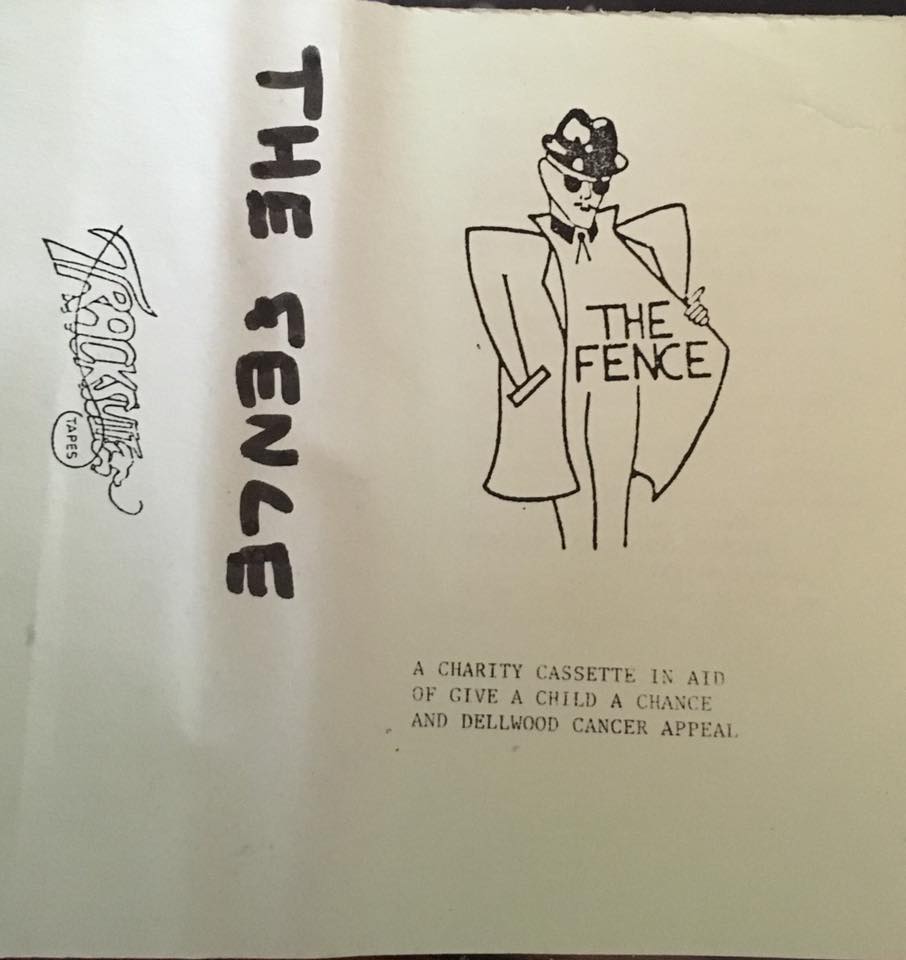
Jim Jiminee and Mega City 4 appeared on this Tracksuit charity compilation cassette from 1989 
Front cover for Jim Jiminee’s “Welcome to Hawaii” 
Back cover for Jim Jiminee’s “Welcome to Hawaii” 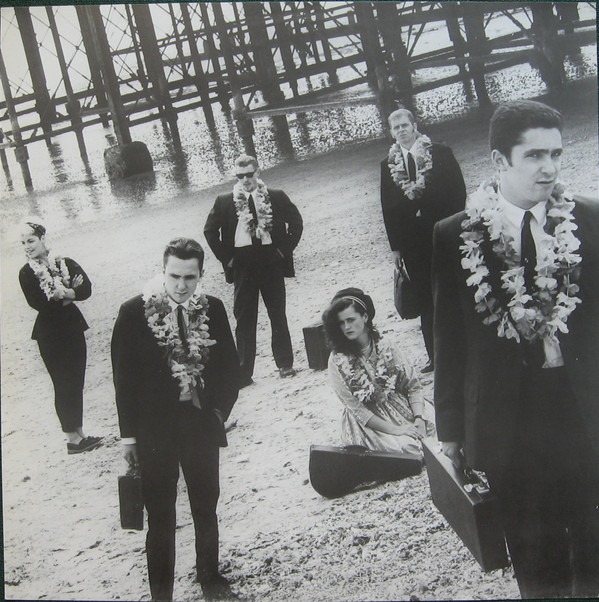
Front of the dust cover for Jim Jiminee’s “Welcome to Hawaii” 
Back of the dust cover for Jim Jiminee’s “Welcome to Hawaii” 
Front cover of Jim Jiminee’s “Town and Country Blues” 
Back cover of Jim Jiminee’s “Town and Country Blues” 
The front of Jim Jiminee’s “Town and Country Blues” Vinyl Japan re-release 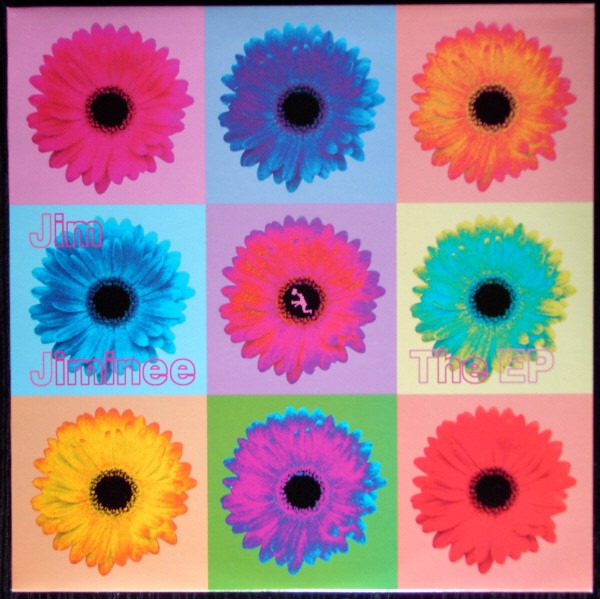
Front of the sleeve for Jim Jiminee’s “The EP” 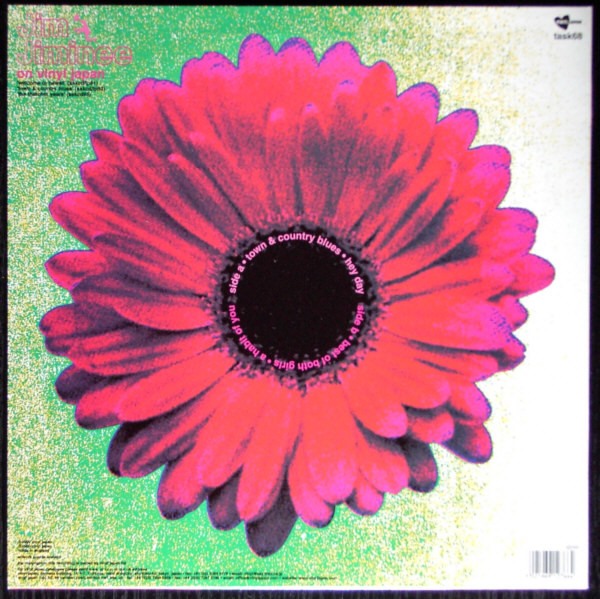
Back of the sleeve for Jim Jiminee’s “The EP” 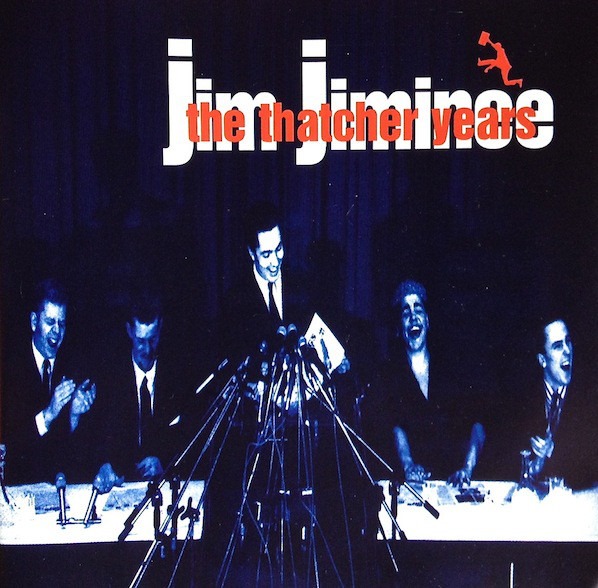
Front cover of Jim Jiminee’s “The Thatcher Years” 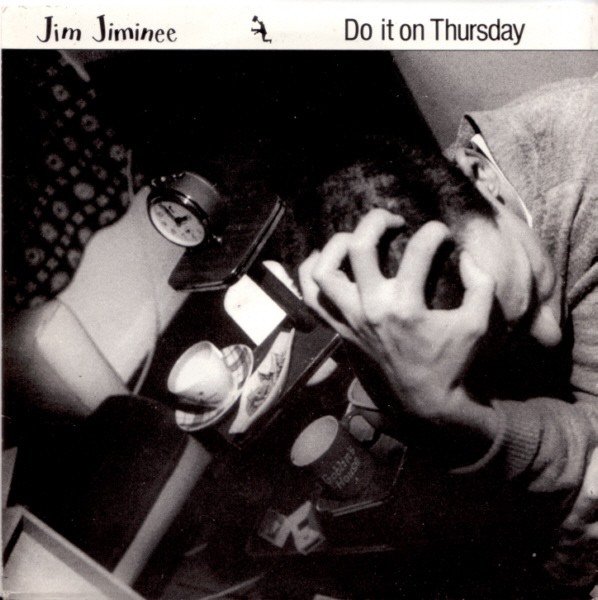
Front cover of Jim Jiminee’s “Do It On Thursday”. 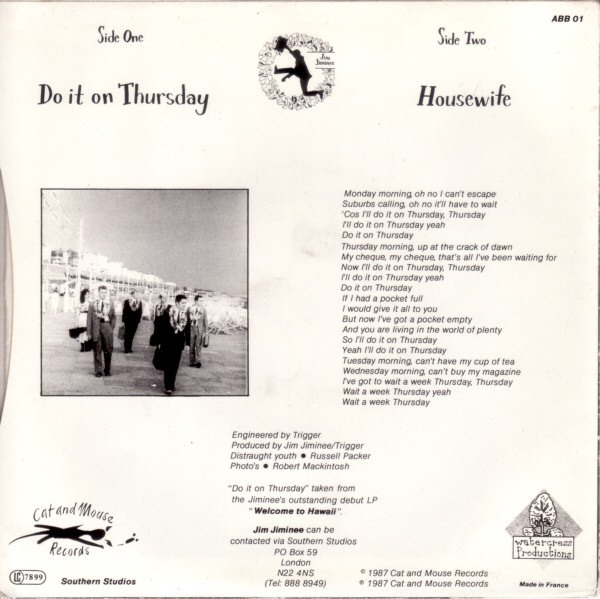
Back cover of Jim Jiminee’s “Do It On Thursday”. 
Front cover of Jim Jiminee’s “I Wanna Work” 
Back cover of Jim Jiminee’s “I Wanna Work” 
Band photo of Jim Jiminee (LtoR: Lindsay Jamieson, Kevin Jamieson, Nick Hannan, Pete Dyes, and Delphi Newman) from the back of their EP “I Wanna Work!”, released by Cat & Mouse Records in 1988. 
Jim Jiminee! Town & Country Blues Vladivar Vodka. Source: Elizabeth West via Farnborough (Hants) Nostalgia Aldershot, Arnold, Astronaut Pushers, Beatwax, Ben Folds, Bennet, Blah Street Studio, Bull & Gate, Cat & Mouse, Chris Ward, Church Crookham, Circus, Civic hall, Croydon, David Rose, Delphi Newman, Departure Lounge, Disguise, Fleet, Fleet Football Club, Football Club, Gammelsdorf, Germany, Go Go Amigos, Green Gables, Greengables, Guildford, Handsome Bastards, International Resque, Jack Henderson, Jim Jiminee, John Shuttleworth, Kennington, Kentish Town, Kevin Jamieson, Lindsay Jamieson, London, Mark Flanagan, Mighty Mighty, Nick Hannan, Night Network, North of Cornwallis, Paul Greendale, Perry Rose, Pete Dyes, Radio 1, RCA, Reading University, Second Balcony Jump, Simon Bates, Star 69, Student Union, Supermodel, The Bridge, The Buzz Club, The Company She Keeps, The Cricketers, The Deep Season, The Jeremiahs, The Marquee, The Passmore Sisters, The Primitives, The Splendids, The Sundays, The Tunnel Club, Third Angle Projection Band Management, Thrilled Skinny, Timebox, Underground, Vinyl Japan, West End Centre, World Without Tigers -
Bluetrain

(c’86-’88) Jo Bartlett (vocals / guitar), Rudy Carroll (guitar / vocals / sax), Danny Hagan (bass), and Kevin Morey (drums).
Formed from the ashes of Go! Service in 1986, Frimley / Camberley band Bluetrain were signed by TV Personalities Dan Treacy’s Dreamworld Records, along with The Mighty Lemon Drops, 1,000 Violins and the TV Personalities. They played regularly at The Room at the Top and The Buzz Club (which were organized by Bartlett and Hagan).
Shortly after forming Bluetrain, along with West One, supported Ministry of Sound on 15 August ’86 at Princes Hall, Aldershot. On 28 October ’86 the band supported 1000 Violins, along with Tallulah Gosh, at Bay 63, London.
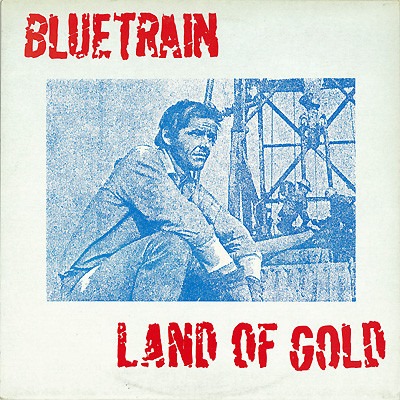
The front cover of 1987’s 12″ EP ‘Land of Gold’ [DREAM007T]. The Brilliant Corners were booked by Bartlett to perform at The Buzz Club, held at the West End Centre, Aldershot on 10 January ’87; and Bluetrain and local band Second Balcony Jump were the support. A few months later Bluetrain, along with Rain, supported The Chesterfields at The Buzz Club on 4 April ’87, while Rodney Allen played in the bar at The West End Centre, Aldershot. The band supported 1000 Violins again on 9 May ’87 at the University of Surrey, Guildford. Their signing to Dreamworld Records resulted in 1987’s four-track (“Wheels Go Round”, Land of Gold”, “Parade”, and “Because Of The Dollars”) 12″ EP ‘Land of Gold’ [DREAM007T]. They also appeared in the Cinema Tent at Glastonbury Festival in ’87; and toured Scotland with The Pastels and supported The Soup Dragons. When Carroll left he was replaced by Mark Nemetz, who was subsequently replaced by Richard Handyside in ’87.
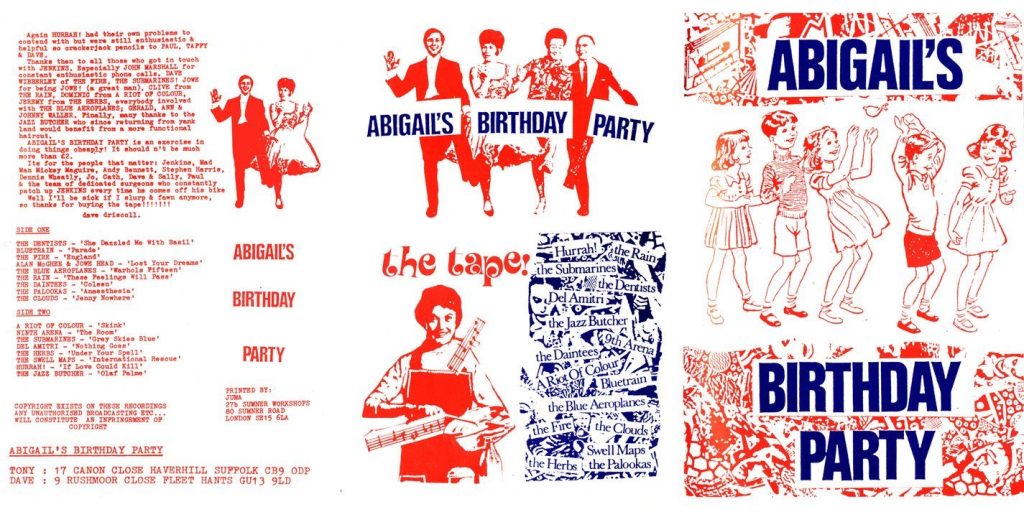
The band’s “Parade” was included on the Abigail’s Birthday Party fanzine cassette (1987) The band’s “Parade”, which featured Jon “Bandit” Hunter of The June Brides on trumpet, was included on the Abigail’s Birthday Party fanzine cassette. Also in ’87, “Some Greater Love” appeared on an Uncle Arthurs Pop Parlour fanzine cassette – a C-46 in a clear plastic bag with a 20 page fanzine on the bands. Around the time they were interviewed and performed on the “Time Out” TV show, the band may have been talking to German label Pastell about an album release.
The band were back at The Buzz Club on 5 March ’88 and again on the 18 June ’88; this time with Sugar Mountain, The Jeremiahs, Crimplene Explosion, The Aubisons, THe Mulberry Ceilings, and The Splendids.
A Dreamworld compilation, “Whaam! Bam! Thank You Dan!” on Vinyl Japan was released in ’95 and included a couple of songs by Bluetrain. In 2008 a posthumous Bluetrain best of CD – which included 3 Go Service tracks – titled “Some Greater Love” was released on Peruvian indie label Plastilina Records [PLAST011] and in Japan on Morgan [MC01]. There was also a Bluetrain tribute act doing the rounds in Japan. Plastilina followed up by including “Wheels Go Around” on 2009’s “Has My Heart Gone to Sleep” CD compilation. Then in June 2017 Bluetrain’s “Land of Gold” was included on Cherry Red’s excellent C88 [CRCDBOX36] 3 CD box set.
Carroll went on to be in The Yellow Moon Band with Bartlett and Hagan who also formed It’s Jo and Danny. Moorey would later join ex-The Ha Ha Men‘s Jason Applin in Bennet. Bartlett also has a solo career and the Christine X, Kodiak Island, and Plaza projects.
Gallery:

The band’s “Parade” was included on the Abigail’s Birthday Party fanzine cassette (1987) 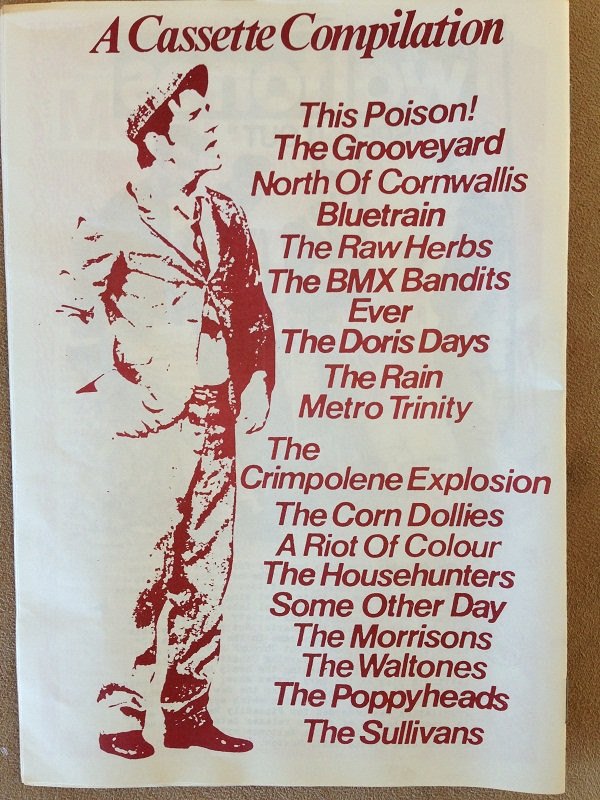
Bluetrain’s “Some Greater Love” appeared on an Uncle Arthurs Pop Parlour fanzine cassette. 
15 August 1986: Bluetrain along with West One supported Ministry of Sound at Princes Hall, Aldershot. Source: West One 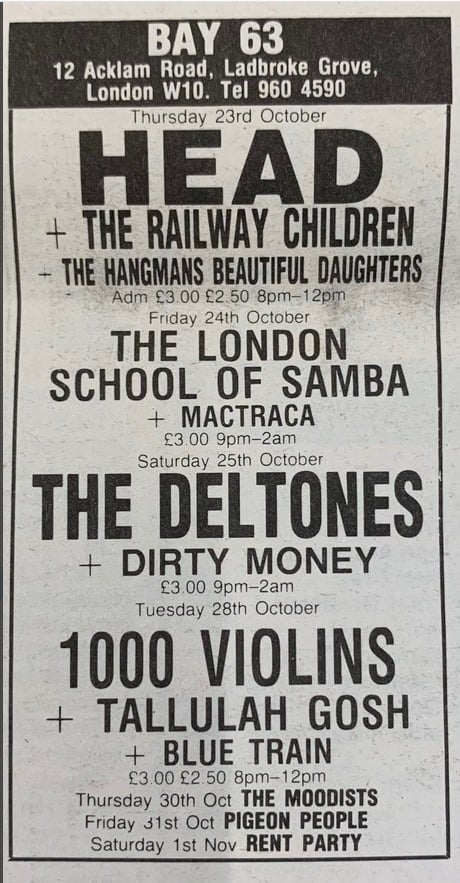
28 October 1986: Blue Train supported 1000 Violins, along with Tallulah Gosh at Bay 63, London. Ad from NME, 25 Oct 1986. Picture courtesy of Pete Cole 
The back cover of 1987’s four-track (“Wheels Go Round”, Land of Gold”, “Parade”, and “Because Of The Dollars”) 12″ EP “Land of Gold” [DREAM007T]. 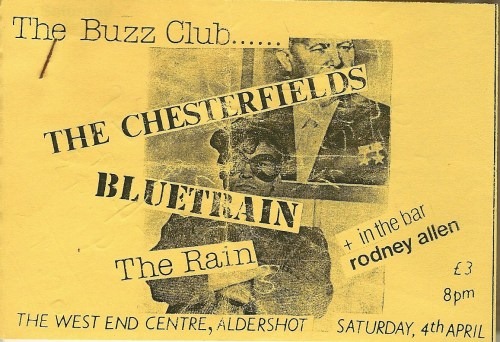
4 April 1987: Bluetrain supported The Chesterfields at The Buzz Club along with The Rain, while Rodney Allen played in the bar at The West End Centre, Aldershot. 
In 2008 a posthumous Bluetrain best of CD – which included 3 Go Service tracks – titled “Some Greater Love” was released on Peruvian indie label Plastilina Records [PLAST011] and in Japan on Morgan [MC01]. 
Plastilina included Bluetrain’s “Wheels Go Around” on 2009’s “Has My Heart Gone to Sleep” CD compilation 
10 January ’87 
9 May 1987: Local gig listing for Saturday from that weeks The News. 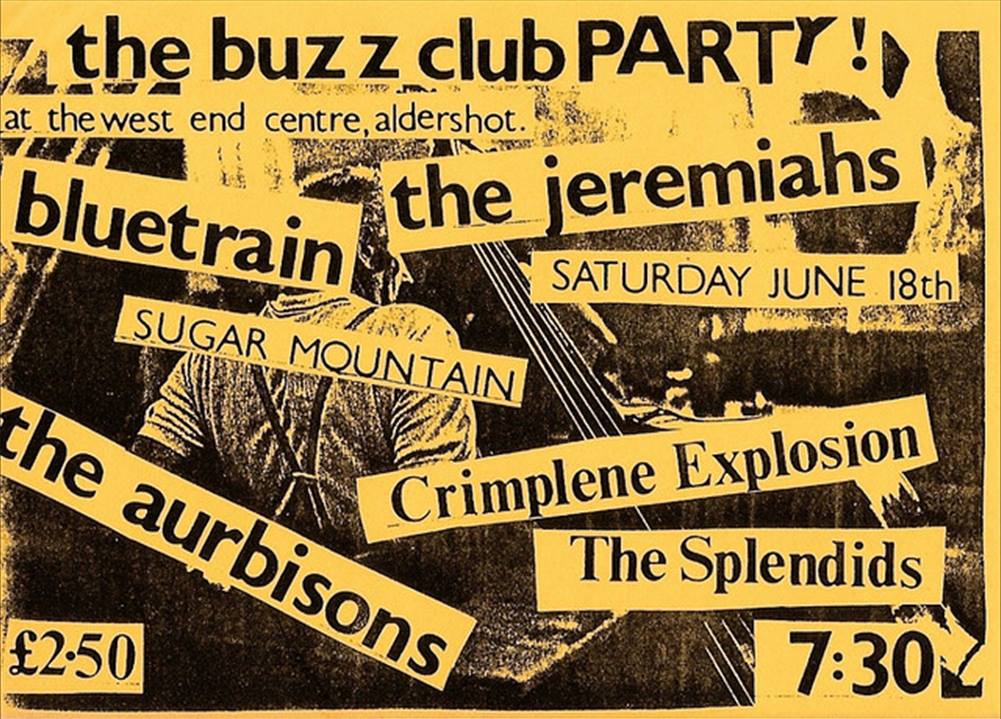
18 June ’88 
18 June 1988: Framed Buzz Club Poster. Source: Dave Driscoll 1000 Violins, Abigail’s Birthday Party, Aldershot, Bay 63, Bennet, Bluetrain, Camberley, Cherry Red, Christine X, Cinema Tent, Crimplene Explosion, Dan Treacy, Danny Hagan, Dreamworld Records, Frimley, Glastonbury Festival, Go! Service, It’s Jo and Danny, Jason Applin, Jo Bartlett, Jon Hunter, Kevin Morey, Kodiak Island, London, Mark Nemetz, Ministry of Sound, Morgan, Pastell, Plastilina Records, Plaza, Princes Hall, Rain, Richard Handyside, Rodney Allen, Rudy Carroll, Second Balcony Jump, Sugar Mountain, Tallulah Gosh, The Aubisons, The Brilliant Corners, The Buzz Club, The Chesterfields, The Ha Ha Men, The Jeremiahs, The June Brides, The Mighty Lemon Drops, The Mulberry Ceilings, The Pastels, The Room at The Top, The Soup Dragons, The Splendids, The Yellow Moon Band, Time Out, TV Personalities, Uncle Arthurs Pop Parlour, University of Surrey, Vinyl Japan, West End Centre, West One


Human beings takes me back to 1981. Followed them all over the Surrey reading area for a year a great band and 3 good guys playing well written songs of the era. I wish john Tim and steve well what ever they are doing now. Should reform for a few shows just like Oasis but do the wooden bridge.
LikeLiked by 1 person