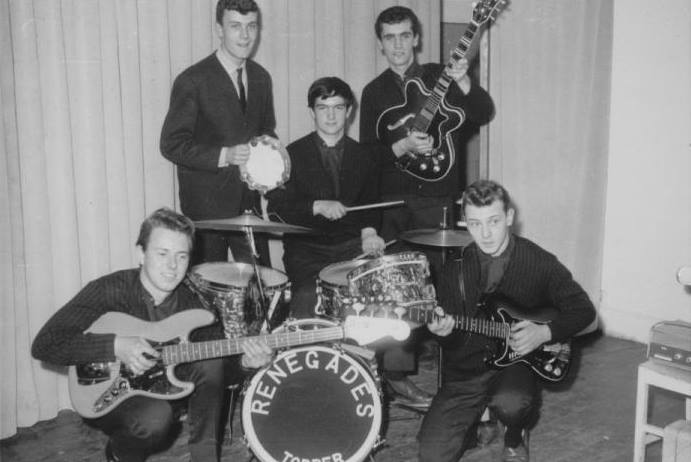
(c’62-64) Barry ‘Bo’ Williams (bass), Dave Luther (guitar); Roy Daniel “Boone” Spreadborough (vocals); Graham ‘Topper’ Clay (drums), and Pete Foster (rhythm guitar).
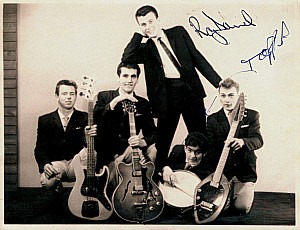
Spreadborough and Luther formed The Blackjacks at Farnborough Grammar School in ’58. They recorded two songs “I love Her” and “Little Jennie” at a studio in Denmark Street.
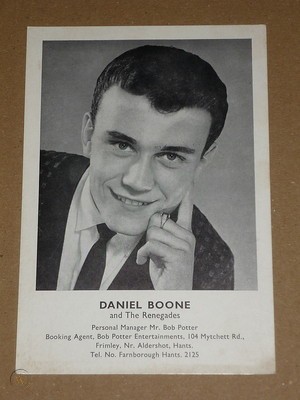
They then changed their name to Daniel Boone & The Renegades, although they often just went by The Renegades, in ’62 and were taken on by Bob Potter’s Bob Potter Entertainments. They recorded four more tracks, releasing them on 78 acetate: “Country Girl” and “She” on the A-side, and “Forever And Ever I Do” with “I Miss You” on the B-side. The band were also represented by Southampton based Barrie James Enterprises.
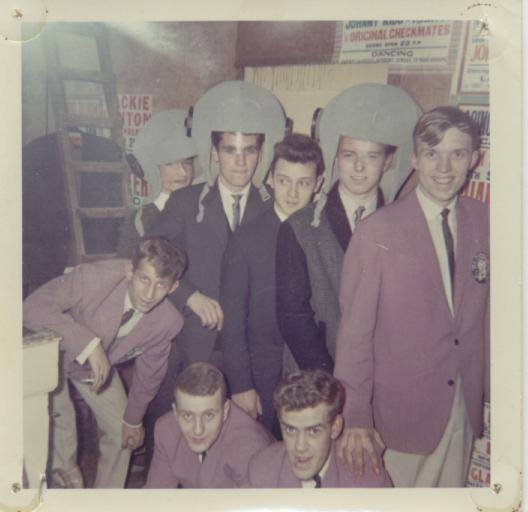
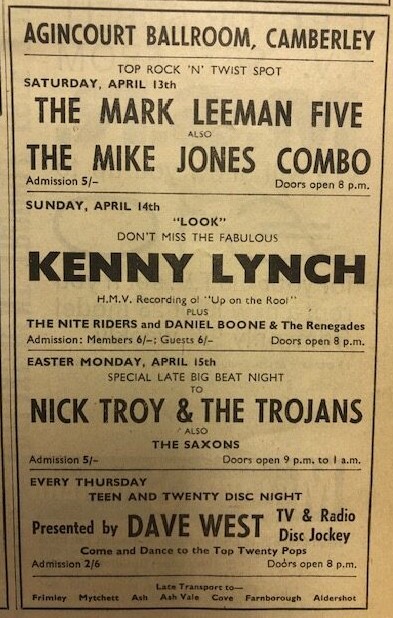
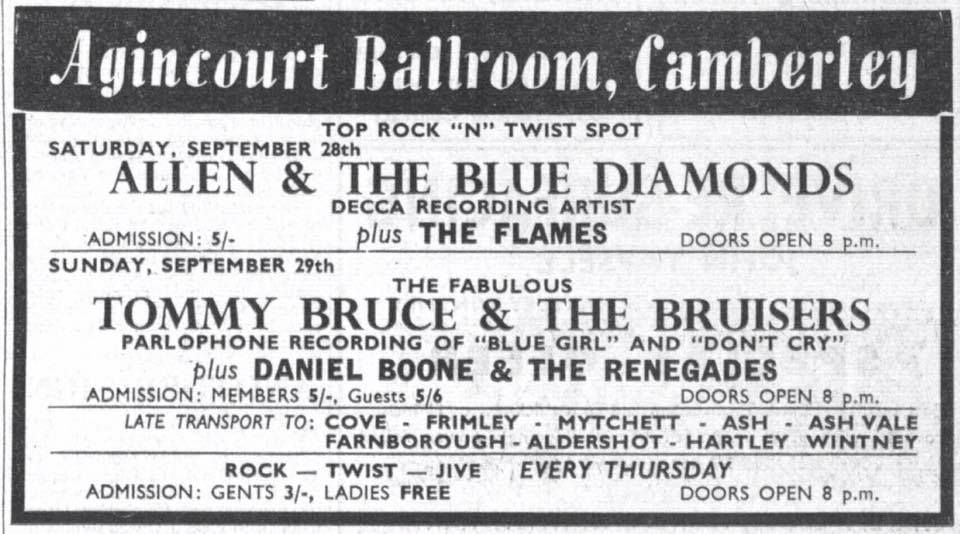
In ’62 the band supported Chart topping Swedish instrumental band The Spotnicks at Agincourt Ballroom, Camberley. The next year, along with The Nite Riders, Daniel Boone and The Renegades opened for Kenny Lynch, who’d just released his top ten hit “Up on the Roof”, on 14 April ’63 at Agincourt. The band also filled the supporting role with Tommy Bruce and The Bruisers on the 29 September ’63, at the same venue. Interestingly, Peter Lee Stirling, the guitarist with Tommy Bruce and The Bruisers, went on to have a one-hit wonder in the United States with the single “Beautiful Sunday” in 1972 under the name Daniel Boone. A few months later, on 6 December ’63, Daniel Boone & The Renegades were supporting Wayne Fontana and the Mindbenders at Lido Ballroom, Winchester.
The Renegades disbanded and Daniel Boone found himself backed by The Emeralds, another of Potter’s bands, and were for a time billed as Daniel Boone and The Emeralds. Eventually the Daniel Boone stage name was dropped and Spreadborough went by Roy Daniel, and we see the band listed as Daniel and The Emeralds. This new lineup would became Wishful Thinking.
Having joined The Knack in ’65, who were originally known as The Londoners, Clay moved onto New York Public Library in Spring ’67. They had originally been The Cherokees, but their producer Micky Most persuaded them to change their name and suggested New York Public Library.
Allen passed away at his home in Salignac, France on May 23, 2012.
Gallery: