
-
Les Reed

(c’35-’19) Les Reed (songwriter, arranger, musician and band leader)
Often seen in The Cricketers, Westfield; Woking Born songwriter Les Reed wrote hits for Tom Jones and Engelbert Humperdinck and had his songs recorded by Elvis, Bing Crosby, Frank Sinatra, Lulu, Shirley Bassey, Petula Clark, Sandie Shaw and Otis Redding to name a few. Reed was a songwriter, musician, composer, conductor, arranger, producer and record-label owner of world renown.
He grew up in Granville Road and at age 6 took his first piano lesson with Rita Row, who took him through all of his grades over the next few years, including the London College of Music exams. Les’ cousin, Denis Edward Sines, who also played piano and accordion, got him his first piano and he and young Les would often play at family do’s together. In ’45 Les was part of his father Ralph Henry Reed’s local troupe of child entertainers, called “The Westfield Kids”, that entertained troops in hospitals and working men’s clubs; playing piano and accordion. It was at this time that he wrote his first songs, called “Oh Mother Dear” and “Nirvana”.
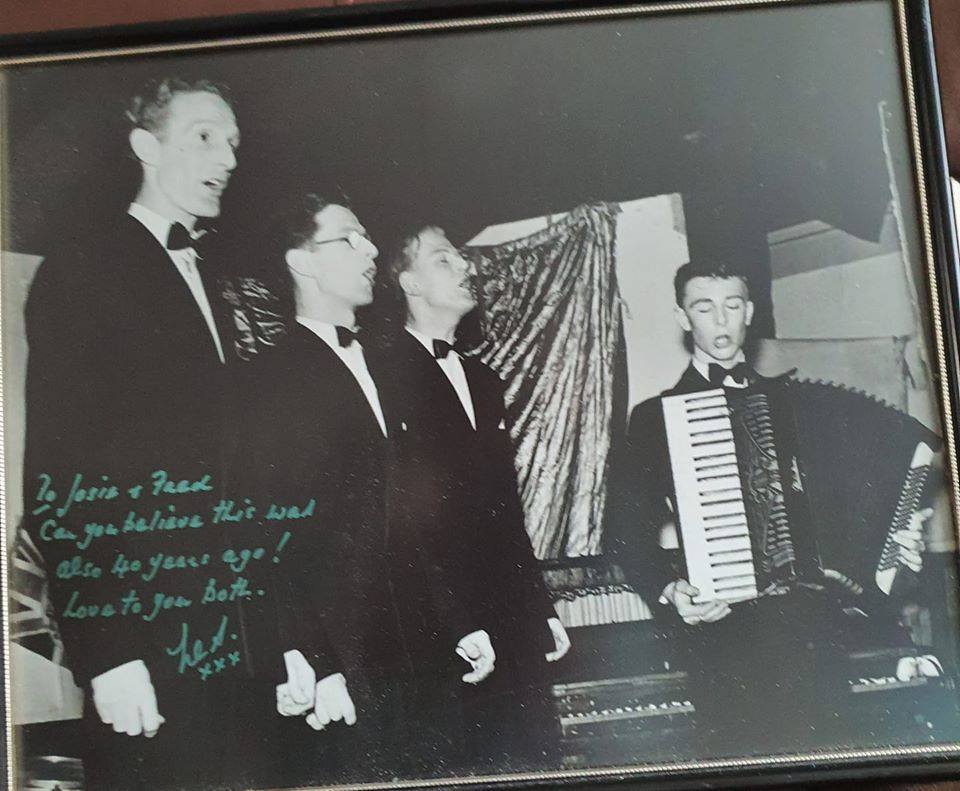
Les Reed (far right) in the Weysiders in 1950 with fellow members (LtoR) Gerry Cheeseman, Fred Gardner, and Derek Potter. Source: Christine Turner via WOKING when we were young Les’s mother used to be the caretaker at the Atalanta Ballroom, Woking and introduced venue owner Bob Potter to piano playing Les. A season playing piano at the Nab Club, Hayling Island was his first professional gig in ’49. In 1950 Les was in a combo called The Weysiders, with Gerry Cheeseman, Fred Gardner, and Derek Potter. That same year The Les Reed Trio was formed with Les on piano, Bob Wooler (bass) and Johnny King (drums) doing nightclubs, weddings and parties. The house on Granville Road became where the band/s rehearsed on a Sunday. In the early 50’s he worked at Kenwoods, Woking, and briefly at Sorbo fixing bicycles, as well as playing in a skiffle group; but also undertook his National Service.
Joining the Royal East Kent Regiment in ’54 and serving in Germany, The Balkans and Denmark, he was in the regiments band, The Buffs, and learnt to play the clarinet. Demob was in ’56 and by ’58 Les, a jobbing pianist playing with Woking based The Jimmie Cole Band up and down the country and held a residency at Park Ballroom, Southampton with the Frank Joynson Orchestra. He also accepted an offer from guitarist Vic Flick to play at Butlins for a summer season, along with Cliff Richard and The Drifters. John Barry auditioned Les and he join the The John Barry Seven for a period in which they appeared on BBC’s Drumbeat and recorded the immortal ‘The James Bond Theme” for Dr No, released in ’61. In addition he formed and was a member of Les Reed and his Orchestra, Proffer, Marmelzat & Reed, The Les Reed Brass, The Les Reed Combo, and The Sounds of Les And Barry.
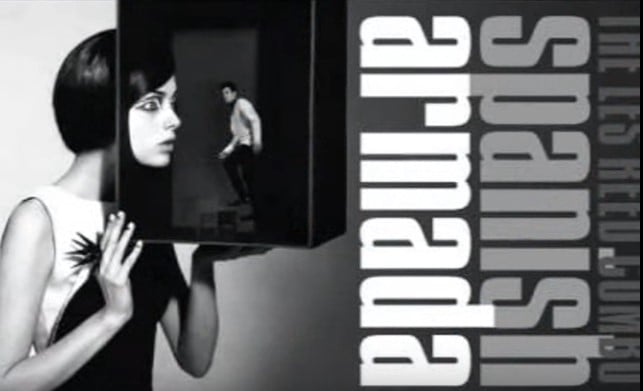
In ’64 The Les Reed Combo released the 7″ instrumental single “Spanish Armada” In ’64 The Les Reed Combo released the 7″ instrumental single “Spanish Armada” which became the theme to the ITN-TV Production “People In London”; in the early 70’s it was the Odeon’s ‘Showtime’ film trailers theme; and it was used in a Peek Freans cinema advert. The easy listening Les Reed Combo was worthy in itself, but he went on to be one of the writers of the 60’s and 70’s; penning over 2000 songs and was involved with arranging/producing some 5000 tracks in all.
“Here It Comes Again” written by Barry Mason and Les Reed in ’65; was recorded by The Fortunes and released on 10 September 1965. It reached number four on the UK and Canadian Singles Charts and 27th in the US Billboard Hot 100 chart that same year. A cover version by Rita Pavone with Italian lyrics entitled “Qui Ritornerà” went to number one in Italy, and a version was used as a jingle for BBC DJ Tony Brandon in the early 1970s.
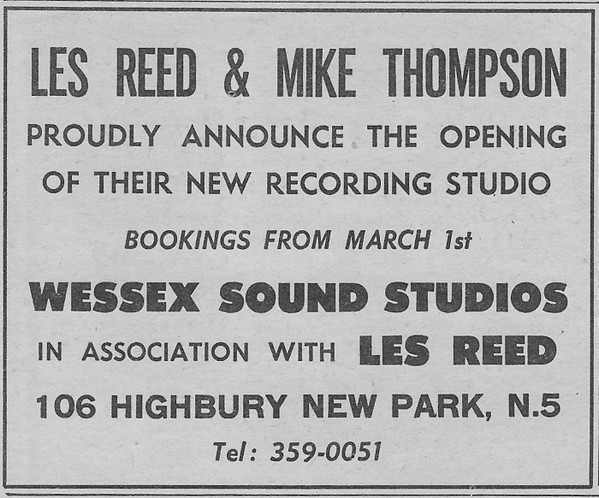
Advert for the new Wessex Sound Studios Reed, who had recorded at Wessex Studios, entered a partnership with the studio’s owner Ron Thompson and his partners in ’66, and purchased the church hall of St Augustine’s Church at 106a Highbury New Park in North London. Ron Thompson’s sons Mike and Robin converted the church hall into a recording studio and outfitted it with an 8-track Neve mixing console, the third console built by Thompson’s longtime friend Rupert Neve. The studio, however, did not immediately offer 8-track recording facilities – Trident Studios, Soho offered the first operational 8-track studio in London. Mike Batt recalls recording his first single at Wessex in ’68 on 4-track, then subsequently in the early seventies many other albums including all four of the Wombles’ albums, using state-of-the-art 24-track. Amongst the artists / bands to enter the old church hall were Big Mama Thornton, Eddie Boyd, Timi Yuro, P.J. Proby, Melanie, Connie Francis, and King Crimson, who recorded their first three studio albums at Wessex. The Moody Blues recorded their ’69 album, To Our Children’s Children’s Children and in ’70, a new custom 24-channel Neve console was installed and widely advertised as “London’s first 24-track desk”. In ’74, Queen recorded portions of Sheer Heart Attack at on that very desk. A year later, in ’75, the Chrysalis Group purchased both Wessex Studios.
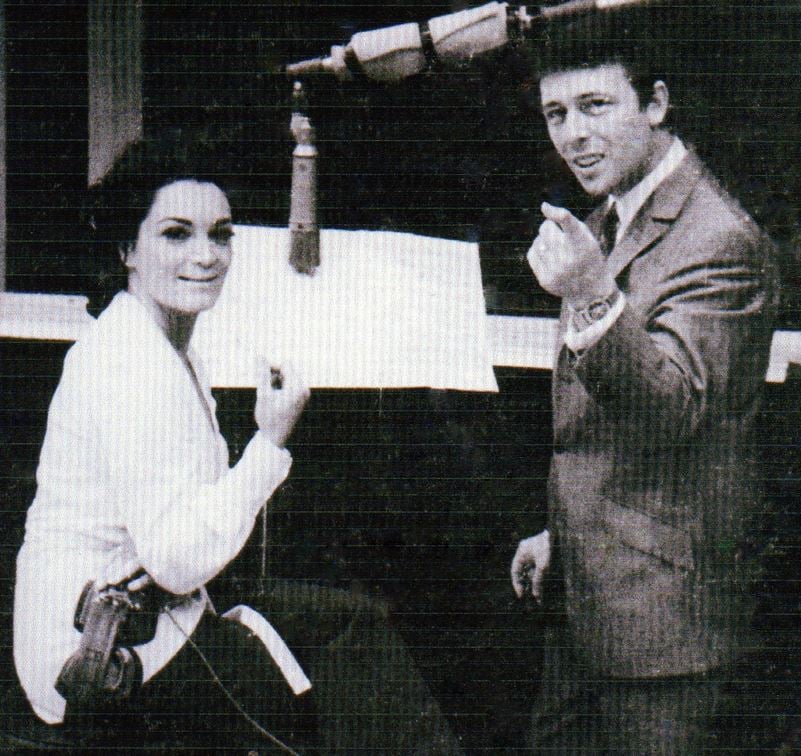
Les Reed with Connie Frances in Wessex Studios, Highbury Jumping back to our timeline, Englebert Humperdinck recorded “The Last Waltz”, by Les Reed and Barry Mason, releasing the 7″ single on Decca [F 12655] around the world in 1967. Connie Francis recorded “Connie Francis sings The Songs of Les Reed” [SE-4655] over the 6, 8 and 9 September ’69 at Wessex Studios, London; with additional vocals and overdubs laid down on 25 September in New York. The album was released in November, Francis’ last on MGM.
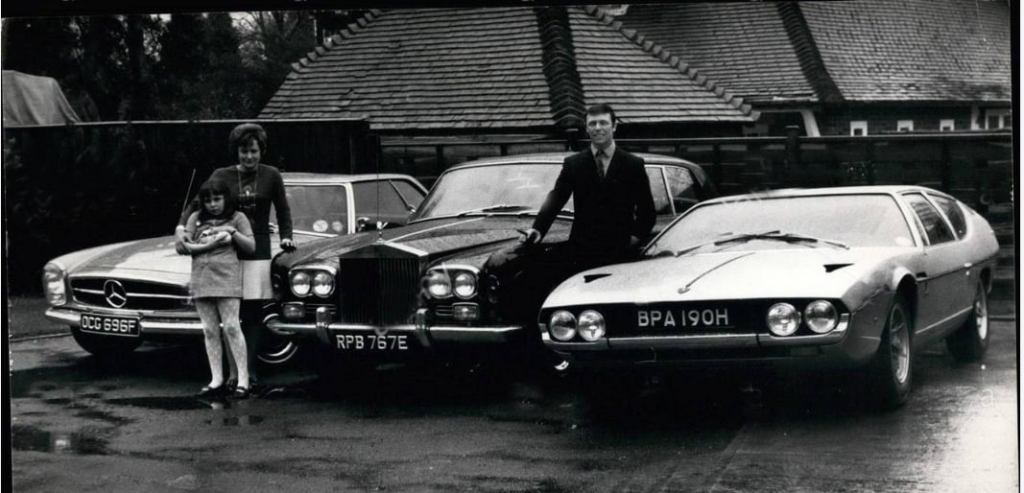
In 1970, Reed’s daughter’s guinea pig displaces his new Lamborghini Espada. Source Richard Knotek via WOKING when we were young In 1970 the local newspaper (4 April ’70) carried a short story on Reed. His daughter, Donna’s guinea pig was pregnant and housed in the garage. The result was that Reed’s new Lamborghini Espada sat in the drive of their home in Cedar Road, Hook Heath; along with his Rolls Royce and Mercedes. That same year, Reed presented and arranged some of the songs on a recording of The Epworth Choir supported by The Choir of Woking Grammar School for Boys on the Chapter 1 label [CMS 1003] as part of the Choirs of Britain Series; which was recorded at Trinity Church, Woking by the Pye Mobile Recording Unit.

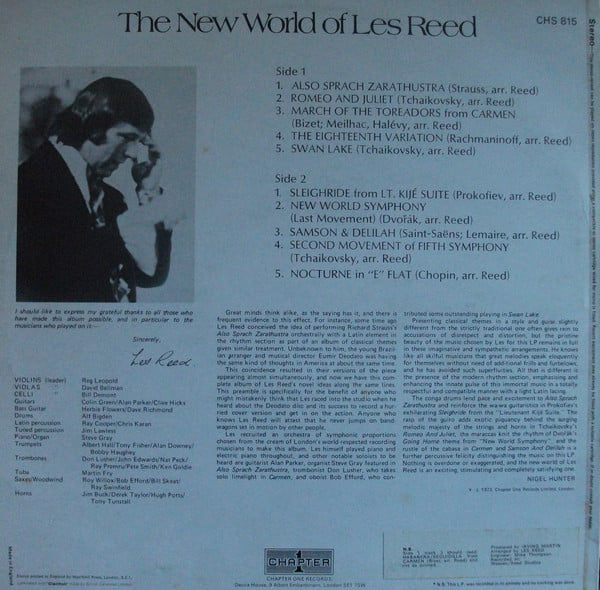
The Les Reed Orchestra’s last LP, released in 1973, titled “The New World Of Les Reed”. The Les Reed Orchestra’s last LP was released in 1973 on Chapter 1 [CHS 815] and titled “The New World of Les Reed”. In 1979 Polydor Records released a two-record set of “Connie Francis sings The Songs of Les Reed” and “Connie Francis Sings Bacharach & David”.
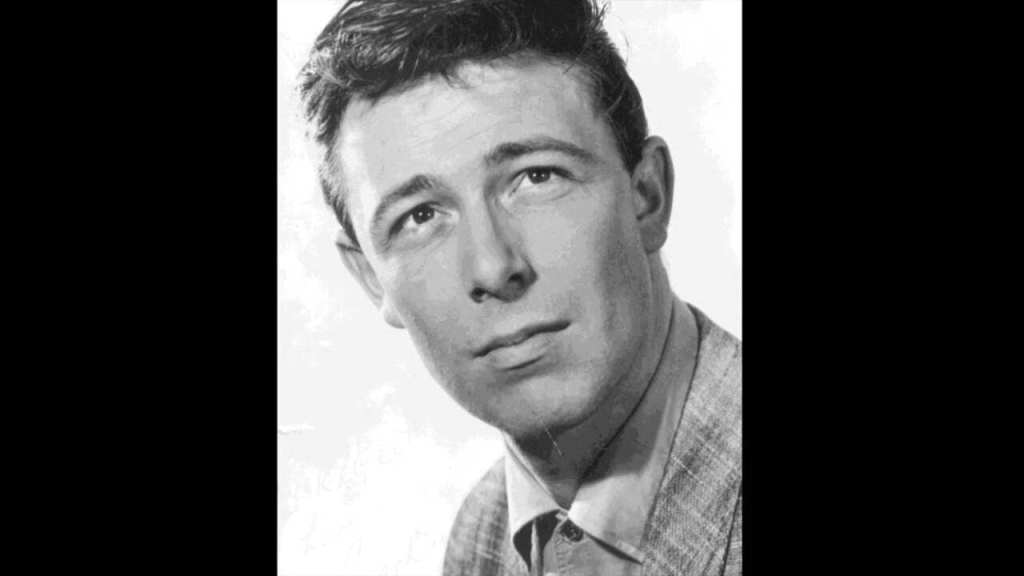
Les died on 16 April 2019 at the age of 83.
Links:
Tracks:Here is a brief sample of some of the tracks Reed wrote/co-wrote/composed:
“Delilah” – Tom Jones
“Here It Comes Again” – The Fortunes
“It’s Not Unusual” – Tom Jones
“Leeds, Leeds, Leeds” – Leeds United
“Man of Action” – Radio North Sea International’s
“The Last Waltz” – Engelbert Humperdinck
“There’s A Kind of Hush” – Herman’s Hermits / Carpenters’
“What New Pussycat” – Tom Jones[Ed – As we gather more information, comments and images we will expand this bio]
Gallery:

Melody Maker 10 August 1968: Center spread on Les Reed 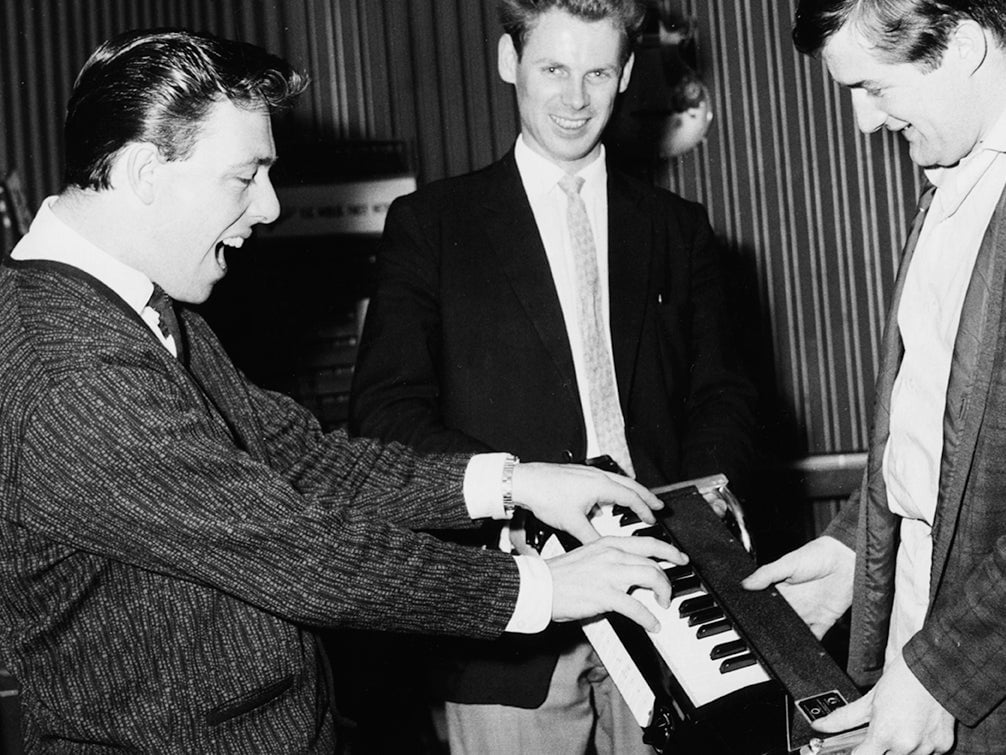
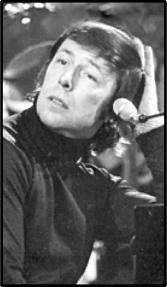
Les Reed on keyboard, with ? 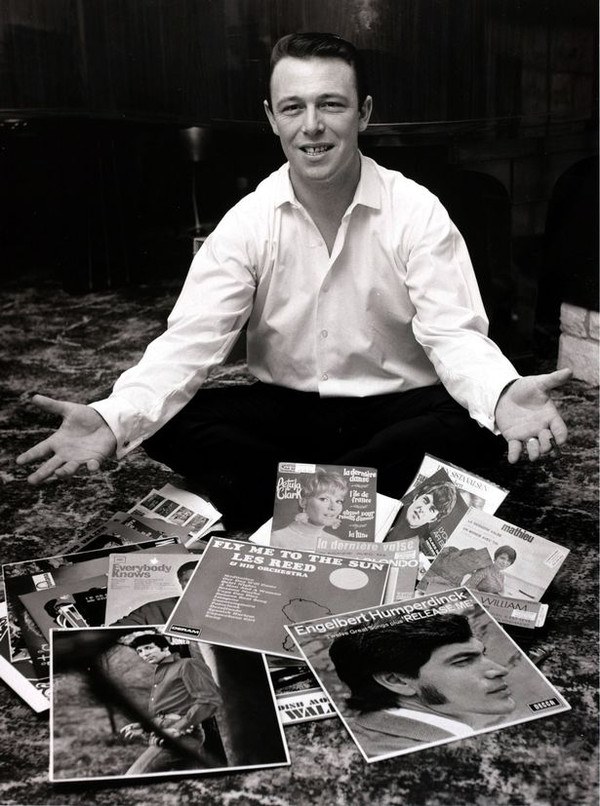
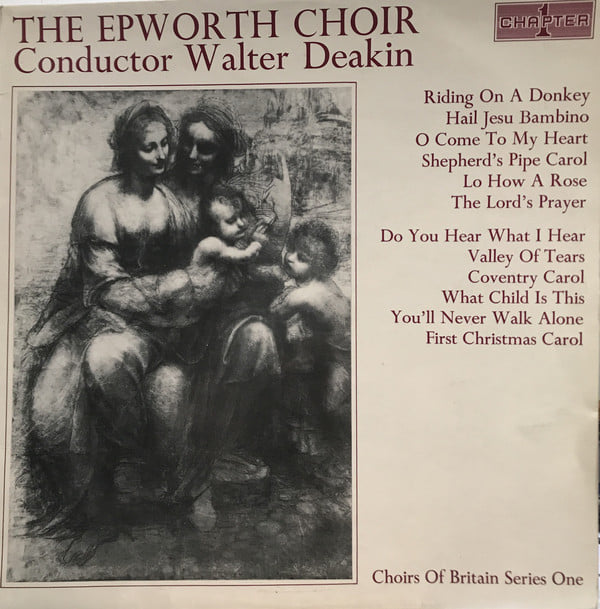
Front cover of The Epworth Choir supported by The Choir of Woking Grammar School for Boys 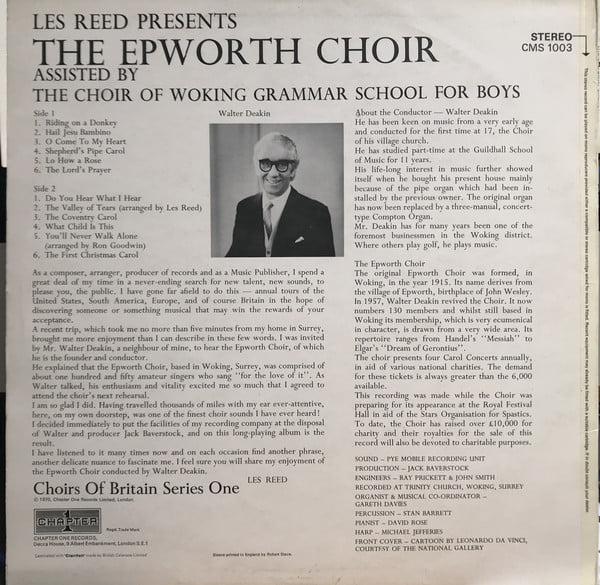
Back cover of The Epworth Choir supported by The Choir of Woking Grammar School for Boys 
The Les Reed Orchestra’s “Man of Action” [CH126] 7″ single on the Chapter One label. Picture courtesy of Michael Bailey 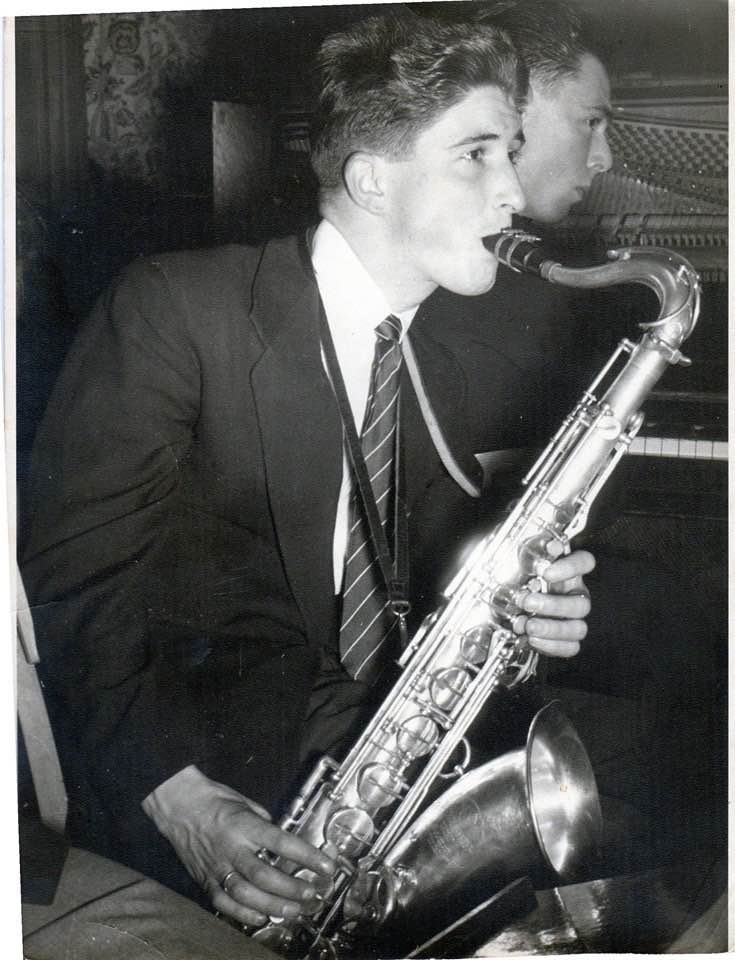
Les Reed & Tony Coe when they were in The Buffs Band (c’54-56) in Dusseldorf. Picture courtesy of Celia Reed. 
Les Reed with Engelbert Humperdinck. Source: Engelbert Humperdinck 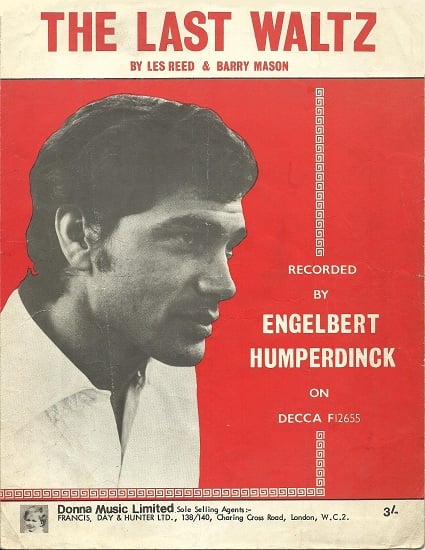
Englebert Humperdinck recorded “The Last Waltz”, by Les Reed and Barry Mason 
The Les Reed Combo’s “Spanish Armada” 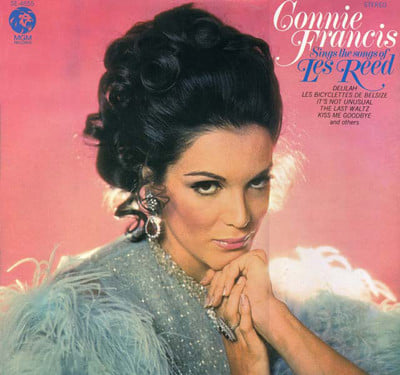
Album cover of 1969’s “Connie Francis Sing the Songs of Les Reed”. 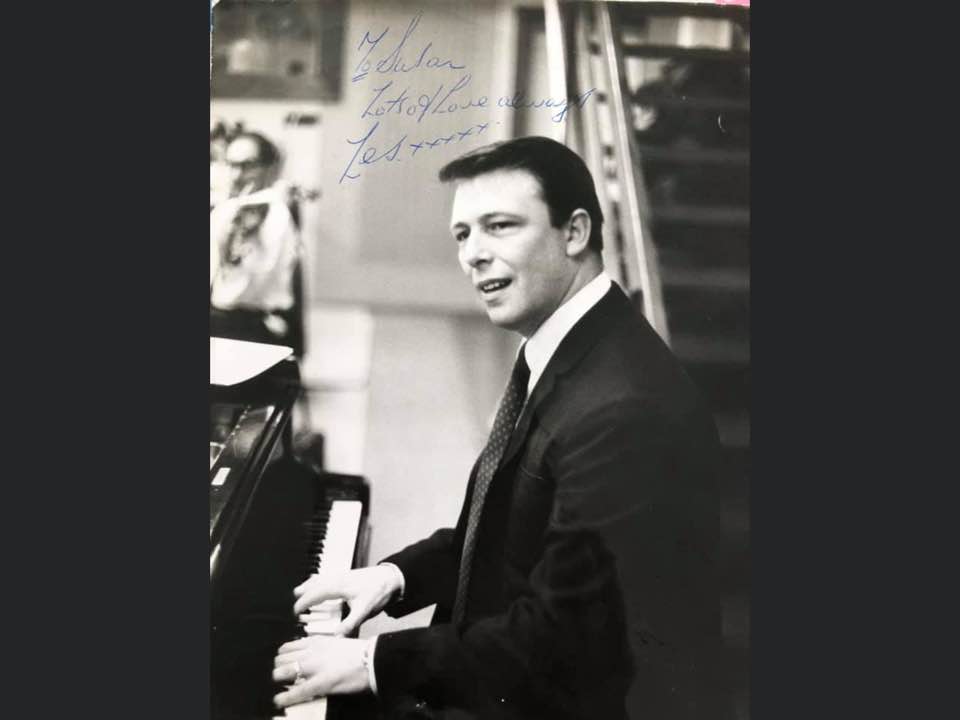
Les Reed. Picture courtesy of Celia Reed 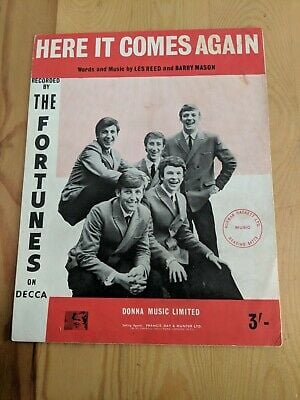
“Here It Comes Again” written by Barry Mason and Les Reed in ’65 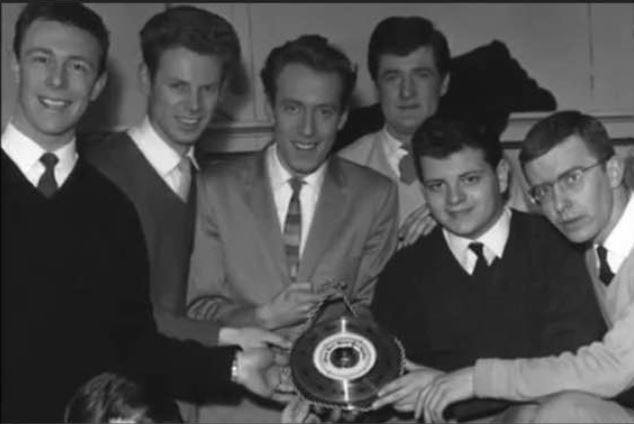
Les Reed (far left) as part of The John Barry Seven. Picture courtesy of Celia Reed. 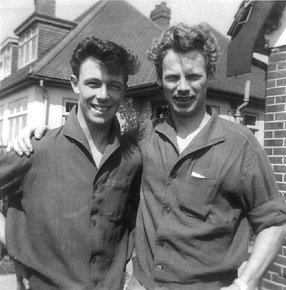
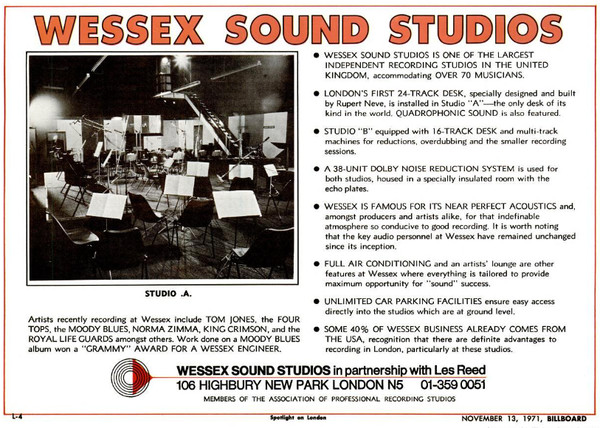
Advert for Wessex Studio Atalanta Ballroom, Barry Mason, BBC, Big Mama Thornton, Bing Crosby, Bob Potter, Bob Wooler, Chapter 1, Chiors of Britain Series, Chrysalis Group, Cliff Richard, Connie Francis, Cricketers, Denis Edward Sines, Denis Sines, Derek Potter, Dr No, Drumbeat, Eddie Boyd, Elvis, Englebert Humperdinck, Frank Joynson Orchestra, Frank Sinatra, Fred Gardner, Gerry Cheeseman, Hayley Island, Hook Heath, ITN, Jimmie Cole Band, John Barry, Johnny King, Kenwoods, King Crimson, Les Reed, Les Reed and his Orchestra, London, London College of Music, Lulu, Marmelzat & Reed, Melanie, MGM, Mike Batt, Mike Thompson, Nab Club, Odeon, Otis Redding, P.J. Proby, Park Ballroom, Peek Freans, People in London, Petula Clark, Polydor Records, Proffer, Pye Mobile Recording Unit, Queen, Ralph Henry Reed, Ralph Reed, Rita Pavone, Rita Row, Robin Thompson, Ron Thompson, Royal East Kent Regiment, Rupert Neve, Sandie Shaw, Shirley Bassey, Sorbo, Southampton, The Buffs, The Choir of Woking Grammar School for Boys, The Drifters, The Epworth Choir, The Fortunes, The John Barry Seven, The Les Reed Brass, The Les Reed Combo, The Les Reed Trio, The Moody Blues, The Sounds of Les and Barry, The Westfield Kids, The Wombles, Timi Yuro, Tom Jones, Tony Brandon, Trinity Church, Vic Flick, Wessex Sound Studios, Wessex Studios, Westfield, Weysiders, Woking -
Somewhere In Europe

(c’83-’92) Andrea James (?) and David Tiffen (?).
Shortly after the demise of Basic Essentials, James and Tiffen began to formulate Aldershot based Somewhere in Europe. This groups tracks were often initiated with a piece of “found” sound or TV audio clip, then other elements layered on and around it, using synth.

1986 “Somewhere In Europe” cassette [TST3] Recorded from ’83 to ’86 the tracks for the eponymous “Somewhere in Europe” cassette came together in mid ’86 and released on the duo’s own These Silences [TST3] label. At times they’d take existing songs, strip them down and reassemble. “Blood of Martyrs” for example was based on Death in June‘s “Rule Again” and used Aleister Crowley slogans. This appeared on their second cassette “Dark Days” which was released in ’88. Tiffin and James did collaborate quite a bit with Death in June and particularly Douglas Pearce. They were both credited on Death in June’s 1989 LP, “The Corn Years”.

1990 “Know Your Enemy” cassette [TSR5] sleeve. On their 1990 cassette release “Know Your Enemy” – again on These Silences [TST5] – Somewhere In Europe identified with the European avant garde tradition: the “anti-art” of Dadaism, the beauty of the unexpected and unconventional within Surrealism, and the Situationist’s belief that behavior is determined by set of circumstances in which one finds oneself.
“Liturgy Of Anguish” [TST6] followed in ’91 continuing the bands industrial/experimental electronica. A reviewer for the EST Fanzine described it as ‘Tasty’, continuing their neo-surrealist musical fragments style; portraying an absinthe-scarred view of the world. In theory, the music stopped for Somewhere in Europe in 1992. This coincided with the release of the compilation CD “Gestures” on Douglas Pearce’s New European Recordings label [BAD VC CD 45] with tracks from each of the previous cassette releases and “To Cross The Bridge At Dusk” which first appeared on the “Realidade Virtual” compilation CD in ’91.
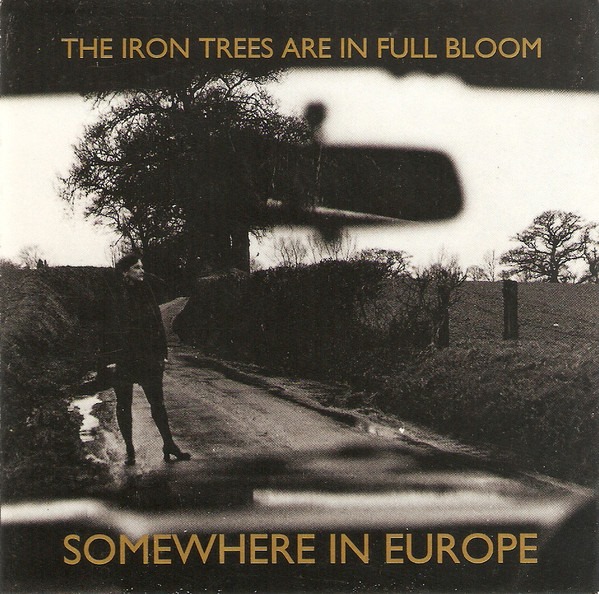
1994 “The Iron Trees Are In Full Bloom” CD [TSCD1] Experimental noise-rockers, Splintered sampled Somewhere In Europe for their track “The First Threat” released on “The Judas Cradle” LP in ’93. The following year they did it again on “S.H.C.” which was on the B-side of the 7″ “Comparatively Mainstream” EP. “S.H.C.” was also included on 2015’s compilation of out of print Splintered pieces titled “Turned Inside Out”.
In ’95, the CD, “The Iron Trees Are In Full Bloom” on These Silences [TSCD1] appeared and was distributed by World Serpent. This was a precursor to ’96’s “Savage Dreams” [TSCD2] which presented a more ambient sound in places. Again distributed by World Serpent; on this releases track 8, which was titled “Assault”, the voice on Basic Essentials colleague Stewart Home appeared.
Tracks by the band have also appeared on numerous compilations cassettes: Smile Smile Smile Smile (Canada, ’85), Mail Art Manifest (Norway, ’87), Leiv Traumas (France, ’89), Dreams From Within (Britain, ’89), Moto Perpetuo (Italy, ’89), Partners in Music (Italy, ’89), Neither Good Nor Evil (Germany, ’90), Goodbye Forever Annie Wilkes (Italy, ’90), Mjölnir (Germany, ’90), Iberico (Portugal, ’90), Eat Your Pets (Germany, ’90), Shake the Foundations (Britain, ’91) and the aforementioned Realidade Virtual (Portugal, ’91).
Both James and Tiffen were featured on Death In June’s “Brown Book” released on 19 December 2007, after which we lose track.
Tracks:
Gallery:

1988 “Dark Days” cassette [TST4] 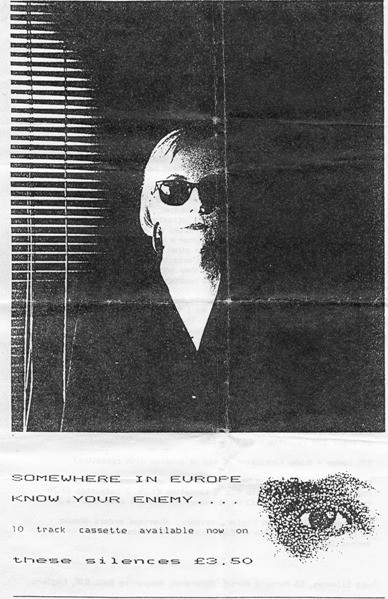
1990 “Know Your Enemy” cassette [TST5] insert front 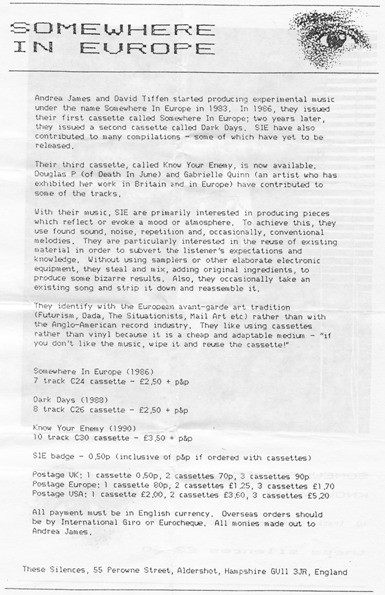
1990 “Know Your Enemy” cassette [TST5] insert back 
1991 “Liturgy Of Anguish” cassette [TST6] 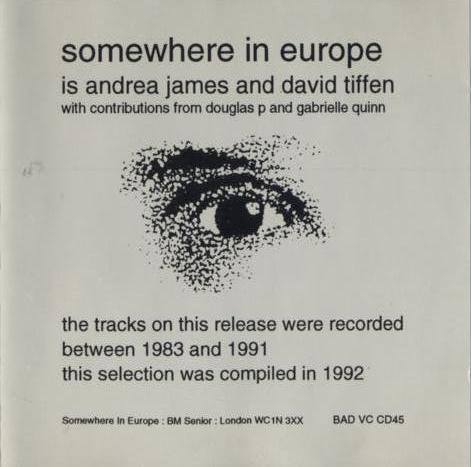
1992 “Gestures” compilation CD [BAD VC CD 45] 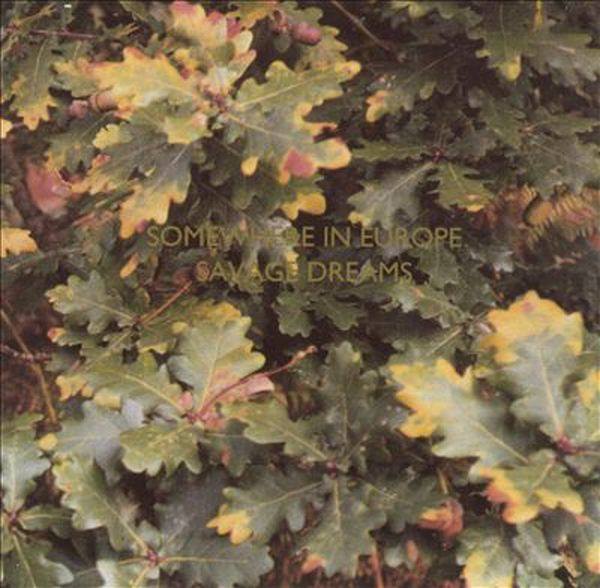
1996 “Savage Dreams” CD [TSCD2] 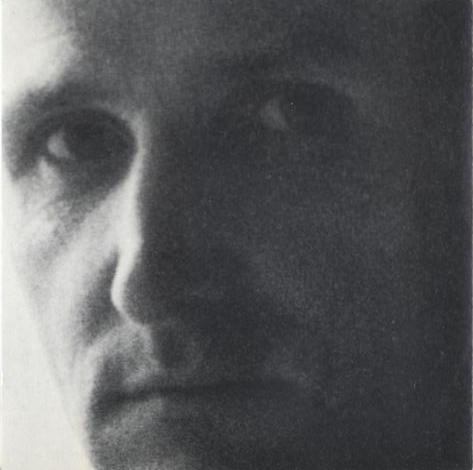
Somewhere in Europe’s Tiffen 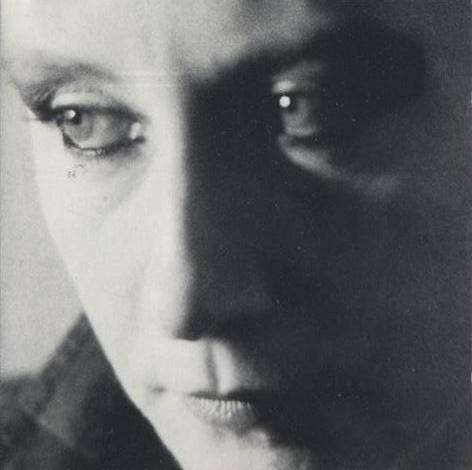
Somewhere in Europe’s James -
The Modern Art of Living

(’68) Alan Harvey (drums), Scott Crawford (guitar) and Roger “Paddy” Carson (bass).
This Farnborough band supported The Late at Bourne Youth Club’s Midsummer Night’s Dance on 21 July ’68. An appearance at The Barn, held at the Cambridge Hotel, Camberley was delayed briefly when Carson broke a fluorescent tube while putting on his bass, spearing his hand in the process. The performance awaited the glass to be extracted, but ultimately Brian Smith took over playing Carson’s right hand bass, left handed. The band also played Rev’s Youth Club dances at St. John’s Hall, Farnborough on a number of occasions.
At some point Tony Duncan joined The Modern Art of Living.
Harvey went on to play in Magic Alice. Carson went into estate agency and property development. Duncan, who had also been in The Four Dimensions and The Dwarves during the ’60s, now lives in Tenerife and currently performs with the Pete Downes Trio, aka PD3.
Gallery:

-
Just So Stories

(c’81-82) Kaz Jones (vocals), Alan “Archie” Bishop (bass) Ian Patterson (drums), and Nigel Spaughton (guitar).

Early, Just So Stories, with Binns on vocals and Bishop on bass, at University of Surrey SU Bar in June 81. Picture courtesy of Fred Pipes In June ’81, Just So Stories appeared at the Student Union Bar at the University of Surrey, Guildford. Jones, who’d been in Matrix, replaced Simon Binns on vocals, sometime in the later half of ’81. While this Guildford band gigged locally they also journeyed up into London. They practiced in their own rehearsal room in a house, owned by Mark Charles’ parents, in Llanaway Road, Godalming; with his band, UBz, rehearsing in the next room.
On 12 November 1881, Godalming was the first place to have both private and public electrical supply. As part of the centennial celebrations, Just So Stories performed at the Borough Hall, Godalming in November 1981; the band also appeared at The Wooden Bridge, Guildford that month. Another venue that hosted the band was West Surrey College of Art and Design, Farnham. Also in ’81 the band released a five track demo cassette titled “Catch 44”. Just So Stories appeared at the Starlight Room at The Railway Tavern, West Hampstead on 3 Feb ’82; were they deployed a PA supplied by Ray “Bonza” Bradman.
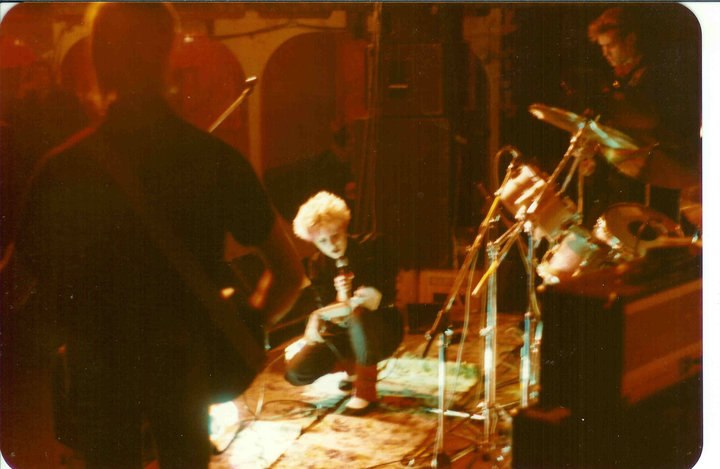
3 Feb 1982: Just So Stories at Starlight Room, Hampstead. Picture courtesy of Kaz Jones Jones would later played sax and piano in Funtime and subsequently Casual Sax, performing with Holy Durex and Steel Bill & The Buffalos. Patterson and Spaughton were among the musicians who’d join Funtime to flesh-out the sound when performing live.
Tracks:
Gallery:

Early, Just So Stories, with Binns on vocals, at University of Surrey SU Bar in June 81. Picture courtesy of Fred Pipes 
Early, Just So Stories, with Binns on vocals and Bishop on bass, at University of Surrey SU Bar in June 81. Picture courtesy of Fred Pipes 
Image courtesy of Alan Bishop 
Image courtesy of Alan Bishop 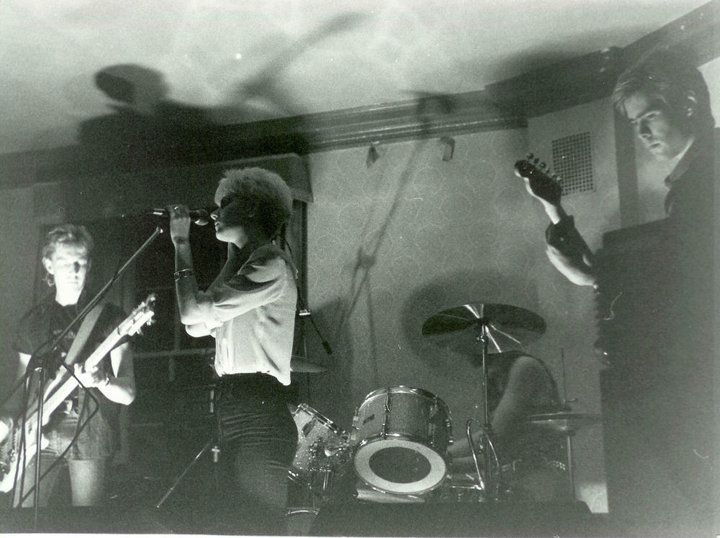
Nov 81: Just So Stories at The Wooden Bridge, Guildford. (LtoR) Bishop, Jones, Patterson, and Spaughton. Picture courtesy of Kaz Jones 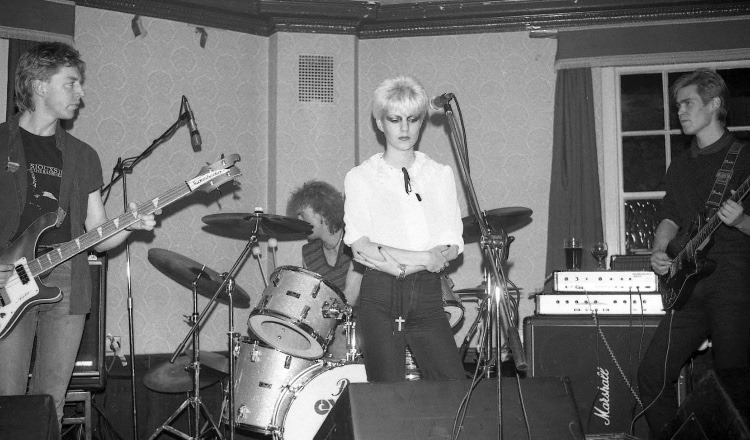
Image courtesy of Alan Bishop 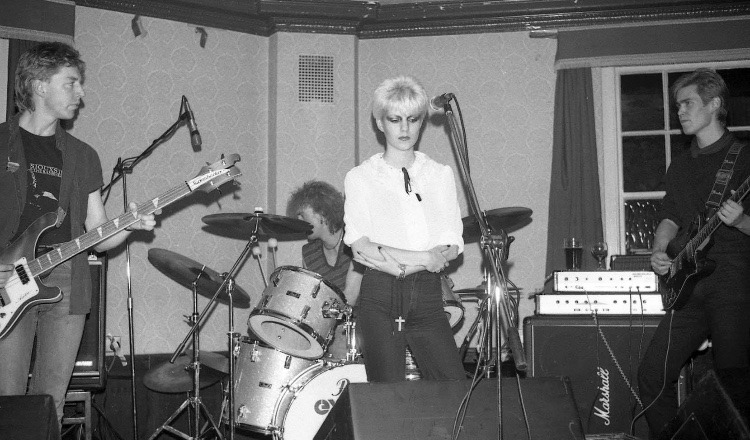
Image courtesy of Alan Bishop 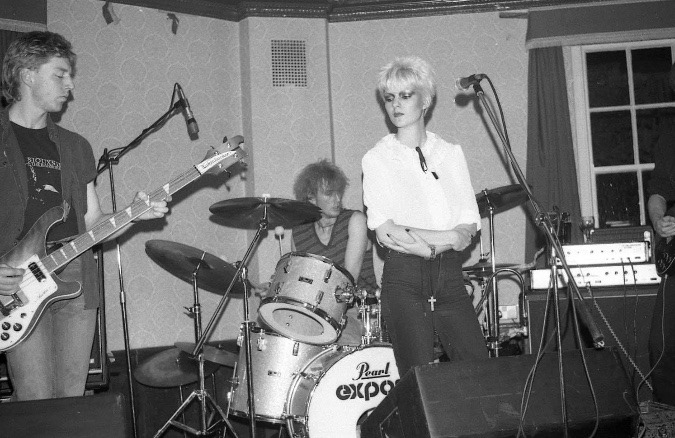
Image courtesy of Alan Bishop 
Image courtesy of Alan Bishop 
3 Feb 1982: Just So Stories’ Patterson at Starlight Room, Hampstead. Picture courtesy of Kaz Jones 
3 Feb 1982: Just So Stories’ Spaughton at Starlight Room, Hampstead. Picture courtesy of Kaz Jones 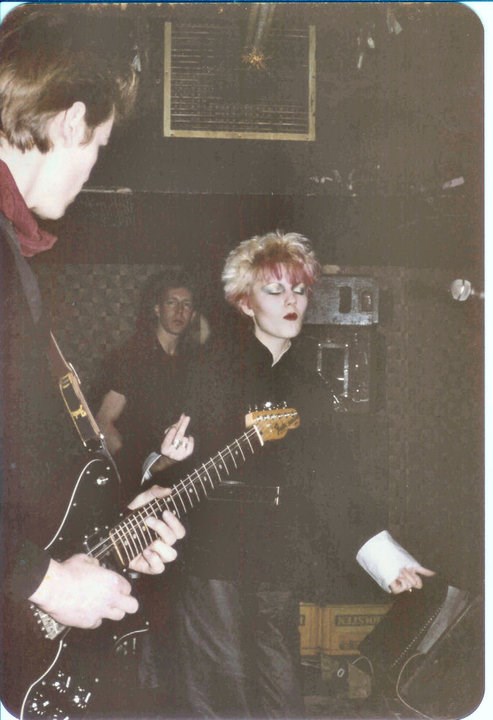
3 Feb 1982: Just So Stories at Starlight Room, Hampstead. Picture courtesy of Kaz Jones 
3 Feb 1982: Just So Stories’ Jones at Starlight Room, Hampstead. Picture courtesy of Kaz Jones Alan Bishop, Bonza, Borough Hall, Casual Sax, Farnham, Funtime, Godalming, Guildford, Holy Durex, Ian Patterson, Just So Stories, Kaz Jones, Mark Charles, Matrix, Nigel Spaughton, Ray Bradman, Simon Binns, Starlight Club, Starlight Room, Steel Bill & the Buffalos, The Railway Tavern, UBz, University of Surrey, West Hampstead, West Surrey College of Art and Design, Wooden Bridge, WSCAD -
Matrix

(c’80-’81) Kaz Jones (vocals) Gavin Dunt (bass), John “Johnnie” Clarke (guitar) and Richard “Tully” Tull (drums).
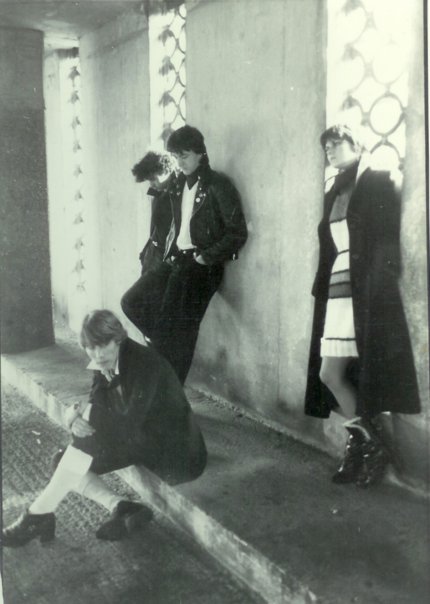
1980 Matrix photoshoot at the now demolished and rebuilt Sainsbury’s car park, Guildford. Picture courtesy of Kaz Jones Dunt and Clarke got together, with Jamie “Breezeblock” Legg (drums) and Sophie “Sis” Montague (vocals) of The Golden Age Of Metro, to form Matrix. Tully replaced Legg and Jones took over Montague’s vocals role. With a PA supplied by Ray “Bonza” Bradman, these 17 year olds gigged locally at the likes of The Wooden Bridge, Guildford, where they once supported Disruptive Patterns; Godalming College, and the Village Hall, Bramley. Issue No.4, the June/July ’80 issue, of Down in the Street, featured the band along with Actifed, Crisis, and Revolt. The band headlined at The Wooden Bridge, Guildford on 9 December ’80 and their Christmas outing that year at the Youth Centre, Cranleigh garnered 47 ticket sales.

Matrix’s Cristmas 1980 gig at Cranleigh Youth Centre. Picture courtesy of Kaz Jones The band recorded a demo at Chestnut Studios, Churt in 1980, which carried “Deja Vu” and the band’s cover of The Tights’ “China’s Eternal”.
Clarke and Tull were also both in Imperfect Hold. Jones went on to join Just So Stories in late ’81; then played sax and piano in Funtime and subsequently Casual Sax, performing with Holy Durex and Steel Bill & The Buffalos. Dunt, following the split of Matrix, got together with a few friends in early ’81 to form Displayed. Legg had previously been in Strange Cult and The Golden Age of Metro, and would join Luxury Glass Town, Ill at Ease, Innocent Bystander and Eat the Sofa a few years later and has since joined forces with others to form The True Deceivers.
Tracks:
Gallery:
Issue No.4, the June/July ’80 issue, of Down in the Street, featured the band along with Actifed, Crisis, and Revolt. Picture courtesy of John Hudson 
9 December 1980: Matrix played The Wooden Bridge, Guildford 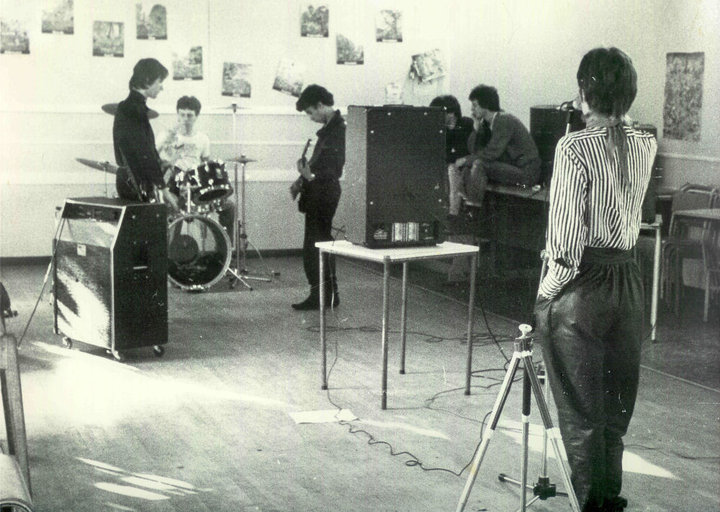
Matrix rehearsal, 1980 with (LtoR) Dunt, Breezeblock, Clarke, two observers, and Jones. Picture courtesy of Kaz Jones 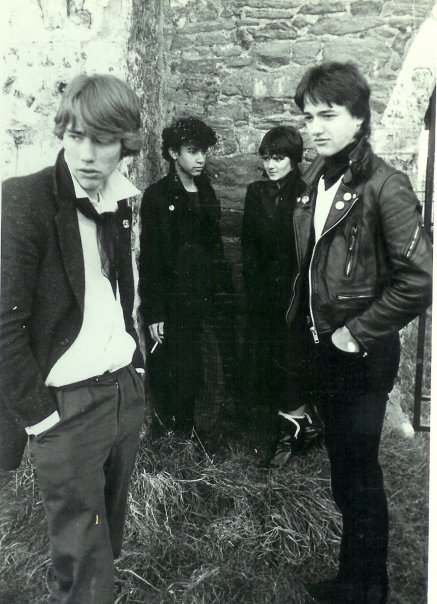
Matrix photoshoot at St Martha’s Church, Portsmouth Road, Guildford. (LtoR) Tull, Clark, Jones, and Dunt. Picture courtesy of Kaz Jones 
1980 Matrix photoshoot at the now demolished and rebuilt Sainsbury’s car park, Guildford. Picture courtesy of Kaz Jones 
Matrix’s Christmas 1980 gig at Cranleigh Youth Centre. Picture courtesy of Kaz Jones 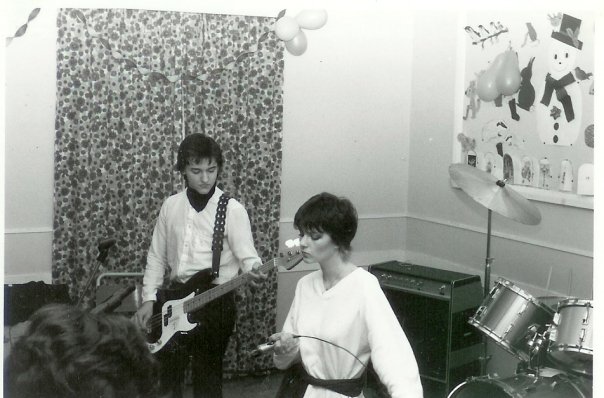
Matrix’s Cristmas 1980 gig at Cranleigh Youth Centre. Picture courtesy of Kaz Jones 
Matrix’s Cristmas 1980 gig at Cranleigh Youth Centre. Picture courtesy of Kaz Jones 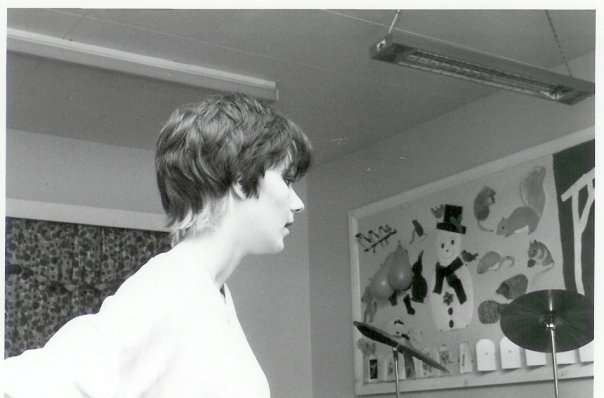
Matrix’s Cristmas 1980 gig at Cranleigh Youth Centre. Picture courtesy of Kaz Jones 
Matrix’s Cristmas 1980 gig at Cranleigh Youth Centre. Picture courtesy of Kaz Jones Actifed, Bonza, Bramley, Casual Sax, Chestnut Studios, Cranleigh, Crisis, Displayed, Disruptive Patterns, Down in the Street, Eat the Sofa, Funtime, Gavin Dunt, Godalming, Godalming College, Holy Durex, Ill At Ease, Imperfect Hold, Innocent Bystanders, Jamie Legg, John Clarke, Just So Stories, Kaz Jones, Luxury Glass Town, Matrix, Ray Bradman, Revolt, Richard Tull, Sophie Montague, Steel Bill & the Buffalos, Strange Cult, The Golden Age of Metro, The Tights, The True Deceivers, Village hall, Wooden Bridge, Youth Centre -
The Age Beaters

(c’63-64). Bert Curtis (drums), Dave Everson (lead guitar / vocals), Alan Hatswell (guitar), and Pete Cannon (bass).
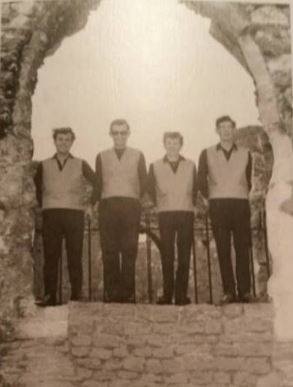
The Age Beaters at Guildford castle. Picture courtesy of Ben’s Collectors Records This Guildford band played The Ticky Rick Club, Basingstoke – which became the Rang-a-Tang Club in mid-’65 – and the Rock & Twist Dances, Guildford. Curtis had been in Guildford skiffle group The Leopard Spots before going on to join The Age Beaters.
On 4 November ’63, Phil and The Stormsville Shakers headlined opening night of the Rock & Twist Dances at the Civic Hall, Guildford, with The Original Dominos, The Condors and The Age Beaters in support. The Age Beaters returned the next week to support The Raiders with Terry Shane on 11 November; The Condors on 18 November, The Original Dominoes on 25 November, and The Transatlantics on 2 December.
The next year, the band would travel further afield with gigs at the likes of The Pavilion, Clarence Pier, Portsmouth where they performed on 17 May ’64. Later in ’64, on 26 September, the band supported Rip Van Winkle, along with The Dynamos, at The Ticky Rick Club, Basingstoke. Kenneth Payne, a rookie promoter at the time, organized his first event at Foxburrows Hall and booked The Age Beaters
Curtis’ local connections went back a ways as the grandson of Mr Reg “Robin Red Breast” Curtis landlord of the Seven Stars, Swan Lane and the Vintner’s Arms, and son of Albert Curtis Snr who also landlorded the Seven Stars. Sadly, Curtis passed on 3 April 2020
Gallery:
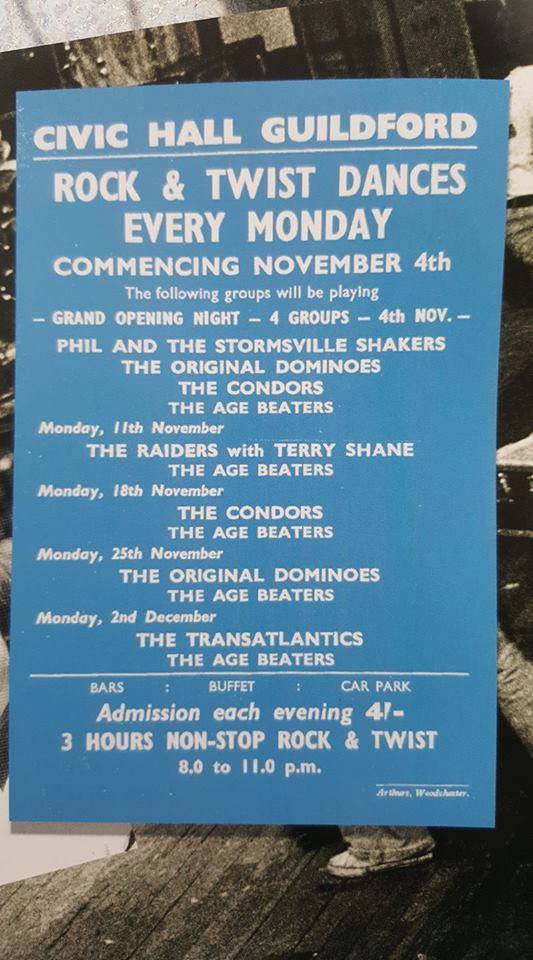
Commencing 4 November 1963: Rock & Twist Dances at Civic Hall, Guildford. Source: Ben’s Collectors Records 
26 September 1964: The Age Beaters play The Ticky Rick Club, Basingstoke 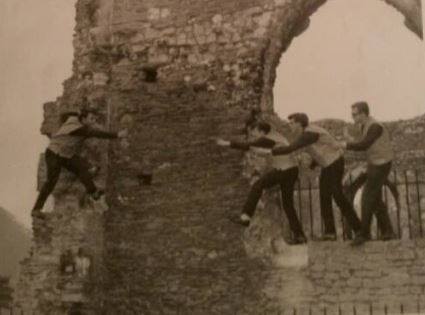
The Age Beaters at Guildford castle. Picture courtesy of Ben’s Collectors Records Alan Hatswell, Basingstoke, Bert Curtis, Civic hall, Clarence Pier, Dave Everson, Foxburrows Hall, Guildford, Kenneth Payne, Pete Cannon, Phil and The Stormsville Shakers, Portsmouth, Rang-a-Tang Club, Rip Van Winkle, Rock & Twist Dances, Seven Stars, Terry Shane, The Age Beaters, The Condors, The Dynamos, The Leopard Spots, The Original Dominos, The Pavilion, The Raiders, The Ticky Rick Club, The Transatlantics, Vintners Arms -
The Bill Leru Quintet
(c’ late-50s/early-60s) Bill Leru (double bass), ? (drums), Peter Cauldwell (baritone sax), John Renshaw (tenor sax) and ? (piano).
Modern Jazz quintet from Woking that played mostly Miles and Mulligon material. Prior to forming BLQ, Leru and Cauldwell had been playing rock n’ roll with the Tony Hoadley Band once a week at the Butaca Club, Old Woking. The origin of the bands name is lost to time, but its likely they got some bookings and following the convention of the time choose The Bill Leru Quintet.

BLQ Double Bass player and namesake, Bill Leru. Picture courtesy of Inga Leru-Kelly Cauldwell recalls BLQ being the warm up band for Tubby Hayes in Farnborough (possibly Farnborough Tech), but not in Woking. Apparently Tubby was getting rather drunk back stage, with a bottle in hand, and there was concern about how he’d manage the gig; but when he got on stage he played like a god. In the late 50’s/early 60’s, Tuesday was Jazz night at the Labour Hall, on Clarence Avenue, Woking and this featured The Bill Leru Quintet supported by the Colin Beeson Quartet.
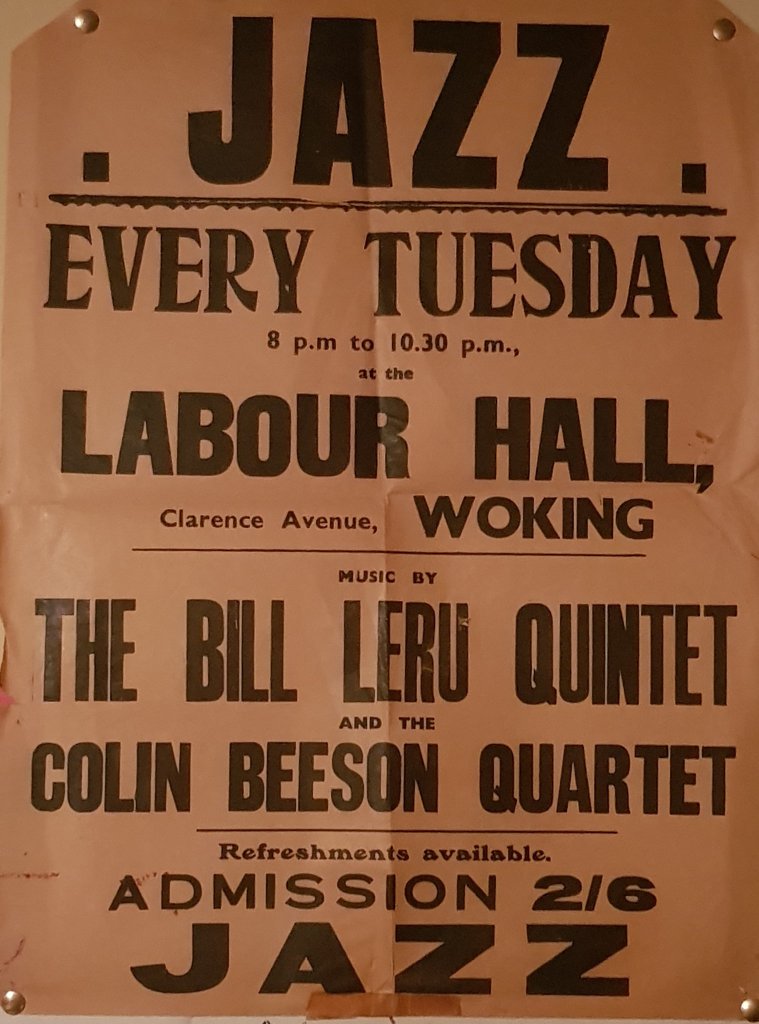
Tuesday was Jazz night at the Labour Hall, Woking, featuring The Bill Leru Quintet and the Colin Beeson Quartet. Picture courtesy of Inga Leru-Kelly We find Leru, along with John Nuttall, playing with Iain Ballamy in the early ’80s at the Bisley Pavilion.
Gallery:

Another flyer for The Bill Leru Quintet supported by the Colin Beeson Quartet at Labour Hall, Woking. Picture courtesy of Ben’s Collectors Records 
BLQ at Labour Hall, Woking. Picture courtesy of Inga Leru-Kelly 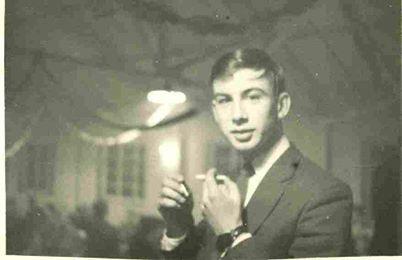
BLQ Sax player Peter Cauldwell at the Labour Hall, Woking. -
Farnborough Firework Factory
(c’72) Terry Sherring (vocals), Mike Batt (backing vocals), Chris Spedding (guitar), Kirk ‘The Riddler’ Riddle (bass), Gary Cooper (?) and Dave Porter (?).
Sherring, who was based in Ash, Cooper, and Porter had all been members of The Embers. Riddle had spent time in The Stormsville Shakers and Circus, before joining this brief lived combo.
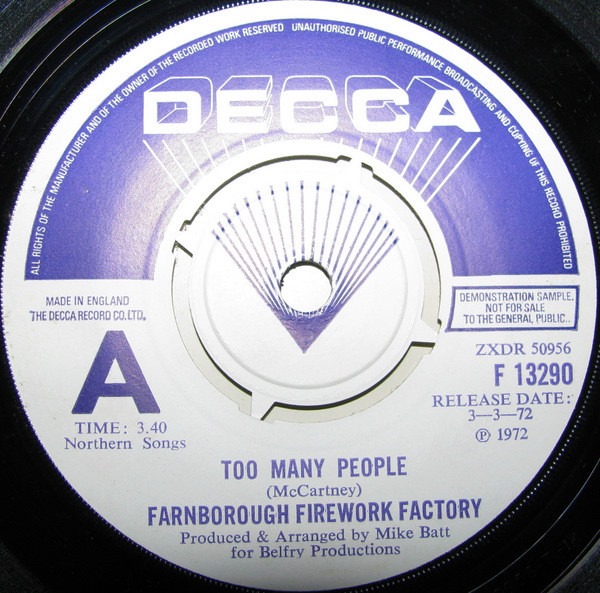
The band released a promo 7″ vinyl cover of Paul McCartney’s “Too Many People” on the Decca label [F 13290] on 3 March 1972. It was backed by the Batt written “She’s Against The Law” and the whole thing was produced and arranged by Batt as well. Parts of the B-side were recorded at Bob Potters Studio in Mychett. Later in the year Decca re-released the single.
Riddle appeared a few years later in Jackie Lynton’s Happy Days Band. Many will recall Batt’s work a couple of years later that produced his first hits as a singer-songwriter/producer for The Wombles in ’74. Spedding had turned down Andy Fraser’s request to join Toby the year before joining Farnborough Firework Factory, but would team up with him when forming Sharks. In ’75, Spedding had a Top 20 solo hit in the UK with “Motor Bikin’”.
Gallery:


-
The Late

(c’66-71 ) Pat Martin (guitar / vocals), Ken Baker (guitar / keyboards/ vocals), Pete Perryer (vocals / drums) and Dave McGreggor (bass).
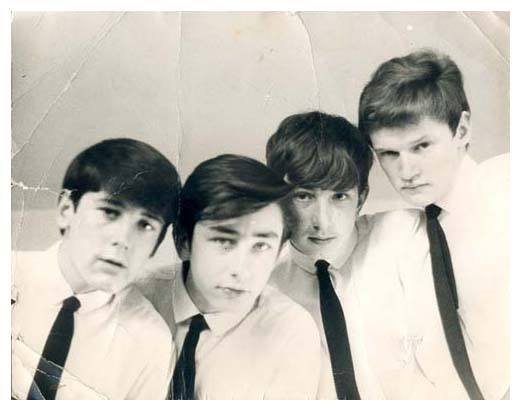
Pre-The Late Edition in 1965 (LtoR: Martin, Colborne, Baker and Perryer). Woking based McGreggor originally joined The Pink Bears and suggested renaming the band The Late Edition, which after a while was shortened to The Late. On leaving school in ’67 they went professional as The Late, starting with local gigs at the likes of the Stereo Club, Woking and the Atalanta Ballroom, Woking.
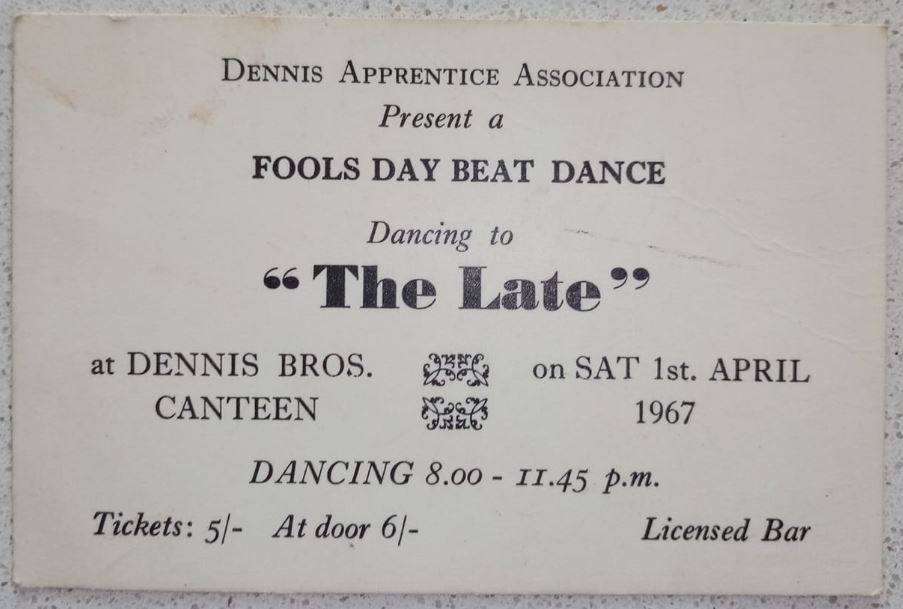
1 April 1967: The Late played the April Fools Day Beat Dance at Dennis Bros. Source: Tina Morant via Guildford Town Past & Present On 1 April ’67 they played the Dennis Apprentice Association’s April Fools Day Beat Dance in the Dennis Brothers canteen, Guildford; at which Perryer broke his snare skin and had no spare. Howard Crouch offered to fetch a spare snare from the bands shed in Send, in his dad’s Lotus Cortina. He was back in no time with the spare and the Cortina in need of some bodywork having lost it on a corner on the way there. The Late’s “Sleepsong” takes some inspiration from this incident and “Nightingale Crescent” was written by Crouch, who’d got a job delivering for Alsford Timber, Cobham to pay for the repairs, while out delivering to Nightingale Crescent. Both songs ended up on Unicorn‘s Blue Pine Trees LP.
The band spent some time in Graham Clark (yes, the racing driver) Studios in Walton-on-Thames resulting in a number of demos. Atalanta owner Bob Potter became The Late’s manager, replacing Martin’s father; a relationship that lasted three years, starting in late ’67 thru ’69. “Family Tree” from one of the bands demos was picked up by UK publishing company, Planetary Norm, who paid for the band to re-record the track. They however lost interest when they struggled to place it.
Under Potter the gigging increased, with venues across the lower half of the UK, and Trevor Mee (ex-Tony Rivers and the Castaways) replaced McGreggor in the line up. They supported Lunar Two, a USA soul duo and Sue and Sunny (who became Brotherhood of Man). They also supported Geno Washington at the Agincourt, Camberley. In ’68 they became Billy J. Kramer’s backing band for 9 months which included 10 TV and radio spots. On 21 June ’68 the “fabulous much in demand” The Late headlined at Bourne Youth Club’s midsummer nights dance, with The Modern Art of Living in support, held at Bourne Hall. In ’69 they were booked for a residency at The Carousel Club, Copenhagen, playing three 45-minute sets each weeknight and five at weekends.

The Late with their LWB 6 wheel Transit in 1969. Pat Martin’s mum in the background, said “You can’t use that I’ve got my pinny on!”. To accommodate the touring and the gear The Late used a LWB 6 wheel Transit. Reportedly, four musicians, two roadies, a Hammond organ, Leslie, two Marshall stacks, a drum kit, four Wem columns, two SL 100 Wem slaves and a Wem Audiomaster mixer were taken all over England, Scotland, Wales, France, Holland, Belgium, Germany, Italy, Denmark and Sweden in that van.

The Late in 1969 (LtoR: Mee, Martin, Perryer, and Baker) On 1 August ’69 the combined Farnborough Tech and R.A.E. Apprentices’ Rag Week’s Rag Queen Inauguration Ball at R.A.E. Assembly Hall, Farnborough was headlined by Status Quo, with The Late, and Magic Alice in support. Then, on 1 October ’69, The Late were one of the many bands, including Sky, Wishful Thinking, The Embers, Canterbury Tales, Crazy Paving, Chimera, and Magic Alice that played a benevolent concert at Samantha’s Club, as the Agincourt was called for a time. This was compered by Dave West and also featured the Radio 1 D.J. Ray Moore. About this time Baker started writing his own songs. They recorded several acetates, demos and private recordings, some recorded in Bob Potter’s studio in Mytchett, Surrey on an Ampex 4 and many are now included on Wooden Hill Records compilation “Songs From The Family Tree” [WHCD021]. Potter insisted on the group continuing as a covers band causing some friction and eventually a split.
A demo was cut and the Transatlantic Records label offered a one album deal and “Uphill all the Way” was released in May ’71, along with the “P.F Sloan” single, under the band’s new name, Unicorn.
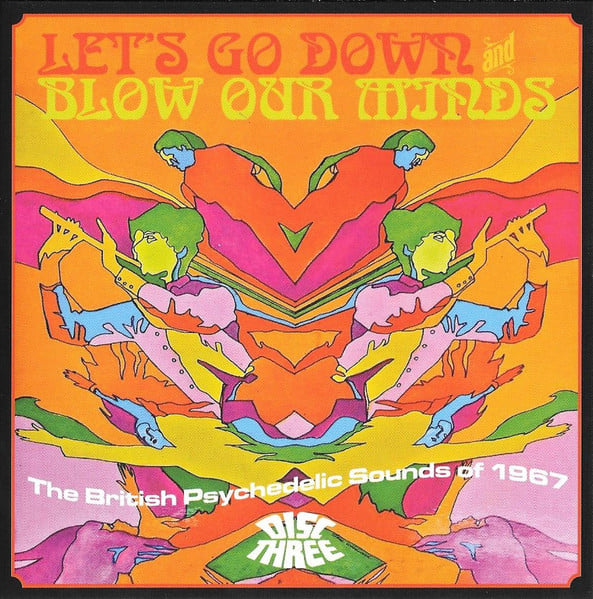
Front cover image of CD 3 from “Let’s Go Down And Blow Our Minds: The British Psychedelic Sounds of 1967” on Cherry Red’s imprint Grapefruit Records includes “Family Tree” by The Late. In 2016, The Late’s “Family Tree” was included on Grapefruit Records [CRSEGBOX033] “Let’s Go Down And Blow Our Minds: The British Psychedelic Sounds Of 1967” 3-CD compilation box set, compiled by David ‘Dog Man’ Wells who has worked on several projects for Woking label Tenth Planet.
Mee sadly passed away in early July 2015
Tracks:
Gallery:
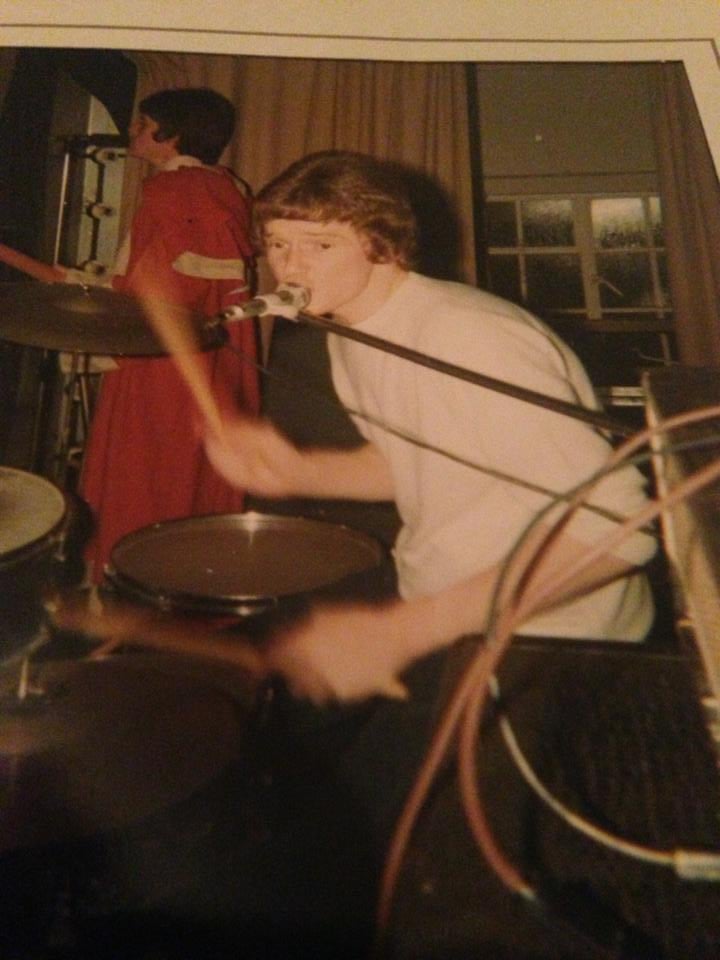
The Late’s Pete Perryer singing and playing drums with Pat Martin singing, playing guitar and wearing a Santa outfit c’66/’67. Picture courtesy of Pat Martin 1968 and the “fabulous much in demand” The Late headlined. 
The Late in 1968, from a photo shoot at Bisley Ranges. Picture courtesy of Patrick Martin 
The Late in 1968, from a photo shoot at Bisley Ranges. 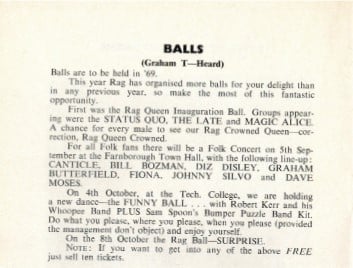
1 August 1969: The Chronic rag mag for Farnborough Tech and R.A.E. Apprentices’ Rag Week 1969 lists the Rag Queen Inauguration Ball at R.A.E. Assembly Hall, Farnborough with Status Quo, The Late, and Magic Alice. 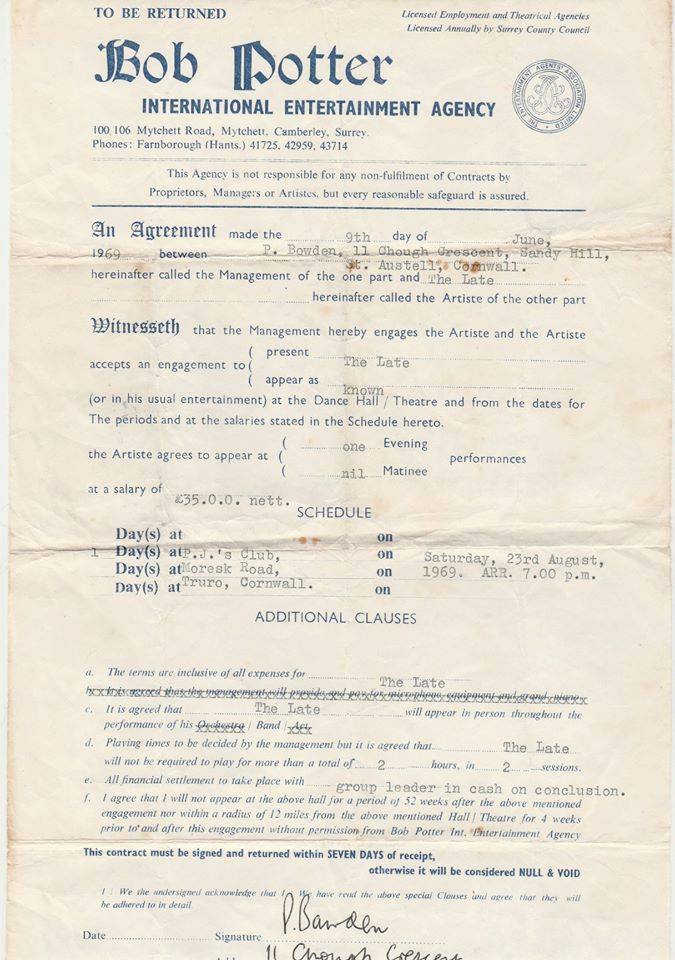
A Bob Potter contract booking THe Late to play at PJs Club, Truro on 23 August 1969. Picture courtesy of Patrick Martin 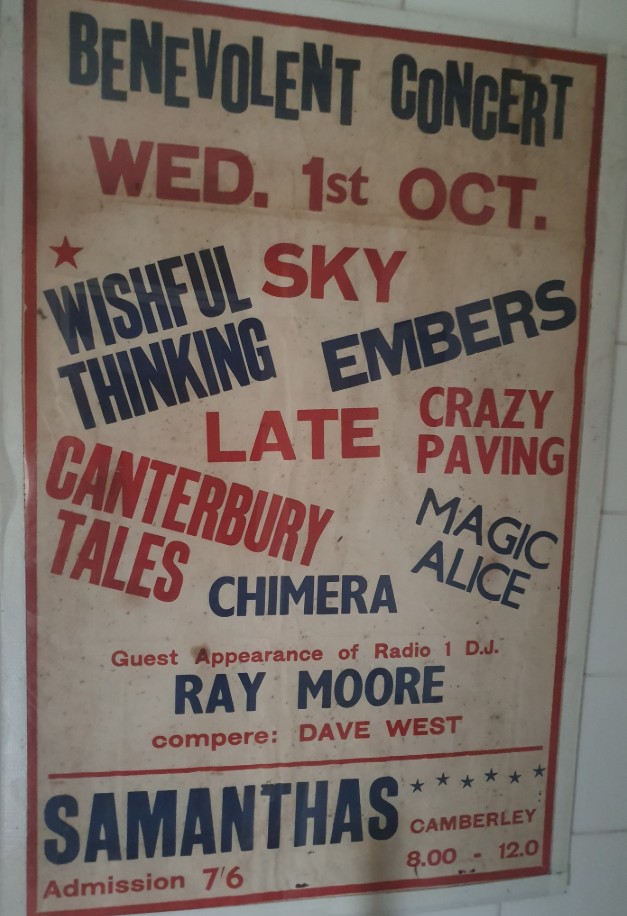
1 October 1969: Crazy Paving played Samanthas (Agincourt Camberley). Image courtesy of Maureen Gamble 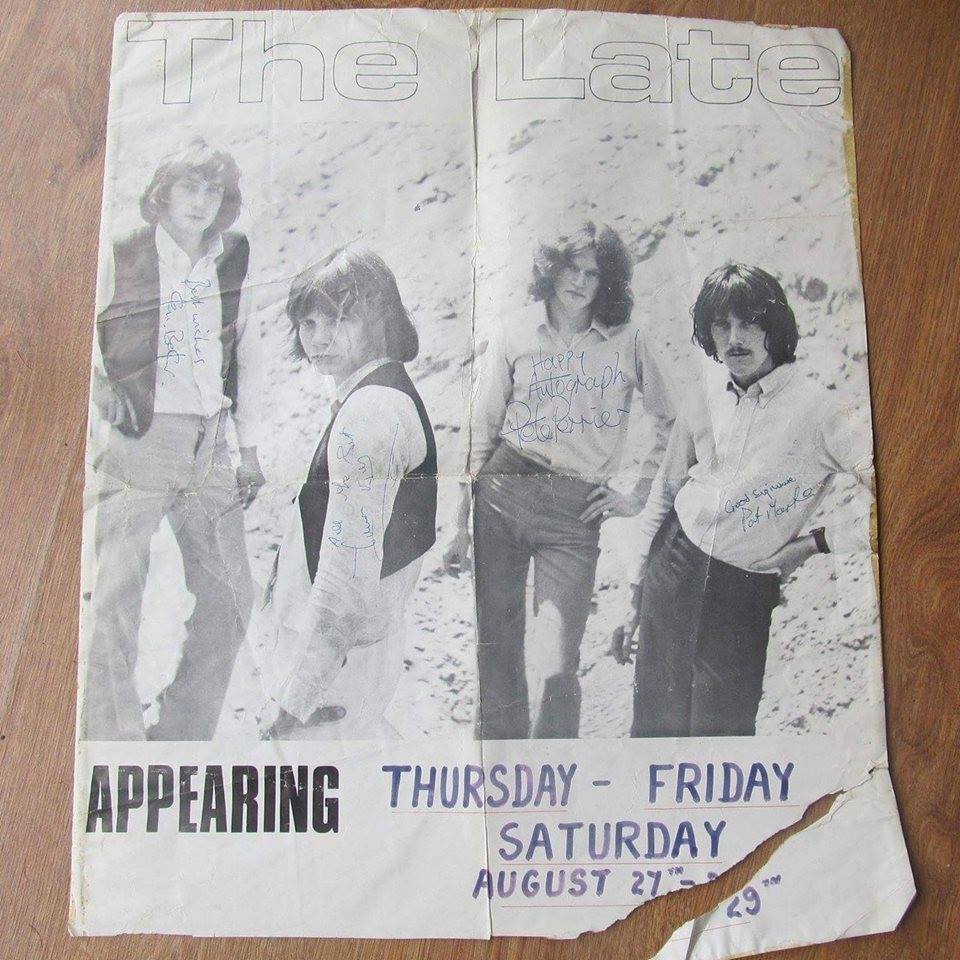
Poster from 1970 for The Late to appear three night in a row at the Blue Lagoon, Newquay. Picture courtesy of Ben’s Collectors Records 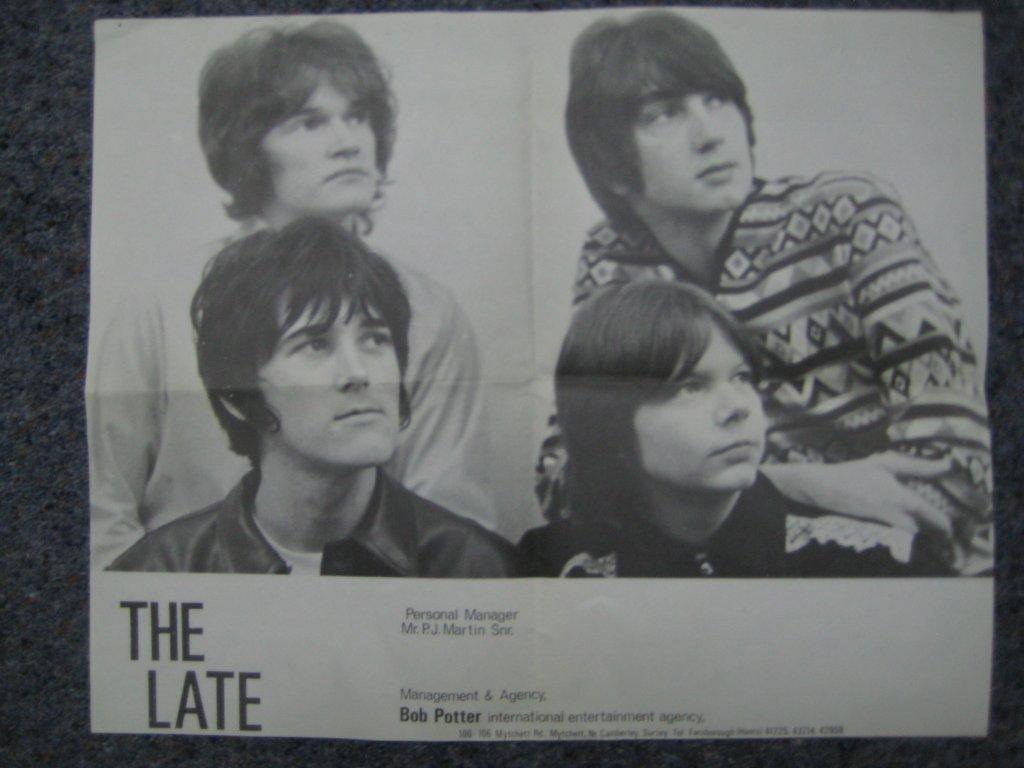
Agency Flyer for The Late. Purloined from a post by Richard Prest 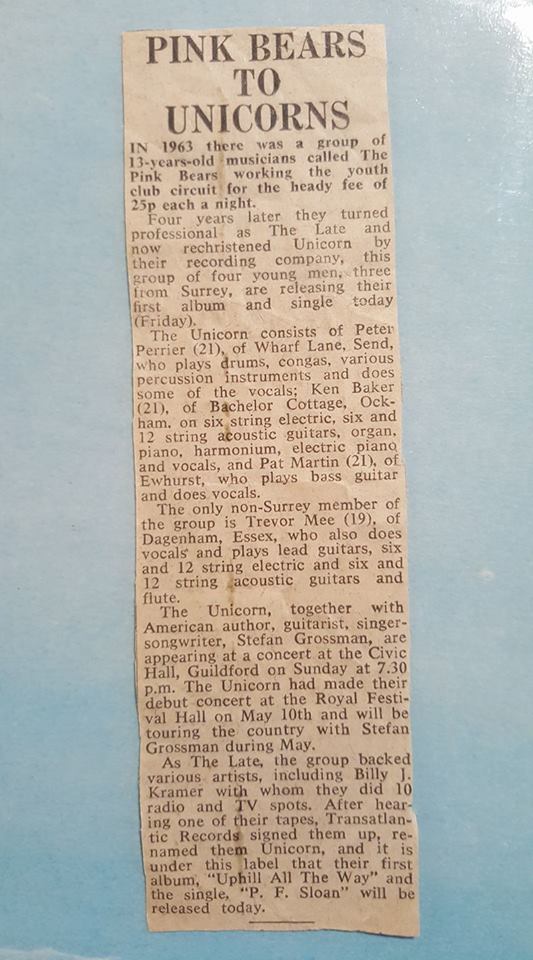
A c’71 Unicorn press clipping from somewhere. Picture courtesy of Ben’s Collectors Records 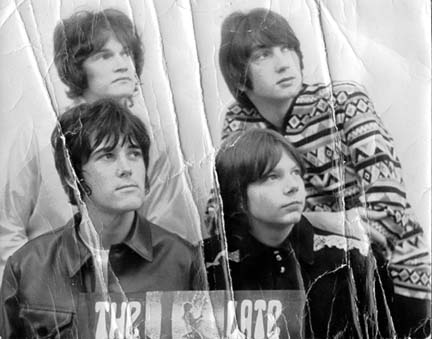
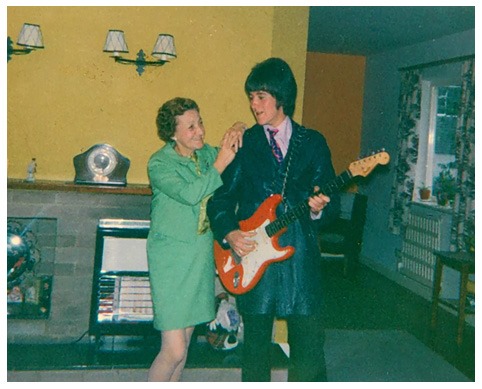
Pat Martin of The Late. 
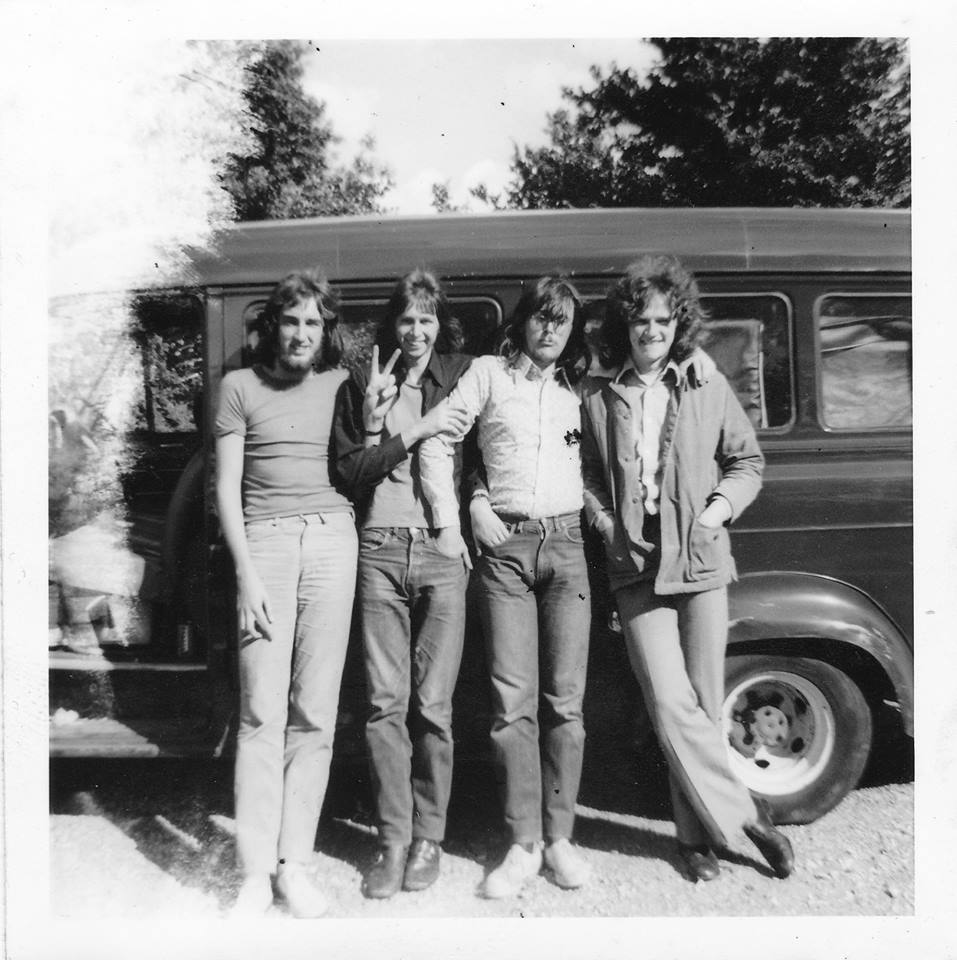
The Late with Transit “tour bus”. Picture courtesy of Patrick Martin 
The Late’s Ken Baker and Pat Martin in their Transit with Dave Helm 


Box set front cover image. Compiled by David Wells, who also has projects with Woking label Tenth Planet, “Let’s Go Down And Blow Our Minds: The British Psychedelic Sounds of 1967” on Cherry Red’s imprint Grapefruit Records includes “Family Tree” by The Late. 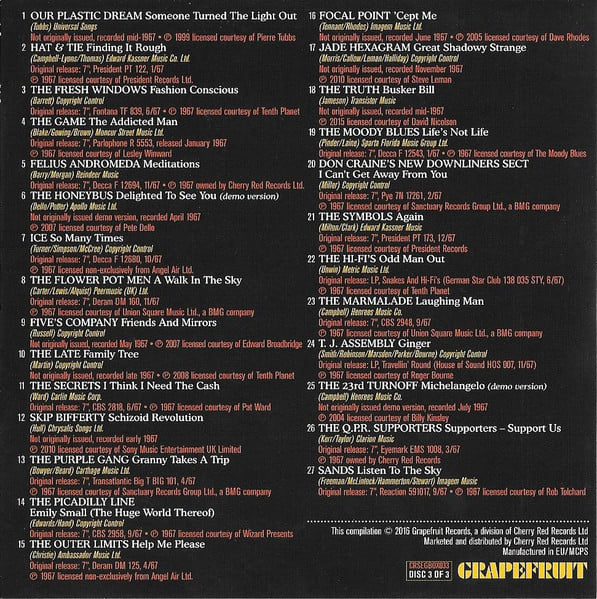
CD 3 back cover image. Compiled by David Wells, who also has projects with Woking label Tenth Planet, “Let’s Go Down And Blow Our Minds: The British Psychedelic Sounds of 1967” on Cherry Red’s imprint Grapefruit Records includes “Family Tree” by The Late. 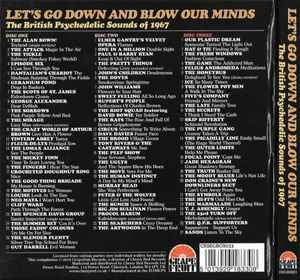
Box set back cover image. Compiled by David Wells, who also has projects with Woking label Tenth Planet, “Let’s Go Down And Blow Our Minds: The British Psychedelic Sounds of 1967” on Cherry Red’s imprint Grapefruit Records includes “Family Tree” by The Late. 
Page 31 of booklet featuring The Late. Compiled by David Wells, who also has projects with Woking label Tenth Planet, “Let’s Go Down And Blow Our Minds: The British Psychedelic Sounds of 1967” on Cherry Red’s imprint Grapefruit Records includes “Family Tree” by The Late. 
David Rose looks back at Woking’s Pink Bears and their development, via The Late, into Unicorn in this Woking News & Mail article from 2 November 2017. Picture courtesy of Ben’s Collectors Records Agincourt, Alsford Timber, Atalanta Ballroom, Billy J. Kramer, Bob Potter, Bourne Hall, Bourne Youth Club, Brotherhood of Man, Camberley, Canterbury Tales, Chimera, Cobham, Copenhagen, Crazy Paving, Dave McGreggor, Dave West, David Wells, Dennis Apprentice Association, Farnborough, Farnborough Tech, Geno Washington, Graham Clark, Graham Clark Studios, Grapefruit Records, Howard Crouch, Ken Baker, Lunar Two, Magic Alice, Mychett, Pat Martin, Pete Perryer, Planetary Norm, R.A.E., R.A.E. Assembley Hall, Radio 1, Ray Moore, Richard Colborne, Samantha's Club, Send, Sky, Status Quo, Stereo Club, Sue and Sunny, Technical College, Tenth Planet, The Carousel Club, The Embers, The Late, The Late Edition, The Modern Art of LIving, The Pink Bears, Tony Rivers and the Castaways, Transatlantic Records, Trevor Mee, Unicorn, Walton on Thames, Wishful Thinking, Woking, Wooden Hill Records -
Redefining Beautiful

(c’92-’95) Martin Warren (vocals / guitar), Matt Harding (guitar / vocals), Russ ? (drums / vocals), Alex Bowen (bass / vocals) and Phil Ernest (guitar / b.vocals).

Redefining Beautiful. Image courtesy of Mick Magic After the demise of Deceased Disease, Harding and Ernest went on to form Redefining Beautiful with Severance bassist Martin Warren on vocals. We believe you would have found this Camberley / Farnborough band at The George, Ash Vale on 2 July ’92 and later that month, on 25 July, playing The Four Horseshoes, Camberley with The Exploding Fir Trees. On the 25 and 26 August ’92, Redefining Beautiful were in Studio Poisson, Crondall – as used by The Vinegar Blossom. They laid down the four tracks: “Swan”, “I Will Tell You”, “Velvet” and “Drift” that were, once produced by drummer of The Sundays, Patrick “Patch” Hannon, released as their “Sky High” demo cassette.

Redefining Beautiful’s “Sky High” demo cassette inlay outer. Picture courtesy of Martin Warren The band rehearsed at The Workhouse, Aldershot and at some point in ’93 we know that Redefining Beautiful played with Fleet based The Hairy Things at Farnborough Tech. The band also, along with Credit To The Nation, performed at Critical Club, West End Centre, Aldershot on 5 June ’93. They were back at Critical Club on 22 October ’93 with Who Moved The Ground? and Serious Plankton.
The following year, on 14 April ’94, the band were joined by J.C. Regulator in supporting Suck Henry at The Shed, South Hill Park, Bracknell, where the band were described by the reviewer for Wokingham News as ‘[blowing] everyone away when all four guitars were blasted manically into action…’. The following month, on 18 May ’94, they competed in the Battle for the Limelight at Princes Hall, Aldershot; along with Who Moved the Ground?, Strange World, Parmaviolet, Blind, and Punching Judy, who all lost to Headnoise. ‘Revenge of Farnborough Groove, Vol.4’ also arrived in 1994 with only six of the 20 bands having appear on a Groove before. This heavy dose of newbies included Redefining Beautiful with “Swan”.

3rd February 1995: Redefining Beautiful openned the first Splatch with Meanwhile, Skipper and The Baby South also on the bill. Source: The Surrey & NE Hampshire Music Scene On 3 February ’95 they opened the first Splatch! with Meanwhile, Skipper and The Baby South also on the bill. That same year their track “Discontent” appeared on Farnborough Groove Strikes Back Vol.5, their second and final appearance.
Ernest went to the School of Audio Engineering, Islington and produced the 7″ Who Moved the Ground? single, “The Chase”, which was released post tour in September ’94, amongst others. Bowen joined Dry Riser in ’95.
Tracks:
Gallery:
Redefining Beautiful – Picture is from Farnborough/Aldershot News c’94. Picture courtesy of Martin Warren 
5 June 1993: Redefining Beautiful supported Moonflowers, with Credit To The Nation at Critical Club, West End Centre. Aldershot. Picture courtesy of Martin Warren 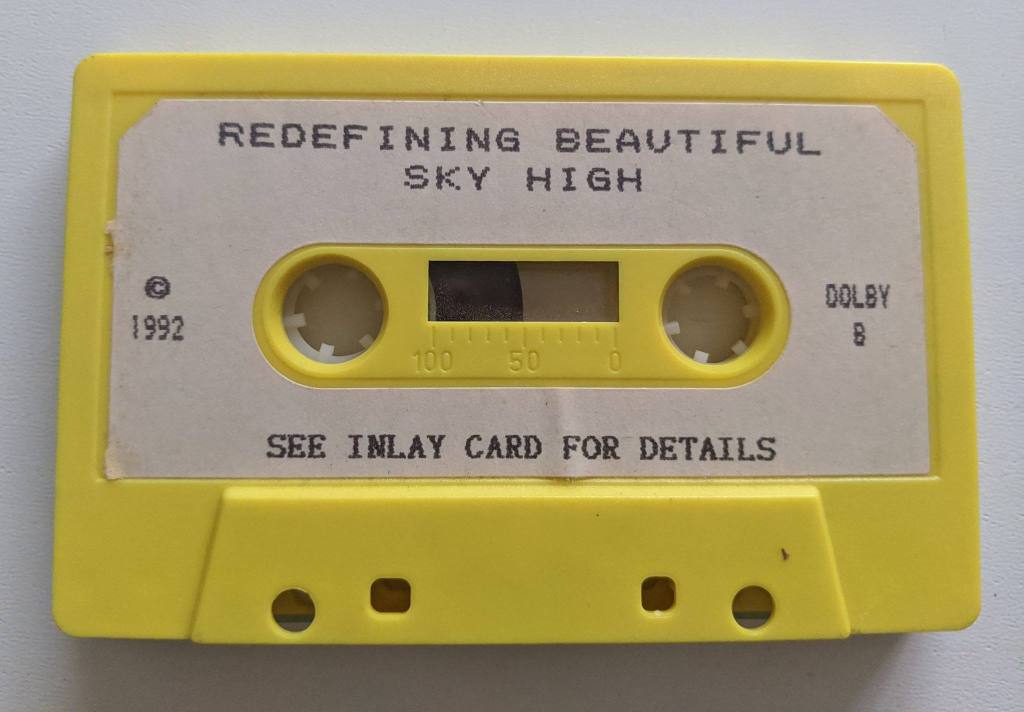
Redefining Beautiful’s “Sky High” demo cassette. Picture courtesy of Martin Warren 
Redefining Beautiful’s “Sky High” demo cassette inlay inner. Picture courtesy of Martin Warren 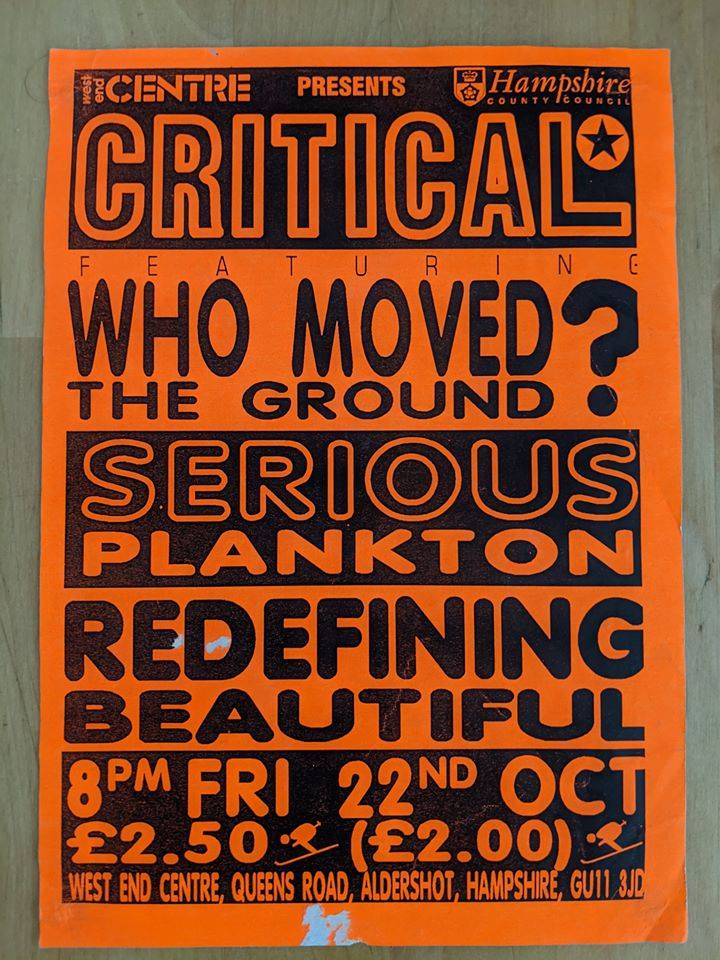
22 October 1993: Who Moved The Ground?, Serious Plankton and Redefining Beautiful played the Critical Club, West End Centre, Aldershot. Picture courtesy of Martin Warren 
On 2 July 19?? Redefining Beautiful played The George, Ash Vale then on 25 July they played the Four Hourse Shoes, Camberley with The Exploding Fir Trees. Picture courtesy of Martin Warren 
18 May 1994: Flyer for Battle for the Limelight at Princes Hall, Aldershot. Head Noise beat Who Moved the Ground?, Strange World, Parmaviolet, Blind, Punching Judy, and Redefining Beautiful! Source: Who Moved The Ground? 
Clipping from local rag mentions Redefining Beautiful along with Credit To The Nation supporting Moonflowers at Critical Club, West End Centre on 5 June 1993. Picture courtesy of Steve Porter 
14 April 1994: Review of Suck Henry, Redefining Beautiful, and J.C. Regulator from Wokingham News 5 May 1994 issue. Image courtesy of Matt Harding. 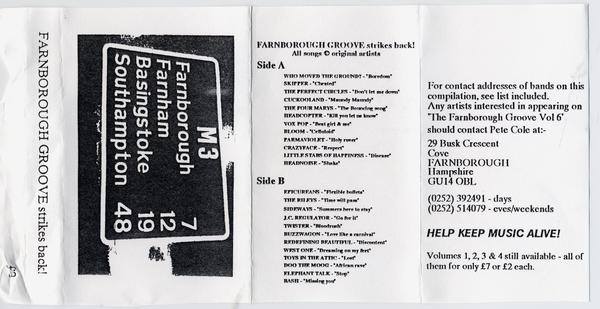
Redefining Beautiful’s “Discontent” appeared on Farnborough Groove Strikes Back Vol.5 in 1995. Picture courtesy of Pete Cole 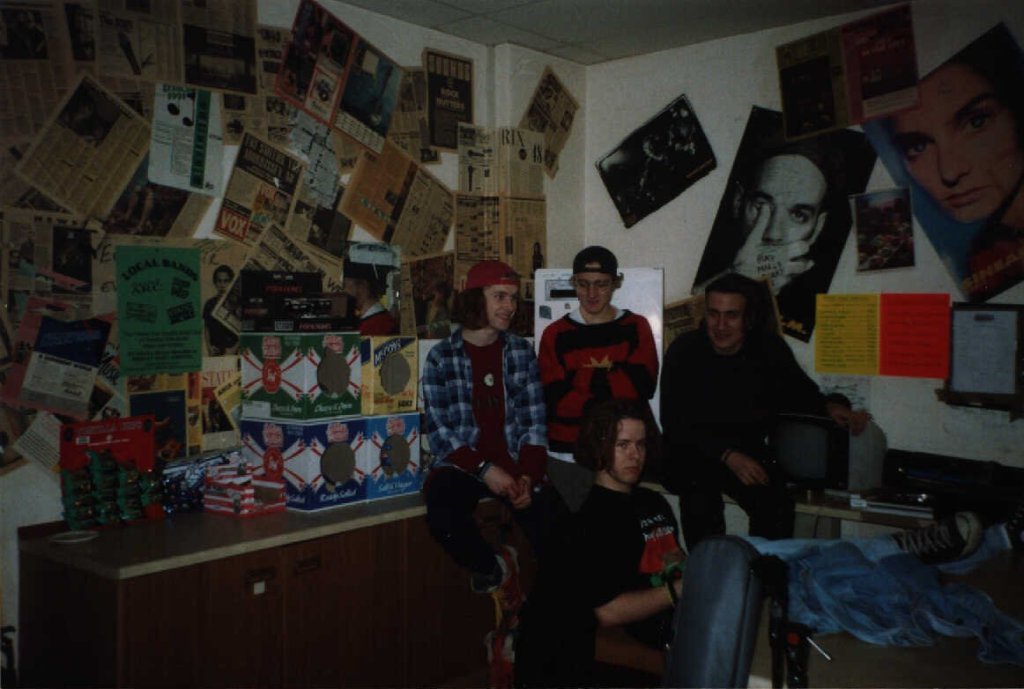
Redefining Beautiful at The Workhouse, Aldershot. Image courtesy of Matt Harding 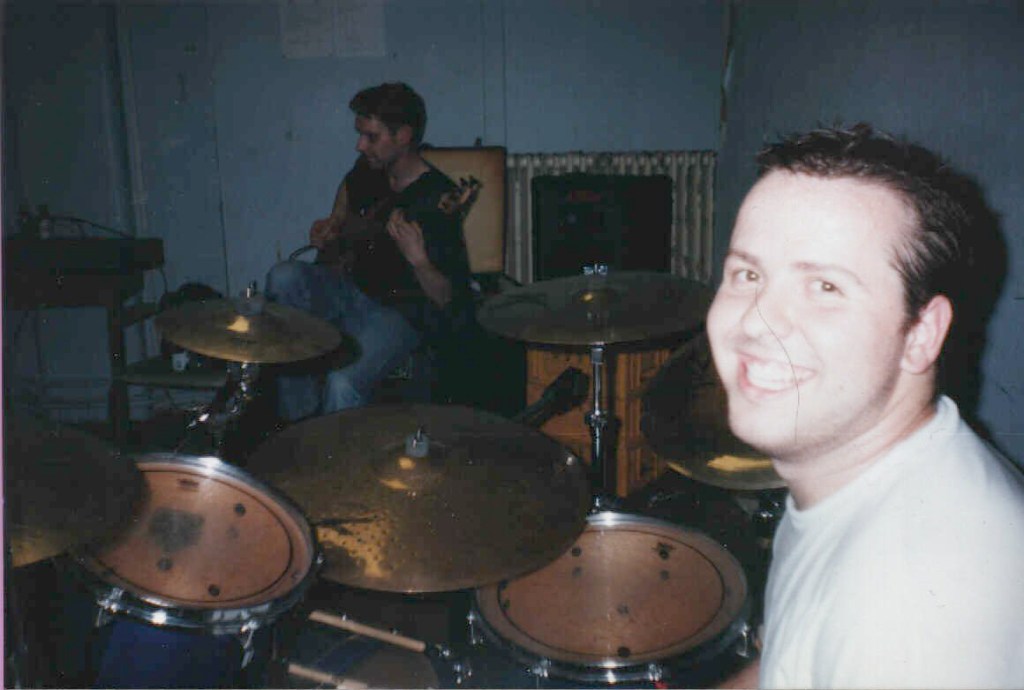
Redefining Beautiful at The Workhouse, Aldershot. Image courtesy of Matt Harding 
Harding & Ernest of Redefining Beautiful at The Workhouse, Aldershot. Image courtesy of Matt Harding 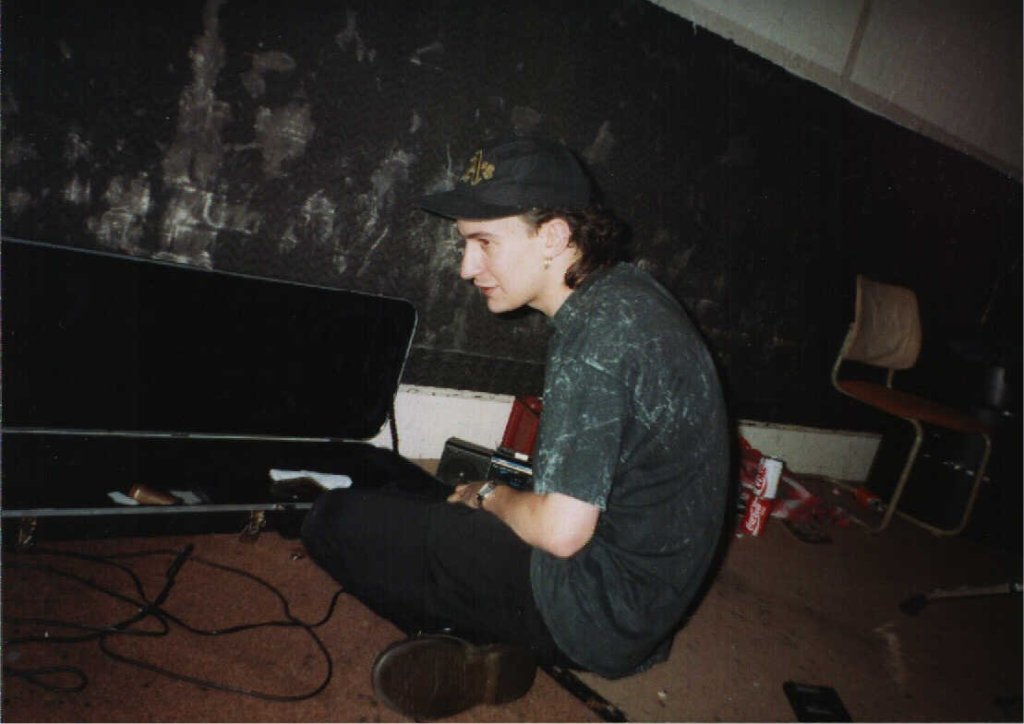
Harding of Redefining Beautiful at The Workhouse, Aldershot. Image courtesy of Matt Harding 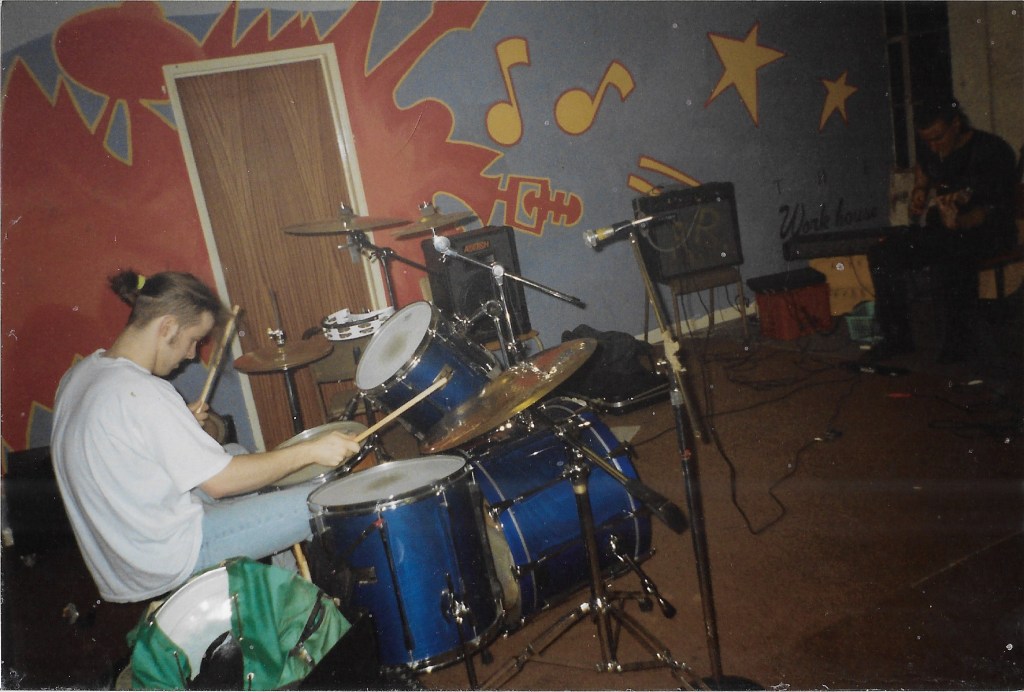
Russ (drums) and Harding (guitar) from Redefining Beautiful at The Workhouse. Image courtesy of Martin Warren 
Warren of Redefining Beautiful at The Workhouse. Image courtesy of Martin Warren 
Redefining Beautiful, and Keith of Study in Scarlet, in The Workhouse’s reception area. Image courtesy of Martin Warren 
Harding of Redefining Beautiful at The Workhouse. Image courtesy of Martin Warren Aldershot, Alex Bowen, Ash Vale, Battle for the Limelight, Blind, Bracknell, Camberley, Credit to the Nation, Critical Club, Crondall, Deceased Disease, Dry Riser, Farnborough, Farnborough Groove, Farnborough Tech, Fleet, Headnoise, Islington, J.C. Regulator, Martin Warren, Matt Harding, Meanwhile, Parmaviolet, Patch Hannon, Patrick Hannon, Phil Ernest, Princes Hall, Punching Judy, Redefining Beautiful, School of Audio Engineering, Serious Plankton, Severance, Skipper, South Hill Park, Splatch!, Strange World, Studio Poisson, Suck Henry, Technical College, The Baby South, The Exploding Fir Trees, The Four Horseshoes, The George, The Hairy Things, The Shed, The Sundays, The Vinegar Blossom, Who Moved the Ground?, Wokingham News


Human beings takes me back to 1981. Followed them all over the Surrey reading area for a year a great band and 3 good guys playing well written songs of the era. I wish john Tim and steve well what ever they are doing now. Should reform for a few shows just like Oasis but do the wooden bridge.
LikeLiked by 1 person