
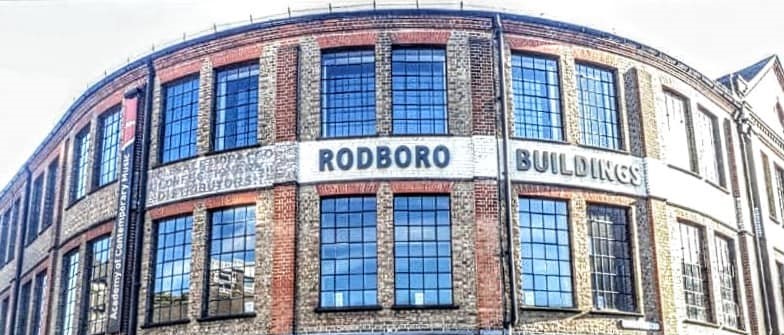
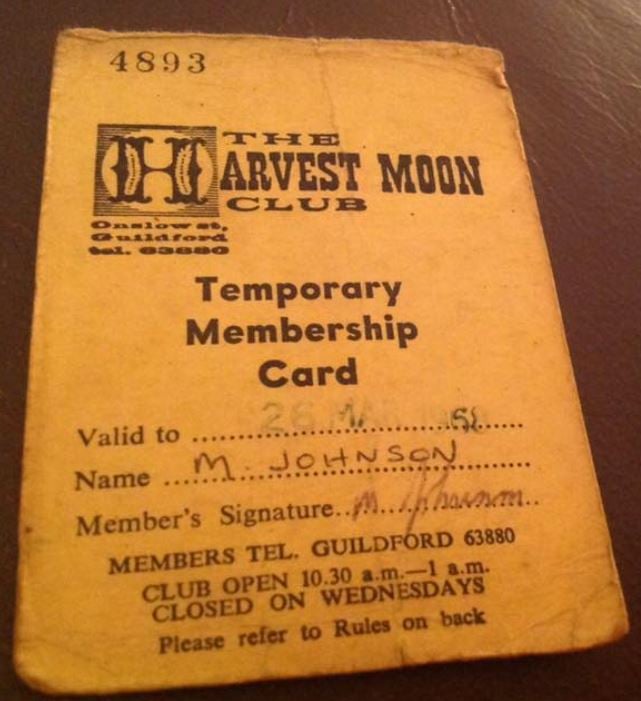
The Harvest Moon Club, owned by Ray Musgrove, opened in early 1965 with a sign, over the front entrance, painted by Joseph Hills. It sat on the upper floor of the Rodboro’ Building, with windows blacked out with red paint.
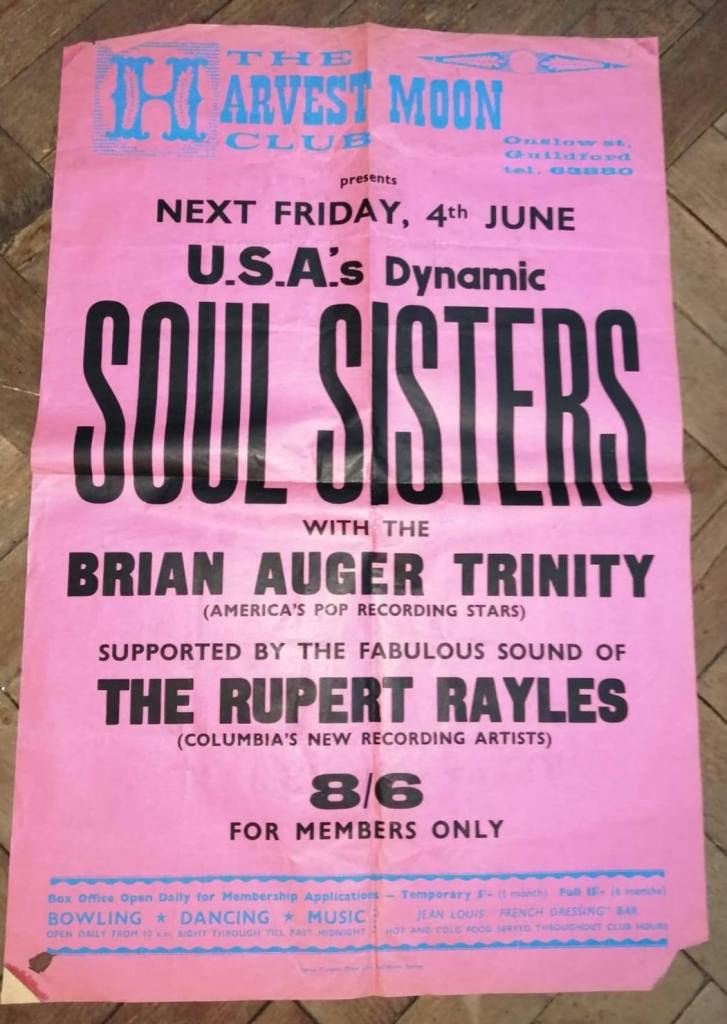
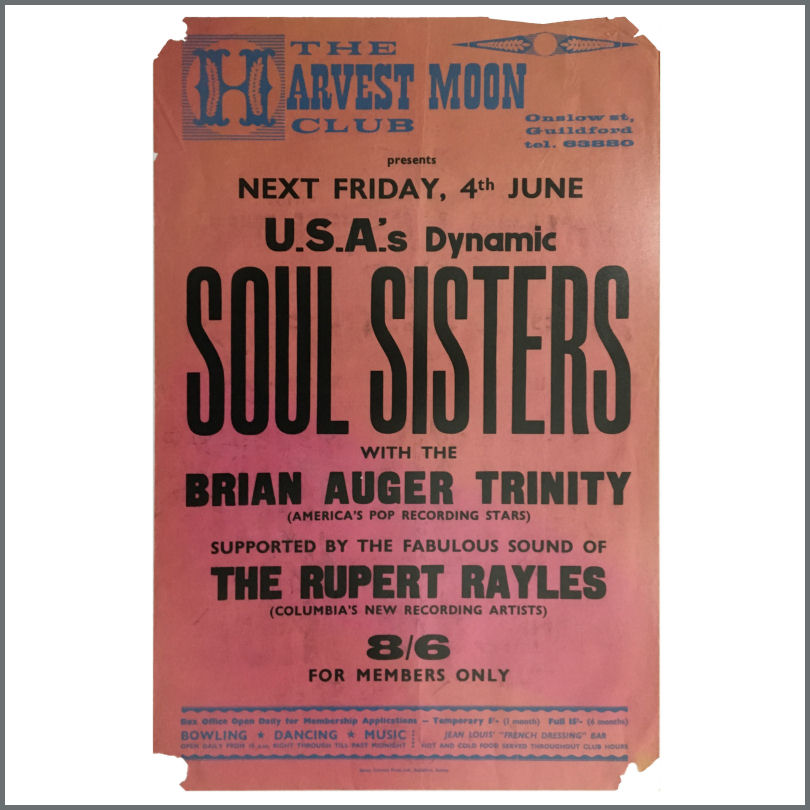
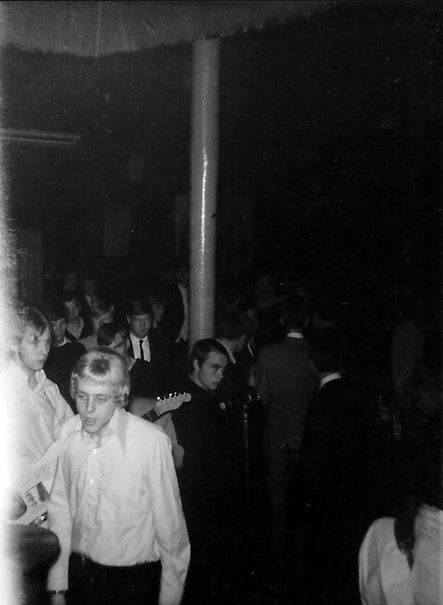
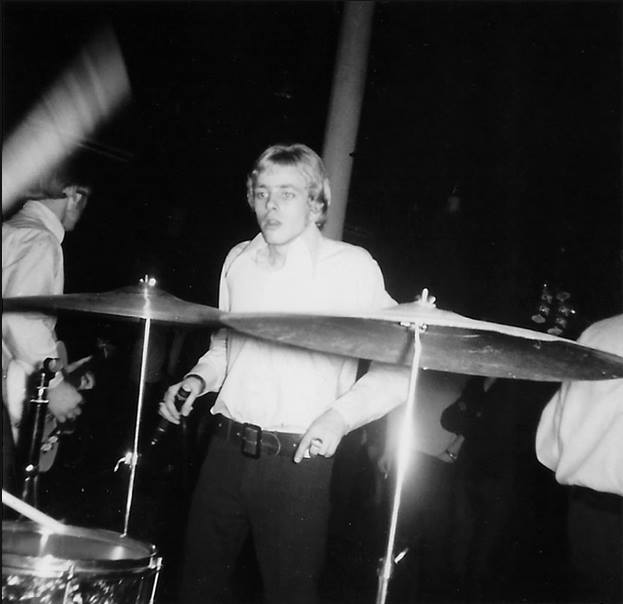
Unlicensed, it was coffee and soft drinks only, the Harvest could choose its opening hours and it was open all day and evening during the week, all night on Saturdays, and by the summer of ’65 was holding all-nighters. On 4 June ’65 the US soul duet of Tresia Cleveland and Ann Gissendanner, better known as The Soul Sisters, were supported by the Brian Auger Trinity and The Rupert Rayles at The Harvest Moon. Later that year, The Rivals became the established, de facto house, band at the Harvest Moon from September ’65.
Reportedly not as hip as the Ricky Tick Club in Guildford, the club was notorious for its “drug problem”, with many a punter popping purple hearts (Drinamyl) to keep them going all night. David B., who worked the door on Sunday nights, reports financing a trade in ‘mothers little helpers’ (Diazepam), buying a thousands tabs up in London and selling packs of 20 (or 19) at the Harvest Moon.
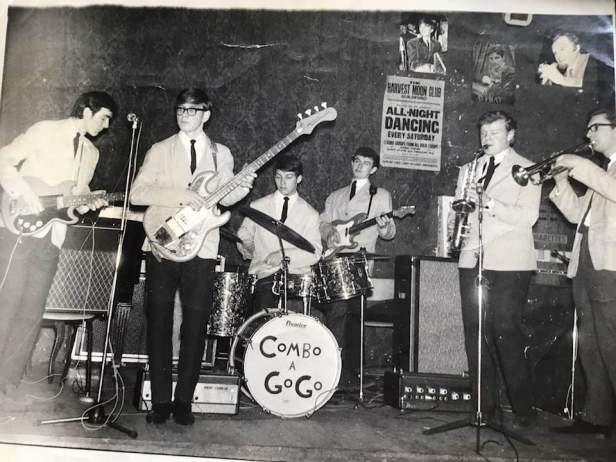
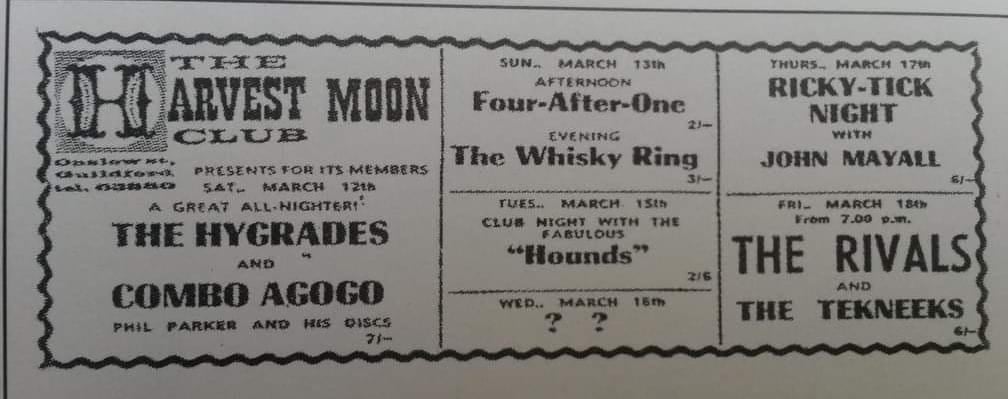
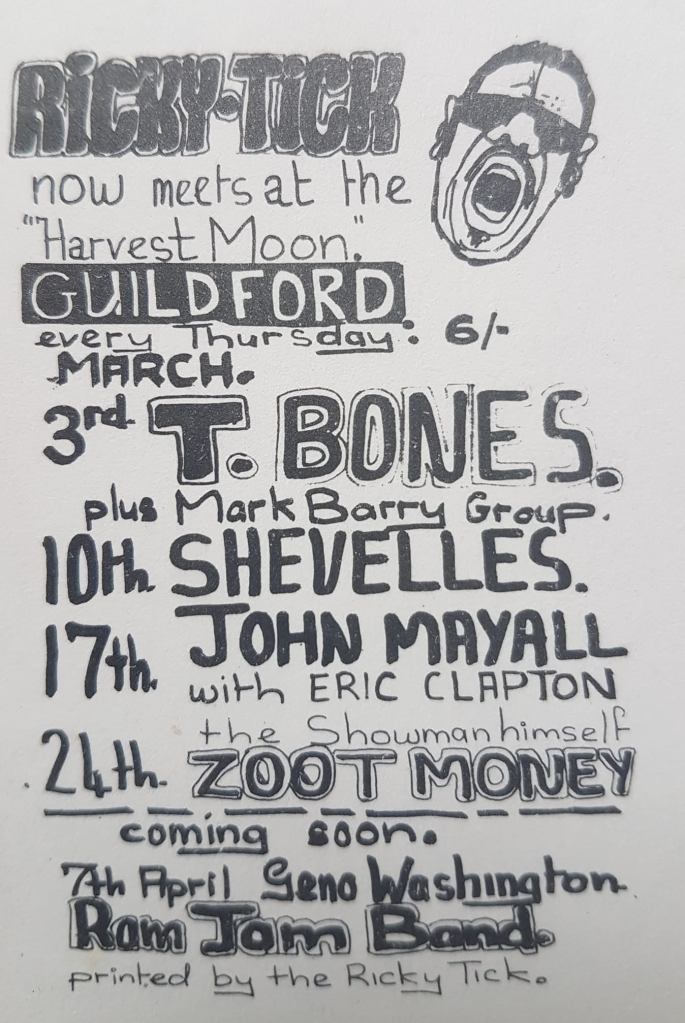
In early ’66, Guildford’s Ricky Tick moved to the Harvest Moon, taking over the venue every Thursday. On the first Thursday in March ’66 the Ricky Tick promoted the Gary Farr fronted T. Bones, which may have had Keith Emerson on keyboards, supported by the Mark Barry Group. Cardiff beat pop group the Shevelles headlined the Ricky Tick night on 10 March ’66. On 16 January ’66, Four After One supported Group Survival at the Harvest. Enugu, Nigeria-based guitarist and producer Goddy Oku bought his band The Hygrades to Guildford’s Harvest Moon on 12 March ’66, where they were supported by Aldershot’s Combo A Go Go, who held a weekly residency at the club. Another local band with a residency at the club were Worplesdon based Roadrunners.
The following day Four After One – who may have been local – were back, playing in the afternoon, and local band The Whiskey Ring in the evening. Two day after, on 15 March, the Hounds took to the venues ‘stage’. The big draw this week in ’66 was John Mayall’s Blues Breakers, which then included Eric Clapton, playing the Ricky Tick night at the Harvest on 17 March; at which they previewed, for all present, most of the ‘Blues Breakers’ LP. The Rivals, supported by The Tekneeks, had to follow that the next night. Zoot Money appeared on 24 March for that weeks Ricky Tick.
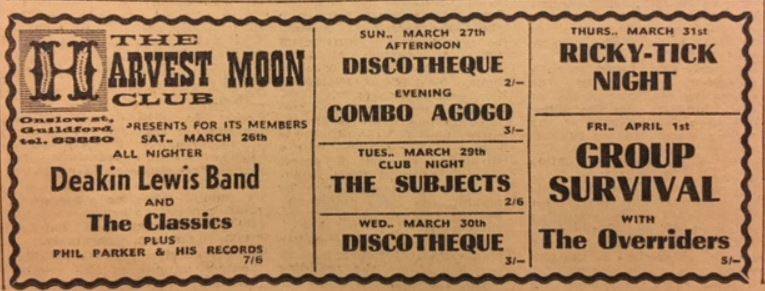
The Deakin Lewis Band headlined on 26 March with The Classics supporting. Combo A Go Go held their own in the evening of 27 March and The Subjects played the club night two days later. The Ricky Tick was back on Thursday and the following night saw The Overriders open for headliners Group Survival. The next Thursday, 7 April, was held by Geno Washington and the Ram Jam Band. Manchester based The Chosen Few, moved down to London in ’66 and changed their name to The Hush, appearing at The Harvest Moon shortly after in November.

The DJs, Shotgun Willy Walker, Harvey the Rabbit, Mick Bradford and Dr Shotgun among them, always played the latest / good music and in the winter there would be a roaring log fire surrounded by old leather sofas.
Ian Latimer recalls a night at The Harvest Moon, standing in for Geoffrey Andrews on bass with The Primevals, to support The New Seekers. By February ’67, several similar venues were being taken over by London club ‘operators’. On one occasion, The Rivals had been booked by the Harvest Moon; but when they arrived East London based pop / rock band Pussyfoot were already playing. The local management knew nothing about the booking and were not intending to pay Pussyfoot, assuming they’d been sent by a London agency. The Rivals were asked to come back later that evening and to start at 11pm.

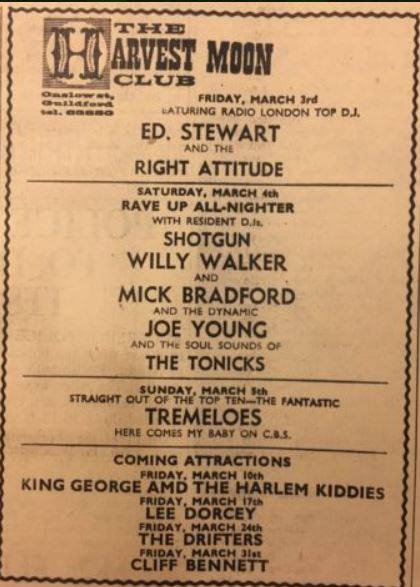
On 10 February ’67, The Net were supported by The Human Instincts for a Radio London night. This was followed by The Rivals final gig on 11 February ’67. On 3 March ’67, Radio London DJ, Ed Stewart spun the vinyl and compered with Right Attitude providing the live music. A trifecta of resident DJs held the club members attention for an all-nighter the next night, with The Tonicks ably handling the live music. The next night, and riding the wave of their first UK top-ten hit since the departure of lead singer Brian Poole with the Cat Stevens written “Here Comes My Baby”, The Tremeloes came to the Rodboro Building. Over the course of the next few weeks the club hosted: King George and the Harlem Kiddies, Lee Dorsey, The Drifters, and Cliff Bennett. Another luminary to have played the venue was Humphrey Lyttelton. Despite booking some of the times leading artists the club closed later that year.
Gallery:


 Our Soundscene